
Translated material
Zlaki attention
Why Türkiye returned Russia to a grain transaction: the price of the issue. The economist explains
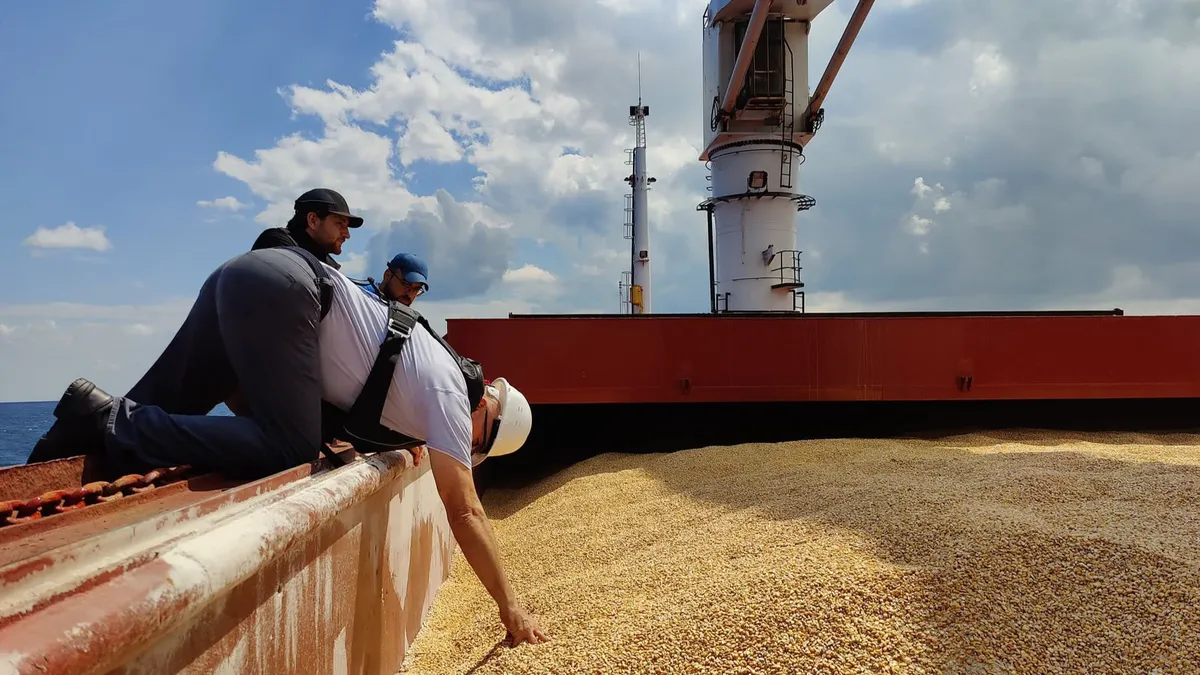
Ukraine is a world exporter No. 4 of wheat and corn, the largest exporter of sunflower oil. 10-15% of world trade in wheat and corn is provided by Ukraine. Russia is the world exporter of wheat No. 1, it provides 20% of the world's trade in wheat. Therefore, the “loss” of such volumes really strongly affects the situation in the world.
But for the Ukrainian economy, agriculture (and grain export) is much more significant than for the Russian economy. The agrosector creates approximately 10% of Ukraine’s GDP and only 4% - GDP of the Russian Federation.
After February 24, grain exports through the seaports of Ukraine was discontinued (90% of Ukrainian exports went through the Black Sea terminals). Later he was resumed “by land”, but in much smaller volumes. At the same time, Russian deliveries after a small break in late February continued.
This situation immediately affected world grain prices (and at food prices as a whole). The countries of Africa, the Middle and Middle East, which are very dependent on exports from Ukraine and Russia: were most affected by the greatest extent:
According to the special speaker of the UN, on the right to nutrition, Michael Fahri, the supply of Ukrainian and Russian grain provided at least half of the needs for 26 countries.
Two contracts
Discussions of the resumption of food supplies from Ukrainian ports, as formal and informal, began back in March on the initiative of the leaders of Turkey, Egypt, Iran, Saudi Arabia, Israel and other countries of the Middle East and North Africa. They insisted that interruptions in the supply of grain could provoke unacceptable prices and destabilize the situation in the region.
The result of prolonged and complex negotiations was the “initiative to transport grain and food from Ukrainian ports”, also called the “Black Sea Grain Initiative”, or the “grain transaction” - an agreement between the Russian Federation, Ukraine, Turkey and the organization of the United Nations on the organization of a safe sea corridor for agricultural goods from Ukraine.
The two agreements that form a single grain transaction - between Ukraine, the UN and Turkey and between Russia, the UN and Turkey - were signed on July 22, 2022.
The first is the “initiative to safely transport grain and food from the ports of Ukraine”, which was signed by Türkiye, Russia and Ukraine through the mediation of the UN. The initiative regulates the safe removal of grain, food and fertilizers from Ukrainian ports of Yuzhny, Odessa and Chernomorsk.
Russia assumed not to attack these ports, as well as Ukrainian ships that accompany the fairway through the country's mined internal waters.
To control the execution of agreements on July 27 in Istanbul under the auspices of the UN, a joint coordination center (SCC) began to work, which included 5 representatives from the parties to the participants of the grain transaction. Before arriving in Ukrainian ports, trading ships take place an inspection in which Turkish, Ukrainian and Russian officials take part to make sure that there are no military cargo on board.
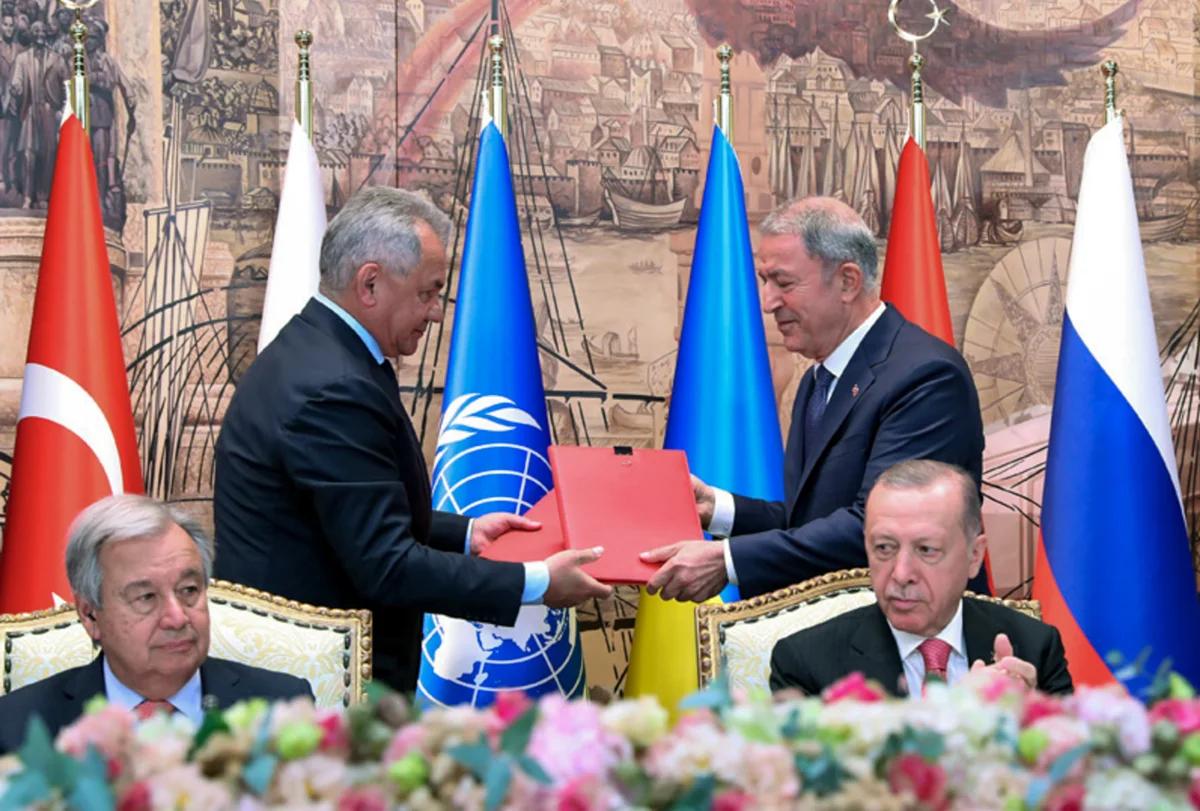
The second document is “Memorandum of understanding of Russian exports of agricultural products”, which was signed by Russia and the UN. Unlike the first, he was not published, and his content, according to the Minister of Foreign Affairs of the Russian Federation Sergey Lavrov, concerns
“Eliminating the obstacles of the United States and the EU regarding finance, logistics and insurance” in relation to Russian agricultural products and fertilizers. In other words, it was about the conclusion from the sanctions of the Russian agricultural sector.
This made it possible for Russia to not only export, but also to import agricultural goods: seeds (according to some crops, Russia depends on imports by 90%), plant protection products, a breeding fund for animal husbandry and veterinary drugs.
The grain transaction was the first agreement between Russia and Ukraine after February 24 and was positively perceived by global markets: so, after the news of the transaction, wheat prices returned to their previous level.
On August 1, 2022, the first vessel was left from the port of Odessa as part of a grain transaction: Disgreen Drown under the flag of Sierra Leone with a corn cargo for buyers in Lebanon. From August 1 to October 22, 360 vessels with 8.1 million metric tons of grain and other agricultural products were released from the ports of Ukraine as part of a grain transaction. Almost 43% of the total cargo amounted to corn, followed by wheat and sunflower oil.
There and back
However, back in September, the leaders of the Russian Federation spoke about the possible exit of the country from the Grain transaction. The reason was called this: the Russian Federation made a deal so that the poor countries of Africa and the Middle East could receive Ukrainian grain, which instead was supposedly sent to the European Union.
In fact, in the published documents regulating the grain transaction there were no references to the directions of export, while almost half of the Ukrainian grain was sent to Turkey and Asian countries, a third to Europe, the rest to North Africa.
The reason, most likely, was different: the Russian grain oligarchs, having a very solid influence on the adoption of the most important political decisions, could not take advantage of the abolition of food sanctions from the Russian Federation as expected. Yes, there are no sanctions on Russian wheat, but Western banks and insurers are convinced of Russian companies, shipowners are afraid to send their ships to the Black Sea, and a number of jurisdictions closed their ports for Russian courts.
In addition, a too strong ruble undermined the competitiveness of Russian grain in the world market: yes, the grain has risen in price, but not so much as to compensate for the costs of a “strong ruble”.
On October 29, 2022, Russia announced the suspension of participation in a grain transaction, since the warships involved in ensuring the security of the grain corridor became the goal of attacking drones in the Sevastopol Bay.
But Ukraine, Türkiye and the UN agreed on the route, along which on October 31, 16 dry cargo loads headed towards the Turkish straits, just notifying Russia about this decision. The Minister of Defense of Turkey, Hulushi, Akar, publicly said that dry cargo loads under the flag of Turkey will continue to transport grain regardless of Russia's participation in the agreement.
And already on November 2, Russia sharply changed the position on the opposite, resuming participation in a grain transaction under the pretext of obtaining security guarantees from Ukraine.
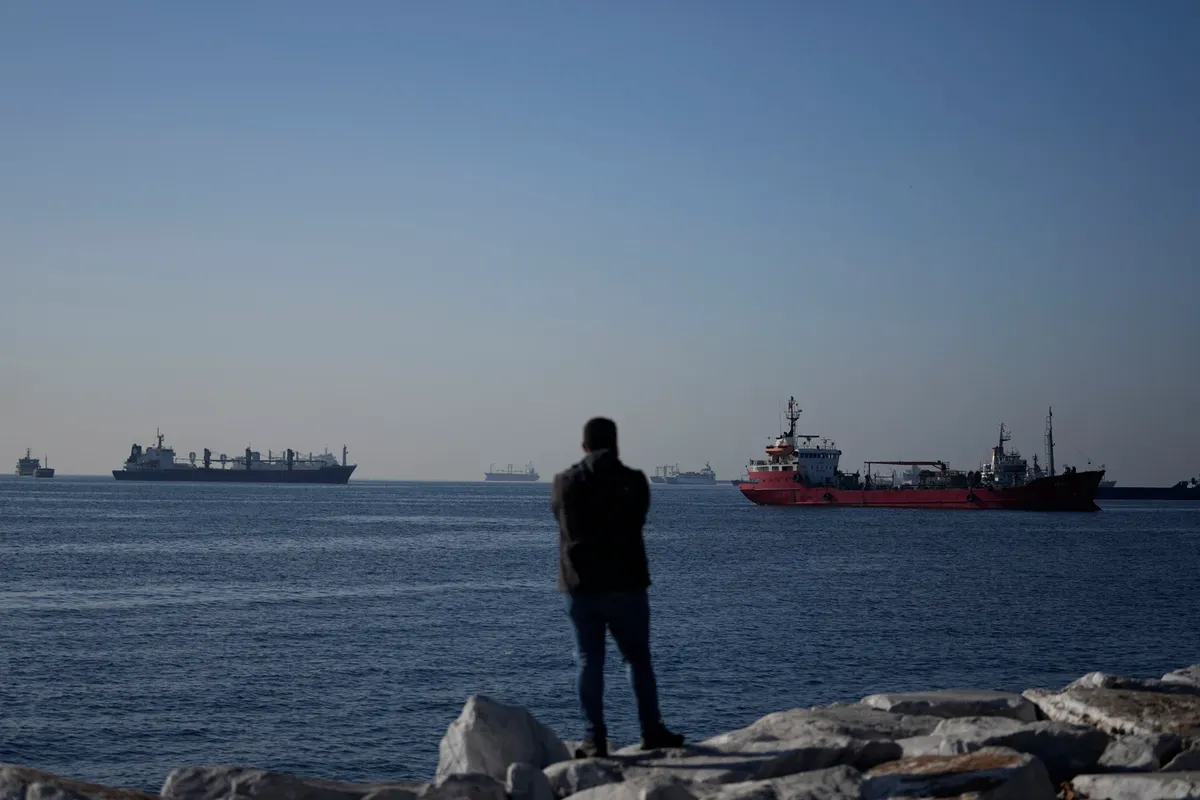
What was it? Most likely, the position of Turkey played a decisive role in the return of the Russian Federation to the “grain transaction”, cooperation with which becomes more important for the Russian side. In the first three quarters of 2022, the turnover of Turkey and the Russian Federation reached $ 47 billion, doubled compared to last year. At the same time, it is through Turkey that the main stream of technological goods that needs Russian industry, and the Russian authorities promise to create a “gas hub” in Turkey, since the pipeline to Turkey remained the only gas route from Russia to Europe, which is fully controlled by the Russian side.
Paradox: the owners of Russia for many centuries fought with the Lords of Turkey in fact for monitoring the export of grain from the northern ports of the Black Sea. But now the tools for control over grain trade in this region are again in the hands of the Turkish side.