
Translated material
Spher-brown-raspberry
Roscosmos reported on the launch of the first spacecraft of the Sphere multi -seater system. But he cannot fly without state depots
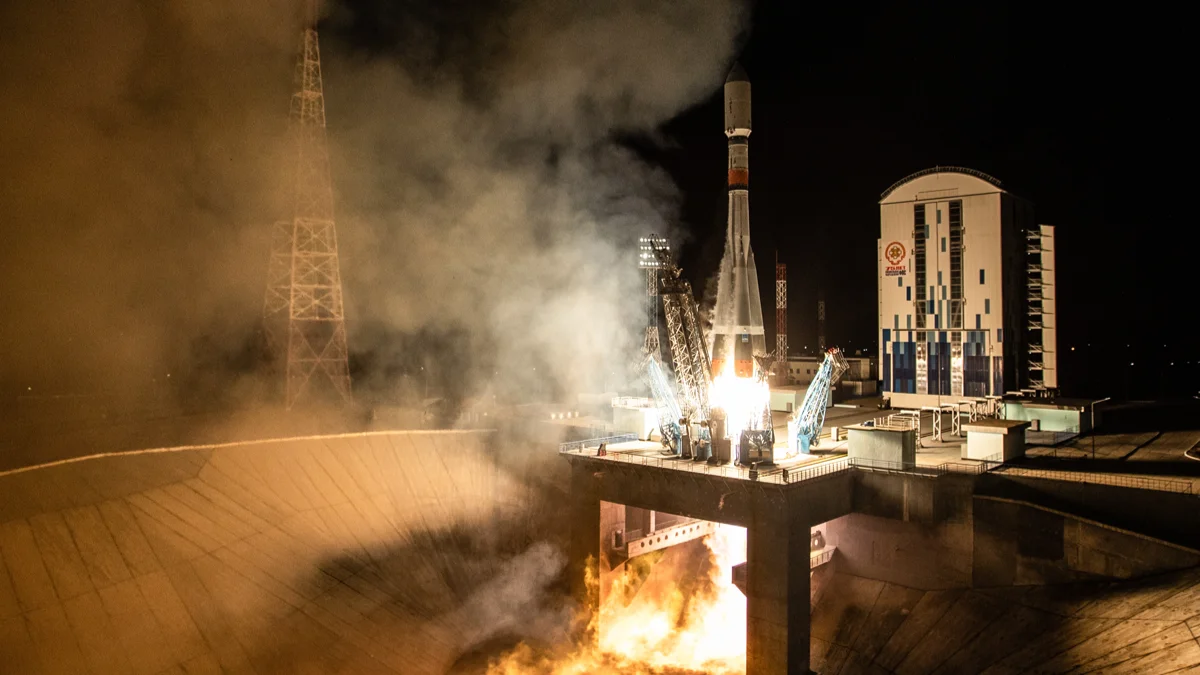
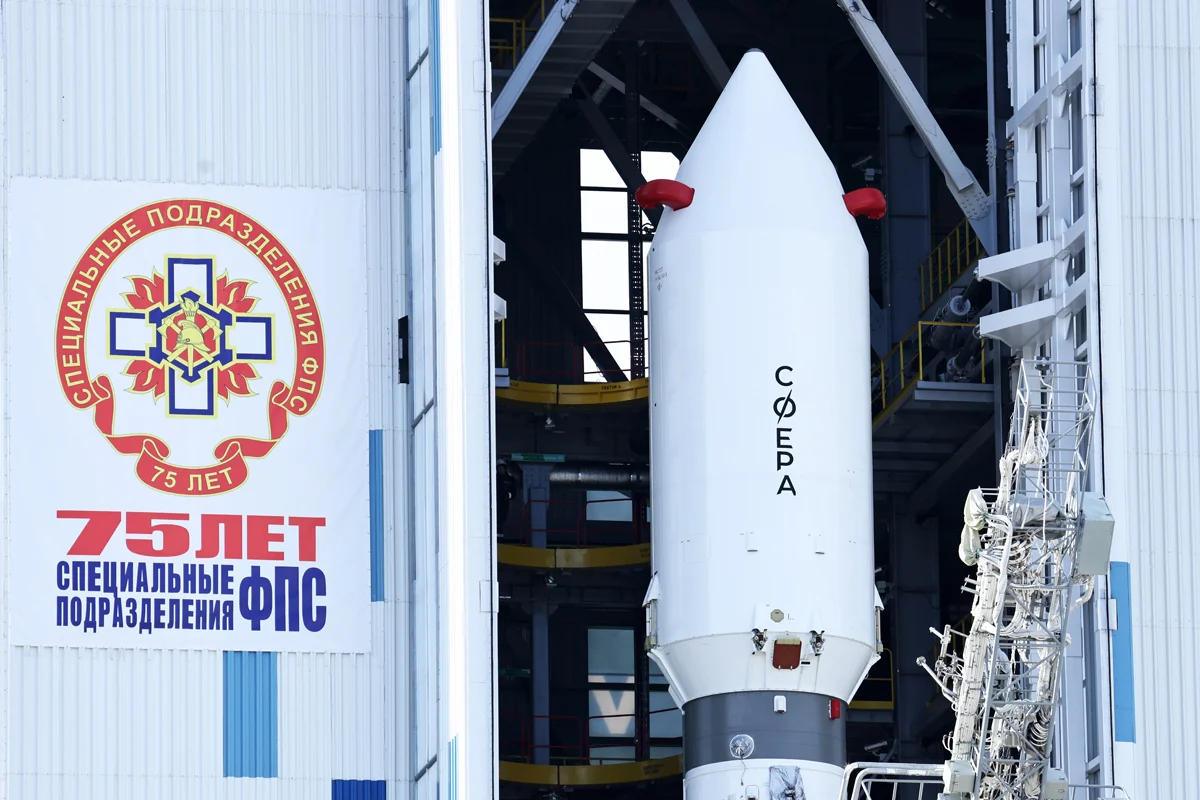
Roscosmos launched Scythian-D-the first spacecraft of the Sphere multi-seater system. Earlier it was assumed that the “sphere” will become a competitor to such satellite Internet projects as Starlink and Oneweb, but at the same time it would be navigation and photograph the land to photograph. It turned out not quite what was expected. We figure out where the “sphere” began and where it will roll.
For the first time, the name “sphere” appeared in the speech of Vladimir Putin in June 2018, although on the eve of Roscosmos held a presentation of the project of a multi -party grouping for the Internet called “Ether”. Evil languages said that he confused the names, but the officials of the “Roscosmos” hastened to explain that everything was right, just “sphere” is an even more complex system for everything at once: the Internet, satellite shooting, and navigation, and “broadcast” is only its Internet part. After familiarization with the updated description, it seemed that Roscosmos was ready to dump all civilian satellites into the “sphere”, regardless of their purpose, structure and orbit.
The first estimates of the cost of the "sphere" were also named. At first they talked about 300 billion rubles, but, apparently, this was an assessment of the Internet, since Roscosmos counted on attracting “extra-budgetary financing”. Then the amount to the "sphere" increased to 1.5 trillion rubles, and then decreased to 800 billion rubles. By 2022, Roscosmos estimated the project at 180 billion rubles for 162 satellites until 2030.
The government promised to allocate 95 billion, but so far it allocated only 40 for the next three years.
Various assessments of the cost of the program and the various number of satellites that fell into the press is a reflection of the trading process between Roscosmos, which is interested in maximum increase in orders, and a government that does not have enough funds for all the wishes of the space industry.
It is curious that 162 planned satellite are approximately equal to the current number of existing Russian spacecraft. Thus, the “sphere” could be called a ten-year program for updating the satellite group of Russia, and not some single system. For example, it includes Yamal and Visitsa devices from Gazprom Space Systems, which is not included in Roscosmos and, in general, a formally non -state project. Also in the "sphere" there were "expresses" from the Ministry of Construction, although it is also separated from Roscosmos. Some projects repeat or compete with each other, for example, Yamal with Expresses, and the “review” with “Golden Eagle-Up”.
The proposed composition of the system also changed. In its maximum filling, it was supposed to launch more than 600 satellites, on which Roscosmos planned to spend more than 40 missiles. But very quickly the navigation Glonass fell out of the Sphere, probably because of its military purpose. Three years later, against the backdrop of the success of the Starlink and Oneweb and tightening sanctions, it became obvious that nothing shines in the world market. Even such “extra -budgetary” investors as VEB and Gazprom refused to invest in it, so the project was actually stopped . However, later the MegaFon took up a similar project, but this is already outside the “sphere”.
Roscosmos counted on receiving funding for the "sphere" from new and abundant national projects of digitalization of Russia and the development of the Arctic. At the same time, direct questions about the prospects for the payback of projects were followed by extensive thoughts about new workplaces, an infrastructure project and its multiplier and synergistic effects. That is, even at the early stage of design, it was not supposed to create a commercial competitor to Starlink and Oneweb and try to enter the world market with specific services.
Although the “broadcast” did not find support, the task of broadband Internet access is nevertheless entitled to the “sphere”, and satellite shooting projects remained. Currently, ten projects are included in the Sphere, half of them are a connection, half is the shooting of the Earth.

For the next three years, the government allocated 40 billion rubles. The distribution of these funds “Roscosmos” does not disclose, but most of all this is similar to ensuring the release of geostationary “expresses” in the interests of the Ministry of Cyphra. However, Skif-D was the first to fly, and Roscosmos hastened to report that the “sphere” began to come true. But if you delve into the details ...
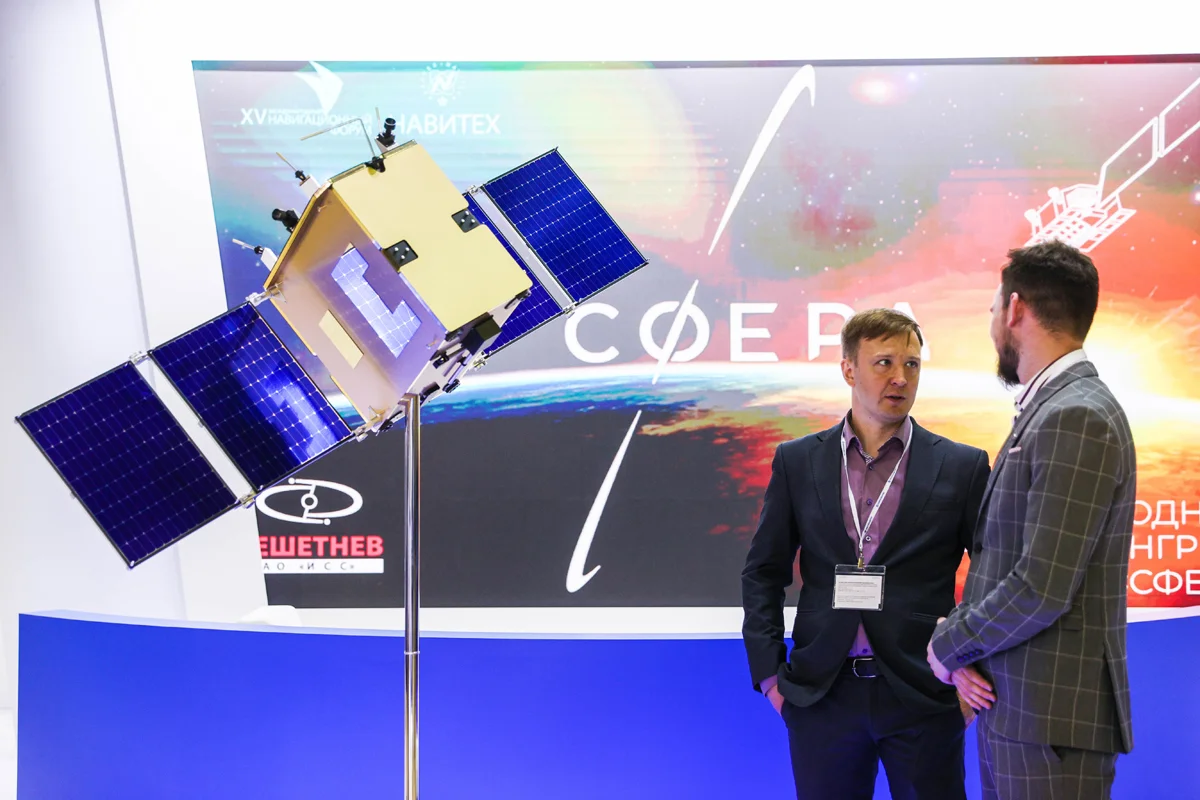
The SKIF project appeared on the initiative of LLC "Sond-Holding" as a Russian analogue of the International O3B, with the difference in the inclination of the orbit: foreigners have close to the equator, and ours is supposed to be a near-polar one. The difference of 6 or 12 satellites is determined by user geography.
If the Scythian is used within Russia and other northern countries, then 6 satellites are enough; If you apply for global coverage, you need 12 pieces.
It seems very little in comparison with many thousands of Starlink, but there is a serious difference in the height of the orbit - almost fifteen times: the Americans have 550 km, and the Scythians have 8070 km. The difference in altitude affects the difference in the size of ground stations: the Scythian needs antennas of 1.8 and 2.4 m, that is, potential customers are not individual users, but cellular companies, remote settlements and passenger vessels.
There are a couple of significant obstacles in the way of Scythian. Firstly, economic. The name of a foreign competitor, who has been supplying stable services for several years, O3B - the number of potential customers is hidden: Over 3 Billions, i.e. The potential market covers more than three billion users. If you look at the area of the “northern” six -satellite “Scythian”, then it is good if a tenth of that amount is typed. This means that the first stage of the project is economically non -viable without state financing.
The second stage makes sense only when the business model and international demand are confirmed, ground infrastructure and user stations are worked out. Given the current international situation and the success of competitors, such a business plan seems too risky, so most likely, at best, Scythian will be limited to six devices.
However, the current situation forms the next problem of the project-technical and political. First of all, it is necessary to take into account the imposed sanctions on electronics. They have been affected by the Scythian for a long time. Six years ago, it was supposed to create a system based on the Glonass-K platform, the development of ISS Reshetnev. But the accession of Crimea and American sanctions after this made it impossible to produce such satellites. The Glonasses had to be redone, and the Scythians decided to transfer to another Reshetnevskaya platform-Express-1000. From her name it follows that she has a mass of 1 ton, which can not be compared with a running 150-kilogram “demonstrator” “Scythian-D”.
“Expresses” are more imported platforms, but they also flew with the payload of French manufacturing from Thales. And Europeans stopped any interaction with Russian partners after February 2022.
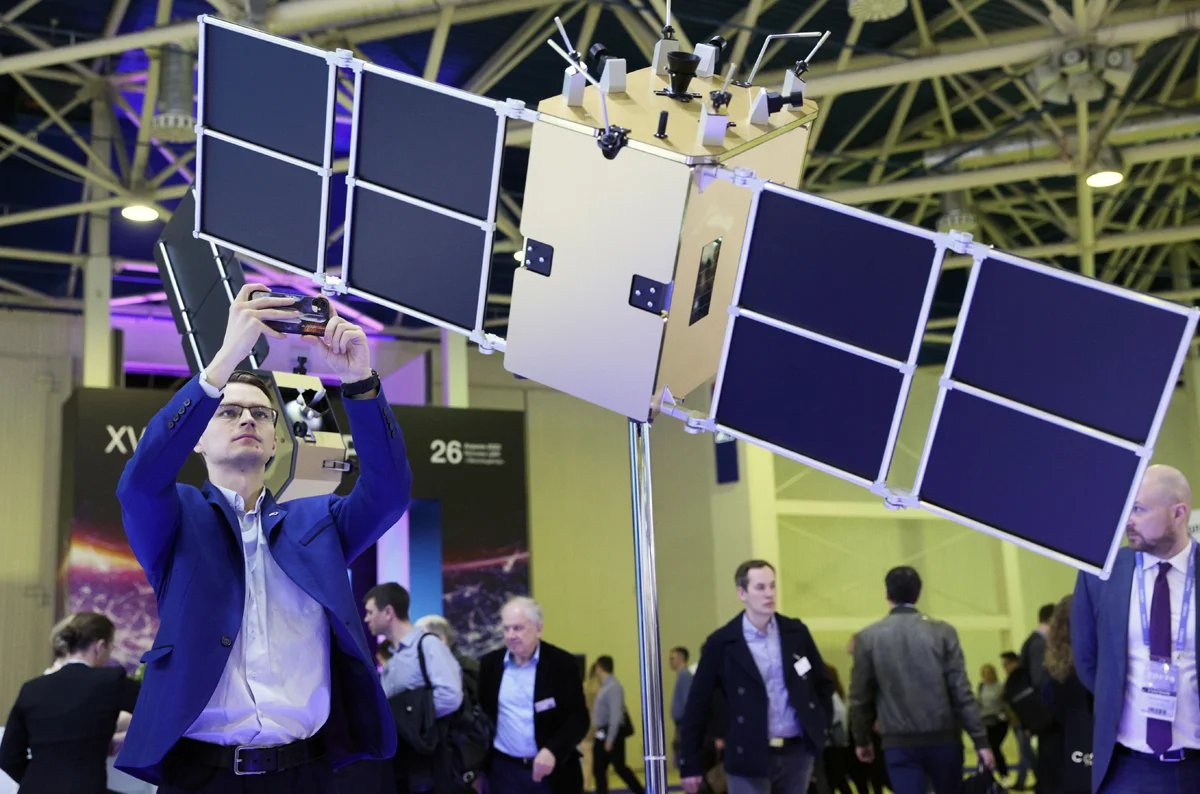
What is Skif-D and why was it launched, despite the obvious problems and the lack of serious state financing? And the secret turned out to be simple : the company "Sond-Holding", which initiated this project, must confirm its application for the allocation of radio frequencies in the International Union of Electric Communications. Under the terms of the MAS, the applicant’s sender must launch at least 10% of the planned satellite group until 2023. A radio transmitter of the desired range is installed on board the Scythian-D, which, according to official press releases, will take flight tests. The satellite itself was made on the basis of the experimental platform, which ISS Reshetnev created for the student’s student “Yubileiny”. That device was still famous for the fact that on board there was a “gravitsapa” for a miserable change in the satellite orbit, which, of course, did not work.
Judging by the fact that Skif-D is launched in a single copy, there are no more than nine in total Scythians. It is also difficult to say when real devices flew, not a demonstrator. The Russian media prepared several reports with the ISS Reshetnev about the development of the demonstrator, but no one and no one mentioned the production of the first serial apparatus.
For other reports, it can be seen that ISS Reshetneva is active in another “spherical” project - “Marathon IoT”. A new small satellite platform weighing about 50 kg is designed, and the technology of stream assembly is determined. Probably, it was precisely this work that the head of Roscosmos recently spoke, when he announced the goal of collecting a satellite per day. At the same time, the Marathon has the same problems as the Scythian has a lack of money, difficulties with suppliers of components.
As of 2022, it is planned to bring 132 satellites into orbit by 2030, starting launches since 2025, i.e. About 26 pieces per year. By the way, first of all, thanks to them, 162 devices of the entire “sphere” are recruited.
The observation component of the "sphere" is even greater uncertainty. Apparently, for many projects, the manufacturer of various families of satellites is not even defined. It is more or less clear only with the “review”, which Gazprom has long been planning to engage in, but it is difficult to say whether its satellite-building production is ready for this work. It is known that Thales was engaged in the equipment of the plant, and she did not manage to finish work until February 2022.
Thus, the real “sphere” has not yet flew anywhere-due to the lack of market prospects, sanctions and underfunding. Most likely, the real “sphere”, and not a blow, will begin with ordinary geostationary “expresses” for the Ministry of Construction. But they will have to wait for them for several more years.