
Translated material
How contagious freedom is!
The story of one presidential decree
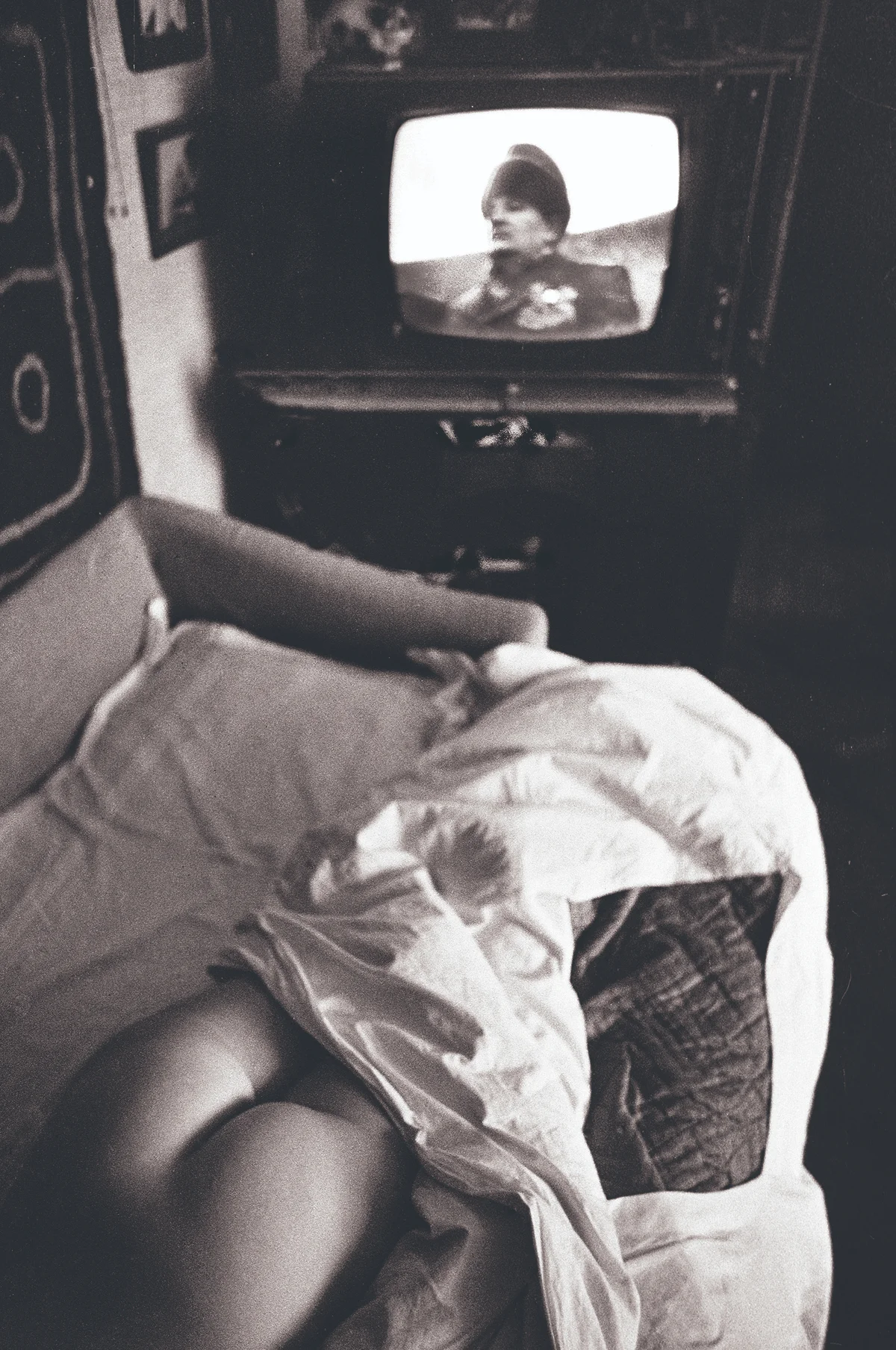
- I will spend the night. Do not go home in this form. - She passed me, undressed, lay down and fell asleep.
I would not open the door to her, but just did not have time to close. She, apparently, was waiting in the dark corner of the corridor. I can endure not all the tipsy women. This one was unbearable. She just had not paid attention to my words about the need to finish experience for a long time. “I won’t leave,” she said, smearing mascara in her face. - I won’t leave at all, but now I’ll go outside. And I, fearing that something would happen to her, drunk, stopped her and talked. She did not listen and giggled. There was no desire or strength to educate her now. The woman was meaningless, it was early to get up early.
In the afternoon, the editorial office was met by the theater critic Lida Polskaya, the wife of my friend Julik Krelin, a writer and a doctor, and said, as if continuing the conversation:
- Well, of course, you will be tomorrow at the Yaroslavl station.
What we were talking about-I did not know yet, but the image of a person who happens where something is happening did not allow me to ask when I should be there and whom to meet. But I guessed and began to call those who could know what kind of train Sakharov came.
Moreover, he did not name the name, fearing that they were listening to the phone, and the conversation could be applied [...] to the interlocutor.
Oh fear, you are the world!
They (who is this? The collective organizer of our life. Essentially, the invaders of the conditions) achieved their own-they built into the constitution of a person what he was, alas, predisposed.
Thunder, lightning, hunger, pestilence, God ...
This is a base of fear. The modern story of my country showed that the durable leaders have achieved the forces of the Bolshevik Paranoidal idea of the Bolshevik paranoid. They expanded the assortment of five feelings giving her: “vision, hearing, touch, smell, taste”, the sixth - “fear”.
He was tested by everyone, including the creators. There were, however, not devoid of him, but overcoming him. These people, capable of awareness, and therefore moral resistance, were the worst enemies, because fear did not force them to love power. And the authorities only want love to be humiliated by her.
- Borya! - I call Boris Messerer, believing that he and Bella can answer my question. “You don't know when an academician comes tomorrow?”
- Academician in a high moral sense?
- Yes.
- Don't know! - says Borya and hangs the phone.
Overcoming the sixth feeling, I am recruiting the reference service of the station and catch myself thinking that I want to change my voice, I ask when trains from Gorky come.
At three in the morning, at five and seven. Something like that.
It is necessary to take the Canon Fi camera, check the film, the portable Sony tape recorder, meet and sleep. And then this gift.
At night I get up without lighting light. I drink coffee, dress and hear an offended voice:
- Where are you? To the wife? Ha ha. Give the hello.
There are no meters at the station. Upon learning that the SV-Wagon is in a seven-hour train, I return home.
“Have you let you go? .. Do not count on me either.” Do not be afraid, go to bed ...
I put the alarm clock at six, and when I drove to the garden, I saw a car with diplomatic numbers traveling towards the Yaroslavl station.
Guessed.
On the benches in uncomfortable poses, fellow citizens slept, to the extreme, the pure janitor stood on the broom with a whore. Seeing me with a photosuma, he, until strange, informedly, but waved his hand in the direction of the platform, standing separately beyond the paths, and said:
- Run there. You are already there.
There were no ours on the platform. Some foreign journalists with tape recorders, photo and video cameras. Having crossed the paths, I ran to the place where the correspondents drove, and raised my hands - to run to the stairs was short. From solidarity, my colleagues pulled me into the platform, and I saw the background - in the shade ... If it were an opera, then these characters equipped with amateur cameras could be called chorus.
No one has come yet, and they already shot those who were just about to shoot.
Colleagues carefully looked at me. It was obvious that they did not know from which car to wait for the appearance.
Knowing that in this train a “sleeping car” with double compartment in the middle of the composition, I ran along the platform. I felt like a leader and was sure that no one would overtake me.
The first of the wagon was Bonner. Fotovski sparkled.
- What are you spending a film on me? - Elena Georgievna said in her friendly manner. - Now Sakharov will come out, and remove it.
And after a few seconds, Andrei Dmitrievich appeared in the door of the car in a slightly rickety bright Tsigaika Ushaka.
Blitz and incidentally light illuminated Sakharov. The screams were heard on the platform: “What are you crowded? Let me go! " Through the station noise, Sakharov gave the first interview after the link.
I took it off and recorded his words on the tape recorder. So in terms of meaning and letter, for sure, but without Sakharov recordings.
He said that they installed a phone that was not, and they realized that there would be a conversation.
Gorbachev called Gorky on this phone and said that Andrei Dmitrievich and Bonn E R (“He incorrectly uttered my wife’s last name”) may return to Moscow.
Sakharov thanked Mikhail Sergeyevich and immediately said that he was very worried about the fate of political prisoners. That recently, Anatoly Marchenko, a wonderful person and fighter for human rights, died in imprisonment.
For our story, this detail is so important that I omit all the details of a flying conversation at the station and the guide of the four, which the artist Boris Birger met at the Zhiguli.
I omit the details of my appearance in apartment No. 68 on Chkalov Street (calculated on a burned mailbox), the door of which was, however, was not locked. I presented to Elena Georgievna a photograph of Sakharov, shot by me on March 3, 70, with an autograph, and miraculously survived in the wanderings of newspapers. She, seeing the date written by the academician’s hand, said that she met Sakharov in the same year, no later.
In Sakharovsky, we sat and agreed with Andrei Dmitrievich about an interview for the Literary Newspaper.
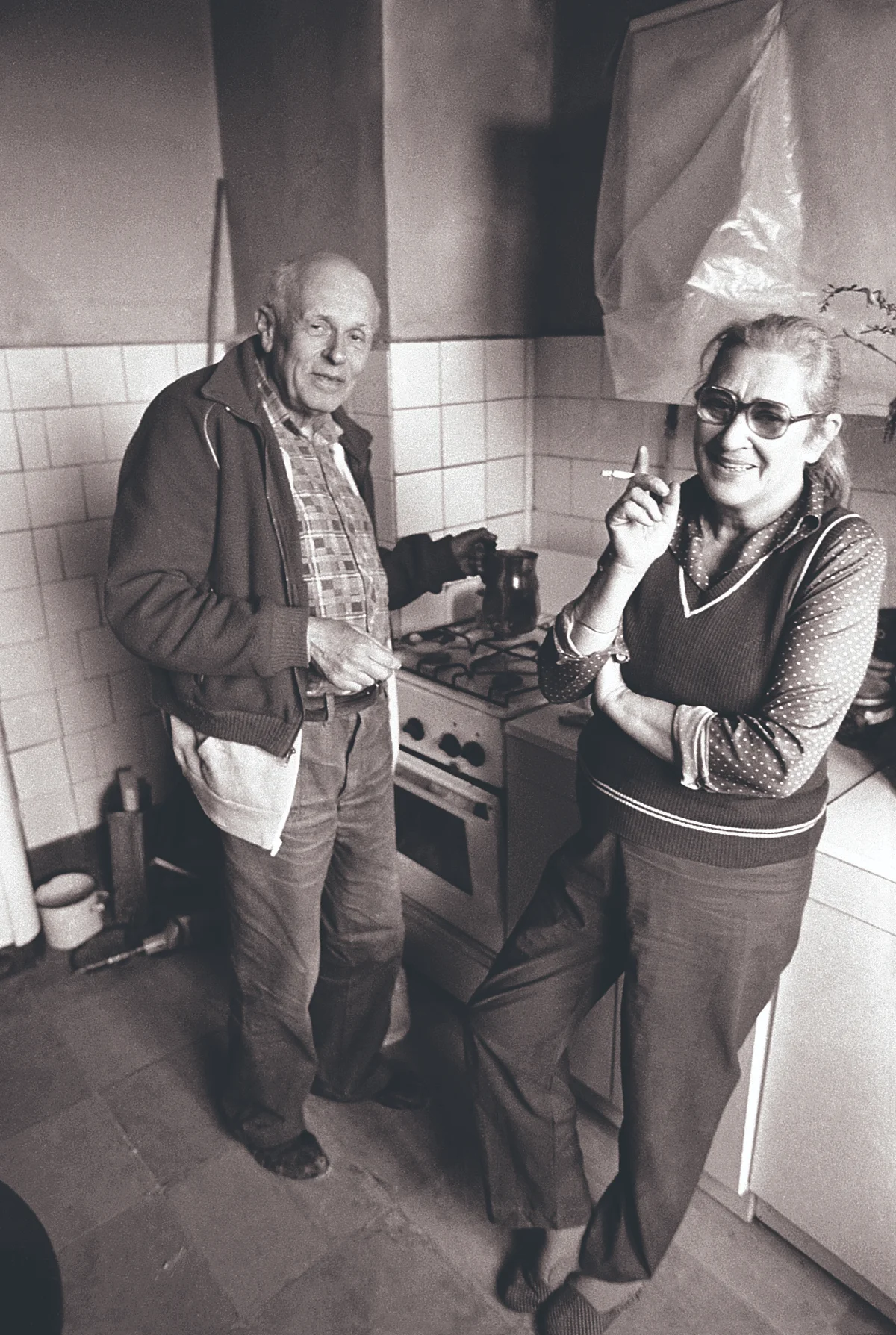
Since his arrival in Moscow was covered only by foreign publications, I wanted to remove Sakharov and write a large essay called “Academician Citizen”.
Andrei Dmitrievich agreed to help me, but said that it would be nice to make an interview about which he was asked by the editor of the LG science department Oleg Moroz - he was interested in the scientific side of the modern life of the academician. "And you would take up socio-political."
I took his photographs without anyone's participation. He liked it. However, of those who shot in the 70th year, he also liked something. During courtship for Bonner, he sent her one of these cards, which Elena Georgievna showed her Leningrad friend.
“A beautiful man,” a friend wrote. "But isn't it a drunk?" No!
The interview was soon ready, but the newspaper reacted to the idea of publication with restraint. All means of information, as if he were not, were silent about the academician.
Meanwhile, in an interview, there was not only cognitive information about this outstanding scientist and citizen, but also several of his proposals, and one, although in a delicate form (himself recorded), an unconditional requirement: to free all political prisoners.
I wrote that the newspaper reacted to the idea of the publication “restrained”. This is euphemism: there was a complete and final “baking”.
We sat in the kitchen: Sakharov and I, who honestly told about the situation in the newspaper.
- In fact, the publication is not particularly important to me. I wanted what I said, read Mikhail Sergeyevich Gorbachev and Alexander Nikolaevich Yakovlev (secretary of the Central Committee for Propaganda, member of the Politburo).
- Yeah!
- You understand why?
- Yes, I was at the station. And I heard your words.
God! I went to meet Sakharov, and the lady stayed at home. Two weeks have passed. Probably, you can already return.
Having examined the dark corner of the corridor, I carefully entered the house. On the table lay a note:
"Do not pursue me ... You are unlikely to get borrowed." (So wrote!)
Well, no so no! I sat down on the phone and dialed the number of my good comrade, an ironic clever man, an educated, intelligent person who writes a perfectly writing person (everything is true) - Andrei Serafimovich Grachev - at that moment the deputy head of the International Department of the Central Committee of our completely charming communist party.
- Take the text of the interview and come.
Now there is a fence, and hell will you go to the entrance, and in those days you could get to the door.
For myself, I determined how to dress correctly. The ceremonial dark blue quilted jacket bought in Ivankov, the nearest district center to Chernobyl. And on it - the medal "Veteran of Labor", on the reverse of which is a cast unreasonable lies: "For long, conscientious work."
I presented the documents for it to the artist Boris Zhutovsky - look on Facebook* and you will see that this is a bronze saying about him.
So: a quilted jacket, a medal and a scarf on our part, and a Merlushkoy ears, a gray carpel overcoat with a gray Merlushkin collar and, by golly, varnish boots-with their side.
And they do not turn in their brains to pass into the lair of workers' and peasants initially a party of a kind of worn bourgeois.
But, as Uncle Vasya Tsygankov said, the front driver of Studebekker: "The order beats the order." True, it was about the working class during the Novocherkassky events, but we are now in a good way.
We missed the same in the Central Committee.
Andrei takes the text, reads.
This is an unpleasant moment, and I, since the interviews are large, and it is attentive, I go to their buffet to ask about the assortment and prices and find them very acceptable compared to the “external” product.
I can withstand the queue of two people and tell the saleswoman: give me these tanned sausages, 400 grams. She is confused - she sees: not her own, but after me - two of my own, and I’m not going to take a deal with my conscience.
- Four hundred grams?
- Four hundred grams!
“This is where Stirlitz pierced,” she thinks, and still wears 400 grams.
She has a spiritual victory, I have sausages.
Andrey puts the text in the envelope.
- What would Andrei Dmitrievich want?
- So that the text is read by MS and AN.
- And you?
- It would be nice to print.
Then we recall common friends and sons who were friends.
- I'll call you.
Almost two years will pass, and Grachev will help me publish after the departure of Andrei Dmitrievich Sakharovsky, to participate in the intrigue, however, only exalted the defendants.
- Come! - He calls in a couple of days.
I arrived. On the table lay a text without blots.
- Two news, as in a joke.
- Do not print?
- No. MS and so it is not easy with the return of Andrei Dmitrievich. Let them calm down.
- Now good, Andryusha!
- They read, as the academician asked, both were Mikhail Sergeyevich and Alexander Nikolaevich.
- AND?..
- Now January. Tell Sakharov that in February his request will be fulfilled.
We hugged Andryusha. (After many years it turned out to be hugged and Gorbachev!)
On February 2, 1987, a decree of the Supreme Soviet of the USSR was issued on pardon and liberation from Soviet camps and prisons of 140 prisoners of conscience, and the same amount was freed a little later.
280 people - approximately coincided with the number of prisoners known in dissident circles.
This was the first and, alas, the only case when the authorities issued its political opponents without fear.
* * *
I walked from Sakharov to pure ponds and thought what an independent fate of an unnecessary interview.
Approaching the door, I, with a lateral vision, seeing the movement in the darkness of the corridor, turned back and ran down two steps.
- And don't try to look for me! - I heard after him. “It's over between us!”
How contagious freedom is!