
Translated material
How the United States intends to resist Russia and China. What are the new directive documents of the Pentagon about
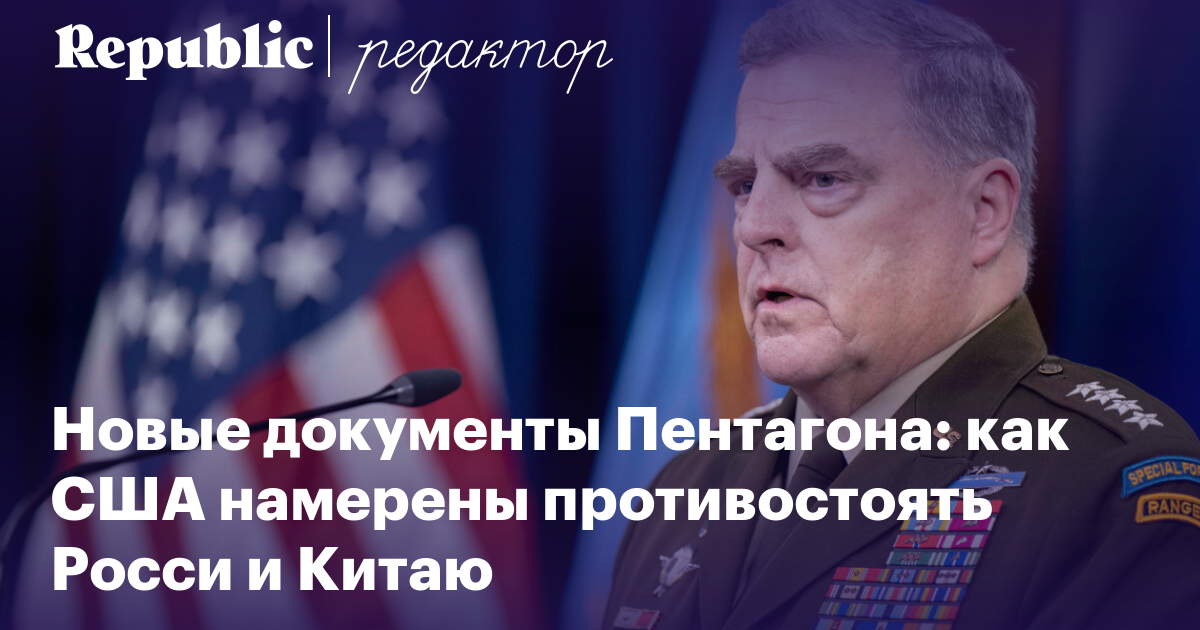
The assertion that the world has entered during the new Cold War, which had recently caused fierce disputes, today looks like a banality on the teeth. However, it seems that people involved in military planning in the USA cannot yet adapt a strategy to new cruel realities.
A bunch of cliches?
That is why the publication in mid -October with one file containing all the Directive Pentagon documents (National Defense Strategy, Nuclear Policy Review, “Restless Defense Review”) should have attracted the interest of specialists. Moreover, with the publication of a defense strategy and nuclear review, the Biden administration was great late. According to the secrets of these doctrinal documents established in the last thirty years after the arrival of the new President, about a year after the arrival of the new president, they are sent to Congress along with the Pentagon budget draft. Almost simultaneously, their open versions were published. However, in this March, when all these documents entered the Capitol, their unexpected options were not published. The explanation was quite logical: Russia began a special military operation in Ukraine, which radically changed the entire strategic situation, and this required the introduction of radical changes to the military strategy, which, in theory, was supposed to somehow be reflected in the Pentagon doctrinal documents.
Indeed, the defense strategy gives a completely realistic description of the strategic situation: “By the 2030s, the United States will be faced with the two largest nuclear powers as strategic competitors and potential opponents for the first time in their history.” At the same time, China is called a “impending challenge”, and Russia is a “acute threat”, which, according to Pentagon analysts, is evidenced by the war with Ukraine and “rattling” nuclear weapons. I must say that if the US defense strategy speaks quite carefully to the PRC, then characterizing Russia, derogatory words do not regret. When compared with previous directive documents, then a change in priorities is more than obvious. China is commemorated in defense strategy more than 70 times, Russia is more than fifty. Threats from North Korea, Iran, extremist and terrorist organizations, which were considered the main ones in the still doctrinal documents of Barack Obama, are now clearly faded into the background.
Thus, it is quite openly admitted that the largest military power was in an extremely unpleasant strategic situation - it is now opposed simultaneously by the second and third on the list of military powers. It would be reasonable to assume that the authors of the new doctrines will state without revealing military secrets, how exactly they intend to withstand threats on two fronts at once. But nothing of the kind in published texts is found at all. And here I cannot disagree with the annoyed comments of American military analysts. The mildest of these assessments can be considered the words of Fred Kaplan, a famous journalist who writes about a military strategy who called a nuclear review of a “bunch of cliches”. This applies to the defense strategy to an even greater extent.
Pentagon’s directive documents are anything, but not clearly formulated indications of how the real military construction of the United States should be held in a fundamentally new environment. Obviously, American strategists were not capable of today (I don’t know what will happen tomorrow) to give a response to the challenge of a new Cold War. In order to disguise this, they, as experienced bureaucrats, have threw a huge number of quasi -theoretical concepts and terms, which, using abstruse constructions, describe long -known concepts.
So, the basis of defense is a certain “complex deterrence”. In fact, this is nothing more than an appeal or recommendation (such in a huge quantity is contained in Russian doctrinal documents) to act in all areas and at all theaters of future conflicts, and without failures to cooperate with other government institutions of the United States, as well as with allies and partners in the hope of strengthening numerous options for containing enemy aggression. “Comprehensive deterrence means the use of all the tools available to the ministry in close cooperation with our colleagues in the US government, as well as with allies and partners, to guarantee that potential opponents understand all the recklessness of aggression,” wrote Minister of Defense Lloyd Austin in the preface to the strategy.
Subscribe to read the whole
Make a subscription Redefine.media to read Republic
Subscribe [you can pay for a Russian or foreign card. The subscription is extended automatically. You can unsubscribe at any time.]
Where are the money subscribers going