
Translated material
Kurt Vonnegutu - 100 years
His "Milia No. 5" is one of the main anti -war novels of the 20th century. Why is it so difficult to read today?

Kurt Vonneguta - 100 years. The most important romance in the work of the American writer “Brotherhood No. 5, or the Crusade of Children” was released in 1969, almost a quarter of a century after the end of the Second World War, in which Vonneguten himself participated. This temporary distance explains the success of the novel (get out in the 1940s, the book would have caused anything but irritation), and why it is so difficult to read today-during the war in Ukraine. Literary critic Galina Yuzefovich tells why the key work of the American classic is an ideal anti -war novel for peacetime.
The army career of Kurt Vonnegut was short and, in general, inglorious. Having got to the front in December 1944, he immediately ended up in the thick of the Battle of Arden , where, after short wandering in the snowy forest in search of an unknown American battery, he ran into a German patrol. Together with several dozens of prisoners of war, he survived during the bombing of Dresden in February 1945, and after the victory over Germany was liberated and returned to the United States. The only injury received by Vonnegut was a slight frostbite; He himself, according to his own assurances, did not kill anyone or even wounded anyone.
For all its brevity, military experience had a decisive influence on the whole subsequent life and views of Vonnegut, and he began to take his first attempts to put him in a literary form, barely returning home. Nevertheless, the “massacre No. 5, or the crusade of children” - a novel based on the memories of days at the front and months in captivity was completed and saw the light only in 1969.
Almost a quarter -century gap between the end of the war and the release of the book can hardly be considered the result of exclusively writing procrastination - obviously, the reason is different. All these years, Vonnegut was looking for intonation, a way to talk about why there were simply no words in the ordinary language.
Kurt Vonnegut’s novel is usually called anti -war, and in his case this vague concept gains extreme specificity and uniqueness. Unlike many other texts from this category, “Milia No. 5” actually denies the idea of war in principle - without amendments and discounts on “fair”, “heroic”, “defensive” or, for example, “forced” its character. The war, according to Vonnegut, is not an excuse, there are no right and guilty in it, it dehumanizes both whole nations and each person separately. And those who still participate in the war can only excuse the complete absence of enthusiasm: cowardice in the eyes of the writer is noticeably better than heroism, and cowardice in ethical sense greatly wins with courage. It is no coincidence that the most repulsive heroes of the novel part-time are the most brutal-vinational, and the protagonist, the absurd and peaceful nonsense of Billy Pilgrim, is most likely sympathetic to the author, and with him and the reader.
The central place in Boyne No. 5 is occupied by the destructive bombardment of Dresden - an event that, from a practical point of view, had no sense. By the beginning of 1945, the outcome of the war was predetermined, and the destruction of the German cities by aviation of the Allies (according to various sources, as a result of the bombing died from half a million to a million civilians) nothing more than a fair revenge of the “sin” people. However, the principle of indistinguishable retaliation casts into question the moral case of the punishing and, in some symbolic sense, equates the executioner and the victim - it is on this aspect that the emphasis does Kurt Vonnegut in his novel.
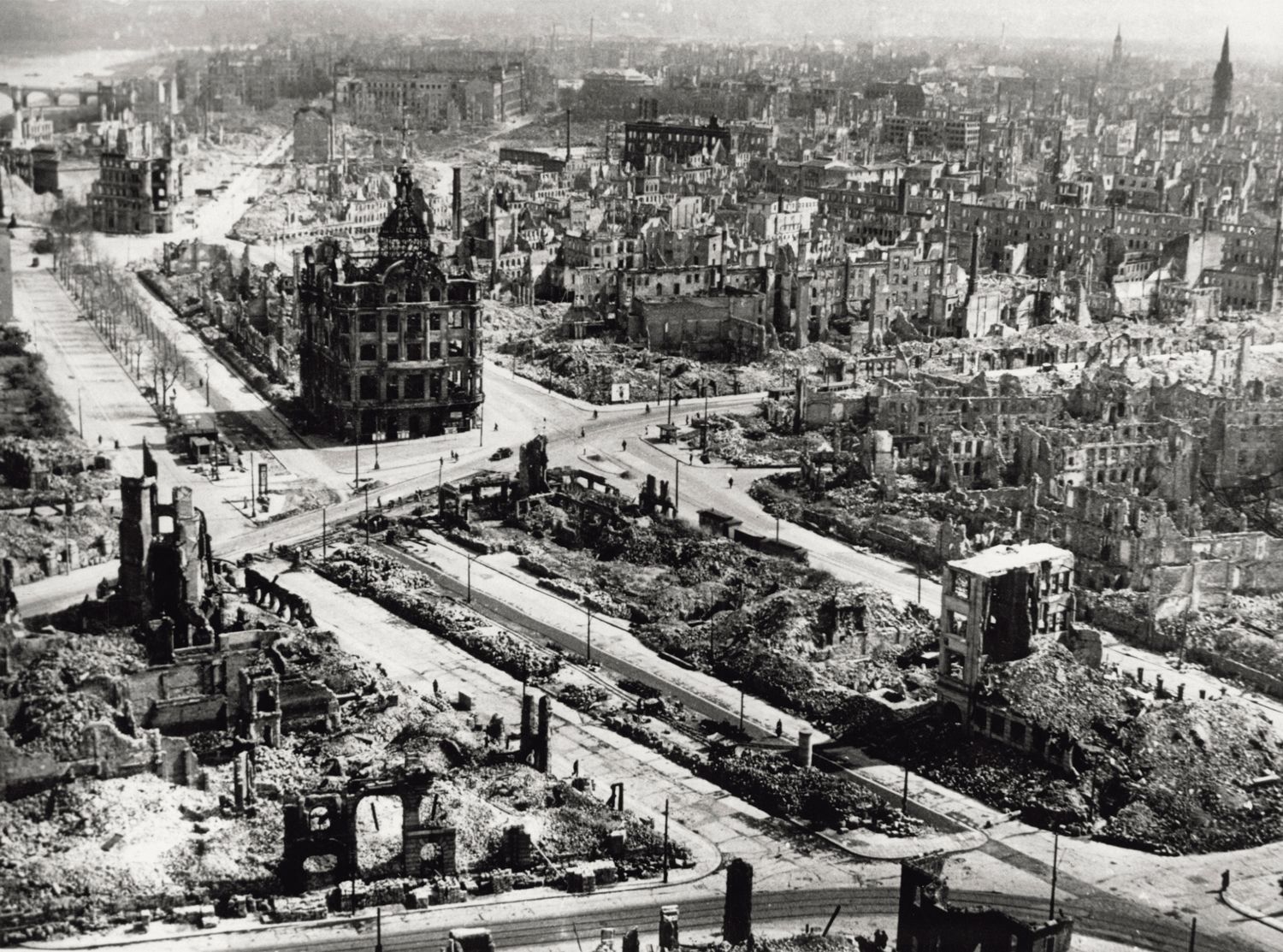

The German writer V. M. Zebald, born in 1944, at the height of those very bombing, in his famous essay “Airy War and Literature” so comprehends the events of this terrible time: “The air war of bomber aircraft was a war in a pure, unmarked form. Its development, contrary to any reason, shows that the victims of the war ... is not the essence of the sacrifice brought in the way to any goal, they are literally this path and this goal. " Probably, such a formula, clearly demonstrating the absurd immorality of any war, would like Vonnegut, who called for "in no case do not take part in the massacre and, having heard about the beating of enemies, do not experience either joy or satisfaction."
The publication of Brillny No. 5 coincided with the highest rise in the youth movement against the war in Vietnam, and this circumstance largely predetermined its success. Moreover, the description of post -traumatic syndrome and a dissociative personality disorder proposed by the writer (episodes in which the hero jumps from one moment of his own life to another is customary to interpret as an element of fantasy, but if desired, you can see a clinical picture of mental illness) coincided with the nascent mass interest in psychology - and this also contributed to the popularity of the novel. From the writer's presenter, Vonnegut at once turned into a last star of the first magnitude.
Criticism for the most part accepted the book favorably, but quite quickly it had irreconcilable opponents. Some of the claims they put forward from the standpoint of today do not look too significant. Someone was outraged by the abundance of obsceneity, someone sexy scenes (in the canonical Russian translation of Rita Rait-Kovaleva, by the way, almost disappeared), someone-the mention of the victims of the Nazism of homosexuals, and someone completely saw in the novel a mockery of Christianity.
However, there are things, just like that it will not work out, and the first in their row is the accusation of the passivity of the author’s position and moral relativism. According to many, showing the moral ambiguity of the allies in Dresden and the abstract horror of the war as such, Vonnig, thereby depreciated the feat of people who saved the world from Hitler, put the right and guilty on one board. The unwillingness of the writer could take someone’s side as a indifference of good and evil. The denial of free will and the idea of the predetermination of everything that is happening with a person (the position, resigned in Billy Pilgrim, allegedly abducted by aliens) was read as a refusal to combat the forces of darkness. Vonnegut was reproached for anti -Semitism, justification of Nazism, insulting the feelings of front -line soldiers, and these claims can hardly be called completely absurd.
However, in 1969, the severity of public indignation was moderate: most of the wounds inflicted by the Second World War managed to drag on to the novel and the pacifist gaze of Vonnegut turned out to be tangled in the mood of most readers. But in 1945, when the writer only visited the idea of writing about Dresden, the reaction to this kind of statement would probably be completely different: the world, who had just survived the most terrible war in its history, was definitely not ready for absolute humanism, reconciliation and alienation. And the writer himself could hardly see the recently experienced from such an angle.
Truly uncompromising anti-war texts require a distance-at the moment when the memory of what happened is still fresh, they cause nothing but irritation. Pacifism is a luxury and privilege of peacetime, but for now the blood flows, the top takes a completely different rhetoric and a way of thinking, and it is impossible to resist this. That is why the “massacre No. 5”, a year ago it seemed unfadingly relevant, today looks like a message from a completely different, alien to us and outrageously happy reality. I would like to believe that we will live until the day when the great novel of Vonnegut can again be read as something related to us. It is bitter to think that the last time it took almost 25 years.
Galina Yuzefovich