
Translated material
In France, Iranian Meadran Karimi Nasseri died, who lived at the Paris airport for 18 years
On his story, the film Steven Spielberg "Terminal" is based
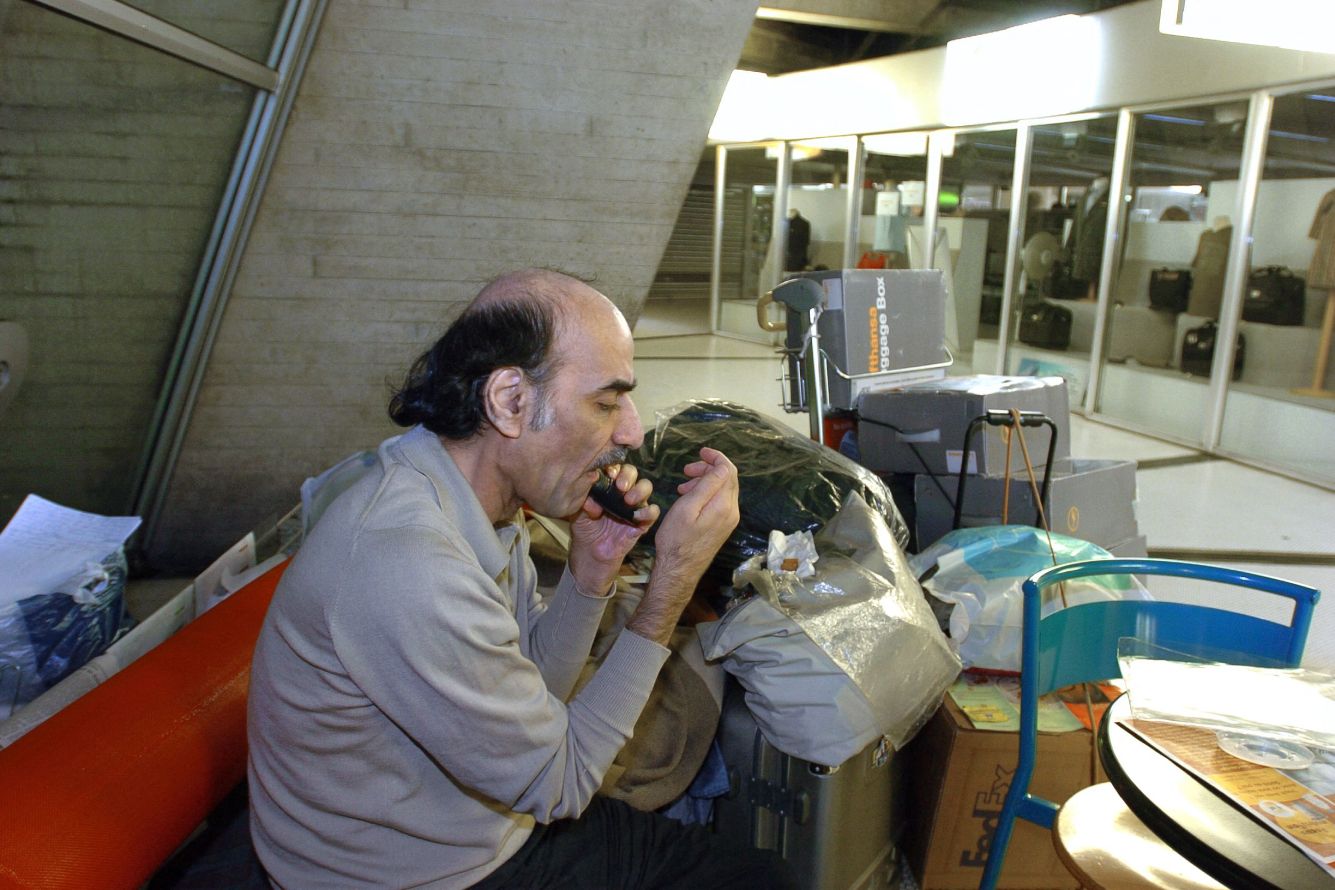
On November 12, 77-year-old Meadran Karimi Nasseri, who lived at this airport for 18 years-from August 1988 to July 2006, died at the Paris Airport named after Charles de Gaulle. The Guardian, citing representatives of the airport, writes that around noon Nasseri had a heart attack. Arriving doctors could not save him.
Meadran Karimi Nasseri was born in Iran in 1945 in the family of a doctor. After the death of his father, 23-year-old Nasseri found out that his biological mother was a Scottish nurse. Nasseri's adoptive mother tried to drive him out of the house, but he decided through the court to defend his right to inherit. As a result, the parties agreed that Nasseri would leave Iran, and the stepmother would pay for his studies at the university. After some time, he went to the UK.
Nasseri settled in the city of Bradford and signed up for the history of Yugoslavia at a local university. However, three years later, his scholarship unexpectedly stopped. After several months of unsuccessful attempts to contact his family, he decided to return to Iran to find out the causes of what happened.
He was immediately arrested in Tehran. As he was later explained, for participation in protests against Mohammed Reza Pahlevi, the last Shah of Iran, in which Nasseri took part in the UK. His stepmother helped him to leave prison, but on the condition that he would never return to the country again.
The next few years, Nasseri lived in the UK, trying to get asylum in one of the European countries. In 1981, Belgium provided him with refugee status. Having lived for some time in Brussels, he accumulated enough money for a trip to Glasgow, where he hoped to find his biological mother.
Nasseri went to the UK by ferry, but on the way he lost all his documents. At first he said that his suitcase with documents was stolen, and later claimed that he sent documents by mail to Brussels. Employees of the British Customs Service did not let Nesseri into the country and sent back to Belgium. He was not accepted there either and returned to the UK.
Then Nasseri was sent to France for an unknown reason, where he was arrested for four months to try to illegally cross the border. After liberation, he was given 48 hours to leave the country. He went to Charles de Gaulle Airport in the hope that on an airplane he would be able to get to the UK. However, he was returned from London to Paris, where he was again arrested for trying to illegally get into the country.
Six months later, Nasseri released. Not knowing what to do next, he returned to the Paris airport, where he lived until 2006. At first, the airport employees tried to get rid of it, but in 1992 the French court ruled that since he entered the country legally, he could not be expelled from the airport. He also could not leave the building, since he had no permission to enter France.
After the journalists drew attention to the history of Nasseri, the Belgian authorities invited him to return to Brussels, but he refused, explaining that he wanted to get to the UK, as he planned earlier. Later, France and Belgium offered him citizenship, but he also refused them, since the documents indicated his Iranian origin and the name given to him at birth. At that moment, he insisted that he was a citizen of Great Britain, born in Sweden, and his name is Sir Alfred Methran.
In 2004, the film “Terminal” was released, which was based on the history of Nasseri. The picture was shot by Stephen Spielberg, and Tom Hanks played the main role in it.
In 2006, Nasseri got to the hospital, having discharged from which he lived at the hotel for some time next to the airport for money received from the sale of rights to his story for the film. Then he moved to the shelter for the homeless. In the fall of 2022, he returned to the airport, where he lived for about two months until his death. According to his bank account, according to the BBC, law enforcement officers discovered several thousand euros.