
Translated material
Drive corpses back and forth
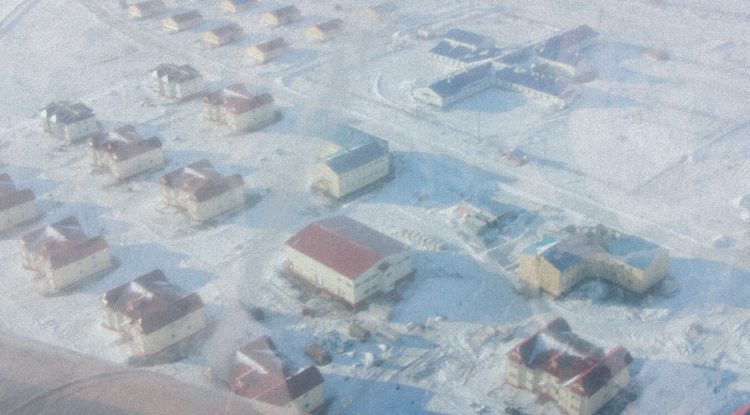
In Kamchatka, a funeral is waiting for months. Sometimes the bodies have to be stored under the snow and protect from animals
According to the law in Russia, the bodies of deceased people, if they were not at that moment in the hospital, must go through the forensic examination before the funeral. In large cities, this rarely becomes a problem, but residents of Kamchatka villages have been complaining about difficulties with burials for several years: the bodies should be taken to district centers if there is no forensic center in the village. They pay close to the dead for this - sometimes the amount reaches 300 thousand rubles for one direction transportation. "Cold" tells how the bodies lie in the sheds and under the snow in Kamchatka and what local authorities think about it.
In order not to miss the main materials of the "cold", subscribe to our Instagram and telegram .
The wind blew, the sheets opened
Natalya Kechgina has been living in Petropavlovsk-Kamchatsky for a year and alone brings up an 11-year-old child with disabilities. She moved to the city from her native village of Manila. There, two years ago, her father died, and two days later - his brother hanged himself. It is difficult to remember this Kecgina, especially when it comes to burial. “Their bodies were going to be sent to Tilichi for examination,” Kechgina recalls. “I wanted to abandon the autopsy, but the investigators sent me to three letters and said that it was necessary to bring [the body].”
In Russia, after death, the body should not be taken to the morgue in the hospital: there, a pathologist establishes the cause of death. By law, you can refuse to open, but in some cases it is mandatory : for example, if you suspect violent death, death from infection or due to intolerance to the drugs. After inspection and autopsy, the relatives of the deceased receive a death certificate. This document must be changed to a stamp certificate, without which a person will not be able to legally bury.
The village for two thousand people Tilichi - the administrative center of the Olyutor district of Kamchatka. Send two bodies from beckoning there cost 20 thousand rubles.
It’s not easy to earn a living in manila, as Kechgina says. The average salary here is 35 thousand rubles. In the village where about 700 people live, there are approximately 12 stores - one seller each in each. The prices in them are high - according to Kecgina, residents often borrow products. Ice cream is considered a luxury, and a jacket can cost 15 thousand rubles. Men are held in a stoker or earned by driver - they transport goods to remote areas of the north. When her relatives died, Natalya Kechgina did not work anywhere, and there were no relatives who could help. In 2017, her mother died, and six months later a sister died (both due to heart problems). The villagers who collected the desired amount helped Kechgin.
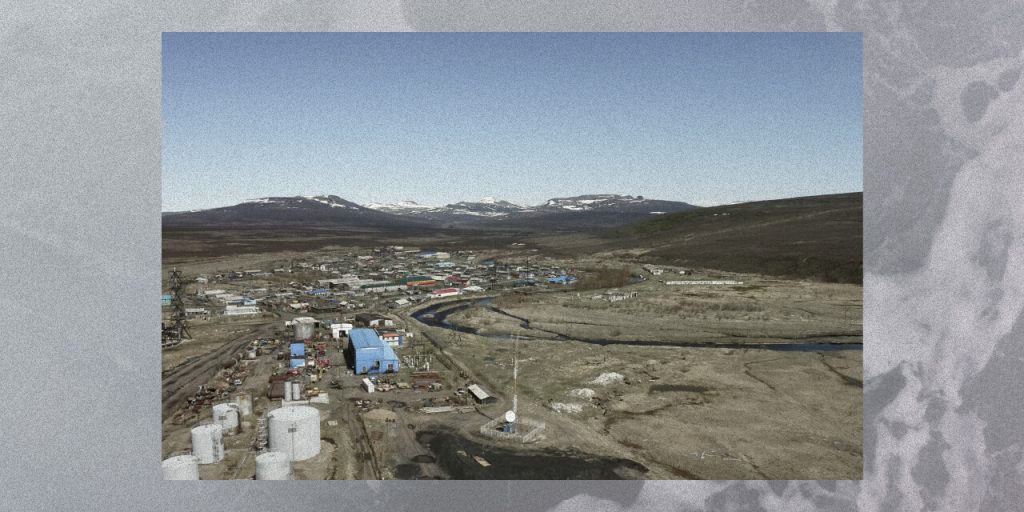
When Kechgin herself reached Tilichiki, what she saw was shocked. The bodies of the dead after the examination were left on the street. “I did not even begin to put clothes on the bodies, just put it next to them. The wind blew, the sheets opened, and it was clear that the skin was limp, as if a person was in the water for a long time, and very red because the bodies were not in the refrigerator, ”she recalls.
Kechgina's family is from Koryaks, this is one of the indigenous peoples of Kamchatka. According to Koryatskoye, for a funeral, men are made a cedar coffin, and Koryak must be buried where he was born. The rules of the funeral rite are carefully spelled out: the Koryaks are burned by the dead, and then they treat everyone with tea near a small bonfire near the main one. After burning, the fireplace is visited after a few days, then in a year.
Kechgina was going to bury her father near the banks of the Penzhina River, and her brother - in the tundra near Manil. But it was not possible to do this: they explained Kechgina that for the transportation of bodies from Tilichik to Manil, it was necessary to pay another 20 thousand - and they will be brought in zinc coffins, for each of which they will have to be given another 50 thousand. She could not collect such money even with the help of fellow villagers. I had to bury my relatives away from the house. “It was very difficult for me,” Kechgina recalls. - I sat without money, because in the village you can’t earn normally, one was engaged in funeral. Everything was very crippled: both the loss, and it was difficult with finances. ”
According to her, the local authorities "never thought" about the inhabitants of remote villages like manil and their problems. They remembered them only with the start of mobilization: from the neighboring village of Kamensky, they took, according to her, "at least four."
They raised everyone on their ears
On May 6, 2021, a 41-year-old man died in the village of Slutny ( at the request of relatives, the “cold” does not indicate the cause of death ). The sister of the deceased Tatyana Zhilina ( the name and surname were changed at her request ) wanted to bury him herself, but the investigating authorities did not allow the funeral without opening and examination. It is impossible to do this in a slurry: it was necessary to take the body to the same tilichiki.
The village of Slautnoye is located in the far north of the Kamchatka Territory. According to 2021, less than 300 people live in it. It is extremely difficult to get there: in winter you can only get on high -precision technology. Due to the spring flood, the village has flooded more than once. Residents urgently evacuated on helicopters to safe places.
You can transport the body from a slurry to Tilichiki only by helicopter. And if the state sometimes pays for examination, then the costs of the return road (it can cost several hundred thousand rubles), relatives must take on. Zhilina did not have that kind of money: she worked as a cook for 29 thousand rubles a month in the neighboring village of Kamenskoye, 119 kilometers from the alcohol.
The problem has not ended on transporting the body. On May 11, five days after the death of her brother, when his body was still in a slurry, she was told that the refrigerator in the morgue would not be frozen and she was turned off because of this. The head physician, whom Zhilina wrote about what was happening, was not going to resolve the issue, and had to cope on his own: the second brother Zhilina and his friend came to the morgue and fixed the freezer. But there was still no money for the transportation of corpses to Tilchik.
After that, Zhilina and her niece called the government of the region, and then decided to contact the journalists. “After all, we are not doing it differently: if you just come to someone, the problem will not be solved-it is useless. But if you get into the news, the people begin to move, ”says Zhilina.
After the story was made public, the officials began to “offer something”: for example, they stated that they would bring the body from the examination by the post side-but this did not happen. Then the villagers Zhilina began to turn to the authorities, and in the end, "everything went and went." “They raised everyone”: officials, the KMNS association (indigenous peoples of the North).
On May 21, the body of Tatyana’s brother was taken to Tilchiki by helicopter, and a week later they brought back - everything at the expense of the authorities. The next day the deceased was buried, and the family "calmed down a little." It is not easy to recall this period with Zhilina: “In words, I can’t convey what my condition was: every day on the nerves, in anticipation, when I can bury him and exhale.”
According to her, before the occasion with her brother, the fellow villagers “were silent and thought that it was in the order of things”-and now they thank her because they “raised and solved the problem” however, it is still not easy to live and die in a slanting one: for example, there are not enough doctors in the village. “Experts should be in all settlements,” Zhilina says what she proposed to the local authorities. “It would be possible to train someone and send to us in order to conduct an examination here, and not back and forth, to drive corpses.”
Some are waiting for three months
On January 11, 2022, Valentina Dorokhina called from the deaf Kamchatka village of Achayva and reported that her uncle had committed suicide. The body had to be taken to a forensic examination to Tilichiki. “They explained to me that the examination is required, and when I began to find out what and when he was taken, they said that“ a helicopter, but this is not for sure. ” When they return, it is also unknown, because “there is no funds in the budget for this,” says Dorokhina. The next day, she and her brother flew to Achayva themselves.
Achayva - a national village with a population of about 340 people. Basically, reindeer herders live there. It’s hard to get to others from this village: in the spring and autumn, the roads are very blurry from the dirt, and in winter it is necessary to use snowmobiles and all -terrain vehicles. Dear gasoline - the barrel costs about 35 thousand rubles: there will be almost two on the road to Tillechiki for one snowmobile. And the road is dangerous - in bad weather you can get stuck.
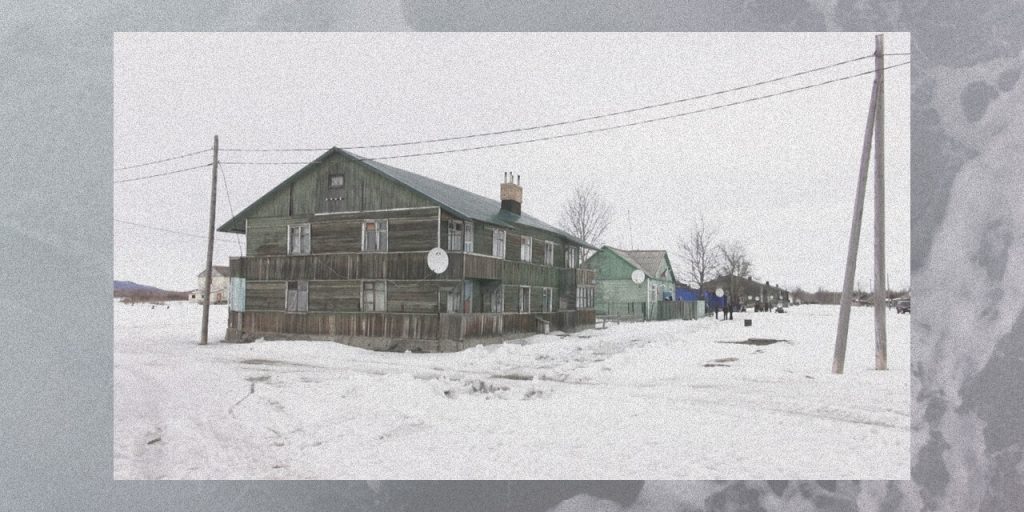
The husband of Dorokhikha at this time was at work in a neighboring village. Together with his brother Dorokhina, they decided to deliver the body to the tilichi on snowmobiles. The district authorities promised: the examination will take two to three days, after which the corpse can be taken home and bury. In reality, the body was returned only a week later. According to Dorokhin, the reasons were called different: he also worked as a pathologist as a surgeon, so he could not conduct an examination, they waited for the body to thaw. According to Dorokhina, the district investigator explained to the family that this is normal: "Some are waiting for three months."
“We were told: either take the body yourself, or wait [while the authorities allocate funds and bring the body home]. It turns out that at this time the corpse will just lie and decompose in the morgue, ”says Dorokhina. Then she contacted the deputy of the Legislative Assembly of the Kamchatka Territory and chairman of the Committee on Social Policy Tatyana Romanova, who is actively fighting for the rights of relatives of the dead, and informed her about the problem. Romanova volunteered to help with fuel for snowmobiles and engine oil.
After the examination, men gave the body that they took in Achayva. The weather at that time deteriorated, and Dorokhina was worried that her brother and her husband could get stuck on the way. On the way, one of the snowmobiles broke down, and the men were forced to get on the second snowmobile along with the corpse to the nearest village of Khailino to buy spare parts there. The path took the path for two days and two hundred liters of gasoline - four barrels only in one direction.
The whole village got up
“The situation with the burials should be resolved at the federal level. We have been fighting for this for a long time, ”Tatyana Romanova tells the“ cold ”. Sometimes, according to her, in anticipation of the examination, the corpses have to be stored in absolutely unsuitable places for this. “There was a case when the reindeer herder shot down,” Romanova recalls. - Relatives kept the body under the snow, and there are beasts in the forest - bears, wolverines: they smell, for them it is food. I had to guard the corpse until it was taken [for examination]. ”
Romanova also knows cases when relatives of the deceased buried relatives without examination. In the summer of 2016, a boy hanged in the village of Kovran. The child’s body began to decompose, and the parents decided to bury it themselves. Two weeks later, investigators flew and dug up the body to take him to forensic expertise. “This is not human. Then the whole village got up, said “Kill us, shoot us,” Romanova recalls. “They stood for two or three hours until they agreed that the helicopter would take the body and immediately after the examination would return it to the village.”
In June 2022, the Governor of Kamchatka Vladimir Solodov proposed creating mobile centers of a pathological examination or simplifying the requirements for it in small settlements. Despite this, according to Romanova, the problem is still relevant. This is confirmed by Zoya Brovenko - the head of Manil, where the father and brother of Natalia Kechgina died. She hopes that the federal authorities will accept some kind of law, so that the "issue finally resolves." Romanova also believes that this will happen, but not immediately: “Now [the federal authorities] are not up to us, but maybe in a few years something will change.”