
Translated material
Sledgehammer justice
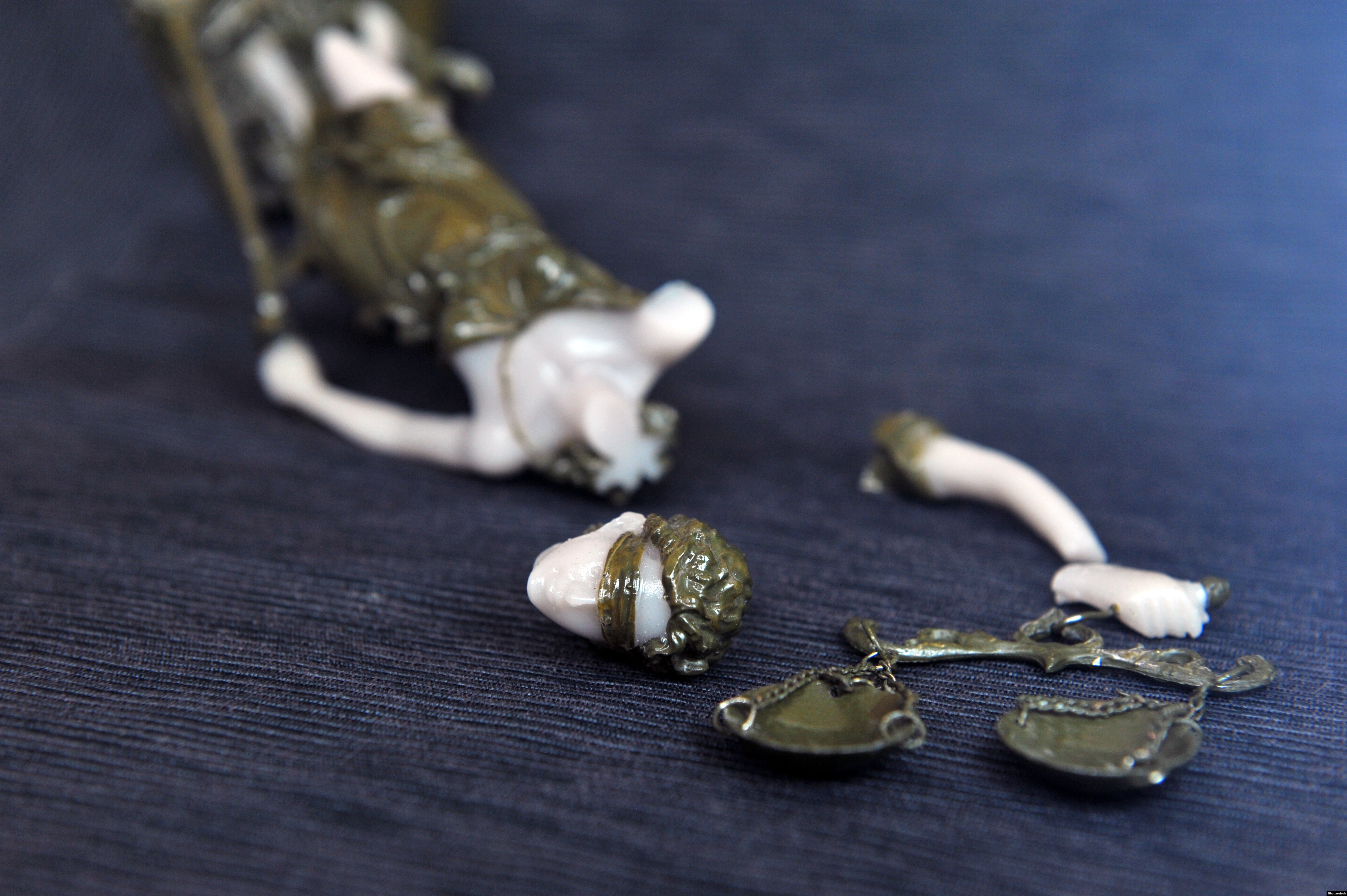
- Why do mercenaries from the Wagner PMC get away with demonstrative murders?
- In Samara, they gave real sentences to police officers who fabricated almost two dozen criminal cases.

width px height px
The URL has been copied to your clipboard
No media source currently available
0:00 0:54:02 Download media fileVideo version of the program
A SLEDGEHAMMER FOR JUSTICE
The Investigative Committee is checking a video depicting the murder of Yevgeny Nuzhin, a former prisoner recruited by the Wagner PMC for the war in Ukraine and, allegedly, voluntarily defected to the Ukrainian Armed Forces. In a video published on Telegram on November 12, Nuzhin, after speaking about the execution being carried out on him, receives blows to the head with a sledgehammer. This is not the first, but perhaps the most famous example of extrajudicial execution of mercenaries from the Wagner PMC over a participant in the war in Ukraine on the Russian side.
With us are lawyer Ilya Novikov and the head of the legal service of the Center for the Protection of Human Rights "Memorial" Natalia Sekretareva .
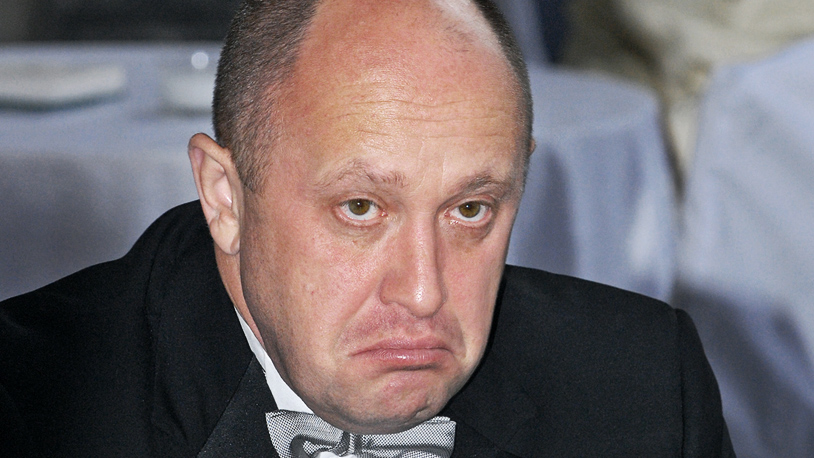
As far as I understand, at first the founder of the Wagner PMC, Yevgeny Prigozhin, commented on a video of a man being killed by a blow to the head with a sledgehammer with the words “a dog’s death is a dog’s death.” But already on Wednesday this week, the text of his statement, allegedly submitted to the Prosecutor General’s Office, began to be distributed on the Internet, where Prigozhin is already asking to check this video and indicates the possible involvement of US intelligence services in its production. Ilya, how can you explain this change in rhetoric?
Ilya Novikov: In 2017, a man was killed in a similar way in Syria - precisely a “Wagnerian”, with a sledgehammer, precisely while being recorded on a video camera, in order to later brag about it. This is practically their signature style. And delving into some of their internal motives, especially Prigozhin’s, why he first said one thing and then another, seems completely unnecessary to me. Well, this is such a structure, such people, such a person.
In 2017, a person was killed in a similar way in Syria - precisely a “Wagnerite”, with a sledgehammer
Maryana Torocheshnikova: Then let's talk about the Investigative Committee of the Russian Federation. You have already mentioned this story when, at the request of Memorial, you contacted the Investigative Committee on behalf of the brother of the Syrian Mohammed Elismael. In 2017, the “Wagnerites” broke his legs with a sledgehammer to a video recording, then cut off his head, and a photograph with these mercenaries, who do not hide their faces, and with a cut off head is on the Internet. Russian law obliges state representatives to investigate crimes committed by Russian citizens abroad, but the Investigative Committee refused to initiate a case - why?
Ilya Novikov: The first time we contacted, they didn’t even answer. The statement, which was signed by Muhammad's brother Elismail, simply sank like a stone into a swamp.

In 2017, a video appeared in which “Wagnerites” with their faces covered kill a man with a sledgehammer, torture him, and then cut off his head. But this was a public version of the recording. After some time, an option appeared, apparently not initially intended for publication, where the same people were already with open faces (that is, they posed for some kind of “demobilization album” or home archive). And now on this second recording, one person was identified presumably, and one almost certainly: this is Dychko, a resident of the Rostov region, about whom it is known that he served in this Wagner structure and visited Syria.
The brother of the murdered man filed an application with the Investigative Committee; there was a certificate from a Syrian lawyer stating that this case was not considered by the court there. The Investigative Committee took the following position: “this is someone else’s territory, not our responsibility, so we will not initiate a criminal case.” But we know very well that they know how to initiate criminal cases regarding what is happening on foreign territory (“the terrible crimes of the Ukrainian military in Ukraine”).
We understood: even if a case was opened, they would still investigate only as a simulation. But our task was to provide the basis for this case to reach the European Court. Memorial managed to send this complaint there before Russia finally left the ECHR. But the “Wagnerites” actually received the green light for the future from the Russian judicial system and from the RF Investigative Committee. In 2017, the stage was set for the murder of 2022. They were told: “do what you want, nothing will happen to you.”
We understood: even if a case was opened, they would still investigate only as a simulation
Maryana Torocheshnikova: Recently, you can increasingly hear from political scientists and lawyers: the state itself is voluntarily depriving itself of the monopoly on violence, and this can lead to disaster. Do you agree with this?
Ilya Novikov: Not really. In a normal state, a monopoly on violence is something good. And the quality of the Russian state is such that even if this monopoly remained with it, you and I would still have enough to talk about, because this state, through the hands of its official employees, is excellent at killing and torturing.
Maryana Torocheshnikova: On November 16, Advisor to the Head of the Office of the Ukrainian President, Mikhail Podolyak, said that prisoner Yevgeny Nuzhin, who was recruited by the Wagner PMC and then surrendered to Ukrainian military personnel, voluntarily agreed to return to Russia during a prisoner exchange. More precisely, he first testified, including about the recruitment of prisoners from Russian colonies into PMCs, and then signed his own handwritten consent to the exchange of prisoners. As part of this exchange, he was placed at the disposal of the Russian authorities. From the point of view of humanitarian law, was it possible to extradite Nuzhin for exchange, even if he signed some kind of voluntary consent?
Natalia Sekretareva: This is a rather dark situation. We don’t understand whether he really signed anything, whether he wanted to return to Russia, and most importantly, to whom he was handed over. We still assume that the people present in the video, fighters of the Wagner PMC, are not official agents of the state.
In international humanitarian law there are such concepts as “agent of the state” and “state control over an armed group.” It is highly likely that Russia controls the actions of the Wagner PMC. But even according to the official protocols of no state in the world - neither Russia nor Ukraine - to hand over a prisoner... He was clearly handed over not to the Armed Forces of the Russian Federation, but to someone else who has no rank or position at all. According to Russian law, Wagner PMC is an illegal organization.
Maryana Torocheshnikova: We do not know whether the Ukrainian Armed Forces handed over Nuzhin to Wagner. But from the point of view of formal law, was it possible to transfer to someone, exchange a person whose testimony, filmed on video, was widely disseminated by both Ukrainian and international media?
Natalia Sekretareva: Here the question arises rather of good old international law - human rights. There is Article 3 of the European Convention for the Prohibition of Torture. This article applies to cases where extradition and deportation to a third country is highly likely to result in the person being subjected to torture. Article 2 prohibits the extradition, expulsion, or deportation of a person to a third country where he can be killed, as happened in Russia.
It is highly likely that Russia controls the actions of the Wagner PMC.
Maryana Torocheshnikova: But again, we don’t know whether this happened in Russia. Prigozhin generally claims that this is all the work of the CIA. Should the investigation find out who appears in the video recording, who was there except the victim, who was the operator, who distributed these recordings, where they came from in the well-known Telegram channel, and give this some kind of legal assessment?
Natalia Sekretareva: Yes, of course. Even if it did not happen on Russian territory, it was committed by Russian citizens and, most likely, by agents of the state. Therefore, Russian law enforcement agencies still have a duty to investigate the crime allegation and facts.
Maryana Torocheshnikova: By the way, this video is still not banned, not blocked by Roskomnadzor, and not included by the court in the list of unwanted videos. As if everything is fine.
Ilya, what changes dictated by this war simply need to be made to the system of international law? Or while hostilities are ongoing, can we basically forget about any right?
Ilya Novikov: The beauty of law is that its point of view does not depend on who is where, on what side of the war. But I am not sure that it is possible to quickly make any changes to such a difficult-to-change matter as international humanitarian law. Since World War II, the vast majority of wars, including those with millions of casualties, have taken place without a declaration of war. The law of war has become so regulated that states are extremely reluctant to do so. That's why Russia doesn't declare war on Ukraine now? One group of reasons probably lies in the PR plane: Putin from the very beginning wanted to be more of a peacemaker. Even when he destroys cities and kills tens of thousands of people, it is still more pleasant to do this under the slogan “we do not kill, but liberate.”
The second group of reasons is that when you have the official status of a declared war, it is much more difficult for you, for example, to receive military materials from abroad; all the rules for the supply of military products from neutral or non-belligerent countries are already included there. That is, following the results of the Second World War, attempts to introduce regulation into international law that would make such terrible wars impossible led to the fact that terrible wars occur, but in such a way as not to fall under this regulation. Recipes from the 20th century no longer work very well in the 21st.
Maryana Torocheshnikova: Natalia, are there any mechanisms currently in place to force states to comply with international humanitarian law?
The “Wagnerites” actually received the green light for the future: “do what you want, nothing will happen to you”
Natalia Sekretareva: There are no enforcement mechanisms in the current situation. There are certain issues of international humanitarian law, there are issues regulating the legality of the use of force, and so on. Issues of international humanitarian law are when everything bad has already happened, these are simply the rules of war, and they apply regardless of the declaration of war. But there is also an architecture for maintaining peace and security, and it does not work at all, because it is tied to the actions of the UN Security Council, one of whose permanent members with the right of veto is Russia.
30 YEARS FOR SIX
This week, a court in Samara sentenced to real terms of imprisonment six former operatives who, for several years, planted drugs, extorted confessions, falsified evidence - all for the sake of fabricating criminal cases. The “Samara case” has become, perhaps, the largest-scale process in Russia in recent years against police officers and their assistants – “regular” ones. 17 people were recognized as victims, who, through the efforts of the current convicts, were sentenced to real terms under anti-drug articles. It is important to emphasize that the police chose drug addicts as “victims”.
People have been convicted, they will no longer work in law enforcement agencies and falsify cases.
We are in touch with the head of the legal practice of the Public Verdict Foundation, Dmitry Yegoshin , and a lawyer collaborating with the Public Verdict Foundation , Eldar Garoz .
Dmitry, are you happy with this sentence for the former operatives?
Dmitry Yegoshin: Considering what they did and how people who received much longer sentences suffered from their actions, then, of course, there is a disproportionality here. However, these people have been convicted, they will no longer work in law enforcement and falsify cases, so overall we are pleased with the verdict.
Maryana Torocheshnikova: Eldar, the court did not see any prior criminal conspiracy between the convicts. It turns out that everyone acted on their own?
Eldar Garoz: No. We all understand that a preliminary conspiracy took place. This is a whole system specifically in this department. During the investigation and judicial investigation, it became clear that this was just such a conveyor belt.
Maryana Torocheshnikova: In addition to these 6 former operatives, there are 14 more people - these are the so-called “witnesses on the payroll” and some buyers who also participated in these criminal schemes. With the exception of two of them who received suspended sentences, the rest actually got away with everything due to the expiration of the statute of limitations?
Eldar Garoz: Yes, in terms of “falsification” the statute of limitations has passed. And not only the “witnesses” and purchasers, but also the former employees also had their compositions changed, and the criminal prosecution in this particular area was stopped.
Maryana Torocheshnikova: As far as I understand, the police chose mainly drug addicts as victims. How could drug addicts use drugs without breaking the law?
Today they could be drug addicts, tomorrow they could be activists, and the day after tomorrow they could be ordinary people who have nothing to do with crime.
Eldar Garoz: There is storage for personal purposes, and there is sales. It was sales that were charged, so the terms there are very long, about ten years. We insisted that they actually had no storage. They may be drug addicts, but at the very moment when they were detained, the police officers planted drugs on them. When the verdict against the police comes into force, it will be necessary to initiate a review procedure against the victims. We assumed that they would be left in storage, that is, sales would be removed, they would be retrained, and probably those who had not yet come out would come out to recover those who had served time (after all, if they are fully acquitted, this will be huge compensation from the state).
Maryana Torocheshnikova: 17 people are officially recognized as victims, but how many of them are still deprived of their liberty?
Eldar Garoz: Two or three people remained in custody. Some left on parole, others went under restriction of freedom.
Maryana Torocheshnikova: These 17 people are only those who were identified? On what scale did this conveyor operate?
Eldar Garoz: In our subjective opinion, there are many more victims.
Maryana Torocheshnikova: Dmitry, under our videos and texts on the Radio Liberty website there were also such comments: “Okay, when drugs are planted on completely innocent people, and these are drug addicts.” One of the operatives said: “Yes, maybe at exactly that moment they were not doing anything illegal, but we know that they were breaking the law, we did not imprison completely innocent people.”
Such falsification of criminal cases is a mass phenomenon.
Dmitry Yegoshin: This is a very vicious practice. The example of this case shows the imperfection of the Criminal Procedure Code: today they could be drug addicts, tomorrow they could be activists, and the day after tomorrow they could be ordinary people, ordinary people who have nothing to do with crime at all. Three people are taken, one of them is the buyer, two are witnesses. The buyer is given a banknote, they are photographed, a protocol for the seizure of money is drawn up, some materials of operational-search activities are drawn up, the operatives write: “we conducted surveillance, we have information.” Nobody cares where this information comes from. Then the drug is sent for examination, the examination confirms that it is a drug, and the case goes to court. Anyone can be in this place.
Maryana Torocheshnikova: What was wrong with the Samara police, why were they exposed?
Dmitry Yegoshin: The convicts to whom they planted drugs wrote complaints. Apparently, at some point, quite a lot of such information accumulated, and they decided to move forward with this matter. There were several more episodes when one of the operatives (this was heard during the court hearing) was involved in selling drugs. One of his accomplices from among the witnesses came to his work and took drugs from him. A funny situation: this witness was already under surveillance by the headquarters. He was taken with these drugs. For reasons unknown to us, this episode was not included in the charges.
Maryana Torocheshnikova: Eldar, according to your observations, how many cases related to charges under anti-drug articles in Russia came to trial according to the Samara scenario?
Eldar Garoz: Such falsification of criminal cases is a mass phenomenon. One of the defendant police officers said that the department's management obliged them to process two sales a week. He himself said in court during interrogation that it was impossible to do this honestly. And it cannot be that this is not practiced throughout the country - plans, sticks, and so on, but only in the Samara department. Employees themselves become hostages of this system: they must either quit or carry out this plan.
One of the defendant police officers said that the department's management obliged them to process two sales per week.
Maryana Torocheshnikova: In this situation, it is completely unprofitable for them to catch large suppliers: they will be caught, imprisoned, and then what should they do with the rest of the plan?
Eldar Garoz: There is no fight against drugs here. They fabricated it and the man went to prison.
Dmitry Yegoshin: I think that in every city, in every capital of a constituent entity of the Russian Federation, every second criminal case related to drug trafficking should be reviewed. There are simply a huge number of such cases!