
Translated material
"At zero." Report "features" from the front line
Report "features" from the front line
Briefly
The counter-battery shooting is one of the main elements of the Russian-Ukrainian war, especially during periods of the small mobility of the front, the artillery duels became the “visiting card ” of this conflict and determine the successes and failures of the parties. The correspondent of the "features " Lidia Mikhalchenko looked near how this duel is being conducted.There is no light in a small house in a village liberated in a village near Kherson. In the kitchen is twilight, a fighter named Denis boils a kettle on a gas from a cylinder. We are sitting at the table with the departure of the unit and discuss where the helmet of another soldier is Albert. He stands dissatisfied in the doorway. This morning he gave me his helmet and body armor so that I, together with his comrades, went to the first front line and describe what he saw.
The last time I saw this helmet in the forest belt, at the position of the Armed Forces of the Armed Forces in a second before jumping into the trench - a Russian mortar shell fell a few meters from us. The helmet remained lying on a small manual table next to the cups with unfinished coffee.
Who shot the monument?
At the end of October, Ruslan*, the deputy commander of one of the Ukrainian units, invited me to the front -line villages of the Kherson region recently liberated by the Ukrainian army. I asked for the front line. The military told me that at that moment there was no special movement of the troops on the front line. Only routine, albeit intensive artillery duels, and a war of drones.
In Krivoy Rog, where I came by train from Lviv, Ruslan meets me. We get in the car, I, out of habit, stretch out behind the seat belt, Ruslan remains unhealthy. “If the shelling, you need to quickly jump out,” he explains. I hold the accreditation from the Ministry of Defense of Ukraine and journalistic documents, but they don’t stop us at any of the posts and do not ask anything, they only know my companion welcome - they know Ruslan, he passes here several times a day. But security measures are not limited by personal acquaintance: everywhere you need to say passwords. They change every day. The shelter says the word - the first part, the passing must correctly name the second.
An hour and a half driving in a military jeep, and we cross the Ingolet river along the temporary recently built bridge without supports and fences. You have to go slowly and very carefully. Before the beginning of October, immediately beyond the river, the territory occupied by the Russian army began. The bridges blew up both sides at the beginning of the war and part of the inhabitants, running away from the captured territory, crossed the river of the waples or swims.
We go around endless traces of the war: the fields are dotted with black funnels in the middle and edges. This year they did not sow here, did not harvest, only fired. In empty villages that are found along the road, there is no light, water, gas and heating. There are no stores in many. Everyone closed because of the war. Those that were, back in March, plundered Russian troops entering here. For the majority, business owners left, fearing reprisals and shelling. ATMs do not work, some of the buildings are destroyed.
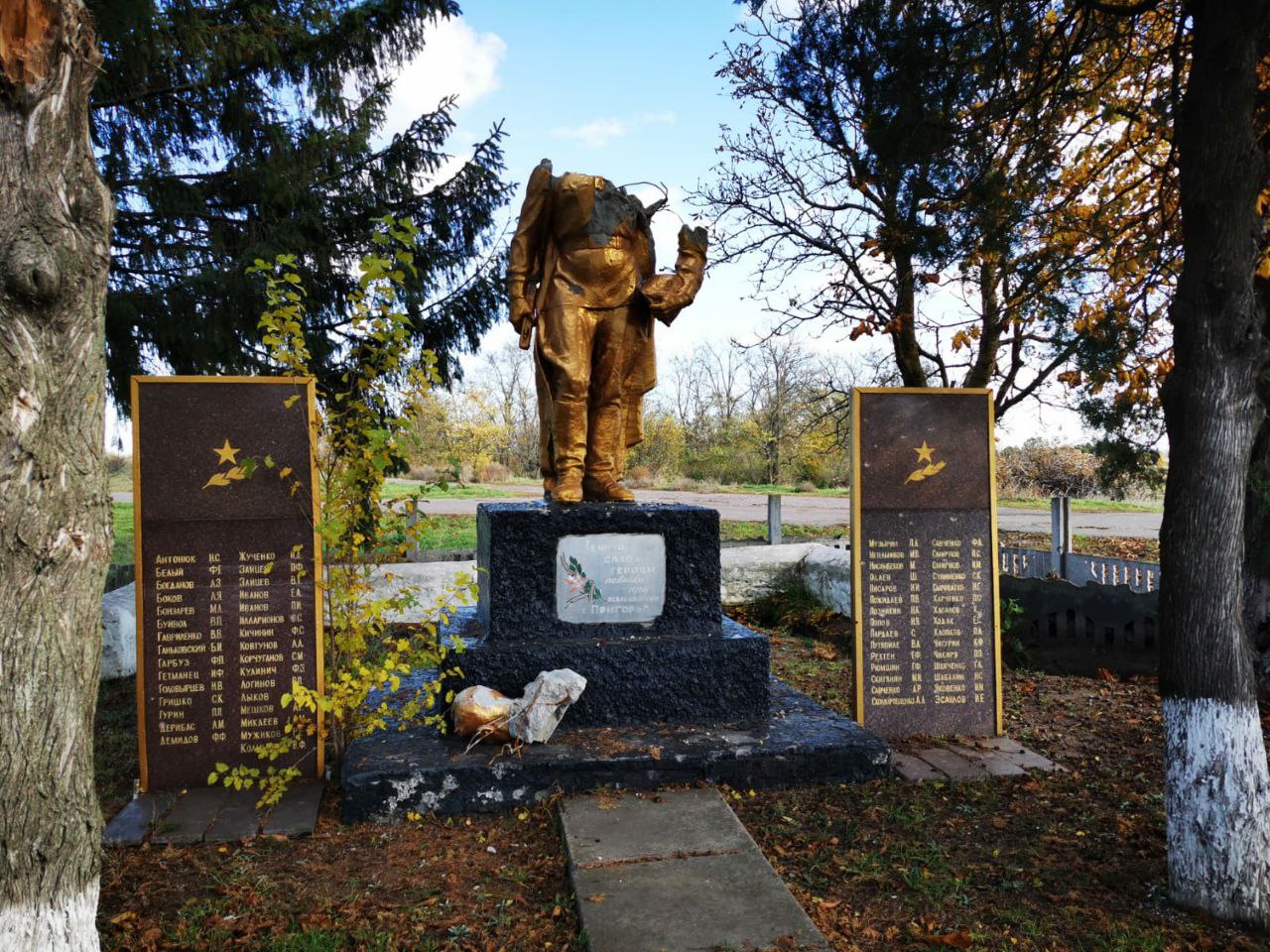
On one of the intersections there is a monument to the soldier of the Great Patriotic War. At the monument, the head and part of the hand were repulsed. Behind the survey, sand bags are piled. A passer -by a local resident explains that here Russian soldiers held their position. Immediately, she adds, drank alcohol, lubricated from local stores, and stopped passing cars to check.
- Who shot the monument? - I ask her.
- The Russian world!
Machine gun and red cat
The Ukrainian military is dispersed into several neighboring villages. They can not settle together-if they find out someone’s deployment and shoot one of the houses, others will remain intact. In one of the villages, the local entrepreneur waves to the driver, we stop, he shows the street where two missiles recently flew in the middle of the night. The windows are knocked out in the building of the local administration, everywhere glass fragments and packs of documents scattered through the knocked out window. In the parking lot nearby, blown up cars, on the contrary, is a shot private house.
“It's good that the owners left at the beginning of the occupation,” the businessman notes. He says that his store was plundered in the very first days of the war, the Russian military. Anticipating such a course of events, the man hid everything he could and in the next months, gradually supplied the provisions of his fellow villagers. According to him, after the liberation of the village, the remaining locals gather with brooms and brooms, sweep streets, cleanse roads from garbage and wreckage of missiles, dragged destroyed cars from the roadway. Growing up a peaceful life.
The end of October in these places is yellow and fiery red leaves, colorful flowers. I am determined in one of the houses where the military live. There is a table in the courtyard under the canopy. On it, next to the open jar of cherry jam lies a bumblebee flamethrower, a luxurious red cat is spinning around. A fighter named Vitalik picked him up, abandoned and pushed away, in one of the destroyed courtyards. He brought, fed and now a red -haired fat handsome man jumps into his hands to Vitalik and falls asleep, putting his head on his shoulder.
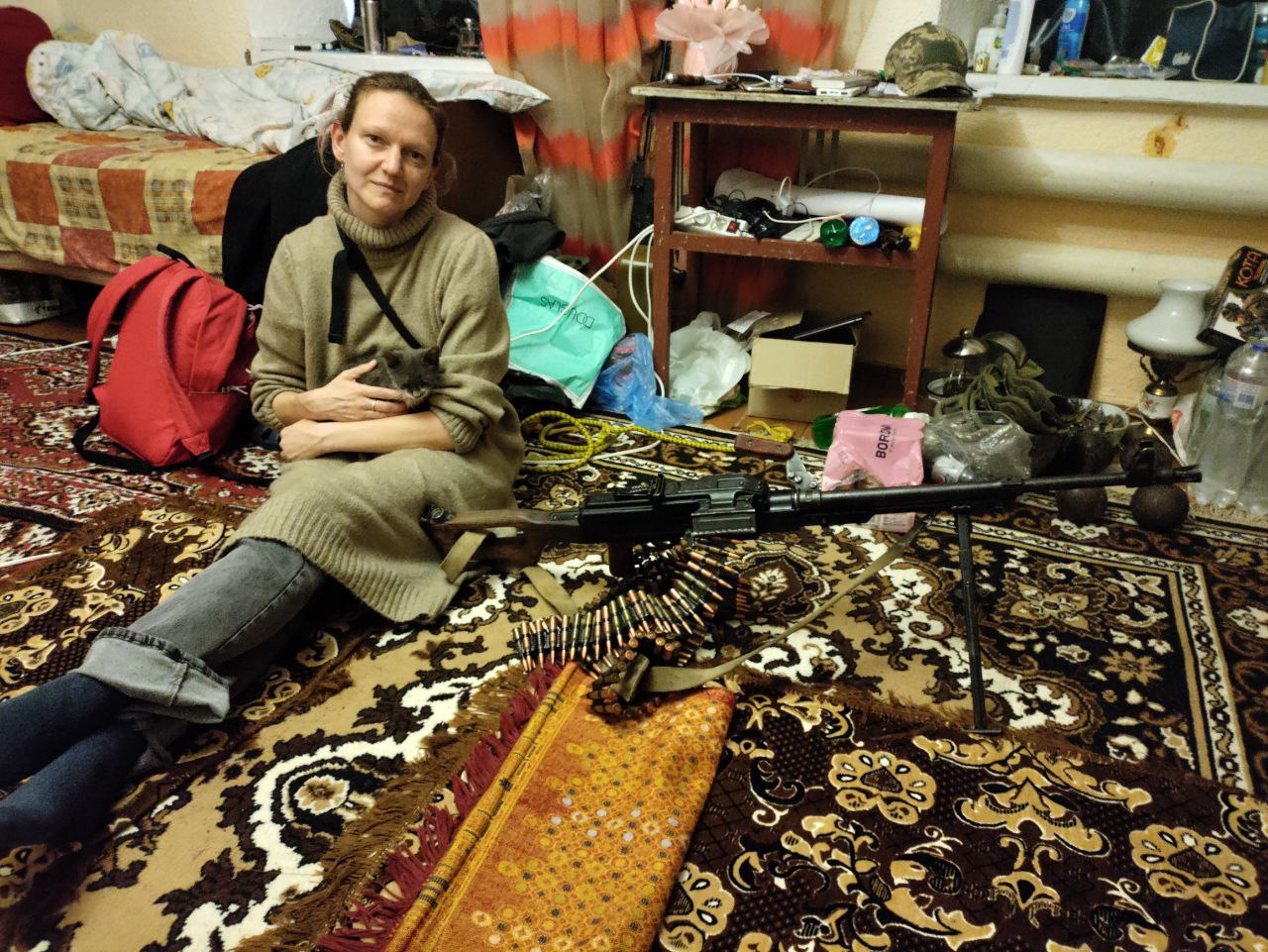
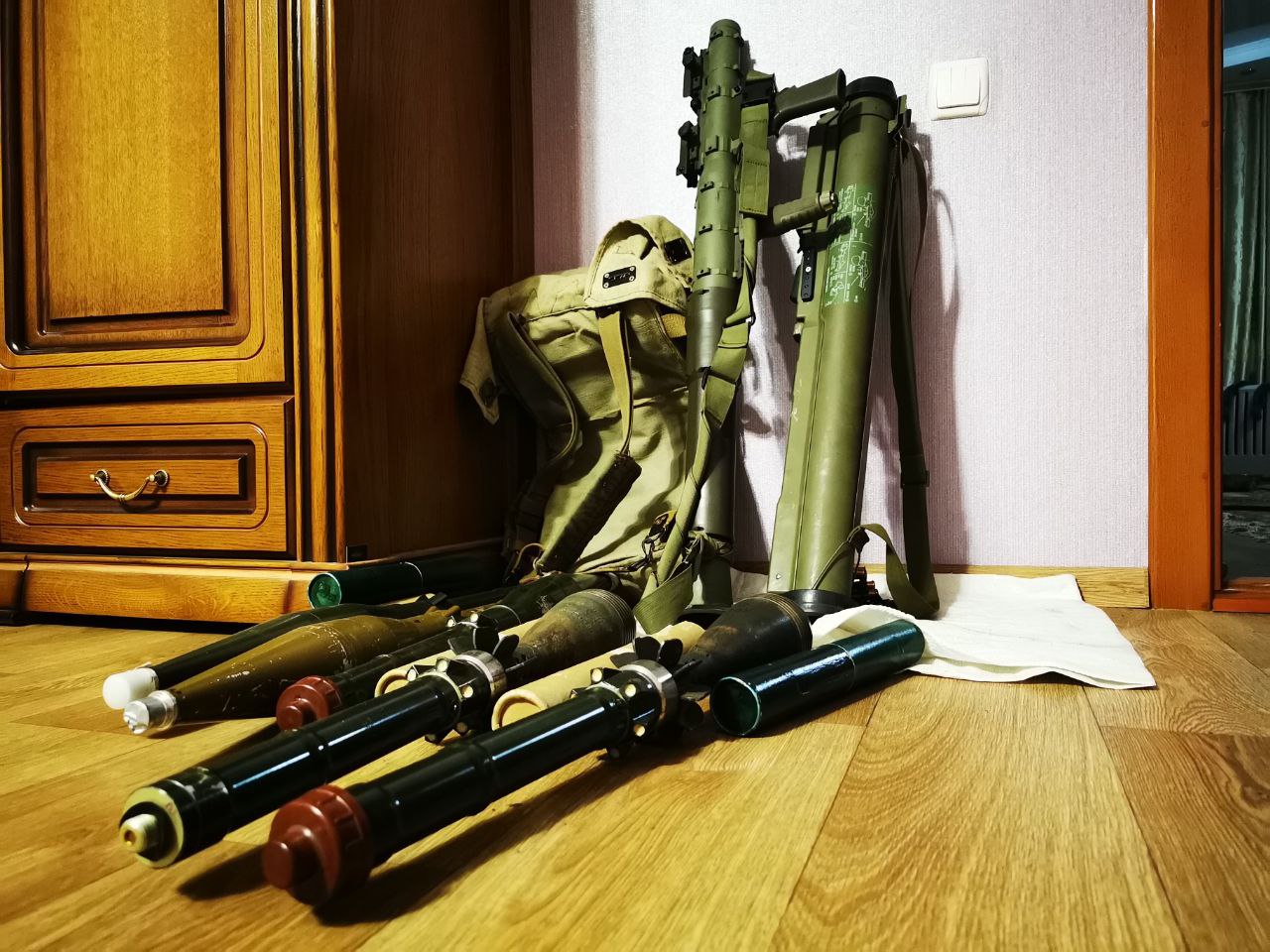
At the gate there is a military jeep, at the porch - boxes with shells, some of them are “trophy”, left by the Russian troops before the retreat. In the corridor - a number of machine guns leaned against the wall. Bottom vests and helmets are laid out on the chairs. In the bedroom there is a machine gun and cartridges for it stand next to the prayer rug (there are Muslims in the unit). There is another cat on the bed. A young soldier is preparing in the kitchen surrounded by empty shells.
Everything is relatively good with the supply. Both local residents and the military numerous Ukrainian volunteers constantly bring food, hygiene items, and medicines. There is electricity and water in the house thanks to the generator, but the water quickly runs out: on the bathroom and washing machine. According to the military, fuel and water have to be ordered at their own expense. The house is surprisingly clean, and this is given that a dozen soldiers who are on the front line live here. On the rope in the yard, a washed shape dries.
"If not destined, he will not hurt"
Ruslan reports that it is impossible for journalists to journalists now, they say, their neighbors on the front line were carried by my colleague and “bad story” came out. Which one, he does not specify. But the military promises to also think and calms: “In general, a rocket can fly here, so there will be news to you!”
That evening, he runs into the room with burning eyes, accompanied by a press officer with joyful news-let's go to look at how the combat drone is launched “at zero” a zero line or a line of contact-a zone of fire contact with the enemy. : “Tomorrow it will be necessary to leave early in the morning. We still haven't taken the press like that. You will wear a helmet and armor! ” I promise to be prepared, I charge phones and put an alarm. The officer who is engaged in the interaction with the press conducts a short briefing: do not shoot the military position on the video, do not upload a photo anywhere without agreement with him.
In the morning, Ruslan, a press officer, Sniper Vasily* (he rides to launch a combat drone), his assistant and I sit in a pickupa. I am clamped in the back seat between the two fighters - thus they close me from bullets and fragments of shells. In the back in the back - three more soldiers.
My fellow travelers are in a good mood, they joke that if “today is not destined,” then at least run under a hail of shells, he won’t hurt. And if your time has come, then at least in the bunker sit, it will still be covered.
Several more squares of the fields remain to the positions, when the car begins to roll strongly - the wheels fall into the funnels from the explosions. Sounds of shooting are heard - these are Russian troops firing the line of contact and “where to get further”, explain to me. We cross the second and first lines of defense, around the fortification - trenches, dugouts, a car camouflage, canopies and small tables. We are approaching the "zero" line. Shots sound more often and more distinct. The most dangerous here.
The car stops, only a strip of fields separates us from the positions of the Russian troops. My companions go out to understand where the fighters are now located - during the day they change the deployment. The places that they occupied yesterday are already empty. There is no connection with them. They ask me to stay at the car. Three military remains with me. I get out of the car, the body armor and the helmet is heavy, I remove the last one - the neck is very tired.
Around - fields lined with mortar hits. The sounds of bursting shells are heard several times per minute, sometimes a small explosive wave is felt. During pauses in silence, birds and buzzing of insects are clearly heard.
The castle commander is returning with his comrades, they found familiar fighters. The press officer addresses me: "Do your job, just do not shoot the video."
Preparation
We approach new positions. Three fighters are on duty in the forest. They drink tea, offer us, there is even a sugar substitute. They interfere with a tablespoon. Tea is very invigorating.
Vasily, the operator of the drone, takes out a pack of cigarettes:
- I will smoke one and start flying [drone].
Andrey, the eldest of the attendants in position, introduces it to the course of business:
- on *** (the number and name of the forest belts designated on the map) is a fag, which constantly adjusts the shooting at us. I listen to their wave on the radio interception. Clearly adjusts Tanchik and self -propelled gun.
- To throw him there today? - asks Vasily.
“Here he is,” Andrei shows a point on the map. - There they have a white car drives between two points. I have been banged (saw) from the drone.
- Today we will disassemble them a little, we will fly and wear gifts to them. - So Vasily calls grenades. They speak among themselves in Ukrainian.
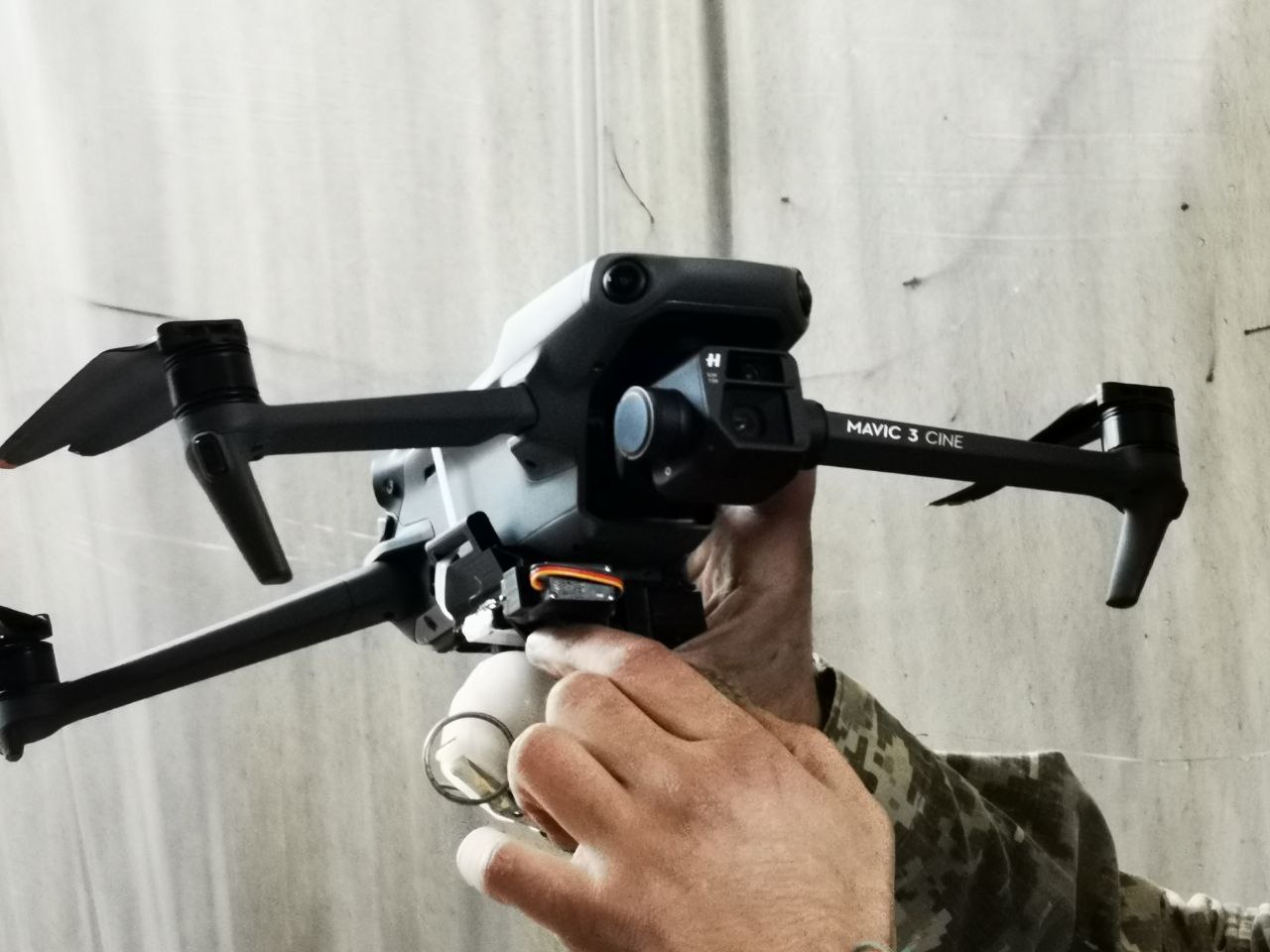
Vasily shows the device of the projectile. This thing is a self -liquidator, you need to touch carefully, it can tear your fingers. It will not be necessary to cut the nails. Here is a piezo element, a slowdown, inside the capsule. She begins to burn out, and when she burns to the end, explodes and eliminates the shell.
- What time do ours start? - asks the castle commander. It means that Ukrainian gunners will open fire on the enemy.
“At 11,” says Andrey. - At the clock at this time 10.20.
“Generally good,” says Vasily, “you can’t hear the drone under their shelling.”
He leisurely attaches an anti -tank shell to the drone and tightens the plastic strap. A tablet lies nearby, a drone will be controlled through it.
- How many grenades are you today?
- Four more, but we must fly, throw, see what's what. If you throw a lot at once, the answer will fly here.
- They pulled a mortar and bullets here.
The military lists the numbers of squares, coordinates.
- Green is discharged! - the explosion is heard again.
All this time, the sounds of bursting shells do not stop. The whole conversation, along with the preparation of the drone, goes through tea, as if we are not at the front line, but in the courtyard of our house.
“We are frying potatoes here,” the military shows a box of food. - We live here. Who else is coffee, here is boiling water, there is a bank with soluble, sugar in a box.
The ongoing cannonade accompanies his words. The assistant operator drone puts an autograph on the projectile marker.
“Let's drink coffee yet, then let's go,” says Vasily. His drone is ready for flight.
Shelling
The explosion thundered very close, a few meters from the table with tea. Everyone involuntarily bent.
- Good evening, I'm a dispatcher! - says calmly Andrey. - We leave in the trenches! If you started to lay down, they will lie down!
The trench is masked by branches and covered on top with a dark tarp. I go down into it and get tired. Nearby are two military. One of them transmits the coordinates of the hit by radio. I sit, listening intensely. The next arrival, as Andrey promised, almost immediately - less than a minute and the explosion rattles over the ear itself. A terrible sound. Stunning. The air is impregnated with caustic smoke, nothing is visible from the trench. Almost immediately one more, aiming hit. Dust. Small stones. Branches. They fly in all directions and fall into my ears, in the head.
After a split second, I hear the voice of the deputy commander: “Rather, it seems that we were spotted from the drone, running, we must leave!”
Another explosion! Again stones in all directions. Sand in the eyes. Smoke envelops everything around, it is impossible not to inhale it. There is a dense aimed shelling for us. The castle commander with screams pulls me out of the trench.
I rise and see how he, bending, gracefully, on his long legs, quickly moves forward, to the nearest trees into the next forest belt. Now this is the only shelter. At that moment, only one thought is spinning in my head. I have a heavy body armor, but I really need to run quickly. Now my life depends only on speed. I feel a surge of enthusiasm and rush forward. At the same time I observe what the military is doing. In a few seconds I master the skill: immediately after the “exit”, that is, the sound of a shot from Russian positions, you need to drop sharply and lie, covering your head with your hands from fragments until you hear the “arrival”, explosion. You can still pray if you have time.
I run to the first trees, shells lie very close. Two explosions are very close.
The castle commander shouts that you can’t stop here and you have to run further to the next trench. A couple of tens of meters. We are falling into it, I already know what we need, - I will pinch my ears. Explosions seem to follow us. Perhaps we are monitored by the enemy drone.
I raise my head, ask the military:
- Where is our car? - Another explosion, right behind. My companion, who matured in the war and fought for many years, is confident and calm, feels himself in his element.
- The car will drive up, everything will be fine! - Arriving ... is torn again. I'm panicing. He laughs at what is happening to cheer himself up and his comrades. - Oh, output, we go to bed! Do not be afraid, Lida. Everything will be fine! Get up, let's go.
We run forward again.
- Lie down! - The next way out. After the explosion, I tear my head off the ground and, it seems, for the first time I hear my intermittent breathing. It used to be not up to it. I'm scared.
How glad I am to see a press officer who hurried and came here. He shouts to the castle commander that he is afraid for me:
-What will we do if something happens to this woman?
“I am responsible for her, we cannot leave now without all of our own, two more of ours behind.” Leave, drive away the car, hide,
“I'm not so afraid for myself as for her!” Let me take her!
This dialogue sounded not in Russian, I was transferred to me later. But in that minutes we still could not raise our heads. The shelling and did not think to end.
“Do you want him to take you and come back?” - asked me as the castle commander.
- Yes, I want! - The reaction "Run!" for stress;
- Then run!
Bending , I rushed towards the car to the sounds of explosions and flew into the back seat. We drove at the highest possible speed on an uneven rut under the ongoing shelling.
When the shock passed a little, I felt how much my throat hurts and how difficult it is to breathe. Too much inhaled caustic smoke from the blown up mine. The driver stopped, I rinsed the throat with chlorhexidine, which, fortunately, gathering, put in the morning in the pocket pocket. It became a little easier. We went on.
“This is our usual day on the front line,” said the driver. - Now I will take you and will return for the remaining. We usually do not take here journalists. You were the first on the fire line. ”
On that day, as I found out, two fighters who watered us tea easily injured. One of them, they say, leaving in a sanitary car, was happy that he would now be warm and with three meals a day.
The next day, a rotation occurred at a position. The rest also got the opportunity to rest a little. And a few days later they told me that Ukrainians in this area advanced even closer to Kherson.