
Translated material
Altruism against nuclear war. The great discovery of Pitirim Sorokin
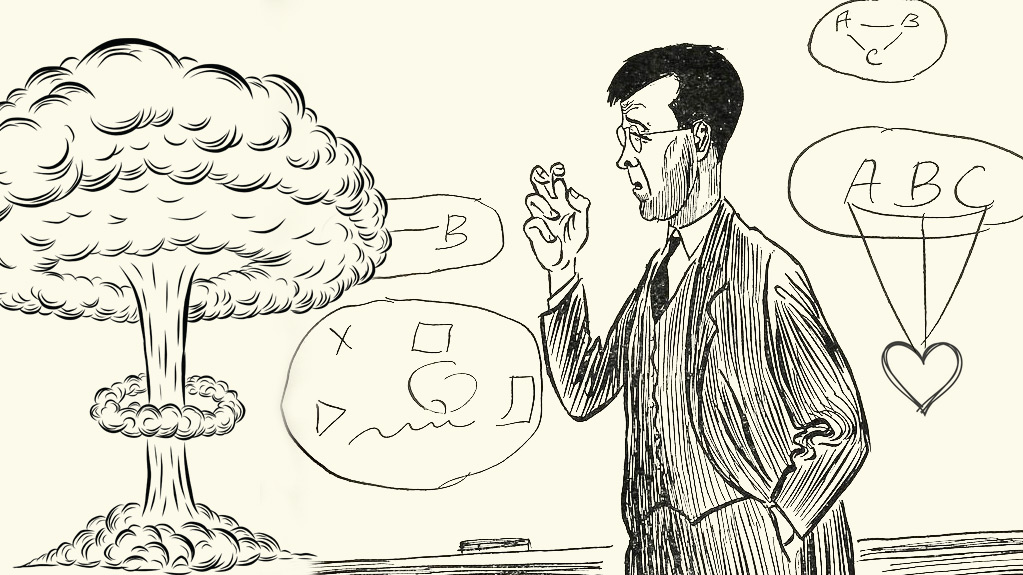
A semi -literate peasant boy, an wave of icons for the village churches; Privat-report of Petrograd University; Socialist-Revolutionary, member of the combat organization, member of the anti-Soviet conspiracy; A respectable American professor, leading correspondence with Einstein and Kennedy, is all episodes of the biography of one person.
Sent from Russia on the personal order of Lenin in 1922 and during his lifetime, which became a classic of world sociology, Pitimi Sorokin was born in the village of Turya of the Vologda province from the Russian father and mother of the Syrian. Since childhood, he wandered a lot in the forests with his father, uncle and older brother. 20 years later, Sorokin’s survival skills in the wild were very useful, when during the civil war he was hiding in the Vologda taiga from the Cheka agents. At the same time, he possessed a sharp visionary gift, allowing both the turns of his personal fate and the events of a great story, from Lenin’s death to the Caribbean crisis.
Dear Mr. President!
In October 1962, the world was on the verge of destruction. By order of Khrushchev, Soviet winged missiles with nuclear warheads were brought to Cuba. It was a "our answer" to the actions of the Americans who posted similar missiles in Turkey, near the southern borders of the USSR. Thus, on both sides of the iron curtain, they were well prepared for the beginning of the Third World War. The generals in Moscow and Washington were only waiting for the go -ahead from above to turn the enemy into a radioactive ash. His peak "Caribbean crisis" reached Black Saturday October 27, when Fidel Castro, confident that the American invasion of the island inevitably, called on the Soviet leadership to deliver a preventive nuclear blow to the United States ...
And only a year earlier Pitimi Sorokin, the Russian emigrant and professor of Harvard University, wrote a letter of pre-presidential to President John Kennedy, in which he reflected on the meaningless confrontation of nuclear superpowers:
Dear Mr. President! In my deep conviction, as can be seen from my article, at present there are no rational reasons to continue the "cold" and the preparation of "hot" war between the two countries (USSR and the USA). Until the current relationship is replaced by truly friendly, none of the important international problems will not be resolved successfully and it will not be possible to prevent the danger of a new war.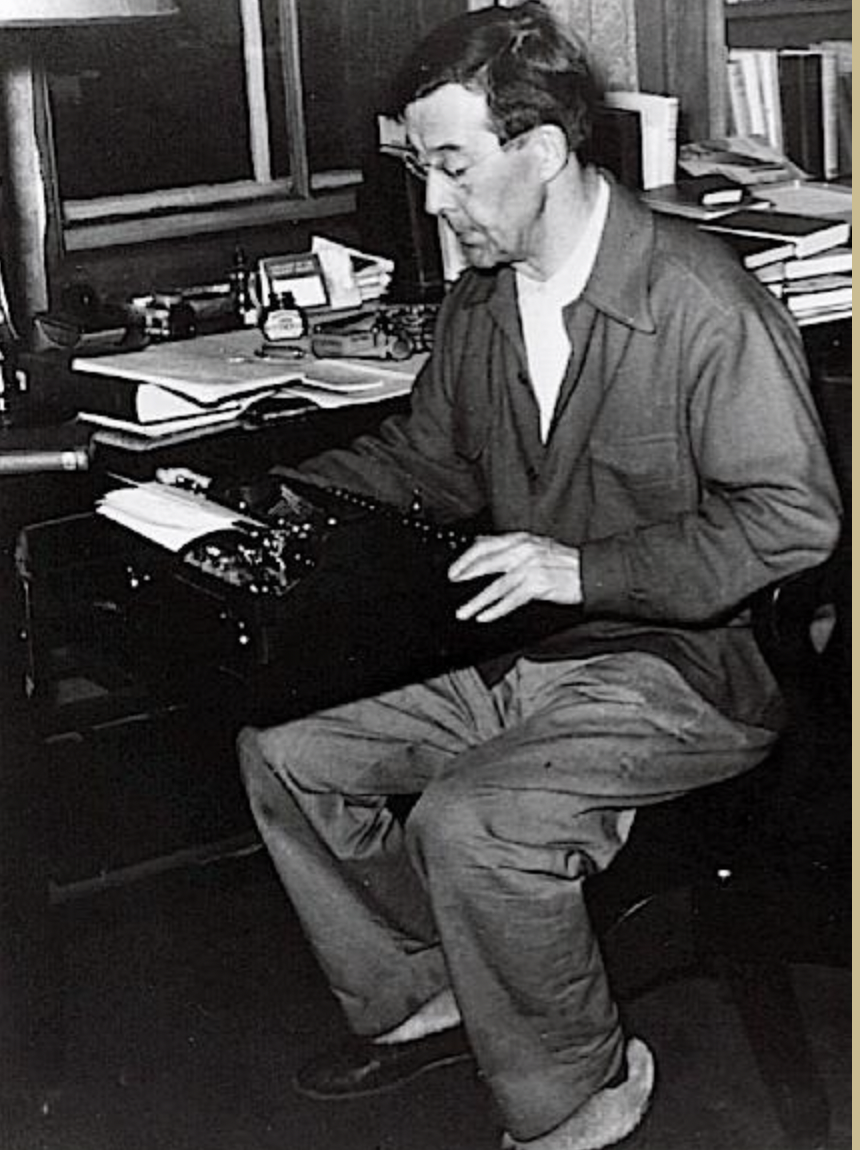
In the hottest days of October 1962, Alexander Feklisov, who became a memoirist, after resigning a memoir writer, after resigning from the authorities, took part in the secret negotiation of the crisis. In his memoirs, Feklisov calls Pitirim Sorokin “the Vythetian from the Winchester” and talks about how he was visiting the famous sociologist. For what purpose - the book does not explain. As if there is nothing more natural for the Soviet resident than to look at the cup of tea to the emigrant professor living 100 miles from Washington. Maybe in the leadership of the KGB, someone seriously considered Sorokin the provids, and Feklisov was given the task to look into the future that the Soviet Union awaits?
Regarding the statement of Khrushchev at the XXII Congress that by 1970 the USSR will surpass the United States for the production of products per capita, and by 1980 it would mainly build communism, the scientist said that this is pure bragging, which is not to the face of the head of the great state. Summing up the discussion of this issue, Pitimim Sorokin thought and quietly, with a hidden sadness, said: - Socialism would not come to Soviet people soon. When - this cannot be determined, it depends on many factors and to a large extent on whether smart, far -sighted people will be in the leadership of the Soviet Union. A. Feklisov. "Behind the ocean and on the island. Notes of the scout"By the time of this conversation, many books were published in the USSR exposing the "bourgeois errors" of Pitirim Sorokin. Since Lenin declared Sorokin a counter -revolutionary, there was no question of any publications of his work in the Soviet press. However, despite the Lenin "Anathema", the most intelligent representatives of the ruling elite in Moscow looked closely at the Sorokinsky "theory of convergence", predicting the merger of the capitalist and socialist system into one system.
True, twenty years after tea drinking in the Winchester, an experiment on the capitalization of socialism, known as perestroika, led the state in which it was held, to catastrophic consequences. But claims here, rather, to the performers, and not to the theory itself.
The beginning of the long road
His first conscious memory, Pitimim, Sorokin calls the death of his mother, experienced by him at the age of three. The father remaining a widower began to drink a lot, bringing himself to a white fever and chasing the devils. During one such attack, he turned up a ten -year -old Pitirim, whom his father tried to kill a wooden carpentry hammer. In a sober form, he was a master of all his hands and sons taught crafts, from Plotnitsky to the icon -painted one. So, after the next beating, the boys decided to leave the violent parent in order to earn a living by the repair of churches, where they received orders for painting work, painting domes and gilding icons.
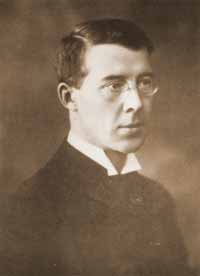
In his memoirs, the Far Road , written in the USA in English, Sorokin admits that his difficult childhood was happy, and he does not regret that he was born and raised "in a virgin country", which made him an integral person. Not afraid of wild animals, nor Soviet power, nor hard work, he always had daring plans for the future. What is worth only the youthful decision of the graduate of the parish school to move from the Vologda wilderness to St. Petersburg to study at the university. No sooner said than done. In just three years, Pitimim Sorokin took possession of the gymnasium program, studying at the courses of Professor Chernyaev, also a native of the Vologda province, and receiving even more knowledge in prison, where he first hit in 1906, like an underground agitator from the Socialist -Revolutionary Party. The young man really liked to sit in the same cell with revolutionaries. The jailers, for a small fee, brought illegal literature: Marx, Bakunin, Kropotkin, Plekhanov, Lenin. And in prison, it was possible to read the works of Charles Darwin, Herbert Spencer and all Tolstoy. Plus, the nightly philosophical and political disputes among cellmates, on which everyone was given the opportunity to express and shake their thoughts.
In the academic circles of the then Russia, there was a phrase “in prison, or something, sit down? I will at least calmly work there,” Sorokin recalls in the “Far Road”.In general, it is not surprising that, having gone free, he easily passed the graduation gymnasium exam and entered the first year of the Bekhterev neuropsychiatric Institute. To do this, I had to get a certificate of reliability in the office of the St. Petersburg mayor. It seems that the royal officials gave such certificates with the ease of extraordinary, which is called, regardless of their faces. Because the "trustworthiness" of Student Sorokin perfectly illustrates an excerpt from his own memories:
My political work attracted the ever -increasing attention from the tsarist guard and its secret agents. Their "eye is subtlest" after my activity soon caused new troubles. Already in the first year of the university, the police caught me with friends during a purely friendly party in my room, arrested and carried everyone to the nearest site. Being in high spirits (partly thanks to beer and vodka drunk at a party) and not having any respect for representatives of the decaying government, we resolutely refused to answer the police questions and began to sing and dance so noisily that the police chief soon shouted at us: “Out of the site, out of here!”, Continuing, continuing to sing all voice.Sorokin transferred to the University of St. Petersburg from the Bekhterev Institute, which was a private educational institution, and therefore his students did not have a delay from the army. The First World War has already begun, and Sorokin did not feel any desire to go to the front in order to feed lice for faith, the king and the Fatherland. Moreover, this "rotten regime" nevertheless gave rise to something good that was worth devoting life-the university-the second (after prison) island of Liberty in the Russian Empire. Years later, Sorokin will compare Russian universities with American, not in favor of the latter.
In contrast, American universities and colleges at Russian universities and institutions at that time did not require mandatory presence at lectures, seminars or tests. This was a personal file of every student. In the same way, there were practically no tests at the institute throughout the academic year; Instead, one, but a very thorough exam at the end of the semester was arranged ... Higher educational institutions were not interested in how students acquire the knowledge necessary for passing strict exams at the end of semesters, that is, the administration and teachers did not have an opinion that this knowledge can be obtained only by present at lectures, seminars and tests. It was quite reasonable that there are other ways for this, if they are more convenient for the student himself ... Such a system was more free, fruitful and creative than a modern system with a mandatory attending lectures and frequent, but superficial tests. Pitimim Sorokin. Far road.Students were the most free people in Russia. And the most dangerous, of course, like the variables of contagious ideas. Student Raskolnikov proclaimed that everything was allowed. Student Ulyanov tried to blow up the king. In 1905, St. Petersburg students sent congratulatory telegrams to the emperor of Japan on the day of the death of the Russian squadron in the Tsushima Strait. It is even amazing how the Soviet regime managed to destroy student freedom so quickly, turning universities into "forges of personnel".
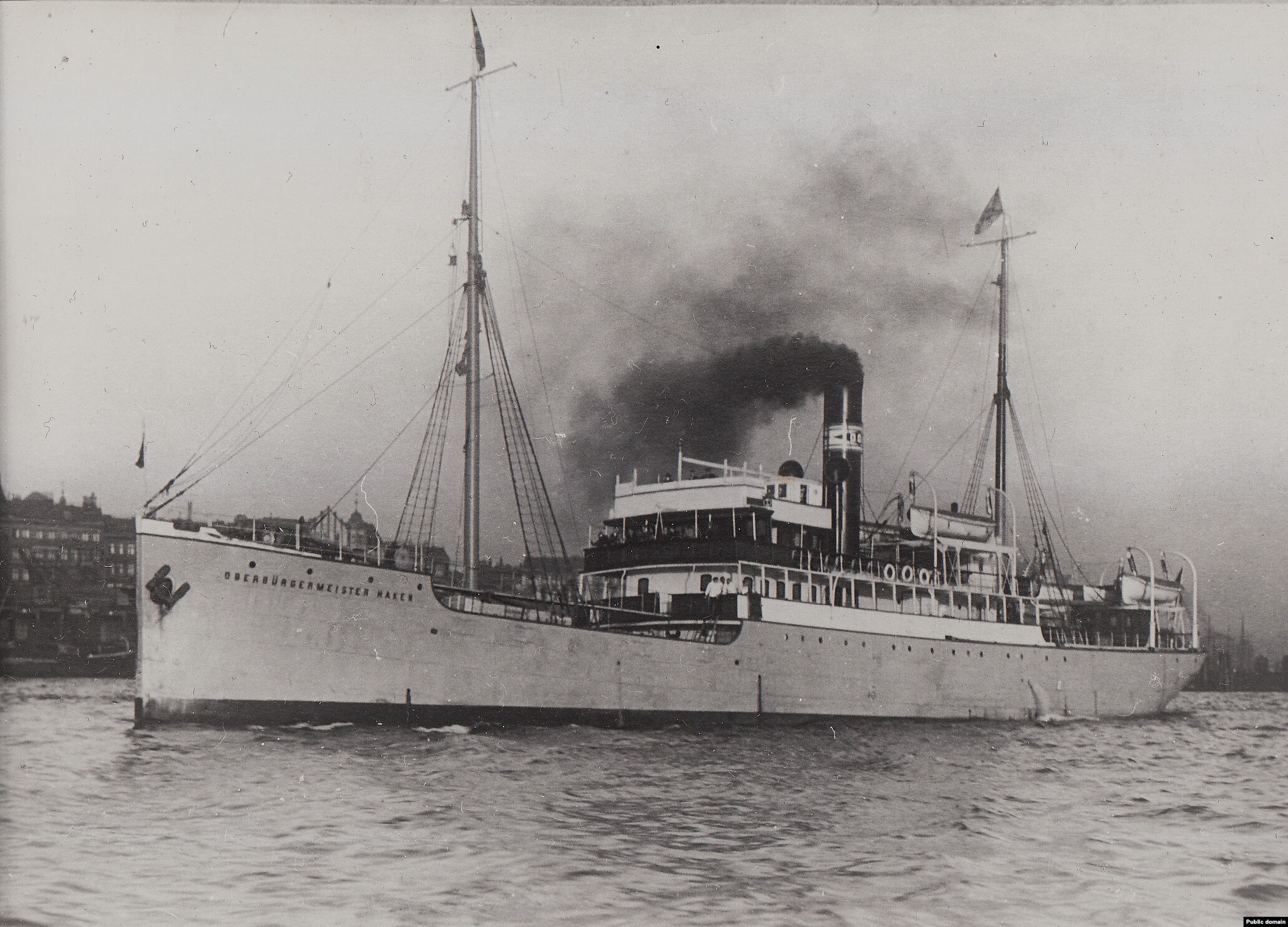
The defeat of the intellectual elite of Russia occurred in the fall of 1922. Just a few months earlier, in April, Pitimim Sorokin managed to get a degree at Petrograd University. He defended his master's dissertation of the System of Sociology in a public dispute. Each such defense was the holiday of the intelligentsia, comparable in spectacularity with gladiatorial battles. The candidate, speaking in a crowded audience, where everyone was allowed, fought alone with seasoned opponents and, if he left the winner, he got noisy appliances. Sorokin defeated triumphantly. This caused irritation among the Bolsheviks, in particular, Zinoviev, the red owner of Petrograd, who has repeatedly said that Sorokina was long for shooting. The Sorokin book "The influence of hunger on human behavior", even cut by Soviet censorship, contained a strict criticism of the regime:
Where everyone becomes shakals and predators, you can not engage in productive labor. Those who will engage in them will still not receive anything for themselves: thousands of robbers will tear one hundred skins from them and will not even leave them a hungry soldering. Therefore, any economic life of such a society inevitably goes to complete collapse, which will happen sooner or later - when everything is plundered and there is nothing to steal. P. Sorokin. "The influence of hunger on human behavior." Petrograd. 1922Of course, the Bolsheviks did not forget that the scientist opposed them not only in a word, but also by deed. In 1918, Sorokin participated in an anti -Soviet conspiracy in the north of the Vologda province. The underground Socialist -Revolutionary organization, which he entered, was negotiating with the British who promised military assistance. On the appointed day, the uprising was supposed to begin throughout the north, from Arkhangelsk to Veliky Ustyug. Unfortunately, the allies, as often happened to them during the civil war, did not keep promises. The British corps was limited to the occupation of Arkhangelsk and its environs. British tanks could not drive deep into Russia, quarreling in the swamps. And it decided the fate of the uprising.
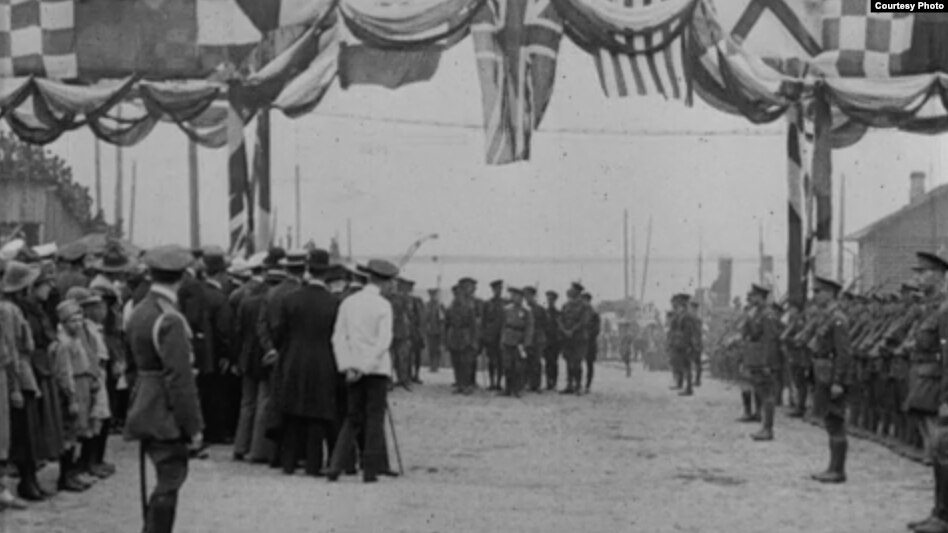
Then, for several months, the punitive detachments of the Red Army pursued and shot the participants of the Socialist -Revolutionary rebellion.
Pitimim Sorokin recalls long wanderings through the forests along with another underground, a meager diet made of mushrooms and berries, about meetings with patrols and salvation, swim over the river under the whistle of bullets.
“In my opinion, we swim too often and eat too rarely,” my companion said sadly.With the onset of winter, the situation became hopeless, and Sorokin decided to surrender to the authorities. In prison, he writes a letter about the abandonment of the armed struggle with the Soviet regime. Lenin liked the letter, who ordered him to publish him in Pravda and release the author.
And now, three years later, his associates convinced the leader that he made a mistake, pardoning the allegedly repentant enemy. It was, of course, not only about Sorokin - hundreds of outstanding names, the color of the Russian intelligentsia were included in future shooting lists ...
The cameras are crowded, and there is definitely nowhere to plant another professor
In the late autumn of 1922, a couple of months after expulsion from Soviet Russia, at dinner in Prague, someone asked Pitirim Sorokin about Lenin's health. Is it true that it improves and Lenin can soon return to political activity? Sorokin replied that Lenin was hopeless and die a year later, at most - two. After the leader of the leader followed the indicated period of time, the reputation of a person who could make the right forecasts was entrenched in the young Russian professor. In 1925, Sorokin published an article " Lenin - Fanatic and Antisocial Extremist ", in which he explained why Lenin "with his explicit tendency to gross repression and mass killings became the hero of the second period of the revolution in Russia." In addition, in his article, the author shared with readers of insider information about the Kremlin’s internal life.
The rumor spread that Lenin was crazy, with the words: “My God! What I did with Russia and the Russian people,” he wrapped his arms around his head, he ran around the Kremlin. Soon after, he was taken to the hills, the nationalized estate of the Russian manufacturer S. Morozov, located near Moscow.However, it was this madman per minute of enlightenment that wrote a forty ticket to the "philosophical ship" and thus made an invaluable contribution to world sociology.
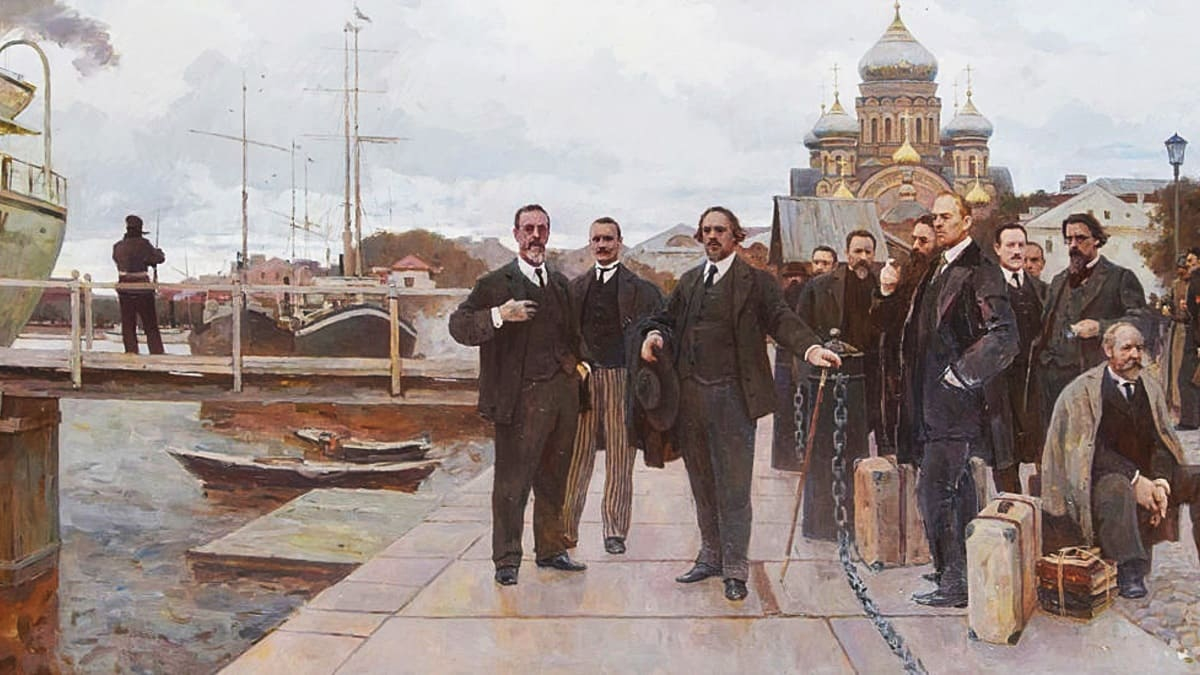
As you know, the "philosophical ship" is a metaphor created by the translator Sergey Khozum . In fact, there were two ships. And there were also several "philosophical trains" to Germany. Pitimim Sorokin and his wife, Elena Baratynskaya, left Russia by train.
In order to leave the Council of People's Commissars, Pitirim Sorokin had to “self -arise” in September 1922, that is, to come to the nearest Cheka and name his name. He recalls the conversation with the Extraordinary employee, a young man with the pale face of the inveterate cocaine, who said that all cameras were crowded and there is now resolutely nowhere to plant another professor. But since the arrested professors are still sent abroad, let Sorokin arrest only on paper, if only he left the country ten days later, otherwise it will be shot.
The passport for departure should have been obtained in the People’s Commissariat of Foreign Affairs. However, this department was in no hurry to issue documents, and a week later it became clear that the further expectation of death was like. Three more days, and the Cheka will be able to shoot Sorokin "on legally."
I had to go to the old acquaintance-underground, at that moment an influential Soviet official, George Pyatakov. An interesting conversation took place in the office between former revolutionaries:
I told him: - Pyatakov, let me know, do you actually believe that you are building a communist society? “Of course not,” he answered honestly. - So, you understand that the experiment has failed and you are building an ordinary bourgeois society. Then why are they sending us? “You do not take into account the fact that two processes are in parallel in Russia,” he said. - One of them is the restoration of bourgeois society; The other is the adaptation of the Soviet government to this society. The first process is faster than the second. This poses a threat to our existence. Our goal is to slow down the development of the first process. That is why you are expelled abroad. Perhaps in two or three years we will invite you to come back. “Thank you,” I said, “I hope to return to my country without your invitation.”Thanks to the help of Pyatakov, the passport was received the next day, and on September 23, Sorokins with two bags sat on a train, following Berlin. Despite the official ban, many people with flowers gathered to see the expelled. Everyone hugged and cried. Pitimim Sorokin recalls that when the train passed the border, he and his wife for the first time in five years went to bed without hesitation whether they would come after them that night.
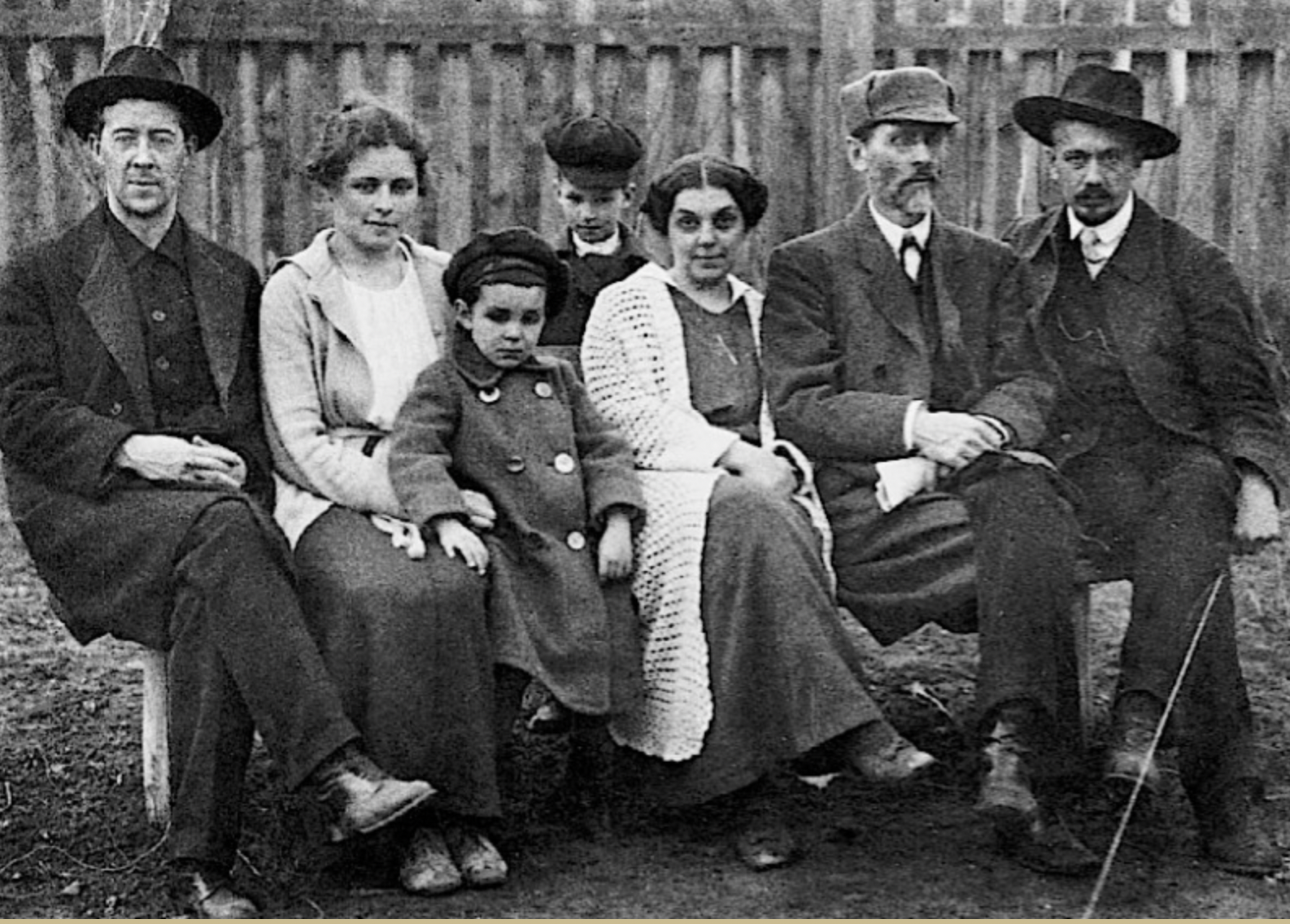
Elena Sorokina in her memoirs clearly described this unforgettable journey:
Нам разрешили беспрепятственно пройти к советской границе в сопровождении вооруженного красного чекиста. Я была в оцепенении до того момента, когда он сошел с поезда на пограничной станции, и мне пришлось ущипнуть себя, чтобы почувствовать, что это не сон, и что мы на самом деле свободны. У нас было достаточно денег, чтобы купить билет до Берлина и несколько долларов на первые дни пребывания там (которые мы добыли на черном рынке), но что делать дальше, нам и в голову не приходило. Приехав в Берлин, мы зашли в русскую эмигрантскую газету и узнали, что о нашей высылке пишут на первых полосах европейских газет.Спаситель ученого, коммунист Григорий Пятаков, был расстрелян в 1937 году как член "параллельного антисоветского троцкистского центра". Всего за месяц до ареста глава НКВД Ежов обещал Пятакову назначить его судьей на процессе над Зиновьевым и Каменевым. Но вскоре обстоятельства резко изменились, и несостоявшийся судья сам оказался в параллельной реальности, на скамье подсудимых, где ему пришлось свидетельствовать против себя, рассказывая о том, как он занимался вредительством в промышленности, которую возглавлял.
Питирим Сорокин так и не вернулся в Россию, обретя второй дом в Соединенных Штатах. Незадолго до своей смерти, в середине шестидесятых годов, он задумался о том, чтобы посетить СССР, куда его настойчиво приглашали товарищи вроде Феклисова, обещая даже разрешить ему прочесть лекцию. Но Госдепартамент США рекомендовал ученому воздержаться от поездки.
Открытие загадочной энергии
Осенью 1923 года по Нью-Йорку шел бедно одетый человек с двумя тяжелыми чемоданами, в которых не было ничего, кроме рукописей и книг. Он только что прибыл в город на пароходе и направлялся в офис волонтерской организации "Помощь русским студентам", хотя сам давно вышел из студенческого возраста. Питириму Сорокину было 34 года, когда он решил начать жизнь заново – учить английский язык и заводить знакомства в американских университетских кругах.
Он встречался и с русскими эмигрантами, например Игорем Сикорским, ещё одним пассажиром "философского парохода", который пытался построить в простом сарае и практически без капиталов свой первый вертолет.
Его положение тогда во многом напоминало мое: мы оба боролись с трудностями и преодолевали препятствия на пути реализации наших стремлений.Главным стремлением Сорокина было завоевать аудитории университетов. And he succeeded. Всего через год после прибытия в Америку он читал свои первые лекции студентам Иллинойского университета на вполне сносном английском языке. Как ни странно, главными его противниками в новой жизни стали американские профессора левых убеждений, которые слышали музыку русской революции и отказывались верить Сорокину, когда на лекциях он рассказывал о голодных смертях, красном терроре и других ужасах СССР. Его обвиняли в "распространении фейков" о советской России, и некоторые научные журналы из-за этого даже отказывались публиковать его статьи.
Но на этом, пожалуй, и заканчивается список трудностей, с которыми Питирим Сорокин столкнулся в реализации своей американской мечты. Дальнейшая история его жизни – это спокойное, с достоинством, восхождение на вершину академического Олимпа.
В 1930 году Сорокин принял американское гражданство.
В 1931 специально для него в Гарвардском университете был основан Социологический факультет.
Во второй половине 1930-х годов, после рождения сыновей Петра и Сергея, Сорокины переезжают в Винчестер (штат Массачусетс), где приобретают дом. Младший сын Сергей вспоминает, что для его отца работа в саду была одним из главных удовольствий жизни за пределами науки:
С первых лет в Винчестере и отец, и мать вместе формировали ландшафтвокруг нашего дома. Сначала посадили вечнозеленые растения и розы, но вскоре отец заинтересовался азалиями и рододендронами, которые подсмотрел у соседей. В своем саду он работал в старой одежде, глядя на которую трудно было заподозрить профессора университета. Однажды незнакомый молодой человек поднялся на наше крыльцо и позвонил в дверь. Не получив ответа, он обошел дом и увидел копающегося в кустах отца. - Hello! Хозяин дома? – крикнул он, явно принимая отца за садовника-иностранца. –Кто вы? – спросил Питирим.- Well. Я продаю журналы. У меня есть Life, Collier's, The Saturday Evening Post и Reader's Digest. Что бы вы предпочли? – Спасибо, ничего.
- But why? Это самые популярные журналы, и по подписке они намного дешевле, чем в газетном киоске.
Отец изобразил смущение на лице: – Извините! Но я необразован.
- What?
– Ну, это... Читать не умею.
– А, тогда прости, чувак! – и смущенный молодой человек удалился.
В 1949 году, опять же специально для Сорокина и под его руководством, в Гарварде был открыт Центр исследования альтруизма.
В 1956 году выходит работа Питирима Сорокина " Американская сексуальная революция ".
В 1965-м он становится президентом Американского социологического общества, крупнейшего в мире объединения социологов.
Два последних десятилетия своей жизни ученый посвятил исследованию "загадочной энергии бескорыстной любви", собирая данные о жизни филантропов, подвижников и святых, от Будды до наших дней. И сделал немало интересных открытий. Например, при изучении биографий христианских святых удалось выяснить, что средняя продолжительность их жизни всегда была выше, чем у их современников, несмотря на то что святые люди не щадили себя и часто жертвовали собой ради блага других.
Основной вывод теории альтруизма заключается в том, что наш мир может спасти только бескорыстная любовь. Беда в том, что ни одно правительство (неважно, демократическое или авторитарное) не способно на это чувство.
Бескорыстная, созидательная любовь, о которой мы знаем все еще очень мало, потенциально является огромной энергией – при условии, что мы знаем, как производить ее в изобилии, как аккумулировать и как использовать. Другими словами, если мы знаем, как сделать людей и группы людей более альтруистичными и созидающими, чтобы они ощущали себя, вели себя и мыслили, как настоящие члены человечества, объединенного в одну крепкую и дружную семью. С этой точки зрения любовь оказывается одной из самых высоких энергий, заключающей в себе необычайные созидательные и терапевтические возможности… Мы понимали и понимаем, что наш вклад в изучение этой проблемы не больше, чем капля в море. Но поскольку правительства, крупные фонды, фирмы и организации, а также лучшие мозги увлечены в основном изобретением все более разрушительных средств уничтожения человека человеком, то кто-нибудь, когда-нибудь и как-нибудь должен в противовес этому заняться изучением феномена бескорыстной любви, неважно, насколько не соответствуют его возможности такой задаче или насколько низко оценивают коллеги его участие в этом "глупом проекте".Сегодня, как никогда актуально вспомнить о "глупом проекте" Питирима Сорокина. Вспомнить прямо сейчас, потому что завтра может быть поздно.