
Translated material
Russia in a censorship tie
The Law on the prohibition of propaganda of LGBTK+ has not yet been adopted, but can already cancel all world literature
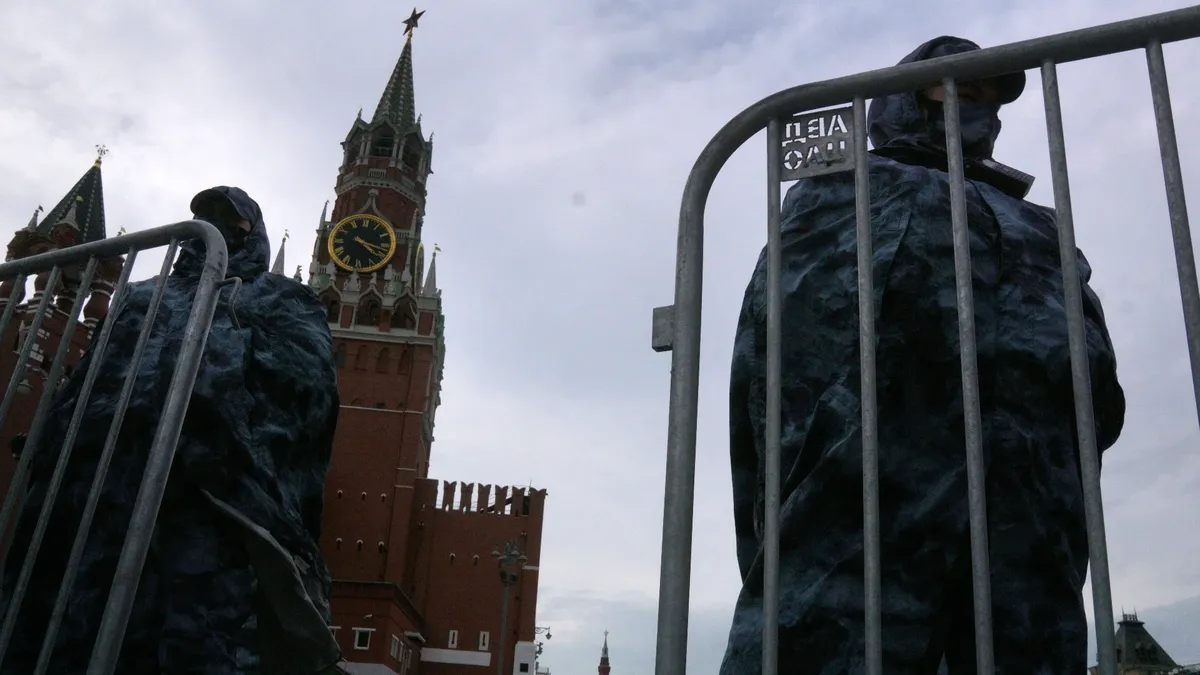
It is not easy for the Russian literature of the military period: many well -known foreign authors abandoned cooperation, publishers publishing LGBTK+ and feminist literature, were not allowed into book fairs, several writers were declared foreign agents, and the new bill on the “propaganda of LGBT” even raises the issue of the survival of individual publishing houses. Censorship plays a special role in all this - it is she, not always officially, changes the modern literary process, killing what is not like power, and leaving conditionally correct books and authors. Censorship, which is prohibited by the Constitution, works great.
Hot summer Prilepin and Khinshtein
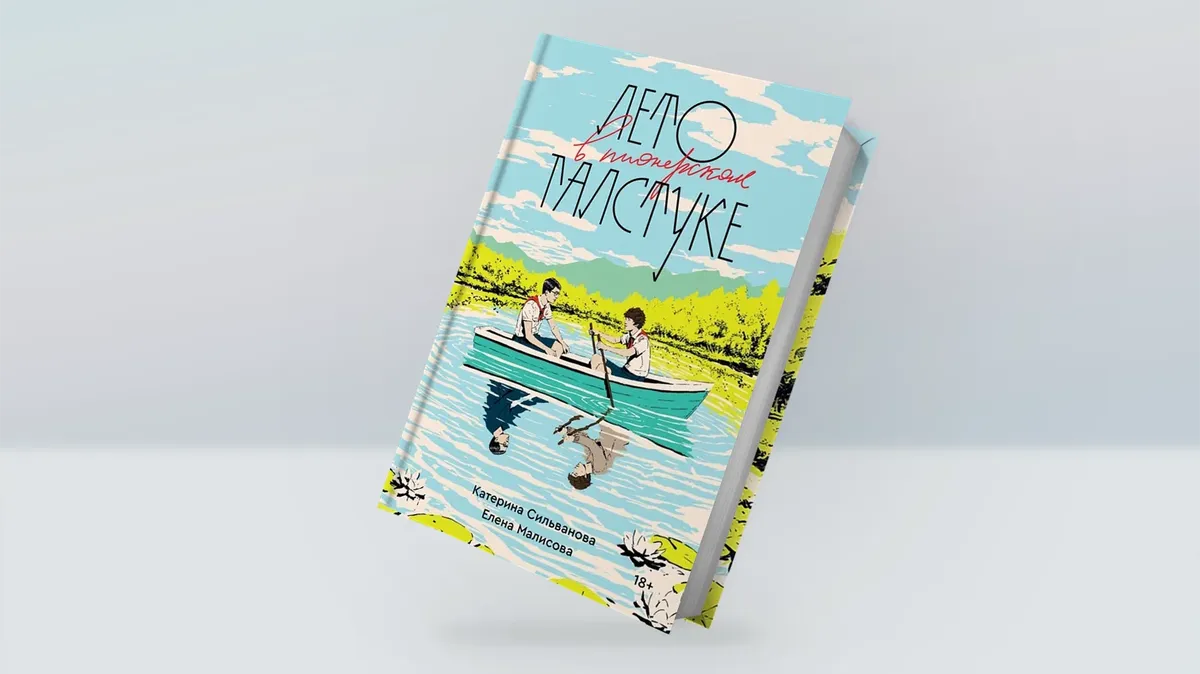
The summer of 2022 was hot in Russia. Especially for modern youth literature: in the media there was a noise around the book of Elena Malisova and Katerina Silvanova “Summer in the Pioneer Tip”, published in the Popcorn Books publishing house. The romantic relationship of the pioneer of Yura and the counselor Volodya against the backdrop of the Soviet landscape excited the conservative audience not so much by their content as amazing circulations for Russia. Now more than 200 thousand copies have been sold - an outstanding achievement for a small Russian publishing industry by world standards. The authors of the protective sense did not dream of such circulations. And this, of course, is extremely insulting. Writing something more in demand by readers with writers such as Zakhar Prilepin, one of the arsonists of moral panic around Russian literature in the Young Adult genre, is not very good. But it is good to arrange noise in the press with shouts "Where does the government look?" And "prohibit, prohibit, prohibit."
In some other times, such a hype, probably, would have been to the hands of publishers-they say, the more noise, the higher the sale. But by the end of this summer, the story reached calls to remove books from the sale. The Nizhny Tagil branch of "Fair Russia" stated that it bought up PopCorn Books and was going to burn them (then, however, the application was recalled). The Legislative Assembly of Sevastopol proposed to tighten the punishment for the “propaganda of LGBT”: now it concerns only minors (therefore, books of the LVPG type are marked with the “18+” sign), but if the law was adopted, then the texts with a description of “non -traditional values” were completely banned. The initiative of the Sevastopol deputies, however, was quickly wrapped in, citing a lack of a response from the government. But at the end of August, the almost identical bill was announced by the deputy of United Russia Alexander Hinshtein. According to the text of the law, for the “propaganda of LGBT” publishers should be punished with a fine of up to 5 million rubles or the suspension of activity for 3 months.
The summer ended, and the work of the guards of Victorian values is not. 27 OKTBYARA State Duma adopted not even one, but two bills- No. 217471-8 and No. 217472-8 . The drafters increased from the bills - under each, 388 deputies signed. And they signed under the complete ban on “propaganda and demonstration of non -traditional sexual relations” and major fines. At the same time, as Khinshtein assures, such books as Lolita will not affect the new law: “The classic example is Nabokov’s novel“ Lolita ”, it cannot be recognized as the propaganda of LGBT and the propaganda of pedophilia.” It may not be propaganda, but (in the text of the bill itself) “imposing information about pedophilia that causes interest in pedophilia” (no?) It is quite possible. The price of the issue for the publishing house is 10 million. Khinshtein repeats the same thing that Senatorka Mizulin said, when ten years ago they adopted the law "On the protection of children from information causing their health and development." The first article of this law says that it does not concern the works "having significant historical, artistic or other cultural value to society." However, if you take any edition of Lolita over the past ten years, you will see the 18+ icon. Why is he standing there? Because laws in Russia do not work as some deputies want, but as it is established and arranged in the Russian law enforcement censorship.
How to introduce censorship if it is prohibited
Censorship in Russia is prohibited by the 29th article of the Constitution. Indeed, we do not have any institution such as Roscenesurus or, as it was in Soviet times, (the so -called the Main Directorate for the Protection of State Secrets in Press). That is, an institution that would determine what can be said and what is impossible, no, but there is still censorship, and for a long time.
To prohibit objectionable statements, it is not necessary to start a special censoring body. You can simply set up a law enforcement car so that it punishes the unwanted opinions already expressed, and punishes loudly and publicly so that the rest would be disgraced. What is needed for this? Relevant laws, tagging of forensic examination and teaching judges to stamp decisions based on the results of such an examination. Actually, everything.
The laws themselves may not prohibit expressing opinions at all. It is enough that not opinions are prohibited, but, for example, “drug advertising”, “equalization of the USSR with the Third Reich”, “imposition of sexual orientation”, or in general, such a thing as “improper age -related restriction” (the publisher was put up to the 16th years, but it was necessary - “up to 18”). And the investigation will always find an expert who will justify on several pages - here it is, the imposition and formation of a distorted representation. The court will confirm this expert’s conclusion without any special concerns. Therefore, if you, as a publisher or as a reader, seem obvious to the artistic and cultural value of Lolita, you may be disappointed, there will be an expert who will conclude the opposite.
At the beginning of the zero, the only censorship restriction was “drug advertising” - according to Art. 46 of the federal law on narcotic drugs operating since 1998. Moreover, advertising then understood the dissemination of information, for example, about the methods of using drugs or about their medical properties. That is, it was worth writing that they were smoking, but this is the carriage, but it helps with myalgia, anti -cancer chemotherapy, etc. - And this was enough to ban the book, and its circulation was to destroy. This fate befell the books “Marijuana: Forgotten Medicine” by Lester Greensepun and James Bakalar, “Club Culture” by Phil Jackson and Adam Parfrey Anthology “Culture of the Apocalypse”.
Is it necessary to clarify that such a law did not at all contribute to the public discussion of drug policy, which led to the fact that the “storage of drugs” became the most popular article in the criminal punishment system.
Following drugs in the second half of the zero, the state took up "extremist activity." This word deserves only quotes, because since then this concept, as if from the Chinese Encyclopedia of Borges (no, however, it includes activity and incitement, and excitement, and still demonstration of symbolism) has finally blurred, and its meaning, after recognition by extremist, opposition political movements and the largest social networks, turned out to be completely compromised. Evidence of this-more than five thousand decisions of ships that recognized as extremist a wide variety of materials-from images in .JPG format to canonical Hadis Al-Bukhari. All these materials are included in a special list of extremist materials that the Ministry of Justice leads.
To introduce new censorship restrictions, it is not required to adopt long and complex laws. If the state wants no one to compare the Stalinist USSR and the Nazi Third Reich, you can threaten a fine for their identification. And all, “ who said totalitarianism? " Nobody! It is too expensive to compare these two historical phenomena today. So expensive that the publishers rushed to edit already published books. Absolutely independently, and no special censorship committee was needed.
But this is just a story, that is, the thing is the past. With LGBTK+ more complicated. Just because this topic has long entered world literature and became its organic part. Because it is part of a large and different human life, about which a large and different world literature is trying to tell readers. But with the adoption of the Hinstein law, all this will become propaganda. Propaganda after all in Russian legislation - as the law itself, that is, the drawbar. Judging by the history of recent years, anything can be subjected to it. Maybe they will not touch classical literature and will not, but the whole new one is easily. And this means that publishers will somehow need to pass their assortment and withdraw from the sale of circulations, and to the bookseller-or wait for the publishers to do this, or independently remove books from the sale. And some publishers - less, have already begun to do it. Even the law has not yet been adopted, censorship is already working! The publishers, such as the exmo holding, are sadly await instructions, because re -pass 80% of the total assortment of fiction in Russian, which is published by the holding publishers, is technically hardly possible.
And what to do large bookstores and book networks? Close to the retraining? Read all books? Or just wait for 5 million a fine?
It is possible that this will come out even cheaper. But what to do less bookstores? There are no answers, but the intention to add criminal to administrative punishment - for “repeated violations” - the deputies have already appeared for the second reading.
When the law will be accepted - and there are few who doubt it - a series of censorship, all together components of a giant censorship, will add several more instruments convenient for the state. Everything will be like a war. In general, nothing can be said about her at all, because any mention of it can be easily qualified as the spread of fakes (this is an administrative offense) or as a discrediting of the Armed Forces of the Russian Federation (for this criminal punishment). Say what you want, ”the state tells us. But - the case, expert, court - and sit down for five years. And no censorship, notice. It is prohibited by the Constitution.