
Translated material
"From the very beginning, Neanderthals were used to scientifically substantiate the superiority of the white race"

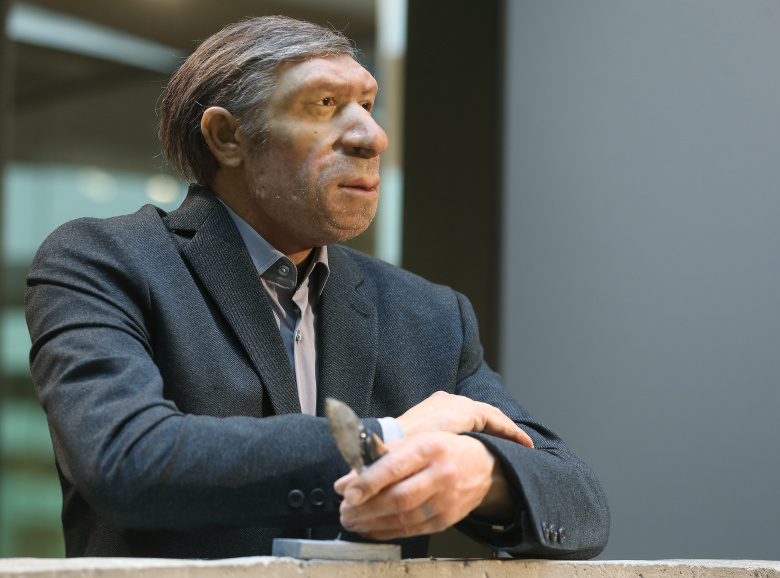
An effective manager: anatomically accurate waxy figure of a Neanderthal, dressed in a modern suit (but with a stone knife in his hand), in the Neanderthal Museum (Mettman, Germany). The character’s name is “Mr. four percent”: this is the maximum share of Neanderthal genes in the genome of modern man.
Photo: David Young / DPA / Global Look Press
In December, the Alpine Non-Fix publishing house was published by the book of the British anthropologist Rebecca Ragg Sick “Reths: Life, Love, Art and Death of Neanderthals” -one of the best (and most relevant) popular science works dedicated to “other humanity”, which disappeared from the Earth’s face about 40,000 years ago.
The author of the book (we quote publishing annotation), “shows Neanderthals in the New World, discarding stereotypical ideas about the savages dressed in rags walking in the ice desert”:
They appear before us with the curious experts of their world, inventive and easily adapting to the surrounding conditions ... There are many DNA of Neanderthals in us, and much of what determines us was inherent in them: planning, cooperation, altruism, a sense of beautiful, imagination, and possibly even a desire to defeat death. Only by understanding Neanderthals, can we truly understand ourselves.
With the kind permission of the publishing house, we chose the chapter “Power over the past” for the publication, which tells how the same stereotypical ideas about the “primitive” non-nunser savages were used to reinforce racist theories and served in the interests of momentary political rhetoric.
Subscribe to read the whole
Make a subscription Redefine.media to read Republic
Subscribe [you can pay for a Russian or foreign card. The subscription is extended automatically. You can unsubscribe at any time.]
Where are the money subscribers going