
Translated material
Pelevin and agendas
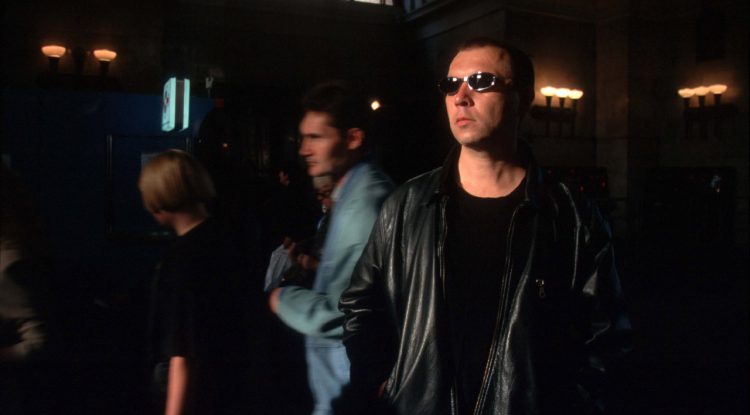
Pelevin is 60. His books are saved today, the author of the film "Pelevin" Rodion Chepel believes
On November 22, Victor Pelevin turned 60 years old. On the same day, the premiere of the documentary of the journalist Rodion Chepel “Pelevin” took place at the Kion online cinema. The hero of the day will appear in the picture only drawn, in animated inserts: for many years the writer has been hiding his whereabouts and has not communicated with journalists. The Chepel about Pelevin is told by those who saw him at least once: for example, the first editor-in-chief of Vogue Russia Alena Doletskaya and literary critic Galina Yuzefovich. Viktor Pelevin’s last novel “KGBT+” was released on September 29 - many fans counted on a political statement, but if it took place, then through metaphors that allow any interpretation. So is Pelevin himself in 2022 relevant? Rodion Chepel explained to the Cold, why - yes.
In order not to miss the main materials of the "cold", subscribe to our Instagram and telegram .

The agenda is one of the main words of 2022, except for the numerous samples of a patriotic novel. The agenda changed on February 24, and radically. From September 21, hundreds of thousands of Russians physically began to come to the agenda. It would seem that it is a matter of the cultural agenda-but I also lived in it: at the end of September, the release of the next novel by Viktor Pelevin was outlined, at the end of November-the film for the 60th anniversary of the writer, which we made in the documentary cinema studio “Amur waves”.
As the date of publication of the new book was approaching, and the agenda turned inside out in every sense, I was afraid that both the book and the film about its author would lose relevance: reality changed too quickly, the concentration of events went off the scoop for every individual day.
Yes, it seems that this is a consensus: in the late 1990s and early 2000s, Viktor Pelevin was a man who, if not formed, then he certainly explained. He always kept up with the novels of those years for reality, and sometimes ahead of it. But since then, reality has accelerated, and he himself, perhaps, has become too far from our lives, is too immersed in the search for meanings that are more than this life. So will his new statement have at least some meaning now? Can he fit into such reality? Will anyone need our film?
It seemed that no, no and no: the cult writer was finally outdated. But the book appeared, and I realized that the fears were in vain.
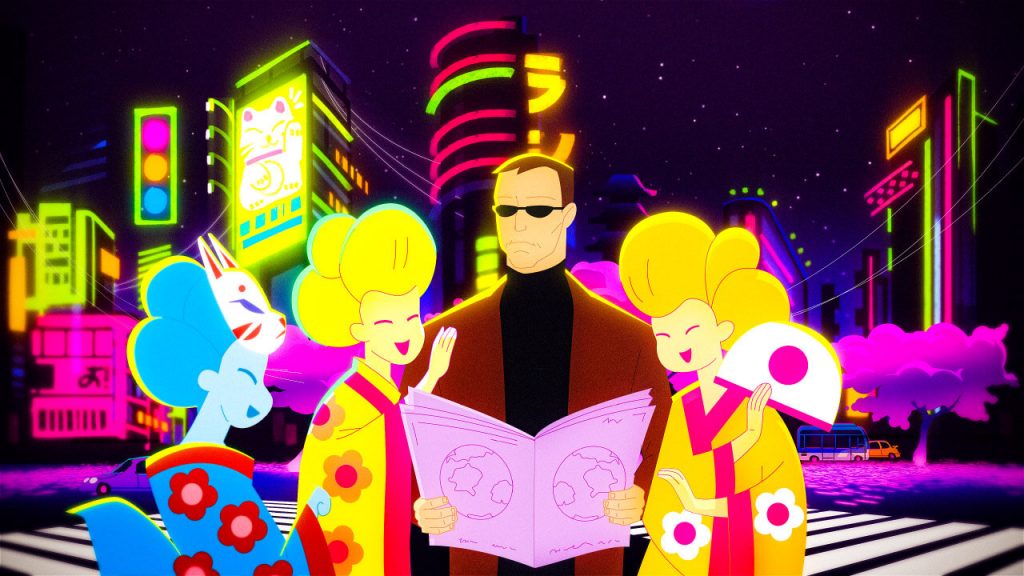
19 Roman Victor Pelevin “KGBT+” was released on September 29 at 20:22 and became for me the most important statement about the surrounding reality. In the matter that I had been involved in more than a year, I returned the meaning, work on the film again acquired value. Pelevin was able to match the agenda. To understand how and why, I need to say a few words about where he came from and how he jumped out of this agenda.
I have always been a devoted “Pelevin”: having failed in a marketing funnel on a hype around Generation “P”, I read all the novels. Yes, recently, I recognized the correctness of the critics of Pelevin, for example, Dmitry Bykov: they say, after the first novels that came out in the 1990s, the author literally and in figurative sense “went into circulation”. By the end of the 2010s, his books, or, as Galina Yuzefovich calls them, the annual “Information Bulletins”, is still a pleasure, but for a long time-not a revelation.
I agreed with this, and in many ways therefore I decided to make a film not about talent, but about a social phenomenon. I wanted to figure out how to remain a popular writer, disappearing from the radar of contemporaries. It turned out that these things - talent and disappearance - are connected. And in the fact that in the texts of Pelevin I did not find revelations - I myself am to blame.
So why is Pelevin so popular? First of all, because he was and remains a science fiction writer. The territory of science fiction was in the late Soviet Union the space of possibilities for criticizing the regime - yes, the Metaphor language, but there was no other mass market for the exchange of ideas. This is partly why it was from the circle of fantasy writers that the main edges of the most massive perestroika magazines-“Science and Religion” and “Chemistry and Life”-and it was in them that the first stories of Viktor Pelevin were published. The novice author jumped into a rose -long rustle mass literature and received a millionth audience.
It was science fiction writers in the early 1990s that gave him his first awards: “Bronze Snail”, “Interpre”, “Great Ring”. It was this genre that taught the writer not to be afraid to break the framework of reality in his texts in order to describe how this reality is “actually”.
It was together with the fantasy friends that Pelevin launched a non-implemented project explaining many of his subsequent texts. This is the book “Red Magic”, in which the authors of the ironic-Absurdist deconstructed Soviet reality: their Soviet abbreviations are Kabbalic spells, Soviet holidays are magical rituals, Soviet symbolism is designed to influence the consciousness of citizens stronger than a psychotropic drug.
Fantast Pelevin conquered the audience and dismantled the Soviet reality. Now at this place you need to collect something else-the esoteric writer will be collected. This second hypostasis Pelevin did not cancel the previous one: they exist in parallel and complement each other.

Another early project that can explain a lot in the late Pelevin is the anthology of Soviet esotericism. The writer traveled to the former Soviet Union, communicating with the authors from the Context group - by researchers who translated philosophical texts for the Soviet audience: from Sufi mystics to the concept of the holotropic breath of Stanislav Grof. Then Pelevin met Vasily Maksimov. A physicist in education, he served as a forester in the Karelian forests, translated Castaneda (Pelevin released several volumes of Castaneda as an editor) and became one of the spiritual teachers of the future writer - they say that in gratitude to the spiritual instructions, Pelevin first made the prototype of the prototype of the protagonist Vasily Chapaev in the novel “Chapaev and the Void”, and then gave Maximov a new “nine”.
Esoteric experience helped Pelevin soar over reality. Now he can generalize. “Generation“ P ”” is a manifesto of capital accumulation and marketing mechanisms. In this book, Pelevin diagnoses the emerging Russian society: magic was replaced by pure manipulation, the desire for personal benefits subjugated all other goals. Advertising controls everyone, and who controls it - the Society of the Priests of Ishtar, Vampires or Reptiloids - is not so important.
In subsequent novels, Pelevin will offer different options for managing mechanisms to everyone, but the technology of subordination through the formation of images in the mass consciousness, being described in the Generation “P”, will not change much since then.
It seems that Pelevin understood everything about the new world in Russia exactly then, at the very end of the twentieth century: the time of Berezovsky, Chechen separatism, collateral auctions, and oligarchic media. I understood and did not want to be present in this world.
After the release of Generation “P”, Pelevin disappears. Before that, on the friendly recommendation of the owner of the Vagrius publishing house Vladimir Grigoryev, the writer gives an interview to two main women of the Russian Vogue - Alena Doletskaya and Karina Dobrotelovo. That interview will be released in September 1999. Previously prone to the shocking, the writer (what is his behavior on the “interpresso”), suddenly appears ... ordinary. Just a person exhausted by attention. He wants to seem courageous and impudent. He complains that glossy ladies do not want to talk normally with him, but slip a microphone. No one knew that this would be the last in Russia and the penultimate , in principle, the personal communication of Pelevin with living people in public.
In the following years, the writer will go to China several times with a narrow circle of interest to those who are interested, but after 2002 Pelevin is only a text. Whether it is rare interviews to literary observers dedicated to the release of his books, or the books themselves. Pelevin no accident disappears at the moment when society around the world goes into a figure. Previously, the Internet was the destiny of geeks of “feeder” ( users of the amateur computer network “Fidonet”.-Approx. “Cold” ), but in the 21st century social networks are sucked on the Internet most of humanity, and our physical personality becomes a digital appendage: all communication-in messengers, around each user marketing departments of giant valley form their informational Bubble.
In time, understanding in which a hole he was dragging a person, Pelevin chose to stay away from her. It is in this, as it seems to me, the main reason for his “absence”. Pelevin took the position of the observer - and now carefully protects his privilege. That's right, it seems to me that he does: none of the public intellectuals possesses her and close to her. From his “somewhere” he, like Leo Tolstoy from Yasnaya Polyana, tells us about where we were.
And then the 2022nd sets in. The agenda rolled over. People die massively, commentators deliberately fade facts and lie, justifying themselves with state interests - some or others. It seems that they can’t believe anything, if you have not been a witness to this, and you treat you with distrust with your own eyes.
In this context, another, annual Pelevin with his philosophy from reality, distinguishing the hidden patterns under everyday and exposure of everything that does not seem. His agenda seemed to have rejected from reality - and why should I, as a reader, ask big questions about the illusoryness of being when I am busy with solving domestic problems. But politics came for us - and Pelevin is useful again. Actual again. For me.
What is KGBT+? The witty and slyly constructed narrative about the vicissitudes of the fate of the character (not even a person) in the distant future. His (both character and author) observation of the characteristics of individual and mass psychology. They are accurate and ironic, as always. But what happened not always is that all these observations now coincide with today. Having learned the current reality in this text, I got the opportunity to look at it and at myself from the outside.
Grindled by the millstones of history, we often imagine ourselves these millstones: some specific form of psychological transfer is triggered. Pelevin offers to relax. In his text, he preaches the Buddhist philosophy of renunciation of reality: when you can’t do anything, just remember that you suffer only because you cannot separate yourself from suffering and are forced to “comment” ( “commenting” of reality as a problem - one of the ideas of the novel “KGBT+”. - Approx. “Cold” ).
I see in this instructions to maintain myself today, in a situation where violence is total and even inaction is interpreted as violence. This instruction is not so complicated and intuitively understandable. She acquired this form, since it was honed with decades of personal isolation and thousands of pages of reflection on this topic. It would seem nothing sensational. But this old mantra of various guru yoga and meditation, passed through the diverse author’s irony of Pelevin, suddenly works. And Pelevin from a fashionable writer, in each of his next text ridiculed our vain agenda, now that the agenda became cruel, becomes a therapist who helps to survive it. For me - so for sure.
The author’s opinion may not coincide with the opinion of the editorial office.