
Translated material
Rule of "crucified boy"
Ten principles of military propaganda, which are present in all conflicts and on both sides
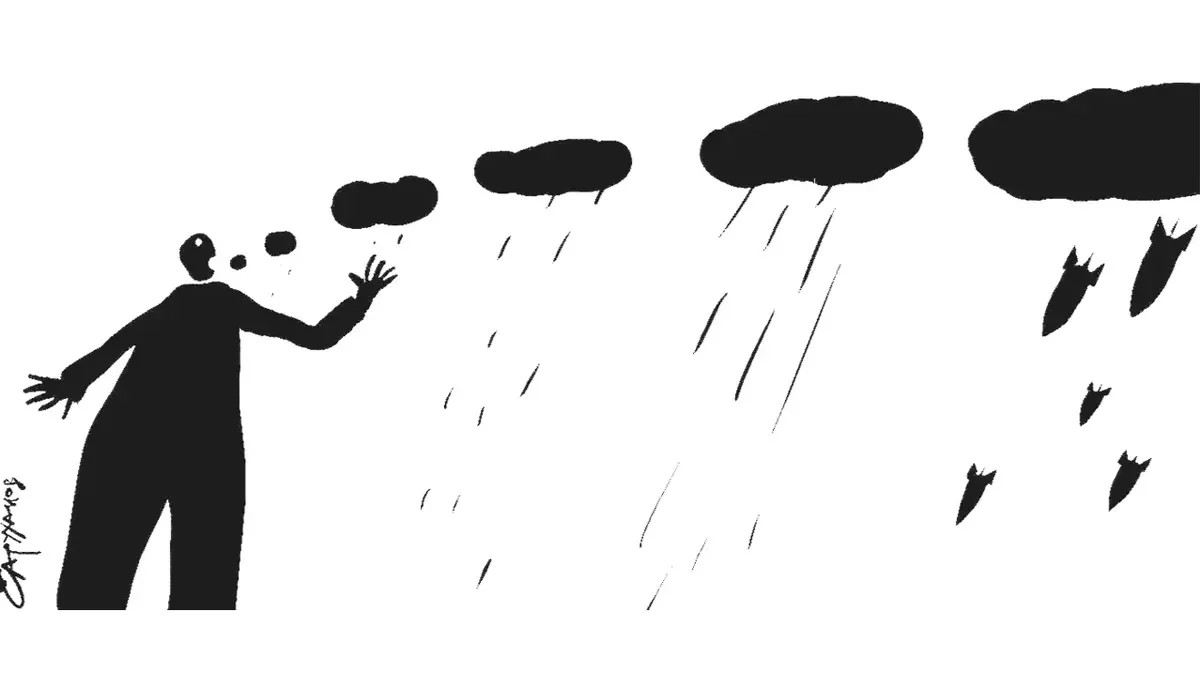
Propaganda during the fighting accompanied all military conflicts of the new history, its principles have not changed within a hundred years. It affects civil society more than propaganda in peacetime, leaves a lifelong seal in the whole generation, for a long time poisons relations between the peoples.
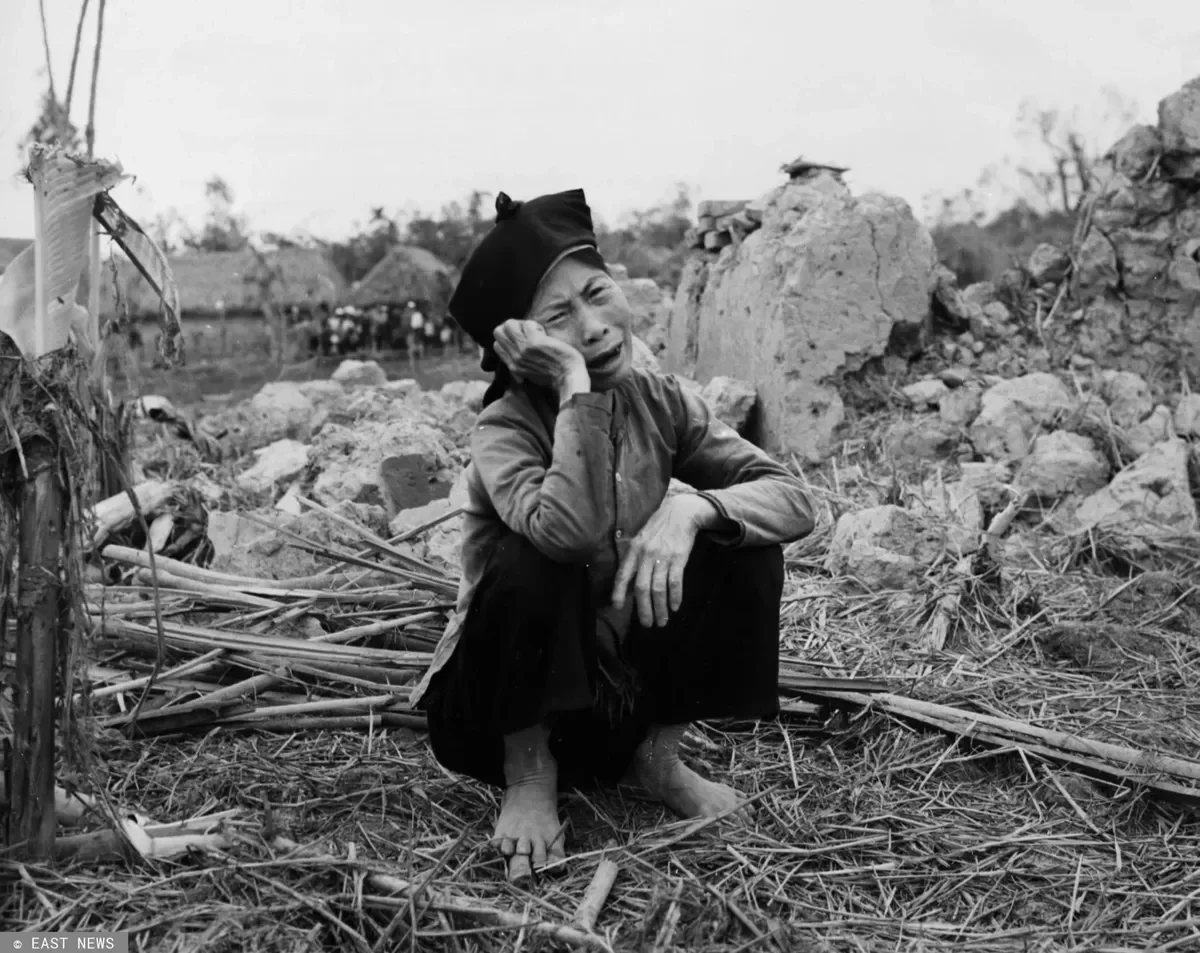
At the bottom of the bomb funnel lay an iron bed with a torn white sheet caught on it. On the white and among the deadly gray spray of dirt from rice checks-large red spots. The outskirts of Hanoi, where a group of journalists was brought on a dank December day of 1972, they bombed a lot on the eve, and there really was a hospital nearby. But the bed in the funnel looked like an installation. Bank, I thought. Against the background of many hundreds of destroyed hospitals and the deaths of incorrect millions of Vietnamese - soldiers and civilian, old people and children - she was superfluous and only sowed the doubt that they always tell us the truth.
Such the urban outskirts, like many areas of the Vietnamese capital, was behind the sign ( Cấm - “forbidden”, in the everyday life of the Soviet specialists - “vitamin”), where foreigners could not go. But everyone knew that there were transshipment storage facilities, either equipment, or ammunition for the war of resistance in South Vietnam. Their Americans regularly ironed their bombing, including carpet.
They already had “high-precision” ammunition, but, probably, for something more significant than hospitals and kindergartens. For example, from what I saw live, for the Hanoi TPP on the shores of Lake White Bamboo or the capital of the Hang Co capital station.
In the "carpet" bombing with extremely high population density residential and other civil buildings, it was already a lot. But the hospital bed in the funnel classically fed into the laws of propaganda of wartime.
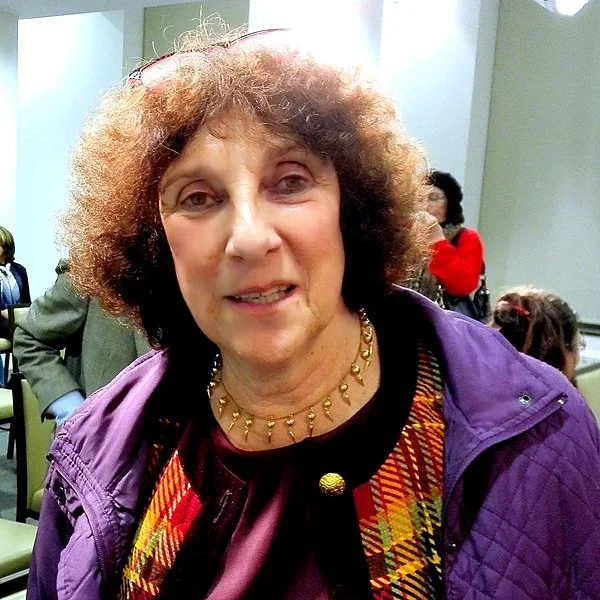
Professor of Brussels Free University Anna Morelli formulated them in the monograph “Elementary Principles of Military Propaganda” ( Principes élémentaires de Propagande de Guerre ). Subbing: “Applicts for cold, hot and warm war” (Utilisables en cas de guerre frude, Chaude Ou Tiède) . The book, published in 2001 and experiencing the third edition, was widely known to the author. This year, Morelli became a demanded guest on television talk shows.
Here are ten basic commandments of military propaganda:
We do not want war, we just defend!
Responsibility for this war is only borne by our opponent!
The leader of our enemies is the embodiment of evil in nature and has the face of the devil.
We protect the noble business, not our selfish interests.
The enemy deliberately bears, and if we make errors, then it is not mentioned.
The enemy uses illegal weapons.
We carry very little losses; The enemy losses are huge.
Recognized intellectuals and artists are on our side.
Our business is holy.
Who doubts our propaganda is a traitor. He helps the enemy.
These principles have been established with the development of democracy. The medieval rulers did not give a damn about the plebs to the war they started. Political parties of the New Age were important votes in the competition for power and to receive money from the state budget. In the 30s and 40s of the last century, these principles appreciated and effectively used the authorities of Italy, Germany and the Soviet Union, which were very far from democracy. They simply followed the principle number 10 and banned an alternative thought. They also discovered the role of radio, which more affects emotions, leaving less time for reflection and analysis than printed text. Not to mention the degree of literacy of the consumer. These modes found in promotion a tool for mobilizing the wide masses of "ordinary people."
In the mid-90s, propaganda rules played their black role in the genocide in Rwanda, where massacres were correlated with the zones of covering the radio station "Thousand Hills" ( Mille Collines ). Now propaganda stuffing, including “gossip in the form of versions” (according to Vysotsky), instantly spread bloggers among millions of those who want to believe them, obviously rejecting everything else.
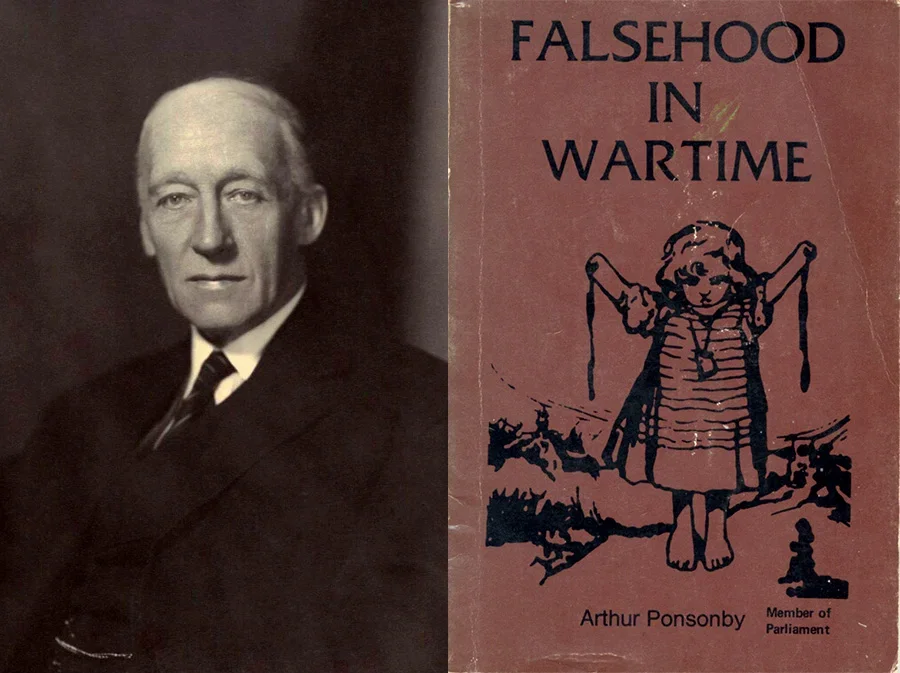
The monograph by Anna Morelli is based on the analysis of military propaganda from the First World War, when this phenomenon gained a very definite form. Morelli found inspiration in the book of British Lord Arthur Ponnbi “False during the war” ( Falsehood in Wartime ) of 1928 and the pamphlet of the French writer Georges Demartsial “The War of 1914. How was the mobilization of beliefs ”( La Guerre de 1914. Comment on mobilisa les conservces ) in 1920. Both were, in the end, with convinced pacifists and, criticizing their governments, exposed the propaganda of the Entente countries (Russia, France and especially Great Britain), directed against the powers of the axis (Germany, Austria-Hungary, Turkey and Bulgaria).
Ponsonby listed more than 20 theses of lies, which were distributed during the First World War, and
He considered a lie to the fundamental part of the creation of the premises and the continuation of hostilities. He wrote that without lies there would be no “neither a reason nor a desire for war”.
British propagandists focused on the topic of "rape of Belgium." They tried to quickly transfer the arrows from the murder of the Austrian Archduke Ferdinand Serbian nationalists to a morally unambiguous issue of Germany's invasion of neutral Belgium. The Germans violated the London Treaty of 1839, to which the European powers guaranteed the small kingdom of integrity and security. Although the dismissive phrase of the German military leader, who called this treaty, called the British intellectuals and prompted them to support the war, in the circles of the "common people" this image did not work well.
Propaganda should be involved in primitive xenophobia, blood and extension of the enemy. This is always an addicted selection of information, its exaggeration, distortion, silence, a mixture of real facts with fiction.
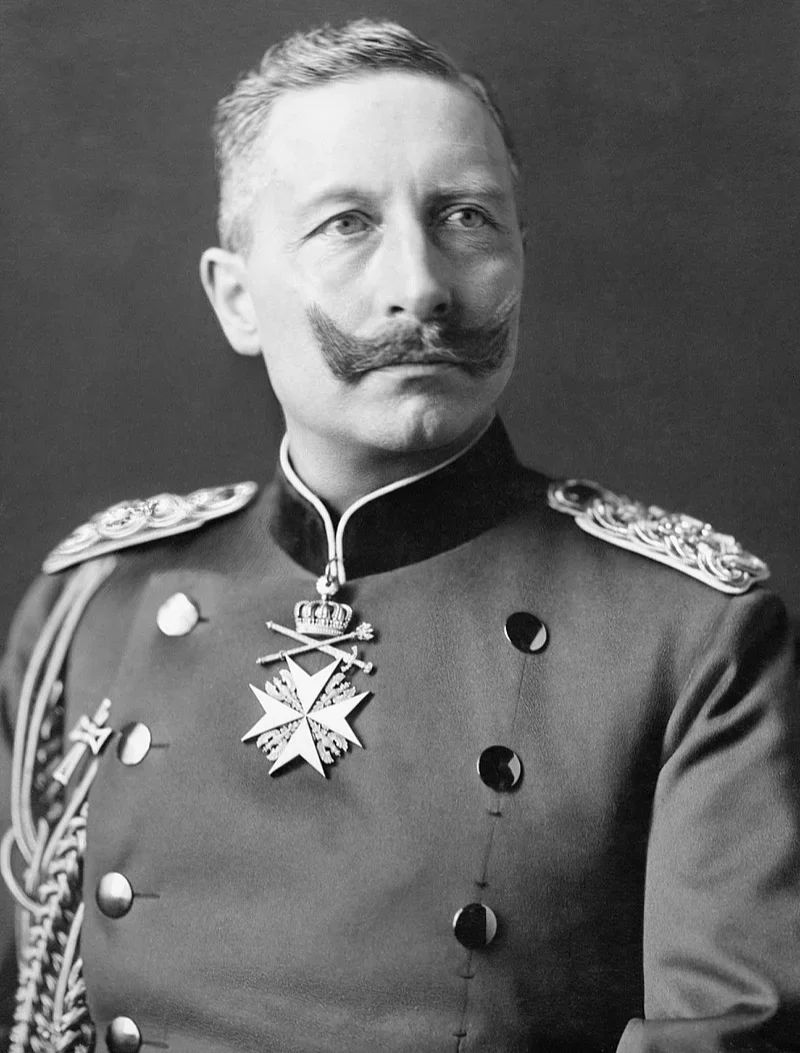
The German Kaiser Wilhelm was portrayed by a monster, a pervert. The text of the “Songs of the Germans”, which later became the state anthem of the Weimar Republic ( Deutschland über Alles ), is presented as a claim to world domination, although in German there is a clear difference between über alles (“most importantly”) and über alle (“over everyone”, that is, dominance over others). Opponents of Germany used this translation during both world wars for propaganda purposes.
The recruiters of the British army had problems with a legal explanation of the reasons for the First World War. As Germany progressed in Belgium, British newspapers began to publish articles about the atrocities of the Germans. The press - both “high -quality” and boulevard - replicated the stories about the nurse disfigured by German soldiers, about the Belgian baby who was chopped off by his hands, about a Canadian soldier who was crucified on the doors of the Sarai, about the raped nuns, about the German factory for the processing of corpses for glycerin and the destruction of the freely Livovent Lovensky Altar. It was reported about the mass killings of civilians, inflicting injuries by prisoners ...
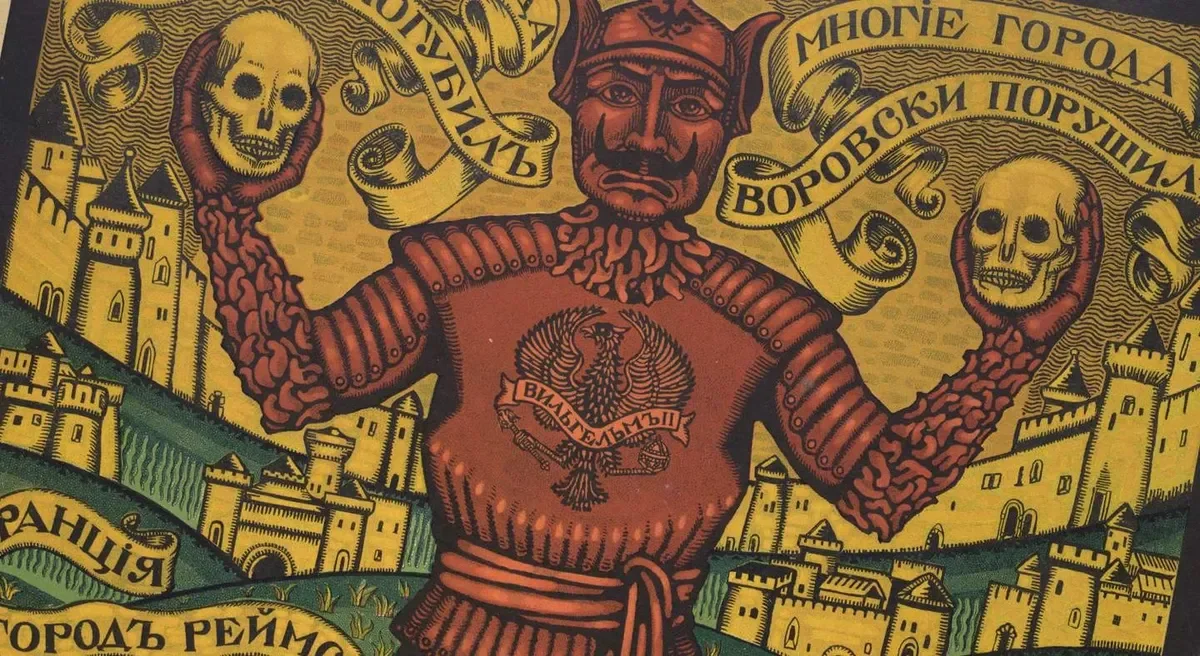
The invasion of Belgium with his very real suffering of people was described in an extremely stylized way, with an emphasis on perverted sexual acts, cut off breasts, naturalistically detailed descriptions of sexual violence against children. Often with doubtful reliability.
Fabricated fairy tales question information about genuine crimes. Part of the British press expressed concern and called on society to a more serious approach. In December 1914, a special commission was appointed for the investigation. Although initially it was supposed to carry out only an imitation of the investigation, the very fact of its creation is important for that time. In May 1915, a report was published, translated into ten languages. He became a reference manual for subsequent military propaganda.
Later, historians, having studied original documents, came to the conclusion that mass atrocities really took place, but some of the stories, including the most odious ones, were fabricated. But the English guys who were furious went to die in the swamps of Flanders "for the Belgian nurse."
German propaganda in those years turned out to be weaker than English, although touching reports were published about German -speaking Belgians who meet the liberators with flowers, and touching photographs of happy Belgian children in the arms of Kaiser soldiers. Soon the Germans will catch their own, and the department of Joseph Goebbels will surpass liberal Anglo -Saxons.
The author of the “elementary principles of military propaganda” Anna Morelli analyzed the documentary material from the time of two world wars and added the experience of conflicts in Iraq, the former Yugoslavia and Afghanistan.
As a historian, she is stipulated in the preface that she does not want to take someone’s side or protect dictators and only demonstrates the repeatability of ten principles through times: “I am not going to find out who is lying and who is telling the truth, who himself believes in what he says and who is not.” But as a person with a pronounced political position (she calls himself “extremely left”) focuses on criticism of the United States, hypocrisy of modern Western democracy and its media. Naturally, this year with its “ten principles” it is in demand by the Belgian and French media in connection with the events in Ukraine (however, it does not use this euphemism, bypassing more simple definitions).
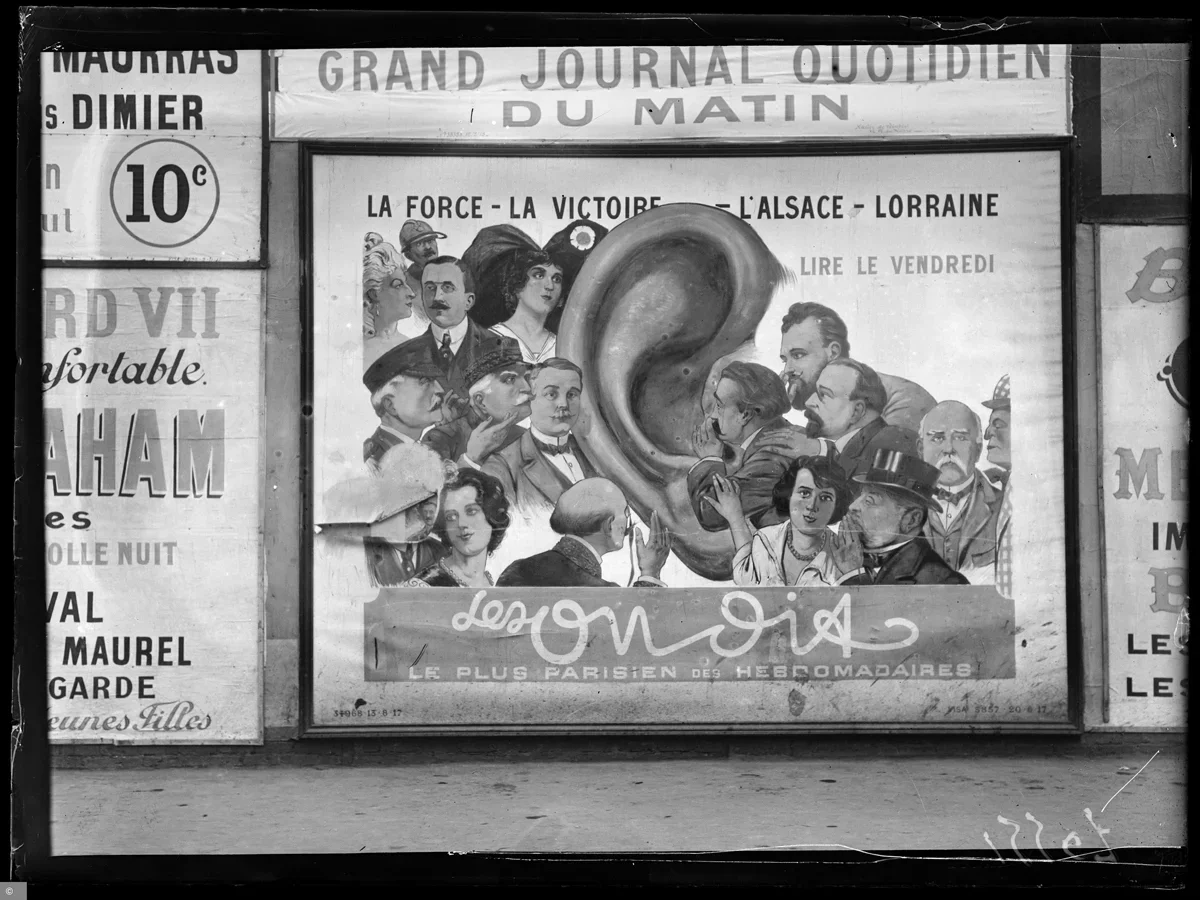
Condemning the actions of Russia, Morelli calls on in one of his interviews to put something on the other side of the scales: “Our media dumps all the blame for Putin. Why do not explore the consequences of the preceding actions of the Western camp, namely the USA, Europe and Ukrainian leaders? <...> I was stunned when I saw on ULB ( Brussels free university. - A.M. ) posters (...). For the first time I see how students are so [belligerent?] Position themselves in a military conflict. It should be noted that Ukraine has weapons, and it did not appear on its own. Ukraine has been armed since 2014, and its government regularly let its weapons against the "rebellious" - the so -called "pro -Russian" territories <...> ".
Judging by the literal repetition of the known theses (“coup in Kyiv”, “pro -American government”, “abolition of the Russian language”, “rebellion of ethnic Russians”, “NATO surrounds Russia”), the knowledge of the professors on this topic are adapted mainly from RT and Sputnik programs.
She condemns the decision of the European Commission to block their broadcasting in the EU (however, the most opinion and most of the journalistic community in Brussels). When Morelli is outraged by the “abolition of Russian culture”, the sources of its information are even more obvious. In Brussels La Monnaie ( Royal Opera Theater in Brussels. - Ed. ), Which half an hour from the university, the season opened with two opera Tchaikovsky, and then Shostakovich follows ...
But the “ten principles” are universal, in any war on any side you can find their presence - regardless of your sympathy or antipathies. In the assessment of the situation, it remains only to take them into account and try to understand who is more lying.
The first two are classics . The former head of German diplomacy, Ribbentrop, justified the war against Poland: “The Fuhrer does not want war. He decides it with a heavy heart. But the decision about the war and the world does not depend on it ... It depends on Poland. In some issues vital for the Reich, Poland should give in and fulfill the requirements, without which we cannot do. If Poland refuses, the responsibility for the conflict will lie on it, and not in Germany. ”
The Americans became involved in the civilian civilian in Vietnam, guided by the “Domino theory”, according to which if the power of the Communists is established in South Vietnam, then all the regimes loyal to the West in Southeast Asia-an important region for the freedom of world trade in the region.
The Chinese leader Dan Xiaopin justified the Military attack of the PRC on Vietnam with the need to “teach the lesson” for the invasion of the sovereign country (Cambodia) and the overthrow of the “peasant” regime Paul Pot.
The third principle : the enemy must have a face. We are not fighting against the people. Hatred goes to the enemy leader or a specific group. Hitler was honored as a man of the year on the covers of American magazines in 1936, but with the outbreak of war he became a monster. In propaganda, the most disgusting labels are used, including from the historical past. The enemy leader is characterized by all conceivable ailments and vices - from the appearance to the characteristics of sexual life. It is portrayed by an old insanity, crazy, maniac, schizophrenic, clown, corrupt official, drug addict, homosexual. Today's propagandists are actively using this old technique.
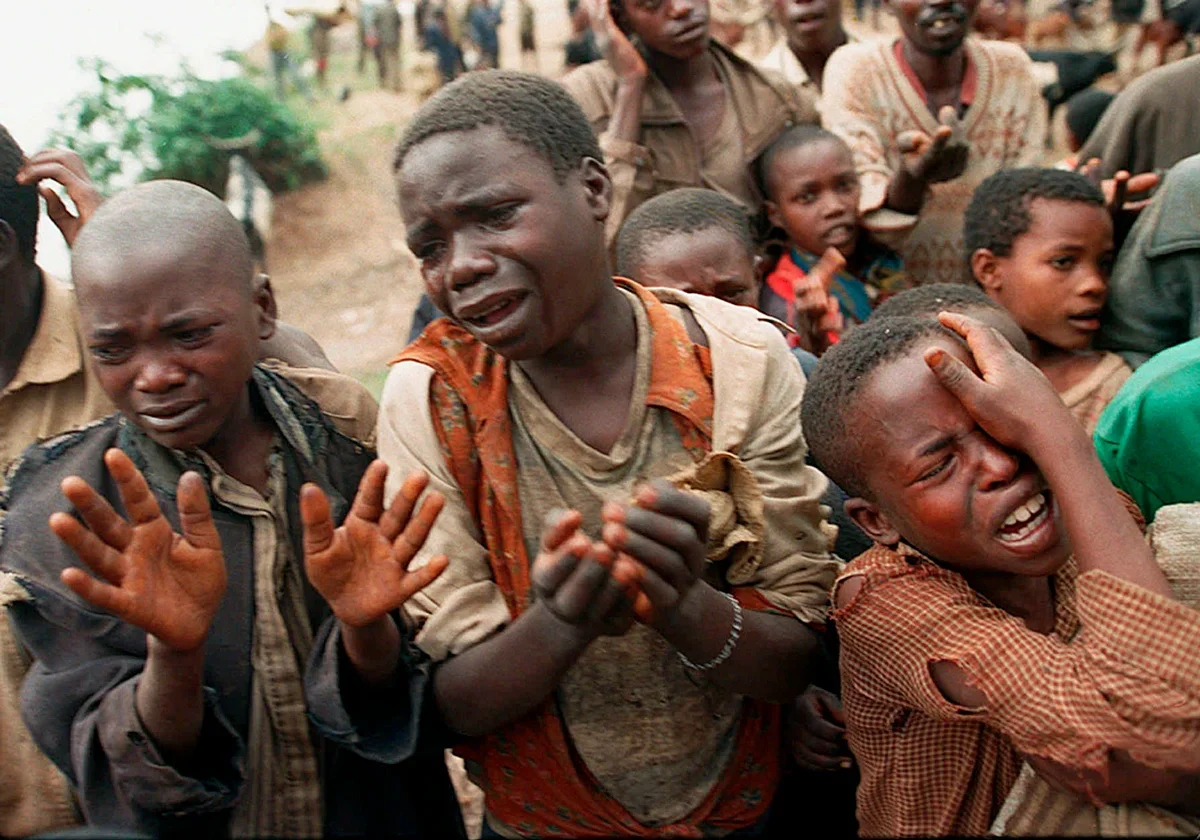
The fourth principle is "we protect the noble cause, not our interests." As a rule, this is the salvation of offended and infringed. There are nuances. Sometimes offended along with infrastructure and territory are simply absorbed by the Savior (examples from past Europe - Alsace and Lorraine, eastern cantons of Belgium). And in 1994, in Rwanda, on the contrary, the noble defenders were late to intervene in the internal affairs of the sovereign country, which cost a million lives of its citizens. There are intermediate, very controversial options such as Kosovo. The Anti -Natovsky camp for almost a quarter of a century has been leading it with an unchanged reproach in all cases of life. The ambiguity refutes the argument of modern propaganda - about "double standards". In international life with its diversity there is neither double, nor triple, nor even a single standard. Each case is unique and requires a separate solution.
In the propaganda itself, “double standards” make up a verbal canvas. The selection of words, euphemisms are very important (scouts - spies, warriors - militants, volunteers - mercenaries, liberation - occupation, “Fuhrer” - leader ...). This is not new.
The National Assembly of France only in 1999 recognized the war in Algeria in Algeria in 1954-1962. Prior to this, the term "operation to restore public order" was used. Algeria was officially considered an integral part of France, that is, the French, in theory, defended the territorial integrity of their homeland.
Stories about the atrocities of the enemy are an important element of propaganda. This is the fifth principle . Cruelty is a property of all wars, but the enemy makes atrocities intentionally, and if ours, if this happens, is only by mistake. Military propaganda is not content with real incidents, she needs to invent something sophisticatedly inhuman in order to make the enemy like the alter ego of Hitler-the universally recognized embodiment of evil.
In accordance with the sixth principle, the enemy uses a forbidden weapon, and we are fighting fiction honestly. During the First World War, propaganda was filled with fierce protests against the use of poisonous gases. Each warring party accused another. Although both used gas as weapons and conducted research in this area.
In modern conflicts, the favorite topics of military propagandists remain the same chemistry, then cassette ammunition and trains, “Dirty bomb”, then secret laboratories in biological weapons and even killer mosquitoes ...
With rare exceptions, people tend to join the work of victory, and this is the meaning of the seventh principle . Support for public opinion largely depends on obvious results at the front. If they are not very good, propaganda should even stricter to hide losses and exaggerate the losses of the enemy. Morelli refers to the fact that after the month of the First World War, the British command did not report a single horse, not to mention the list of dead.
In my Vietnamese memory - nightly trips to the Foreign Ministry, where, on behalf of the factory of the seal, Ngo Dyen was distributed on the typewriter of the military events of the day. Among other things is the account of shot down American aircraft. Judging by these numbers, the United States lost twice as many bombers and fighters than they had. And nothing about the losses of the people's army. Until the end of the war and even longer it was a secret. The Americans, in turn, underestimated the losses of their military equipment, but could not hide human losses from the public. Public support in the United States of the military operation in Vietnam was quite high until the spring of 1968, until the universal offensive of the forces of liberation in the south, which showed that America was more losing than won. Then in the States, the anti -war movement sharply intensified.
Today's practice of military propaganda also illustrates other principles noticed by Morelli in the history of past wars. The economic and geopolitical goals of the war should be disguised as the ideal, moral values, international law in reading by propagandists. This is the salvation of infringed, co -religionists, the restoration of historical justice. In the current more secular Western society , the religious holiness of the war ( 9th principle ) does not play such a role as in the First World War. But even in the "country of atheists", which the USSR was, the authorities used the influence of the Church. And in our time, God is always with us, and with them - Satan or Shaitan. They destroy the shrines.
And of course, propaganda turns to the authority of the color of the nation-intellectuals and cultural figures, especially popular singers who support this war ( 8th principle ). Military experts, generals, politicians may not trust the public, because they are involved. Manifestos, appeals are published. For example, “Manifesto 100” in support of France in the First World War was signed by Andre Jew, Claude Monet, Claude Debussy and Paul Claudel.
In the Vietnamese war in daily programs in English from Hanoi, announcer Hannah (Chin Tih Ngo) included the songs of Joan Baes and Bob Dylan and at the same time read out the names of American soldiers who died in battles in the south, as well as notes from American newspapers about anti -war protests in the United States. And it acted. Anti -war propaganda acts in a more or less open society.
The Communist Party of Vietnam, which in her country tightly controlled the information, after the war, called the “American people” among the companions, referring to the anti -war movement.
The tenth principle of Morelli refers to military propaganda in all countries, but is more effectively implemented in those where there is no political pluralism and diversity of the media: anyone who dares to question official numbers and facts or wants to double -check them is immediately declared at least a naive accomplice of the enemy.
I would add to the ten eleventh principle characteristic of a number of countries. This is a demonization of the outside world, all of foreign. It turns out that two different subspecies of man live on planet Earth: their own and a foreigner. The word "foreigner" itself becomes abusive. The list of “foreign agents” as alien elements, albeit not for the enemies of the people, but obviously “not ours”. The propagandists are more and more forcefully emphasized by the words “foreign mercenaries”, “foreign instructors”, “foreign technology, caliber, and uniform” ... This is the impact on the deep instincts of people living in a relatively isolated country.
Propaganda can change the nature of hostilities, and this is especially terrible. At some point, a stage begins when the voice of the doubts drowning in the choir of those who believe, the thoughts are retreating about why all this, who attacked and who defended himself and what threatens everyone.
Under the influence of propaganda, as history proves, the war - any, whatever you take - becomes “domestic” for both sides, comes the syndrome of the football fan (“ours is always right”), the collective feeling of “our own - stranger”. Hatred is polarized every day.
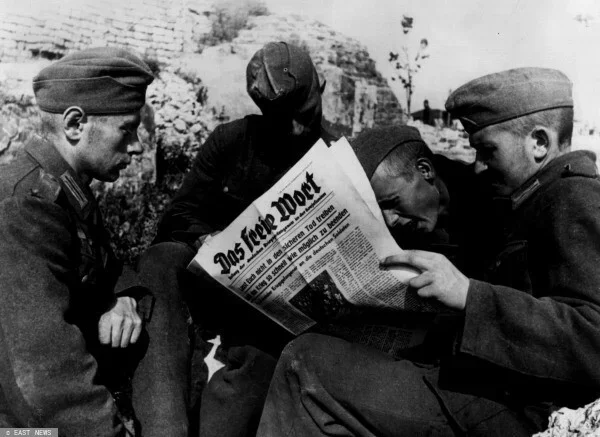
My mother, like almost all adults in my post -war childhood, hated all the Germans, although she did not know a single one in her life, and worked the whole war with a nurse in the rear. I frowned with displeasure when I, the young pioneer, corresponded with Ur and Berndt-schoolchildren from the GDR. The war ended 16 years ago. In 1970, the sister of my student girlfriend Katarina, Aunt Gerda, who lived with them in an apartment on the Berlin highway, looked at me, barely hiding the hostility, and told how Soviet soldiers turned disgustingly when they entered Berlin 25 years ago.
And mother, and, probably, Aunt Gerda has retained their hatred or hostility until the end of his life. Personal life experience was repeatedly strengthened by military propaganda. We, the first post -war generation, did not survive what fell to the share of our parents. And the propaganda of the war was no longer. Therefore, there was no hatred.
In Hanoi, there are no “vitamin” signs for a long time. On the street Ta Hien , which in the evening becomes a continuous noisy party, young Vietnamese drink beer and have fun with American "backups" and expans. This is the second generation that does not remember air anxiety. The memory remained - in families, museums, monuments. But this is only because after the war there was no propaganda that fuel hatred.