
Translated material
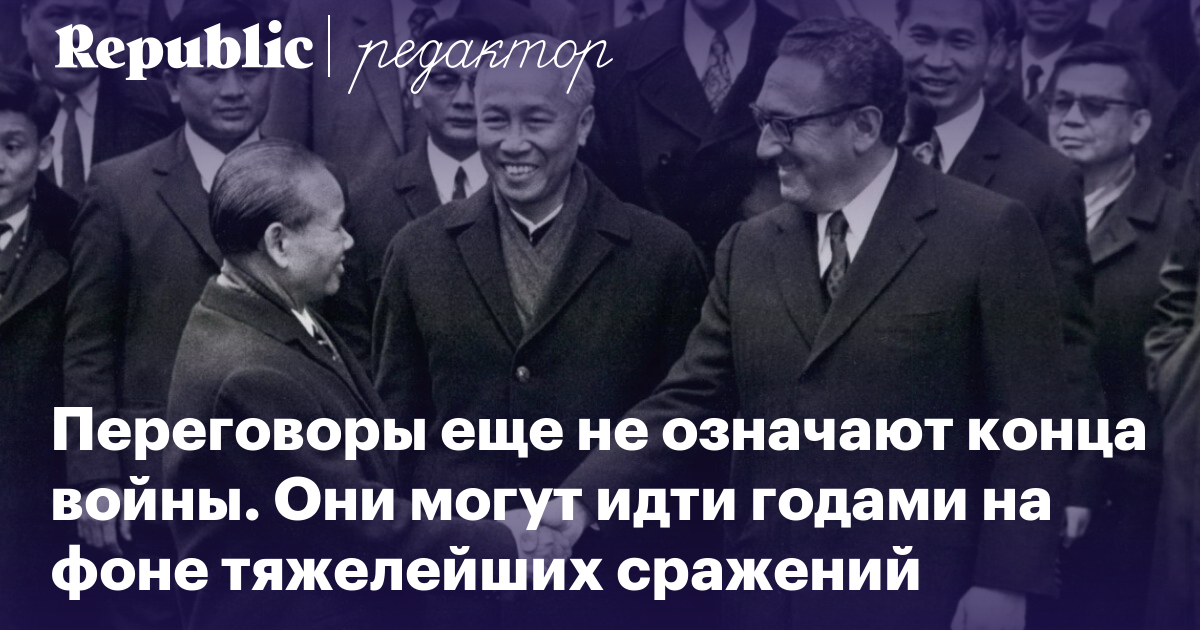
Diplomacy against the background of bombing. The experience of conflicts of the 20th century shows that negotiations do not necessarily mean the end of the war. They can go for years and be accompanied by cruel battles
As the fighting between Russia and Ukraine is obviously dragging on, and every day of continuation of battles leads to the death of new hundreds of military personnel and civilians, the wishes of the rest of the world about the beginning of negotiations between Moscow and Kiev are increasingly persistent. For example, the chairman of the United Committee of the Chiefs of Staffs of the United States, General Mark Millie, persistently spoke about the possibility and necessity of such negotiations: "When there is a possibility of negotiations on when it is possible to achieve peace, use it." The Russian-Ukrainian negotiations were recently called during his negotiations at the Twenty Summit, Chinese President Xi Jinping and French President Emmanuel Macron.
Moreover, if you take seriously the declared positions, the parties so far have nothing to talk about. Kyiv insists that the condition for starting negotiations should be the departure of the Russian armed forces from all occupied territories. Moscow claims that she agrees to start negotiations without any preliminary conditions. However, from the words of domestic diplomats it follows that “new”, freshly connected territories cannot be the subject of negotiations, which directly contradicts the Ukrainian conditions.
The media establishes this joyless background that, firstly, a prerequisite for starting negotiations is a preliminary agreement on the ceasefire, and secondly, that such negotiations can quickly lead to the achievement of agreements. In fact, the experience of completing the two largest wars of the second half of the twentieth century - the war in Korea and the War in Vietnam - calls into question such representations.
Subscribe to read the whole
Make a subscription Redefine.media to read Republic
Subscribe [you can pay for a Russian or foreign card. The subscription is extended automatically. You can unsubscribe at any time.]
Where are the money subscribers going