
Translated material
Give the life of the party
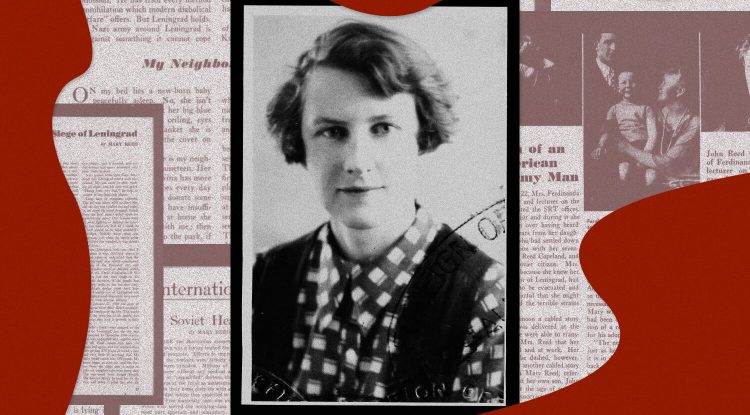
The American Mary Reed in 1927 came to the Soviet Union. In the country of her dreams, she found love and lost freedom
In 1927, an American socialist, journalist and poetess Mary Reid came to the country of her dreams - the USSR. Here she got a job in the Comintern, met her husband, survived the blockade of Leningrad, lost her only son and hit the camp after she wrote a letter to Stalin. In the United States, no one knows about her, no one noticed her in Russia. "Cold" tells her story.
In order not to miss the main materials of the "cold", subscribe to our Instagram and telegram .
“The police cried out with shouts, pulled out banners and grabbed as many people as they could. They directed weapons at us and opened fire. We retreated. Some [protesters] fell and lay in the blood, others carried them away. Still others threw stones at the police. ”
So the American Mary Reed described the demonstration in honor of May 1, which was held in 1919 in Boston. More precisely, I didn’t go: the procession was dispersed. The 21-year-old student first encountered a bloodshed of this scale, but by that time she was no longer surprised by the police. Reid, who studied at a law facet at a women's college in Boston, regularly went to a neighboring town to support the striking textile workers: every day they started pickets in an eight-hour working day at six in the morning, and the police on horseback dispersed them with batons and took them to the station.
All this made a deep impression on Rid. She was convinced that "the great American democracy is gone." And about where genuine democracy now exists, she learned after some time from her namesake John Reed, a journalist of left -wing beliefs, who ended up in Russia during the October Revolution and wrote about this the book “Ten Days that shocked the world”. After listening to Reed's performance with the story of Soviet Russia, Mary decided: “Now I unconditionally support the Russian revolution. Everything cleared in my head. Everything that I weighed and thought about was together. ”
Three years later, she will join the US Communist Party, founded by Reed. And in 1927 the USSR will visit for the first time and decide to stay there forever.
MARALS AGITAR
“Sympathy for the working class” in Mary Reed arose as a child. Her mother in her youth supported the suffrazhists, but married a conservative man: Harvard graduate Willard Reed, a zealous Protestant who worked as a school teacher, categorically did not approve of the woman's rights.
Mary Reed formed her values, knowing the world around him. One of her friends worked in the factory-and due to exhausting working conditions she died when she was not yet 16 years old. Reed by a teenager lived with her family in Europe - and with her own eyes I saw how the first world tormented the continent. “The horrors of the war appeared too brightly before me in Europe so that I could accept anything related to their repetition,” she recalled in her autobiography.
Returning to his homeland and entering the college (receiving higher education for American women in those years was still a great privilege), Reed began to learn Russian-at first not because of the revolution, but because of literature: even at school she fell in love with Tolstoy and Chekhov and now wanted to read “Anna Karenina” in the original. When the Bolsheviks came to power in Russia, politically active students quickly began to be inspired - as now, then there were many of them in Boston. She attended meetings of political circles, where the operational essence of American capitalism was discussed, and Reed. In one of them, in 1918, she met the Bolshevik Peter Antonyuk (at some point he began to work in the People's Commissariat for Foreign Affairs, but this happened before or after meeting an American, it is unclear).
In his handwritten autobiography, Rid calls Antonyuk “Ivan”; At what point the girl found out that she communicates not with the “political refugee from tsarist Russia” (it is in this capacity that “Ivan” arises in the text), but with the Bolshevik agitator, is not quite understandable. One way or another, according to Reed and her friends herself, Antonyuk made a great impression on her. She liked that, unlike her acquaintances, socialist intellectuals, who could only rant about the needs of the working class, the Russian himself worked as a malarus and talked with workers on an equal footing.
Antonyuk greatly influenced Reid's views: he shared with her books of Marx and Lenin, and also told an alternative point of view on events in Russia. In the American press, Bolshevism was considered a threat to civilization and democracy, and the revolution was called the result of the actions of the "unbridled crowd", which was incited by the criminals. Antonyuk, in all likelihood, told his American acquaintance that the Communists actually want to free the oppressed people and that revolutionary violence was the only way to carry out such radical changes: Reed recalled that, despite the all -hairs of the Bolshevik, he could not convince her of the justification of violence.
After protest clashes with the police, she finally joined the socialist movement. In 1922, Reed received a ticket to the US Communist Party. “To become a member of the party for me was not a formality,” she wrote many years later. “This meant to give his life to the party: serving it is above all.”
By the time Reed received a party card, she was already a married woman (it only knows about her first husband that he was an employee of a certain export company); In 1923, she gave birth to a boy - and called him John, according to some reports, in honor of the famous namesake. However, Rid was not going to be an ordinary American housewife: knowledge of the Russian allowed her to become a demanded translator in the left press - for example, in National magazine.
Sometimes Reed wrote articles itself: about the class struggle in the countries of the world or about the political system of Puerto Rico. But most of all, Russia was still beckoning it-more precisely, now the Soviet Union. “I did not have a stronger desire than at least the edge of my eye to look at everything that the Russian Bolsheviks did in the country ruined by wars,” she said in an interview with the newspaper “Soviet Russia”, “to see the faces of these people, to find out their thoughts.”
The country where the sickle and the hammer are being rule
In July 1927, Mary Reed's dream came true: she came to the USSR as a journalist of several American publications at once (her great article about the Soviet health system came out in the same Nation). The 30-year-old American did not return back: she liked it in Moscow, and it quickly became clear that her translator qualification allows her to work in the USSR.
Both the homeland of Reed and its new country at that moment experienced great changes. Six months after the arrival of the American, the XV Congress of the CPSU (b) was held, on which the Trotskyists were defeated; A year later, Stalin removed Bukharin from power and other “right -wing blankers” and actually turned into the sole ruler of the USSR. Relatively liberal NEP was finally canceled; Forcibly collectivization and forced industrialization began.
The United States in parallel experienced the strongest economic crisis in its history: 13 million people remained during the great depression without work. It so happened that the flow of migrants for the first time in history was not rushed from Russia to the States, but in the opposite direction: the Americans attracted jobs in the USSR, as well as free education and medicine. For example, the New York Joint-Stock Company Amtorg, which contributed to Soviet-American trade, received more than 100 thousand applications for immigration in the USSR.
“Engineers, factory workers, teachers, artists, doctors, farmers,” everyone mixed up on passenger liners, ”writes journalist Tim Tsuliadis in his book“ abandoned: American tragedy in Stalinist Russia ”. “Among them were American communists, trade union activists and other radicals of the John Reed school, but most of them were ordinary citizens who were not too preoccupied with politics.” The Americans were settled in production in a variety of corners of the USSR, schools opened for their children, they even brought with them their national sport: at one time, a whole baseball team existed at the gas plant.
Mary Reed worked as a translator in the Executive Committee of the Comintern: this organization was engaged in coordinating the activities of communist parties around the world, theoretically - in order to ultimately arrange a world revolution, in fact, so that the Bolsheviks could influence them. The American made transfers from the house: she was recognized as a disabled person of the group II and allowed not to come to the office (what the disability of Reed was connected with, the “cold” could not be found out).
In her free time, she was engaged in literary work: she wrote stories and poems. Her poetry was subsequently translated into Russian by the Soviet poet Efim Shklovsky. In Russian, Rid's verses look like a template political poetry, but how it correlates with the original is unknown: the only original poetic text of Reed, which managed to find the Cold, is written by a free verse. This dedication to Alik Rivin-the Leningrad poet-tramp, who lived on friends, begged, caught and sold cats for experiments and died during unknown circumstances; In a letter, Rid mentions that the poem was about love. In the first collection of poems by Rivin himself, which was published in 2022, Mary Reed is mentioned in the section with the sketches: "Mary Reid will not come to my grave / only my dad is not my disrepair / I will bury me."
In 1929, Reed wrote a poem dedicated to her son (it is available only in translation):
`` `<...>
And you ask: "Why is Father in America, and you in Russia do not want to do with us?"
And I will answer you:
<...>
There are two classes, a father lives in one, and the mother in the other lives.
<...>
But you will understand that the world will split the struggle, that there is a country where the dollar rules everything, and there is a country where a sickle and a hammer are being ruled. `` `
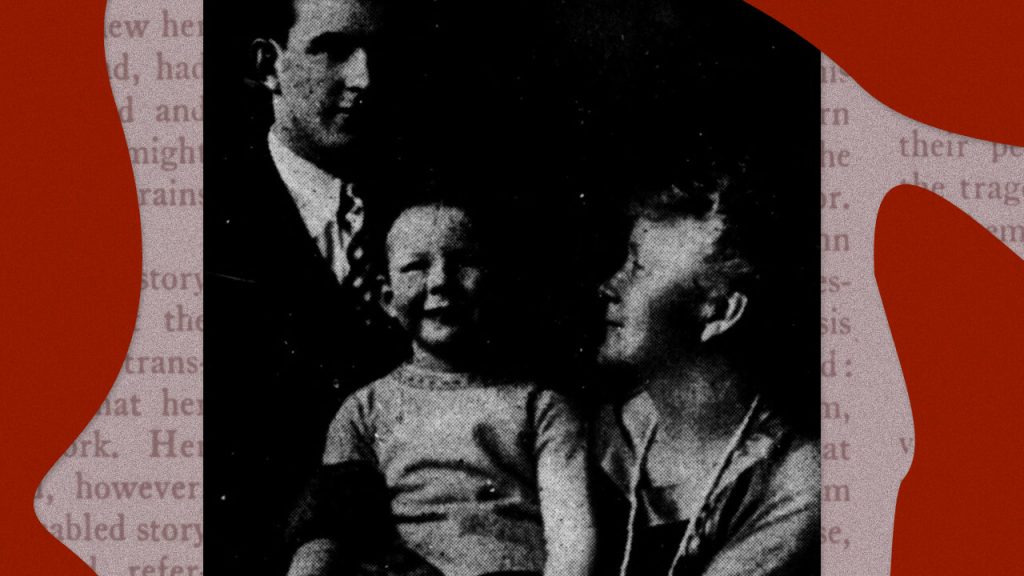
Little John was able to see the country where the “sickle and the hammer is rule”, in 1931, when his grandmother brought him to stay with his mother. At least so they promised his father, but in the end, John never left the USSR.
In November 1932, a reception was held at the Moscow Hotel on the occasion of the visit of the Communist delegation from England. At this party, Mary Reed met 25-year-old Len Wingot, a former sailor of the Royal Fleet, who organized a strike when the British government lowered the sailors of salaries. “Immediately, as I saw him, I fell in love with him,” Rid recalled. Winkott reciprocated.
A year later, they signed: at first Wingott went to Reed in the USSR, they corresponded, and once she managed to come to him in England. In 1934, Wingott moved to the USSR, but a year later the couple parted, continuing to communicate. A few years later, short -term relationships with the Englishman will play an ominous role in the fate of Reed.
By the time of parting with Wingot Reed with her son, she had already lived in Leningrad, they received Soviet citizenship, but the atmosphere in the Soviet Union has changed a lot again. Stalin used the murder of the leader of the Leningrad Party, Stalin, as an occasion to begin large -scale repressions. Soviet citizens constantly read in the newspapers about the next high -ranking arrested, who were accused of cooperation with one or another foreign intelligence. They began to look at foreigners living in the USSR with suspicion.
Reid no longer worked in the Comintern, whose members were also actively repressed. In Leningrad, she taught English at home, was a teacher in the family of a local hospital, and since 1937 she worked as a reviewer of American literature in the local department of the State Publishing House.
John, meanwhile, went to Soviet school. Several friends of Reed were arrested, but she herself remained free. And then the war began.
Hungry person
When Germany attacked the USSR, John Reed only turned 18. He fully felt like a Soviet citizen: after graduating from school, he got a job at Zhdanov’s factory, where he not only worked “with double energy”, but also engaged in political agitation. It was very important for his mother to create a normal life for his son: “The ability to somehow eat, lie in a clean bed, feel the atmosphere of peace-all this was so necessary for a boy who sometimes worked two or three shifts in a row.”
On September 8, 1941, the blockade of Leningrad began. Soon, hunger came to the family. Her daily ration was 125 grams of bread. “My index and thumb closed when I grabbed my hand above the elbow,” Rid wrote in the diary on November 14, 1941. “Two days ago there was still a gap between them.” Since the transport stopped working, John walked daily across the city at the plant on foot - despite the severe cold and general weakness. Mother tried to persuade him to take sick leave, but he said that a new production of wall newspapers should be made. As a result, John fell ill with pneumonia and died at home on December 19, 1941, looking into the eyes of his mother.
Nobody needs the work and knowledge of the American. “I can’t use you anywhere,” the head of the military department of the party district committee told her. “I devoted my life to such as them,” Rid said later about her neighbors in Leningrad. “But they are so intimidated that when they are covered by fear, they begin to see a spy in me.” Old friends like the writer Olga Bergholz turned away from her. In the book “Notes of the Blockade Man”, Lidia Ginzburg gives such a characteristic of Reed from a secular conversation: “What can she write about current things? A hungry person, a year lay in a dystrophic state. What does she know? And everyone talks about her - she does not know how. "
In the midst of the blockade, Reed began to work first in the radio committee, and then in the Swinformburo. Gradually, she was disappointed in the party apparatus, albeit not in the party itself and her mission. At the end of 1944, in her diary, she wrote that from the entire official apparatus of Leningrad, Smerids, but there are no real communists among officials. And in June 1945, after the victory, the American wrote a letter to Stalin, in which-like many Soviet writers before and after her, complained that she was not printed. “With my literary work, I can play an important role in strengthening friendship between our peoples,” Rid reported. “However, they don’t even recognize my works here, because there is no one to“ translate, there is no one to print them, they are not written in the generally accepted manner. ” Reed asked the leader to personally decide on whether the Soviet Union is needed, to which I sacrificed everyone in my life. "
Two weeks later, Mary Reed was arrested on charges of espionage.
Anti -Soviet slanderous fabrications
In October 1946, an article was published in the American magazine Life about three elderly women who owned the Daily Worker Communist Party of the US Communist Party (they bought it so that the publication that received money from the USSR did not have to register as a foreign agent). One of these women was Ferdinand Reed, Mary's mother. By that time, Nancy, the younger sister of Mary, had already lost his job in the labor department in New York due to relations with the Communists, and the younger brother died in the war.
The article, among other things, says: “[Mrs. Reed] is waiting for the permission of the Soviet authorities to return to Russia and find his daughter Mary, from whom there has been no news since her health was shaken after the blockade of Leningrad.” At that time, Ferdinand has been waiting for a visa for two years.
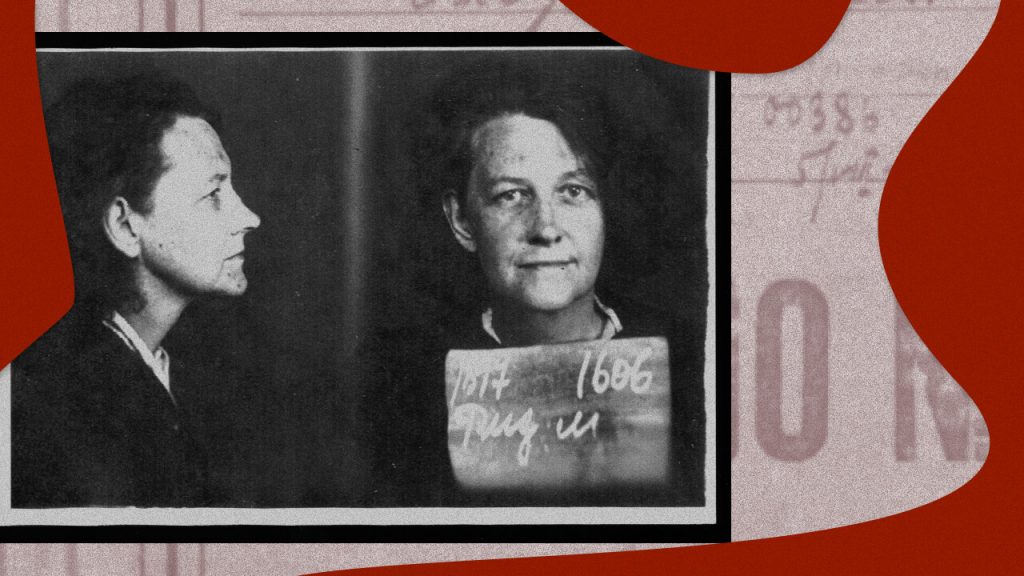
While relatives behind the ocean tried to communicate with Mary Reed, she was under arrest. There was a investigation in her criminal case. From July to November 1945 it was interrogated at least once a week. Usually interrogations, judging by their protocols, passed something like this:
- The investigation has materials that expose you in the fact that you were engaged in active intelligence activities against the USSR. The investigation once again offers you to stop the wasolation and give true testimonies about your intelligence activities against the USSR that you were engaged in.
- Once again I repeat that I did not engage in any intelligence activity against the USSR.
- You continue to brazenly lie.
The Chekists paid special attention to relations with Len Uinkott: he was a person involved in the same criminal case, and arrested him three months before Reed. The third accused was the translator Tatyana Gnedich. According to investigators, Gnedich was part of the anti -Soviet group in the Leningrad branch of the Writers' Union, which wanted to change the political system in the USSR, and also collected intelligence for the English spy of Wingott.
At first, Reed was accused of helping her ex -husband to recruit Soviet citizens, but then the accusation was re -qualified for anti -Soviet propaganda: she supposedly went to the UK to transfer to Wingo, she shared his expert information in the Soviet Union, shared her “anti -Soviet slander inventions” with acquaintances and fixed it all in a diary that she wanted to publish for issuing a diary for issuing for the border to expose the country of advice.
Это обвинение Мэри Рид признала — во всяком случае, если судить по протоколам допросов: поскольку эти документы создавались под полным контролем следствия, относиться к изложенным в них сведениям необходимо с осторожностью. Рид рассказывала, что писала в дневнике о том, что партийные органы Ленинграда «сгнили», что СССР не хватает демократических ценностей, как в Америке, что партия отдалилась от народа. «Я клеветнически утверждала, будто бы сотрудники НКВД вместо того, чтобы вылавливать вредителей и грабителей, занимаются тем, что травят и портят жизнь всем иностранным коммунистам в Ленинграде», — говорила Рид, если верить следственным документам.
26 февраля 1946 года Военный трибунал НКВД приговорил Мэри Рид к пяти годам лишения свободы с поражением в правах на два года. Лен Уинкотт отсидел 10 лет в Минеральном лагере в Коми АССР. В 1955 году он вышел на свободу. После того как он написал письмо Никите Хрущеву, Уинкотта реабилитировали, он уехал в Москву, получил квартиру и женился на русской женщине. С коммунистическими иллюзиями к тому моменту он давно расстался. Татьяне Гнедич тоже дали 10 лет лагерей и тоже реабилитировали в 1956-м; она прожила еще 20 лет, снова была принята в Союз писателей, успешно занималась переводами.

Рид отбывала наказание в Ярославской области. О годах, которые она провела в лагере, практически ничего не известно. С Уинкоттом, судя по всему, она больше не встречалась. В своих мемуарах он ее даже не упомянул, в чужих свидетельствах о жизни Уинкотта о Рид тоже нет ни слова.
Сердце Тумы
В 1950 году Рид приехала в рабочий поселок Тума Рязанской области: ее освободили из лагеря и отправили на спецпоселение. Из вещей у нее с собой были маленький чемоданчик и справка об освобождении из лагеря. «Местные отнеслись к ней настороженно, — вспоминает Нина Фильченкова (Захарова), жительница Тумы, которая еще школьницей иногда помогала американке. — Сейчас ее бы назвали словом “бомж”: она и зимой, и летом ходила в шерстяных носках и калошах, юбке из какой-то мешковины, курточке вроде фуфайки и платке».
Тума — это маленький поселок городского типа, главные достопримечательности которого — это храм и лесопарк; сейчас здесьживет примерно пять с половиной тысяч человек. Со станции Тумская поезда ходят всего два раз в день — во Владимир. Большинство жителей здесь знают друг друга — и знают о Мэри Рид: ее стихи читают на поселковых мероприятиях, школьники пишут о ней доклады, а в региональных газетах о ней вспоминают как об известной жительнице Тумы.
Первое время Рид жила в коридоре многоквартирного дома возле лесопилки, где ей досками отгородили несколько квадратных метров. «У Мэри не было ни печки, ни отопления, только керосинка. Я таскала ей воду, зимой она замерзала, так в комнате было холодно», — рассказывает 84-летняя Римма Ковровская, которая познакомилась с Рид на прогулке в парке в августе 1952 года.
14-летняя девушка и 55-летняя американка подружились и начали встречаться регулярно. «Ей надо было кого-то рядом с собой держать, — объясняет Ковровская. — Я ходила к ней, ухаживала за ней. Это сейчас много волонтеров, а тогда такого не было». Ковровская рассказывает, что общалась с Рид каждый день. Вместе они ходили в парк и на речку; американка учила подругу английскому языку.
По словам Ковровской, первые несколько лет в Туме Рид подрабатывала тем, что убирала опилки на лесопилке за 10 рублей в месяц, потом начала получать небольшую пенсию. Тетя Ковровской перешивала и чинила вещи писательницы. Несколько односельчан иногда ее навещали.
Каждый год Мэри в сопровождении Ковровской ходила на демонстрации 7 ноября. «Если даже она и разочаровалась в партии, она мне никогда этого не показывала, не возмущалась, — говорит Ковровская. — Она всю жизнь верила в партию».
Рид регулярно писала письма в партийные органы, Сталину, Молотову, Берии, в которых рассказывала, что уехала со своей родины, чтобы строить социализм, вспоминала свой опыт работы в Коминтерне и Госиздате, заявляла о преданности ВКП(б). «А что оказалось? Вот в таких условиях она жила, — продолжает Ковровская. — Я приезжала к ней из института и сажала с ней картошку под ее окном, я ее и мыла, и стригла, и все ее письма и записочки относила, покупала лекарства».
В 1956 году 59-летнюю Рид реабилитировали и восстановили в партии. Ее пенсия выросла в три раза; местные власти выделили ей полдома и построили сарай, мебельная фабрика дала мебель. Рид завела козу, разводила кур, а параллельно — переводила стихи на английский, сочиняла собственные и писала свою автобиографию. Жители Тумы ее больше не сторонились: с ней начали общаться соседи, американку стали навещать тимуровцы.
В начале 1960-х Римма Ковровская, которая к тому времени работала в родном селе школьной учительницей, предложила детям в своем классе помогать Рид. Так с американкой познакомилась пятиклассница Нина Захарова. «Все согласились [на предложение учительницы]. Американка, интересно все-таки», — вспоминает она. Сама Рид в письмах рассказывала, что школьники приводят в порядок двор, моют пол в доме и рубят для нее дрова.
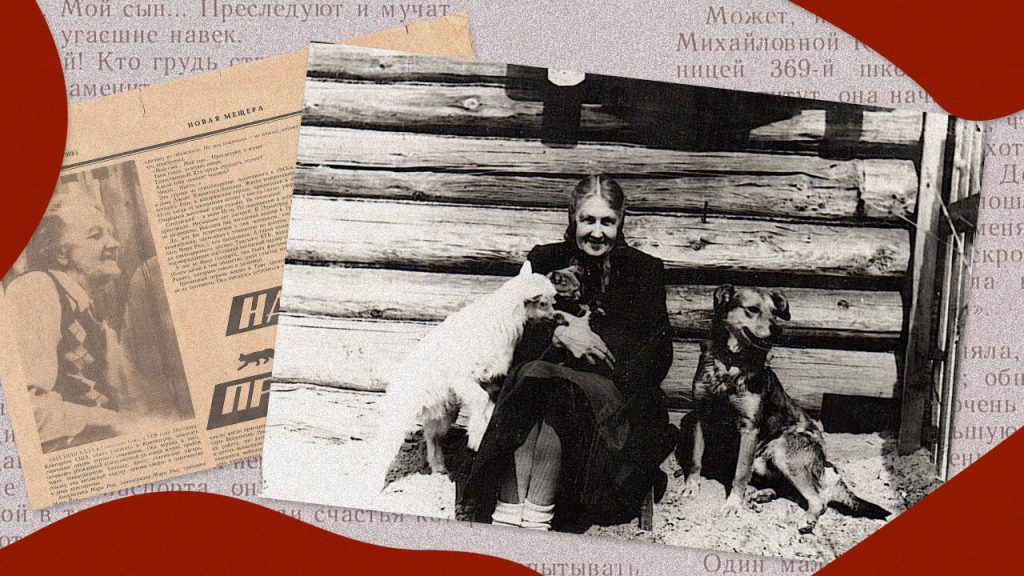
После реабилитации о Мэри Рид начали писать в районной газете. Так, в 1966 году в «Новой Мещере» опубликовали ее стихотворения в переводе Ефима Шкловского. Одно из них посвящено Туме и заканчивается такими строками:
``` И как бы ни был Мой возраст труден, Я улыбаюсь Навстречу людям.
Я с ними рядом Не одинока, И звонко радость Стучится в окна.
И крепче руки, Светлее думы. Твое я сердце Узнала, Тума.
Землею русской, Любой полянкой Прими ты сердце Американки. `` `
В середине 1960-х к Мэри Рид приехала ее сестра Нэнси с мужем. Фильченкова хорошо запомнила, как по-разному выглядели сестры: «У нас тогда еще не знали, что такое краска для волос, а у Нэнси волосы крашеные, завивка, выглядела моложаво. Хоть Мэри была всего на несколько лет старше, она была седая, волосы, как пакля». Сестра предлагала Рид вернуться в Америку, но та отказалась.
«А как вы думаете, почему она не уехала? — спрашивает Ковровская. — Она в 1927 году покинула свою Америку, она уже была гражданкой СССР, она вступила в коммунистическую партию нашей страны. И как она туда поедет больная и старая? Она никогда и не мечтала об этом».
Last desire
В 1967 году, на излете оттепели, Мэри Рид сломала бедро и попала в больницу в Рязани. По словам Риммы Ковровской, именно так в областном центре узнали, что в одном из рязанских сел живет американка. После этого в центральной прессе стали больше писать о ней и публиковать ее стихи. Она признавала: «Я уже стара, у меня был перелом бедра, и я все еще с трудом двигаюсь. Но я очень счастлива, что смысл моей жизни стал доходить до людей».
В Туму начали приезжать журналисты и фотографы. В статьях тех лет многие детали биографии Рид — уголовное преследование, спецпоселение, тяжелые условия жизни — авторы замалчивали. Например, Шкловский, который переводил ее стихи, в одной из статей написал так: «Война, ленинградская блокада, потеря сына подорвали здоровье Мэри. Она поселилась в тихом поселке Туме, среди живописной природы Мещеры».
Через три года Рид предложили переехать из Тумы в один из домов престарелых в Рязанской области, и она выбрала город Михайлов, где тогда жила Римма Ковровская.
«Я чуть ли не каждый день к ней ходила и сидела с ней до ночи, хотя у меня тогда была школа и двое детей, — вспоминает Ковровская. — Мэри жила припеваючи, между прочим, в отдельной комнате, со всеми удобствами, за ней хорошо ухаживали, даже разрешили привезти ее собаку». В интервью местной газете Рид говорила, что у нее еще никогда не было таких прекрасных условий для работы и что теперь ее ничего не отвлекает.
Она была жизнерадостна, полна оптимизма и задора. «Она высказала готовность до конца своей жизни приносить пользу родной и любимой советской стране», — говорится в вырезке газеты 1971 года, которую Ковровская хранит до сих пор. В те же годы Рид писала много писем в Америку — и старым друзьям, и новым единомышленникам. Через знакомых ей удалось передать в нью-йоркскую тюрьму письмо для Анджелы Дэвис — афроамериканской активистки, которую арестовали по липовому обвинению в причастности к убийству и о которой много писали советские СМИ. Рид отправила Дэвис свой перевод стихотворения Пушкина в поддержку декабристов «Во глубине сибирских руд» и письмо рязанских школьников в поддержку политзаключенной.
Через некоторое время активистка ответила: «Дорогой мой товарищ и сестра! Стихи прекрасны, они вдохновляют: они так хорошо выражают те чувства солидарности и любви, которым мы все должны учиться, если хотим одержать окончательную победу над врагами свободного человечества».
Это письмо Рид получила уже в пансионате для ветеранов революции, политкаторжан и ответственных работников в Переделкине, куда она переехала при содействии все того же Ефима Шкловского — он не только переводил стихи Рид, но и подружился с их авторкой. Как говорит Ковровская, американка мечтала, что в Переделкине, которое совсем близко к Москве, ее будут больше навещать ее старые друзья. Но никто не приехал — а через несколько месяцев Рид тяжело заболела пневмонией, болезнью, которая когда-то погубила ее сына. Она умерла в марте 1972 года, ей было 74 года.
Одно из стихотворений Мэри Рид называется «Последнее желание»:
``` Когда желание мое в последний час Родная партия узнать захочет, Отвечу я: «Твоей я жизни часть, И, угасая, не боюсь я ночи.
Чего жалеть, когда я каждый миг Твоей борьбе все сердце отдавала. И не мельчал души моей родник. И я с тобой в пути не уставала.
И если не могу я больше жить, То одного хочу у дна могилы, Чтоб смерть моя, как жизнь, могла служить Примером верности и стойкости и силы». `` `
Мэри Рид похоронена на участке для членов ВКП(б) на кладбище в Переделкине. Ее надгробие сильно выбивается из строя однотипных серых мемориалов. На высоком гранитном камне выгравировано: «Всесильна жизнь — оружие геров».
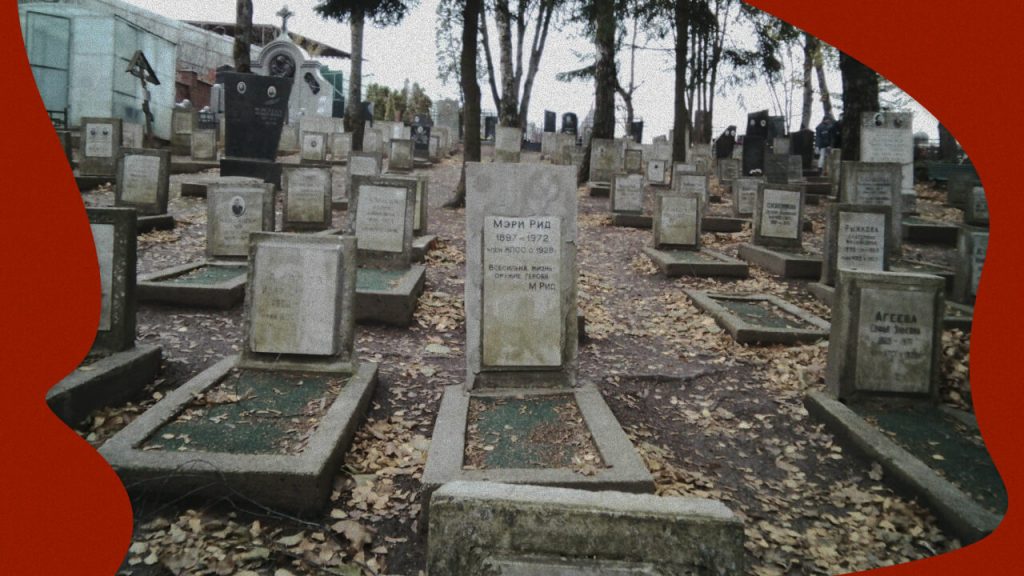
Память об американской женщине, которая всю жизнь верила в коммунизм и партию, сегодня хранят всего несколько человек. Рукописные конспекты трудов Сталина и Ленина, несколько статей и фотографий находятся в музее тумской школы №46. Письма родных и друзей, вырезки газетных статей о Рид и часть ее рукописной автобиографии бережно хранит Римма Ковровская. Еще несколько газетных вырезок сохранила 71-летняя Нина Фильченкова, которая помогала американке в школьные годы. «У меня есть семейный архив, папка о занятиях йогой, папка о кулинарии, — рассказывает она. — Мэри у меня в папке аномальных явлений вместе с инопланетянами».
Список источников
Tzouliadis, Tim The Forsaken: An American Tragedy in Stalin's Russia. NY: The Penguin Press, 2008; Дорога на Смоленск: Американские писатели и журналисты о Великой Отечественной войне советского народа 1941-1945. Per. from English. М. : Прогресс, 1985; Кислов В. Ленинградка Мэри Рид // Комсомольская правда. 1990. № 22 (19722); Литературная страница // Новая Мещера. 1966. №127 (4200); Морозов Н.А. Особые лагеря МВД СССР в Коми АССР (1948-1954 гг.). Сыктывкар: СГУ, 1998; Николаев А., Севергин О. Мэри Рид — “тетя Маруся” // Советская Россия. 1969.№ 145; Семина М. Из эпистолярного наследия Мэри Рид (1897—1972) // VII Яхонтовские чтения. Материалы межрегиональной научно-практической конференции. 16-19 октября 2012 года. Рязань, 2014; Следственное дело № 274 по обвинению Гнедич Татьяны Григорьевны и других. Т. 6. Архив ВЧК - ОГПУ - УНКВД СССР по Ленинградской области; Тихий К.Т. Американцы о стране Советов 1921-1933 гг.. Владивосток: Дальнаука, 2000; Цымбалистый Е., Жулинский Н. Юность моя — комсомолия. Л., 1971; Шкловский Е. Свободы верная сестра // Комсомольская правда. 1972. № 41 (14327); Шкловский Е. Стихи Мэри Рид // Приокская правда. 1970. № 240 (15268).