
Translated material
Protests against coronavirus restrictions were held in China - not the first over the past month
The reason was the death of people in a fire in a high -rise building: presumably, Lokdown could prevent the fire from extinguishing fire
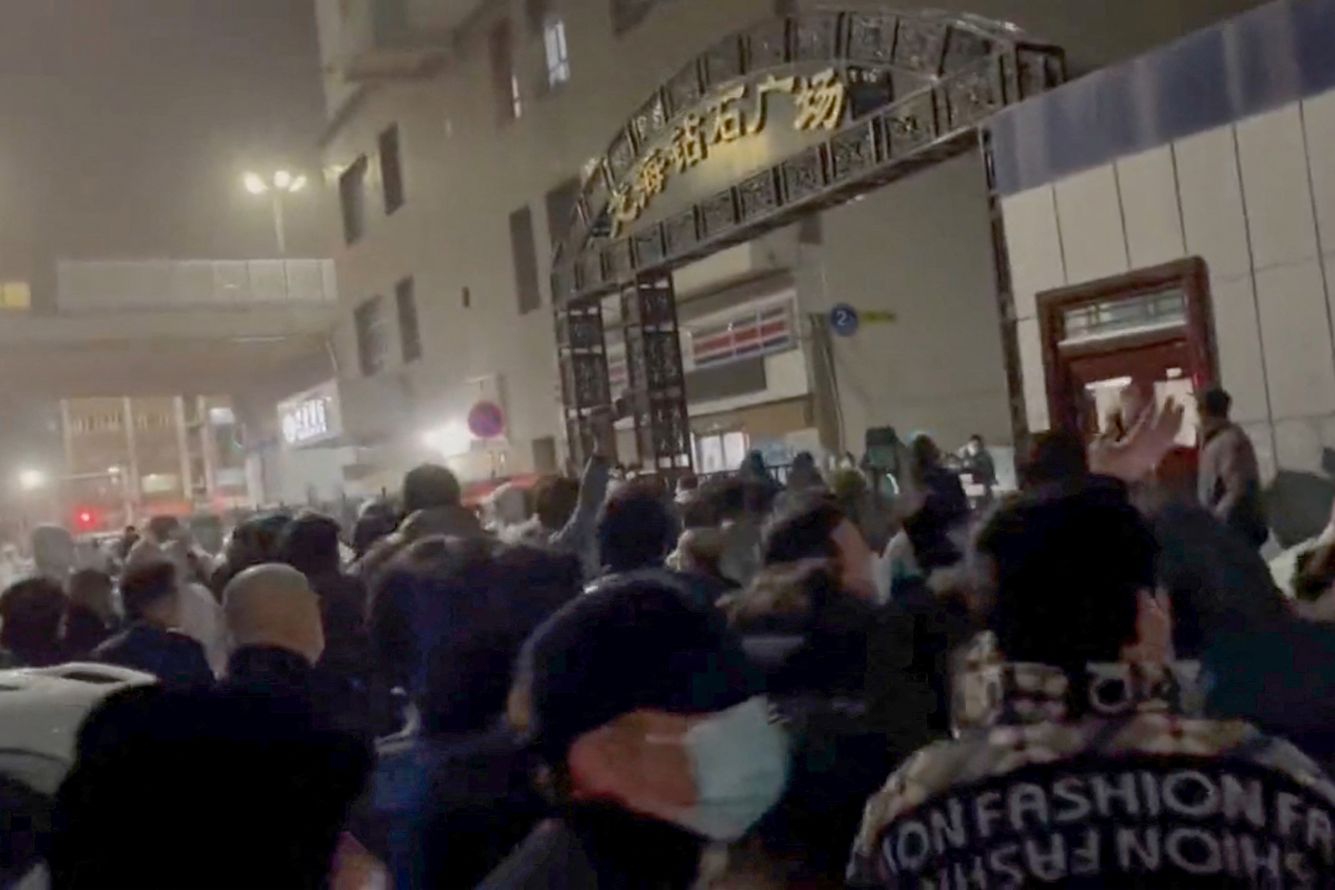
On November 25, in Urumchi, the largest city in the Sinjiang-Uygursky Autonomous District of China, protests against covid restrictions were held. This was reported by Western media, citing a video that spread on social networks; Reuters was able to confirm that the videos were shot in Urumchi.
The rollers shows crowds of people singing and chanting slogans - as Reuters writes, the protesters shouted "Remove Lokdown!" And they sang the anthem of China, in which there are the words "get up, who does not want to become a slave!" In one of the videos, writes BBC News, the crowd broke through the protective fence. The New York Times reports that some videos spread widely on the Chinese Internet segment, but then were removed from social networks.
Lokdown in Urumchi, in which many residents are forbidden to leave their homes, has been operating since the beginning of August, that is, more than a hundred days. At the same time, in the entire autonomous district on Friday, November 25, less than a thousand new cases of infection with Covid were recorded , of which only 20 with symptoms.
The protests occurred after a fire in a residential building in Urumchi on November 24, as a result of which, according to official figures, 10 people were killed and nine suffered.
Firefighters could interfere with covid restrictions. On the frames taken during the incident, a fire engine, which probably could not drive up to the house because of the fences. A stream of water coming from her did not reach the fire on the upper floors. The fences, according to The New York Times, are used in Chinese cities among the restrictive measures during the Locks. Opinions were also expressed, reports that because of the locaun, the tenants could not quickly leave the building.
However, the head of the local emergency service said that the entrance of fire engines to the house was difficult due to "narrow access roads and a large number of private cars." He also stated that the fire exits in the building were open, but some residents did not know where they were located.
Local authorities claim that the house allegedly belonged to the category of “low risk” from the point of view of coronaviral restrictions, which allowed the residents to leave it. But the journalists of South China Morning Post write that they have not found this confirmation. One of the residents told BBC News that it was only possible to leave the house for a short -term time agreed with the authorities.
On November 26, after protests in Urumchi, the Chinese media distributed a message that the Sinjiang-Uyghur Autonomous Autonomous District authorities are conducting a “thorough investigation” of the fire and promise to prosecute the perpetrators. The mayor of the city, Mamitimin Hadir, expressed condolences in connection with the death of people and apologized to the residents of the city (BBC News calls this an unusual event).
This is not the first case of protests due to covid restrictions in China in recent weeks. At the end of October, it became known about demonstrations and clashes with the police in the capital of the Tibetan Autonomous Region Lhasa, where by that time Lokdown was operating for about three months. It was reported that dissatisfaction was expressed by workers' migrants related to the Han, the ethnic majority. In mid -November, protests and clashes with the police took place in Guangzhou, where a strong flash of Covid was recorded.
China authorities establish tough restrictions on settlements where coronavirus outbreaks occur. It is believed that this has a negative impact on the state of the Chinese economy. However, at the recent congress of the Communist Party of China, the policy of “zero tolerance” was called successful. According to official Chinese statistics, a little more than five thousand people died in the country from coronavirus for the entire time of the Pandemia.
In recent days, in China, according to official statistics, the number of 32-35 thousand people infected with coronavirus per day is recorded for the country. In the middle of the month, certain reliefs were introduced in the country - in particular, the quarantine period for people entering the country and for close contacts of infected people was reduced.