
Translated material
In China, mass shares against covid restrictions. They are called the main challenge for the authorities for 30 years - since the protests in Tiananman Square
Protesters demanded the resignation of Xi Jinping
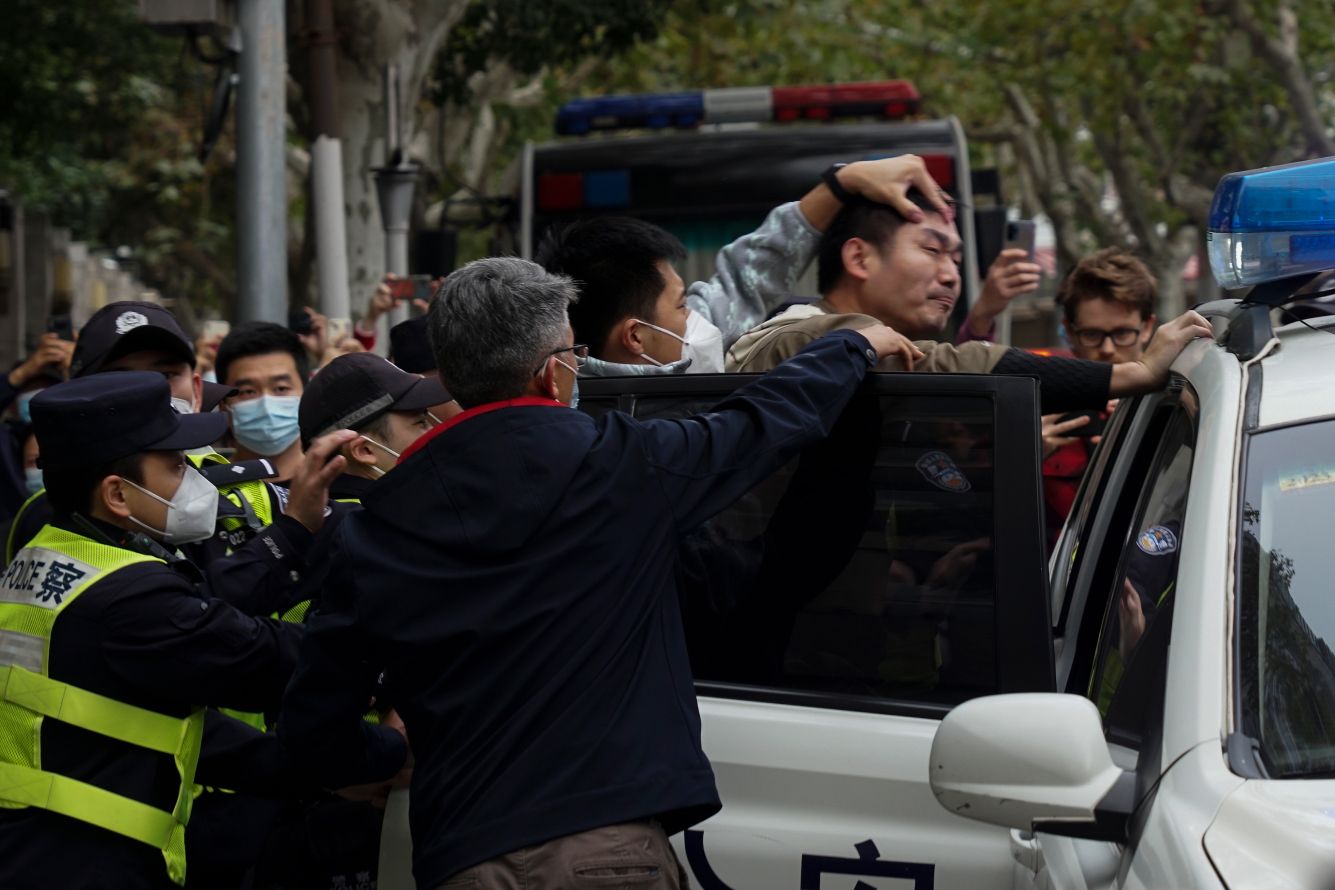
In Beijing, Shanghai and other cities of China, protests were held against hard coronavirus restrictions that the country's authorities introduce from the very beginning of the pandemic.
The reason for mass performances was a fire in a high-rise building in the city of Urumchi, the administrative center of the Xinjiang-Uygursky Autonomous Region of China (this is a region where massrepressions are depressed against the Uyghurs inhabiting it). It occurred on November 24, 10 people died in it and nine more were injured. Soon after the fire, evidence appeared that covid restrictions could interfere with the salvation of people. In particular, it was reported that the firefighters could not drive up to the building because of the fences installed from the locaun, or because of the electric vehicles whose batteries were discharged while the owners were in quarantine.
China authorities declare the policy of the so-called “zero tolerance” to the Covid-19. It provides for the elbows and mass tests in case of the detection of foci of the disease. One of the most striking manifestations of this policy is Lokdown in Shanghai in the spring of 2022, which lasted longer than two months. Then most residents of the 26-millionth city were locked in their homes, offices or special quarantine centers. They spent weeks there, suffering from hunger (due to a large load on delivery services, many could not order products for a long time) and screaming from the windows of their houses in despair.
Beijing calls the policy of “zero tolerance” successful: according to the Chinese authorities, about 5,200 people died from the beginning of the pandemic from Covid in the country. But Chinese statistics on deaths are considered underestimated , Chinese vaccines are not very effective , and mass elbows practiced in the country are called the reason for the slowdown in the economy and the death of people. In September, in the city of Chend, some residents were forbidden to leave houses even during an earthquake, and in November, a four-month-old girl died in the city of Zhengzhou, to whom medical workers refused to go to Covid.
Urumchi became the object of the next covid restrictions in August. At the time of the fire in the high -rise building, Lokdown in the city lasted more than 100 days. Officials said that the death of people in fire was not connected with him. But on November 25, the next day after the fire, the inhabitants of Urumchi came to the administrative building and demanded the abolition of covid restrictions. Videos with protesters diverged on the Chinese Internet. They were quickly removed, but on November 26 the authorities went to some concessions: it was announced that the distribution of coronavirus in the city had ceased and that the work of public transport would resume there.
However, this did not calm the protests. On the evening of November 26, some residents of Shanghai came with candles to the street, named after Urumchi to honor the memory of the dead in a fire. The memory of the memory has grown into a demonstration of protest. Its participants (judging by the photo , they were at least two hundred) called for the complete abolition of the Lokdown in Urumchi and the departure of the head of China Xinpin, who had re -elected for a third term. The protesters sang the “International” and took out white sheets of paper as a symbol of censorship in China. “No one said anything, but we all understood what this means,” one of the participants in the action told The Washington Post.
By the evening of November 27, the protests spread to other large cities, including Beijing, Cunde, Guanzhzhou and Juan (in the last of them, if you remember , the pandemic once began). In addition, the shares were held on the territory of several universities in Beijing, Nanjing and the city of Sien in the Central Chinese province of Sheanxi. The CNN channel counted at least 16 places where protests were observed. According to Reuters, the number of protesters in different cities was from several tens to thousands or more. In particular, more than a thousand people, according to the agency, gathered on the night of November 28 in Beijing. In Shanghai, the police applied force to protesters. The BBC correspondent was detained there; Later he was released.
These are not the first protests due to coronavirus organications that have been held in China recently. At the end of October, it became known about demonstrations and clashes with the police in the capital of the Tibetan Autonomous Region Lhasa, where by that time Lokdown was operating for about three months. In mid -November, unrest took place in Guangzhou, where the strongest outbreak of Covid was recorded from the beginning of the pandemic. There, as reported , was protested by workers, isolated in one of the areas of the city, which, because of the locaun, were not allowed to return to work.
In general, local protests in China are not rare, however, the current demonstrations seem to experts interviewed by Western publications, the most serious challenge for the PRC authorities since the suppression of protests on Tiananmen Square in 1989. “They are so synchronized in terms of scale and mass, it is a really amazing development of events,” Professor Dali Young, political scientist from Chicago University, told The Guardian.
The Director of the Chinese Center at the University of Oxford, the wound Mitter noted in an interview with BBC that another problem related to covid restrictions in China is the lack of a “final point”, after which all the prohibitions will be removed and life will become the way before the pandemic.
On November 27, more than 40 thousand new coronavirus infections were recorded in China, which became the highest value since April. It is still unknown to the protests against the background of the next increase in the incidence of incidence. The country's highest leadership has not yet commented on the actions of protesters. However, the Chinese Foreign Ministry has already stated that the authorities are making adjustments to the policy of "zero tolerance", "based on the situation in the field."