
Translated material
Kudrin & Yandex
Hello! This week our top story is about former Finance Minister Aleksei Kudrin’s role in getting Kremlin approval to break up Yandex — and his decision to take a top role at the company. We also look at the fuss over Immigram when it had a prestigious European prize rescinded over links to Russia, and President Vladimir Putin’s staged meeting with mothers of soldiers killed on the frontlines in Ukraine.
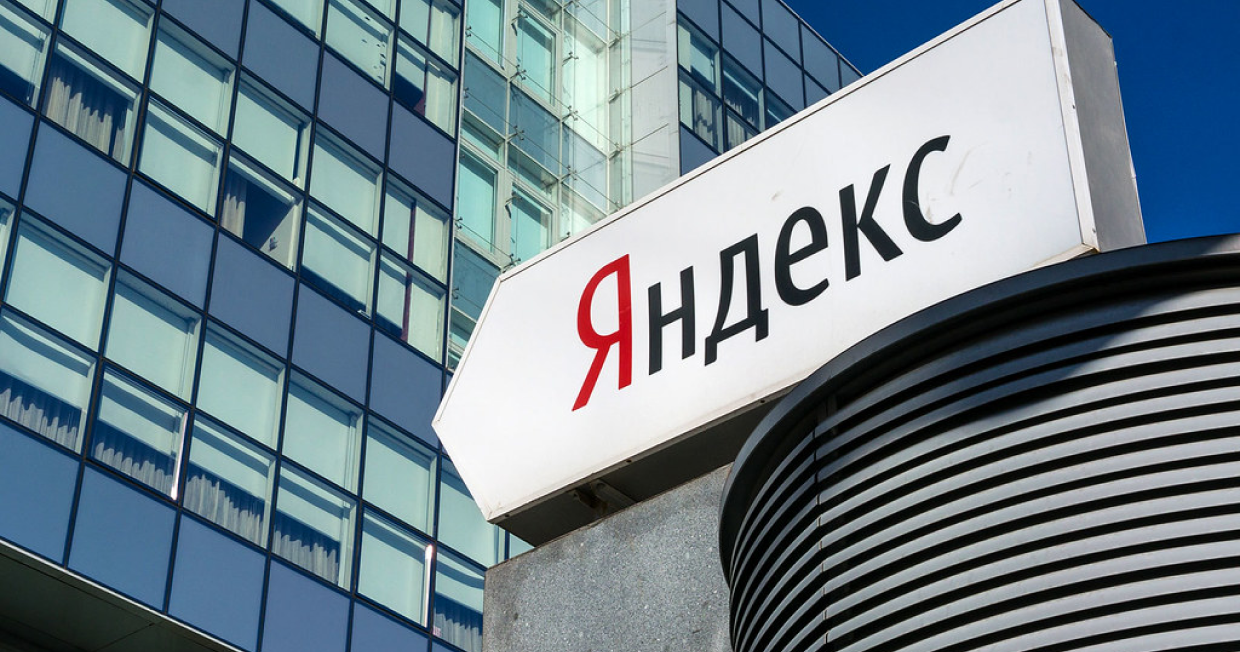
Kudrin leaves public office to take top role at new look Yandex
Former Finance Minister Aleksei Kudrin, once a leading liberal in President Vladimir Putin’s inner circle, is leaving public service to go into business. He is set to take charge of Yandex, Russia’s leading IT company. The transformation of a senior official into a businessman appears to be one of those common attempts to convert political capital into money. However, for Kudrin, it is also a chance to distance himself from the Kremlin and the war.
- At a closed-doors meeting last week, Kudrin and Putin resolved the fate of top IT Yandex — also known as “Russia’s Google.” This brought an end to the biggest question mark in the Russian IT sector since the start of the war. Founder Arkady Volozh has been attempting to move some of Yandex’s assets abroad, while the company’s directors have sought to preserve the business in Russia.
-
In these circumstances, Kudrin was Yandex’s “white knight.” In essence, he took on the role of advocate for the company in the Kremlin. Previously, Aleksandr Voloshin, former head of the presidential administration, fulfilled this function.
-
At a secret meeting Thursday night reported by multiple media outlets (there has been no official confirmation that the gathering took place) Kudrin and Putin agreed to split Yandex’s assets. Kudrin also accepted a new role in the company. As a result, Volozh, who owns a 57.7% stake along with the company management, will lose control. In return, he will be allowed to retain some of its most attractive assets and move them to the West. The agreement effectively means that Yandex will be split in two — a Russian half and a foreign half.
- The Russian part, which includes most of the company’s well-established businesses (its search engine, taxi company and food delivery business) comes under control of a new company that will be registered in Russia and led by Kudrin himself. This company has new shareholders, including billionaire Vladimir Potanin.
- Volozh’s Dutch company, Yandex N.V., retains promising high-tech projects in return for giving up the Russian part of the operation. These projects include self-driving vehicles, cloud services and machine learning.
- Kudrin will get a 5% stake in the company that takes over the Russian side of Yandex. This is a reward for coordinating the whole process with Putin.
Kudrin’s long road to Yandex
Kudrin is an interesting character with a complex back story. He got to know Putin while working in Leningrad City Hall in the early 1990s. In 1996-1997 he was among those who eased Putin’s passage to Moscow and a position in President Boris Yeltsin’s administration. In the first 11 years of the Putin era, Kudrin served as Finance Minister where he laid the foundations of financial stability that enabled Russia to survive the 2008 crisis and even cope with some of the economic shocks Russia has experienced during the Ukraine war.
Kudrin had to resign as Finance Minister in the fall of 2011 following a public conflict with then-President Dmitry Medvedev. For the next seven years, Kudrin’s Committee for Civil Initiatives published a series of proposals for liberal reforms, but his most striking moment was his appearance at an opposition street protest in late 2011. However, nothing came of those protests and Kudrin himself steered clear of the radical opposition in order to maintain his connections with Putin and retain a chance of returning to power.
He got that chance in 2018 when he was put in charge of the Audit Chamber, an oversight body with no serious powers but directly subordinate to Putin. That gave Kudrin an excuse for face-to-face meetings with Putin — although it is unclear how close the two truly remain.
When war broke out, Kremlin sources began briefing journalists about how Kudrin had told Putin about the disastrous consequences of invading Ukraine.
Why the world should care
If Russia’s defeat in the war seems likely and Putin starts to seek a successor who can negotiate with the West (or if he is forced into this against his will), Kudrin’s name is sure to be on the short-list. His departure from state service and time in charge of Russia’s biggest IT company will only increase his chances of being called upon if such a moment arrives.
Russian start-ups skating on thin ice in the West
Immigram, a U.K. project with Russian roots, won a competition for start-ups at the prominent Slush conference in Helsinki earlier this month. However, within a few days, the company opted out of the award and the organizers withdrew the €1 million prize. This happened because of criticism on social media: Slush was accused of rewarding a Russian project. Immigram’s story made a lot of noise but, as The Bell discovered, it’s not unique.
How Immigram was “canceled”
Immigram, a start-up created by Russians Anastasia Mirolyubova and Mikhail Sharonov, won Slush’s start-up competition on Nov. 18. Immigram helps IT professionals from around the world to apply for a U.K. Global Talent Visa and Slush is an annual conference in Helsinki which is seen as a landmark event for Europe’s venture capital market. The prize for the competition winner would have been investment worth €1 million.
No sooner was the decision announced then Slush faced fierce criticism on social media for choosing a Russian — given the ongoing Ukraine war. And Immigram itself was criticized for helping Russian specialists leave the country despite Western sanctions. There was a further accusation that, although Immigram claims to have left Russia, it continues to advertise job vacancies in Moscow. In addition, one of Immigram’s investors, Sergei Dashkov from Joint Journey Ventures, lists his location as “Moscow” on LinkedIn.
Both the start-up and its investors made their excuses. However, the day after the award, Slush announced it was investigating. Two days later, it annulled the award. Shortly before that decision, Immigram co-founder Mirolyubova wrote that her company had chosen to back out. In a commentary for Forbes, the entrepreneur slammed the conference organizers, accusing them of discrimination, racism and betraying their stated values.
A bigger problem
The Immigram affair received so much attention because it happened at a major conference. However, it is far from the only situation of this type in the past year.
In summer, The Bell wrote about the problems facing start-ups with Russian founders in the U.S. state of Delaware, one of the most popular jurisdictions for registering companies. In particular, local regulators were refusing to work with Russian immigrants.
The Bell spoke to several Russian start-ups whose founders have, since the invasion, stopped working in Russia and evacuated their teams from the country. According to one venture investor who spoke to The Bell, cutting all ties with Russia is the only path open to companies that wish to build their business or raise investments in the U.S. and Europe. You can no longer try to keep a foot in both camps.
In itself, a Russian passport is not a red flag. However, to work normally in Europe, neither start-ups nor their investors can afford to maintain operations in Russia. That means no staff and no investors.
One of The Bell’s sources warned that companies have to be rigorous about this. For example, the mere presence of vacancies tagged to “Russia” or “Moscow” on LinkedIn will immediately cause problems when a start-up is vetted, he said. This is exactly what happened to Immigram. It is also important to make a public statement about the company’s position on the war, the source added.
Why the world should care
All Russian investors and entrepreneurs now have to take a side. And some have publicly cut all ties with Russia. For example, Nikolai Storonsky, founder of Revolut, and investor Yury Milner both renounced their Russian citizenship. And, earlier this year, Telegram founder Pavel Durov asked that he no longer be referred to as a Russian citizen.
Putin talks to ‘soldiers’ mothers’ in staged Kremlin meeting
Putin last week took part in a meeting with the mothers of soldiers killed in the war in Ukraine. The title “soldiers’ mother” carries a lot of influence in Russia — and Putin was famously humiliated by a group of soldiers’ relatives in his early years as president. Unsurprisingly, Friday’s meeting included only those trusted to meet Putin and the gathering passed off without awkward questions. Putin — who now rarely communicates with anyone outside of his inner circle — once again demonstrated a complete detachment from reality.
- The Russian authorities have been nervous of organizations of soldiers’ mothers since the mid-1990s. During the first Chechen war (1994-1996), in which the Russian army was humiliated, the Committee of Soldiers’ Mothers was one of the country’s leading anti-war forces and held the state and the military to account.
- For Putin personally, any encounter with soldiers’ mothers stirs unhappy memories of one of the most dramatic incidents of his first year in the Kremlin. In August 2000, the inexperienced president was subjected to a grilling by the wives and mothers of sailors who died in the Kursk submarine disaster. The transcript of the meeting immediately appeared in the press and a recording was played on Channel One, which was then owned by Kremlin eminence grise Boris Berezovsky. Presenter Sergei Dorenko subsequently claimed that, after the broadcast, Putin called the channel and yelled that the widows were not genuine and that Berezovsky’s colleagues “hired whores for $10.” Ever since that encounter, the Russian president has avoided in-person meetings, favoring stage-managed gatherings with hand-picked members of the public.
- This time, of course, there were no surprises. The Kremlin carefully selected the soldiers’ mothers who were invited to attend. At least half of those at the meeting turned out to be activists from the ruling United Russia party and members of pro-Kremlin organizations.
- The most striking speech at the event was close to parody. It was given by Nina Pshenichkina, a woman from Ukraine’s Luhansk Region whose son was killed in 2019. Pshenchkina later became a member of the Public Chamber of the so-called Luhansk People’s Republic and has attended almost every official funeral and official celebration. She told Putin that her son’s last words were: “Let’s go, lads, let’s crop some dill” (in this context, “dill” is an insulting nickname for Ukrainians).
- Putin’s speech was also striking. First, he told the assembled mothers that Ukrainians were Nazis because they kill mobilized Russians soldiers who did not wish to serve on the front line. Then he embarked on a long, strange discussion about why we should be proud of the dead. “We are all mortal, we all live beneath God and at some point we will all leave this world. It’s inevitable. The question is how we live... after all, how some people live or don’t live, it’s not clear. How they get away from vodka, or something. And then they got away and lived, or did not live, imperceptibly. But your son lived. And he achieved something. This means he did not live his life in vain,” he said to one of the mothers.
Why the world should care
It would be an error to assume that Putin has completely abandoned rational thought. However, it is instructive to watch him at meetings like this, which provide a window onto the sort of information he consumes. At this meeting with fake soldiers’ mothers he quoted fake reports from his Defense Ministry and, seemingly, took it all seriously.