
Translated material
“The Conscience of the Nazi Judge”: Konrad Morgen fought with the Nazi Mass Murder. Why did he try to fenced the SS in Nuremberg?
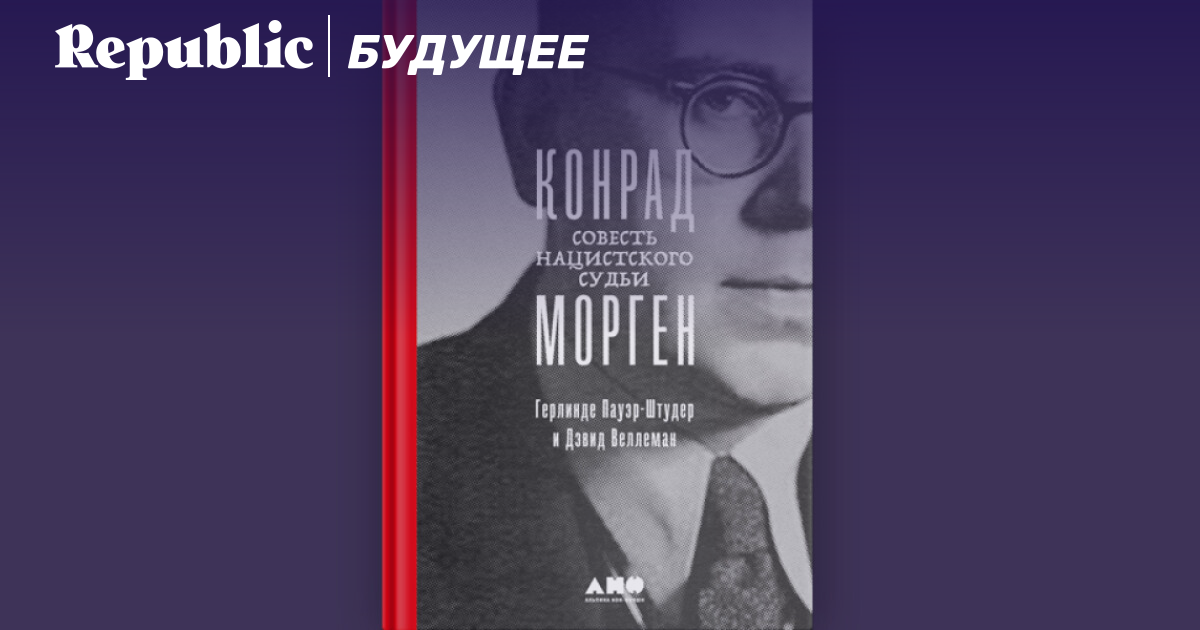
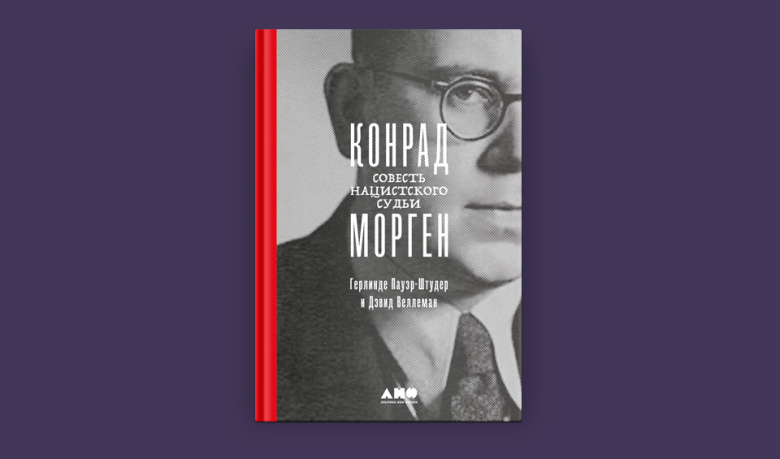
Translator Yuri Chizhov; Scientific editor Dmitry Gurin; Editor Natalya Narcisssoa
Original edition: 'Konrad Morgen: The Conscience of a Nazi Judge', By HerLinde Pauer-Studer and J. David Velleman (Palgrave Macmillan, 2015)
Alpina Non Fikshn issues a documentary historical study “Conrad Morgen. The conscience of the Nazi judge. " The authors of the book- Gerinda Power-Shtuder and J. David Welleman -tell the little-known story of the representative of the SS judicial system, who faced face to face the Nazi Mass Murder and began to fight her to the best of his ability to fight her.
Investigating corruption crimes in concentration camps, the SS judge Konrad Morgen exceeded the authority and began to persecute the main performers of the Hitler’s “final solution to the Jewish question”, charging the murder against the commandant Buchenwald and chef Gestapo Ausvkim.
From the testimony of Morgen given in 1964, we already know how he reached Auschwitz. Customs inspectors discovered gold ingots that were sent from Auschwitz to a private individual, and suspected that there was criminal activity. The fact that in concentration camps of the dead they pulled out golden teeth and sent them to the Reichsbank was not a secret, but, as far as Morgen knew, this concerned prisoners who died from natural causes or as a result of legal executions. However, seeing what size confiscated ingots were, he came to the conclusion that crowns and seals were taken from 50,000–100,000 people should have been made for their manufacture, and this could be the result of only mass murder. Therefore, Morgen went to Auschwitz - “This little -known Auschwitz, which I hardly found on the map,” - where I saw gas chambers and crematoriums.
According to this story, Morgen did not know anything about Auschwitz until he came there. But during the interrogation of 1946, he reported that he first sent an investigative commission to the camp and only after that he went there himself. Thus, the idea that is based on his testimony of 1964 about how he found Auschwitz on the map and then arrived at the station, not yet suspecting where exactly he could not be true. Morgen knew about Auschwitz before he got off the train.
This chronology can help explain inconsistencies in the testimony of Morgen in Frankfurt. First of all, Morgen said that, having begun his excursion with the platform in Birkenau, he "asked his guide how it all happens." But what does it mean "this"? How could Morgen know that “this” was the “beginning of the end” before he saw gas chambers? Perhaps such a discrepancy is explained by the fact that he already knew about them when he arrived.
Subscribe to read the whole
Make a subscription Redefine.media to read Republic
Subscribe [you can pay for a Russian or foreign card. The subscription is extended automatically. You can unsubscribe at any time.]
Where are the money subscribers going