
Translated material
Women suffered stronger from the crisis. Research "features"
Research "features"
Briefly
The economic crisis in Russia after the unprecedented volume of sanctions imposed on the country is just beginning. While the authorities are reporting on the extreme adaptability of the Russian economy and a imminent return to economic growth, the Bloomberg agency with reference to the government’s closed government return to pre -war indicators only at the end of this decade. How will the crisis affect the economic situation of women in Russia? And which of them will be the most vulnerable? The correspondent of " features " Irina Snegovskaya figured out the project " to be precise . "What affects the gap in salaries?
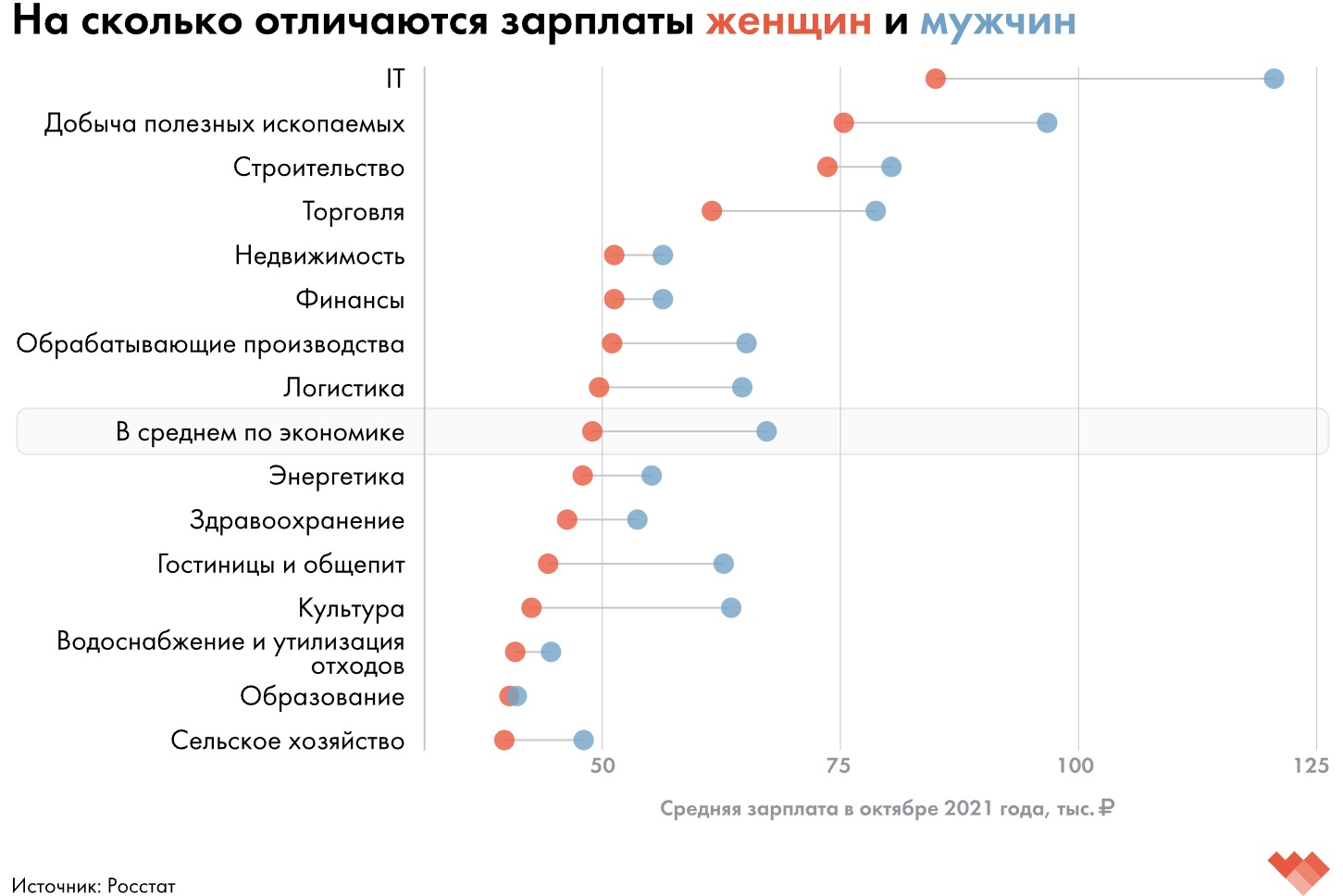
In Russia, a traditionally high level of the International Labor Organization evaluates a global gender gap in the range from 16 to 22% Gender gap in wages: in 2021, the average salary of women was 27.5% lower than that of men, according to Rosstat, the project “to be precise”.
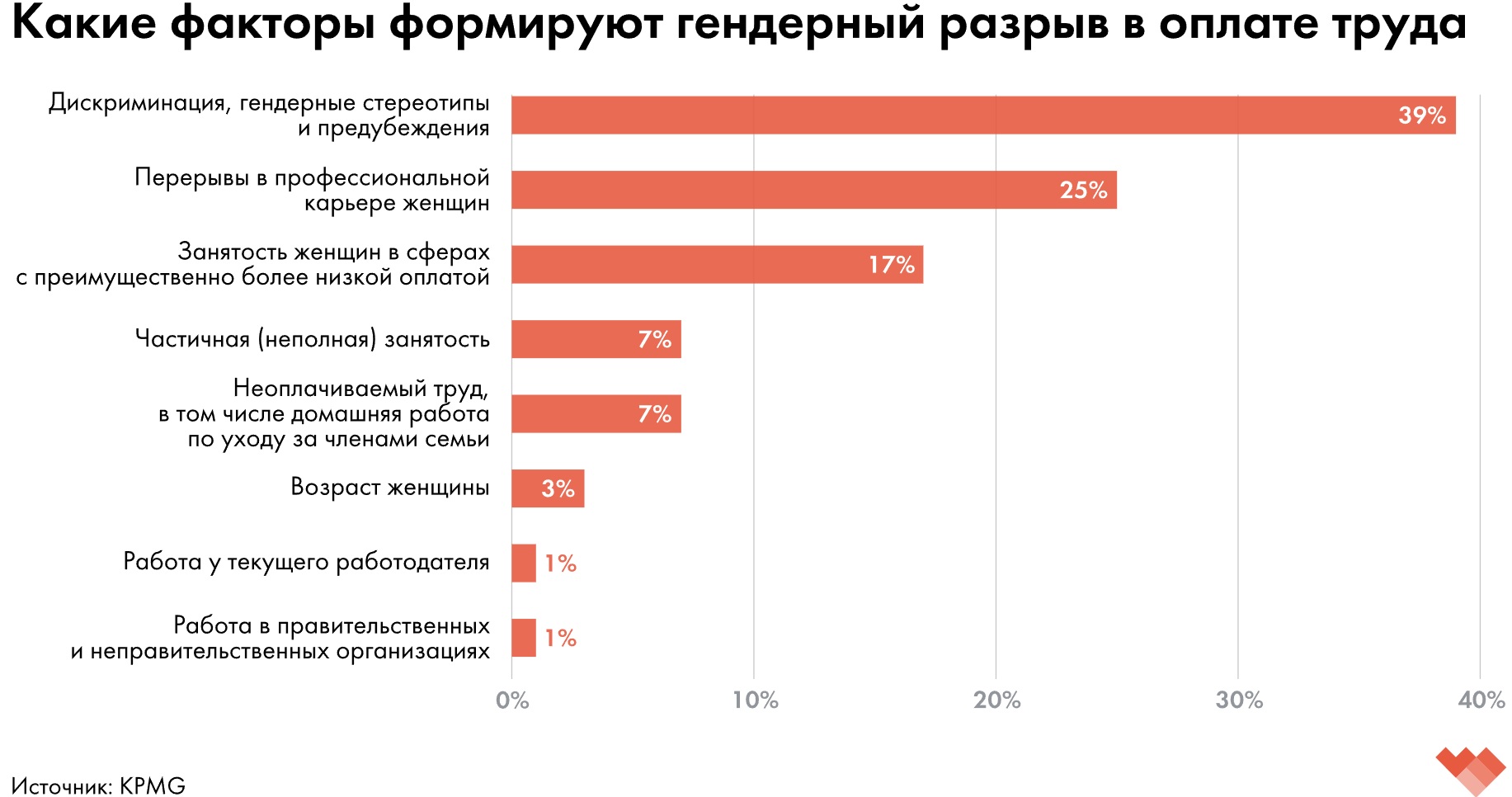
The first factor affecting this factor is listed in the last year’s report of the Ministry of Economic Development - gender discrimination, stereotypes about the role of a woman in society and the prejudice of employers when hiring and making a decision on payment. For example, a stereotype is widespread that the woman is a bad worker, because she is more aimed at creating a family, not a job.
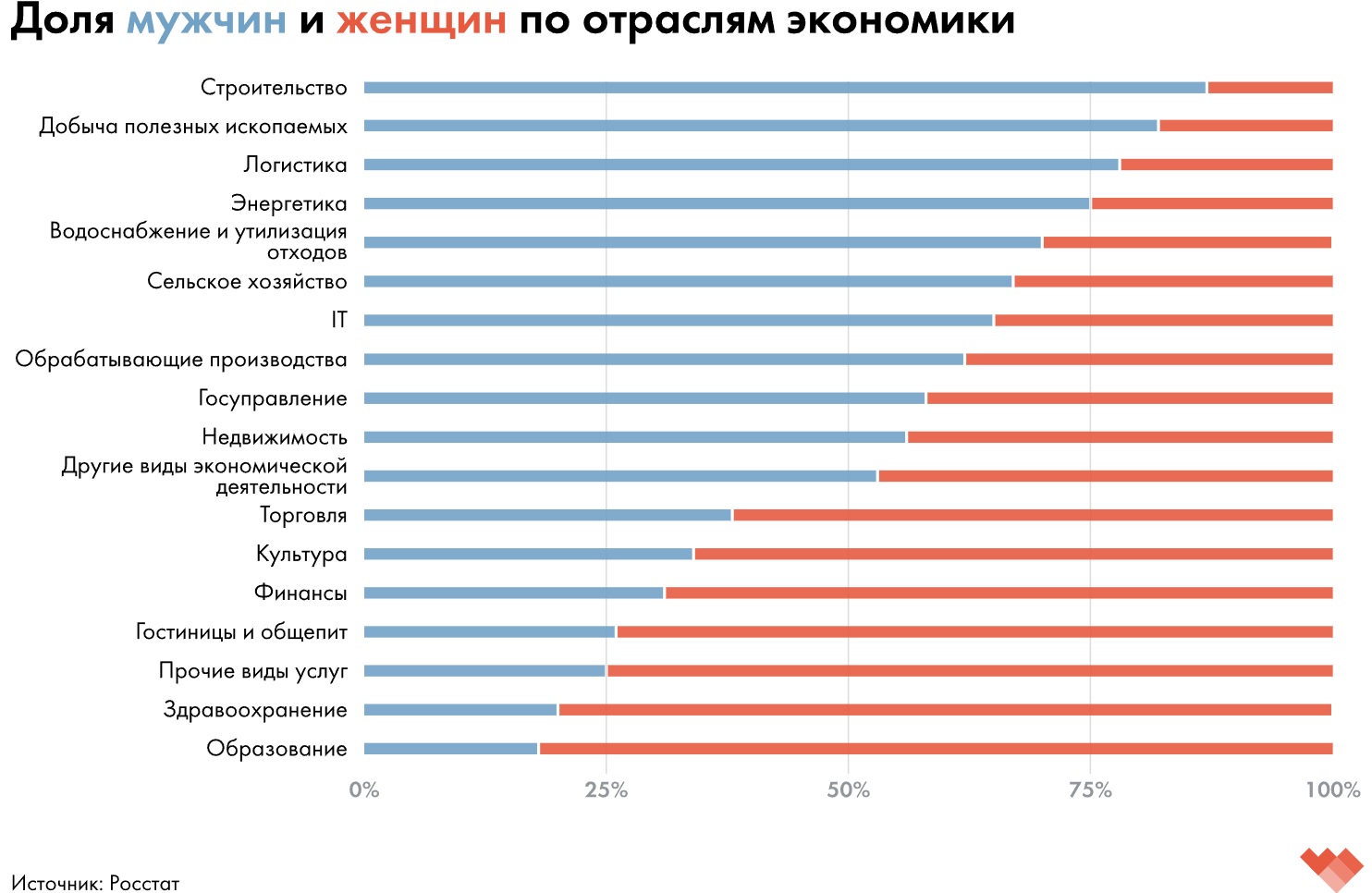
The second factor is the specifics of jobs. In traditionally, “male” industries, payment is most often higher. In particular, there are large salaries in mining industries, but there are few women there. And traditionally “female” are spheres related to the service sector where salaries are lower. This specificity is also called gender segregation and it accounts for 17% of the total gap in wages in Russia.
By almost 40%, this difference is related to the family position and unpaid household work, which are mostly busy women. In Russia, women spend housework and care for loved ones on average 4 hours 20 minutes - 2.3 times more than men.
“Women are involved in unpaid work, and stereotypes also affect them, so they have fewer opportunities for earnings. The logic is this: if it works a lot at home, then she has no time to deal with her career and salary, ”comments the economist and expert on gender issues of Zoya Khotkin.
Due to the war, the gap in salaries will decrease
In a covid crisis, women more often lost their work. This is confirmed by global observations: for example, according to ILO estimates , in 2021 working women were 13 million less than in the dopandemium 2019, while the employment of men was restored to the level of 2019. Among the particularly affected industries is a highly feminized service sector, which was restored more slowly than, for example, construction, where men are more busy.
If women have suffered more in a covid crisis, now the sanctions are most strongly, at least for now, hit the production industries, where mostly men whose wages according to the official figures of Rosstat say, says Khotkina. In particular, we are talking about metallurgy, gas and oil production, automobile and aviation industries, as well as logistics.
Since there were high salaries in these areas, the gender gap in remuneration will be reduced, says Khotkina. Unemployment will also affect the reduction of gender rupture: usually, when people change their work on their own, they go to higher -paid places. In the crisis of deprivation of the work was unkind, so people are forced to agree to less favorable conditions than those that they had in previous places of work. That is, for example, if now a man loses its previous place of work and finds a new one with a smaller salary, he will do this not because of his career growth, but because of the need, so as not to be unemployed. When men agree to less favorable conditions than at the previous place of work, they receive less money, respectively, the gender gap is reduced.
“For example, there were many foreign firms where top managers received very good money. The firms are closed, the number of highly paid personnel has decreased - therefore, the gap in the salaries will be reduced, ”she continues.
At the same time, there are factors that will provoke an increase in the gender gap: the import substitution and restoration of industrial sectors due to sanctions in July 2022, the government allocated 37 billion rubles to create 35 industrial centers for the creation, development and implementation of Russian software, and in March the government decisions increased in grants that are issued to create analogues Foreign components will require many "male" hands and create many "male" jobs.
In what areas are a large gender gap
The budget sphere, in which, according to Rosstat, is mainly engaged in women, is considered stable. However, women may not be dismissed in it, but to reduce the hours of work, thereby cutting off the salary, says sociologist Sofya Reye.
The gender gap according to Rosstat, the maximum gap is in the field of leisure, culture and sports (33%) and information and communications (30%), the minimum - in education (2%) in the budget sphere arises due to the fact that the chiefs work in all sectors more often a man, although the sphere itself is mainly “female” (and low -paid). “Directors of schools, the main doctors are mainly men, and teachers and doctors are women. Glass ceiling, and it is armored there, ”Khotkina explains.
The crisis can also affect the service sector: many brands left the Russian market, and mainly women of about 5,000 brands and projects also left the Russian market, including retail, clothing and cosmetics, as well as restaurants. According to the Federal State Statistics Service, among the employees of the service sector in Russia 70% of women . So, the share of women in the field of trade is 62%. At the same time, the gap in remuneration in this area is traditionally high: “There is a monthly salary, but there is an hourly salary, and in the service sector the gap is obvious ,” says Khotkina, “the woman-seller earns an average of 177 rubles per hour, and the man is 229 rubles, that is, the profession is the same, the work is the same, and the salaries are different. On the other hand, men mainly worked where they sold electronics. They sold more expensive goods, so their salary was higher. And women sold mainly clothes, and the lower the cost of the goods, the lower the salary. ”
Economist considers one of the most vulnerable industries for women, in which about 30% of women are occupied around the world. At the same time, Khotkin notes, women in IT are represented mainly in the data analysis industry, and not in more monetary programming and development of artificial intelligence, which further enhances gender gap. “Here is the fault of stereotypes, there is research data that parents will often lead to a technical circle, and the girl will be dancing or drawing. As a result, men will go to programmers and will have high salaries, and women will have a low -waisting service area, ”the economist describes.
At the same time, as the sociologist Sophia Read noted, all reductions in all areas usually begin with women. Employers and society consider them as secondary workers and secondary miners to the family. “It is believed that this will not hit the household as much as a reduction in a man,” explains the part.
Women are more often than men, they are without work due to dismissal or reduction: in 2021 this was the cause of unemployment for 17.1% of women and 15.8% of men. The share of women who became unemployed due to dismissal or reduction was slightly higher than the share of men in all crisis years: 20% of women against 18.4% of men in 2008, 17.2% against 17% in 2014, 20.1% versus 19.5% in 2020.
Do not forget about the economic consequences that thousands of families were left without men because of the war in Ukraine (the “Mediazone”, together with the “BBC”, by open sources, managed to establish the death of at least 9 thousand Russian military, the “line”) . The women of the dead military personnel will have to independently engage in household duties related to children and work to provide family. The wives of the dead often remain alone with small, preschool children, and sometimes with infants .
The mobilization of men to the front also made its contribution. The promised one -time payments from 100 to 300 thousand rubles do not come to everyone. The wife of a mobilized Muscovite Love told the “line” that from October 4, when her husband went to the military registration and enlistment office on the agenda, she received only 50 thousand rubles, while buying an ammunition to him for 120 thousand - the state did not give the soldier a unloading belt, an arms belt, tactical gloves, knee pads, a walkie -talkie, a shovel, a monoclar Anti -hollow glasses, a balaclava, a masking suit, two sets of thermal underwear, a foam, a sleeping bag and a flashlight.
“I am an architect, I am sitting on an official maternity leave, my company pays me,” says love. - But this is only seven thousand a month, because before pregnancy I worked unofficially, I had a gray salary, so they pay me a minimum. Before mobilization, my husband received 80 thousand, I received seven thousand benefits and 15 thousand . ” Now the girl only“ hopes that the situation [with payments] will change ”.
The crisis has nothing to do with
But there are factors that act constantly and are not related to macroeconomics and other external reasons - these are family and children, household chores, stereotypes - the crisis does not affect them. This is evidenced by the report of the International Labor Organization (ILO), where researchers came to the conclusion: if women in Russia and some other countries paid wages in accordance with the level of their human capital (education, health, experience, skills), then it would be 10% more.
“In Russia, the gap in the salary of about 30% is frozen and does not move anywhere,” Khotkina explains, “this also suggests that there is either unemployment or a crisis in the yard, and the gap all the time remains more or less stable.” In an international study on the first work, i.e. Introduction to the labor market, it was revealed that, unlike many other countries, women in Russia more often receive a higher education for 55%-Women who have received higher education , and this gives them an advantage for reception for the first work: at the first workplace, young Russians become 1.4 times more often than men.
Таким образом, говорит экономист, тот факт, что разница в зарплатах женщин и мужчин застыла на уровне около 30 процентов и много лет никуда не движется, говорит о том, что больше на положение женщин влияет не кризис, постоянно действующие факторы, связанные с неоплачиваемым домашним трудом, семейным положением и стереотипами: «То, что девушки при первом выходе на рынок труда имеют преимущество, говорит о том же самом — они выходят на работу, They receive a salary in accordance with their education, and then their life is breaking away. ”
At the same time, traditional female spheres suffer from a crisis. Muscovite Daria works as a manicure master in almost exclusively female beauty sphere. Her decline, says Daria, began back in 2020-by May, because of quarantine, she lost half of the clients. In 2021, according to her, the sphere resumed growth, but already in 2022 “ended up in shit” again: prices for consumables rose, but the prices for services in beauty salons remained the same-a manicure with gel lacket costs the previous 1200-2000 rubles.
“It becomes very difficult to work,” Daria complains. “Thank God, I am in an average beauty segment, because the economy collapsed at all: people are not very rich, and they are first reducing beauty processes, they no longer go to manicure.” Having worked in this mode for the past two years and having seen that the situation is heating up, in early September 2022, Daria went to work in a state institution for her education of a teacher.
Male and female unemployment during the crisis
Although, in general, the level of unemployment among women is slightly lower than among men, since February 2022, the level of female unemployment began to grow, and the male level to decline. So, if in February there were 2.4%among unemployed women, then by June their number increased to 2.5%. With male unemployment, the situation is opposite - in February, 3.2% of men were unemployed, and by June their number decreased to 2.8%.
Gorshkova says that women are easier than men, adapt to economic crises: in especially difficult times, the readiness of women to take on any work indicates their higher ability to adapt. For example, in the United States, during the pandemic, mortality in the States where women were governors were lower. In the study by American Psychological Association, scientists explain this by the fact that women leaders more intelligibly explained the importance of measures taken, and therefore, their decrees were more often carried out. Superjob.ru surveys in the crisis 2009 showed that 63% of women are ready to change the profession in the conditions of the economic crisis (against 60% of men).
In case of sudden dismissal or reduction, finding a new job for women can also be more difficult. Although in the process of hiring, according to hh.ru, there is no discrimination (ceteris paribus, women get even a little more invitations and fewer refusals from employers than men), women are more limited in choice. They are less likely to move: 26% of men and 16% of women note the position “ready to move”. Women are also more attached to the house: 17% of applicants on Hh.ru from Moscow, the Moscow Region and St. Petersburg note that they would like to spend less than an hour on the road, among men there are only 8.5%. This is probably due to the fact that in the morning women have a lot of trouble in the preparation of children and close to a working day, and in the evening you need to quickly get home - women in Russia spend almost three times more time than men.
Moreover, a quarter of all families in Russia are single mothers with children (according to the 2010 census, the share of single fathers was 3.2%). In 2017, the children's Ombudsman Anna Kuznetsova called the following figures: out of 17 million families with children more than 5 million-single mothers, fathers with children-648 thousand.
Women often have to achieve help from the child’s father through the court, but this is far from always possible. According to the statistics of the Federal Bailiff Service, in the middle bailiffs it is possible to recover only 17% of all alimony debts. The crisis also influenced this sphere - for the first half of 2022, the bailiffs have opened a record number of cases of recovery of alimony compared to the same period over the past seven years. The average recovery for the data for August 2022 - 39900 rubles.
Rupture
If many people know about the gender gap in salaries (about 30%), then the time rupture in the time that women and men spend on household chores and care for loved ones practically do not say. Moreover, this temporary gap is not 30, but almost 300 percent - that is, women spend three times more time on homework than their husbands or partners.
Zoya Khotkina provides data from the Rosstat’s selective studies on household time budgets. According to these data, it was calculated that Russians spend for about an hour daily on their husband's care. For children less - 53 minutes.
“This is a direct difference,” Khotkina explains, “a woman has three times less opportunities to make good money and make a career. The crisis has nothing to do with it, the crisis in our heads. Therefore, I was struck by the VTsIOM survey on satisfaction with the distribution of family duties - only 5 percent of women are unhappy with them. ”
It turns out a vicious circle: the more the woman works at home, the less time she has for professional growth and career, and this confirms the stereotype that she is a second -grade worker, so she can pay less.
Due to direct or indirect gender discrimination, families have to make pragmatic decisions and neglect a woman’s career, says Irina Gorshkova. This is shown by research from the collection of Rosstat “Labor and Employment in Russia. 2021 ”: For example, in 2020 (pandemia), the growth of unemployed among women with minor children is visible (4.3% in 2019 and 5.9% in 2020), especially for women with preschoolers.
Moreover, household underpayable work reduces the capabilities of wives to participate and persist on the labor market. This is evidenced by the data from the same collection of Rosstat about the woman in marriage noticeably less than men in marriage are among the employees, and in divorced ones - on the contrary.
“The involvement of husbands in homework is too slow and not enough,” Gorshkova believes, “women burdened with family duties are often forced to go to incomplete employment, to the informal sector, and are looking for flexible graphs. These are often unstable forms of employment with increased risk of losing work/income, access to social guarantees, protecting their labor rights - especially in crisis periods. ”
Gorshkova’s words are confirmed by Anna (the name changed), working in the largest Chinese IT company in the position of the designer. Она несколько лет проработала на аутстафе, однако после введения санкций компания начала сокращать штат, и под ударом в первую очередь оказались внештатные сотрудники. Анну уволят в ноябре без выплат компенсаций, она будет искать новую работу и первое время жить на средства будущего мужа.
В похожей ситуации оказалась Лидия, работающая в сфере авиации: «Из-за санкций не хватало запчастей, но массовые увольнения начались, когда заказчик ушел в другую фирму. Дошла информация, что уволят 4 человека (по 2 с разных должностей). Я была уверена, что меня оставят, поскольку я могу заменять 3 должности из 4. Но в итоге сказали, что отбирали не по личному отношению и не по профессионализму, а по семейному положению и наличию детей». Лидию уволили «по обоюдному согласию» с выплатой двойной зарплаты. При этом она снимает квартиру, а у ее партнера кредит, который влияет на общий доход. По ее подсчетам, ей придется жить на 13 000 рублей в Москве, пока она не найдет новую работу.
Можно ли избежать разрыва?
Зоя Хоткина говорит однозначно — нельзя. При этом нужно стремиться, чтобы он не был таким большим: «Нужно, чтобы все родители — и мужчины, и женщины — были работники с семейными обязанностями, чтобы работодатель не смотрел волком на женщин. А то сейчас есть даже термин «штраф за материнство» это когда зарплата у женщин с детьми, ниже не только мужской, но также ниже, чем у бездетных женщин».
Ирина Горшкова говорит, что для сокращения разрыва нужны следующие меры:
- Инвестиции в социальную сферу, «экономику ухода и заботы», поскольку сектора здравоохранения, образования, социальных услуг являются важными генераторами рабочих мест, особенно для женщин.
- Политика декретных отпусков и отпусков по уходу, вовлекающая мужчин, а также гибкий график работы могут способствовать более равномерному разделению домашних обязанностей между женщинами и мужчинами.
- Обеспечение всеобщего доступа к всеобъемлющей, адекватной и устойчивой социальной защите.
- Поощрение равной оплаты за труд равной ценности.
- Искоренение насилия и харассмента в сфере труда.
- Содействие участию женщин в органах принятия решений, социальном диалоге и институтах социальных партнеров.