
Translated material
The Dozhd conundrum
Hello! This week our top story is about why Latvia stripped independent media channel Dozhd of its local broadcasting license — and what it means. We also look at The Bell being made a “foreign agent” (finally!) and the return to Russia of notorious arms dealer Viktor Bout after he was released from a U.S. jail in a prisoner swap.
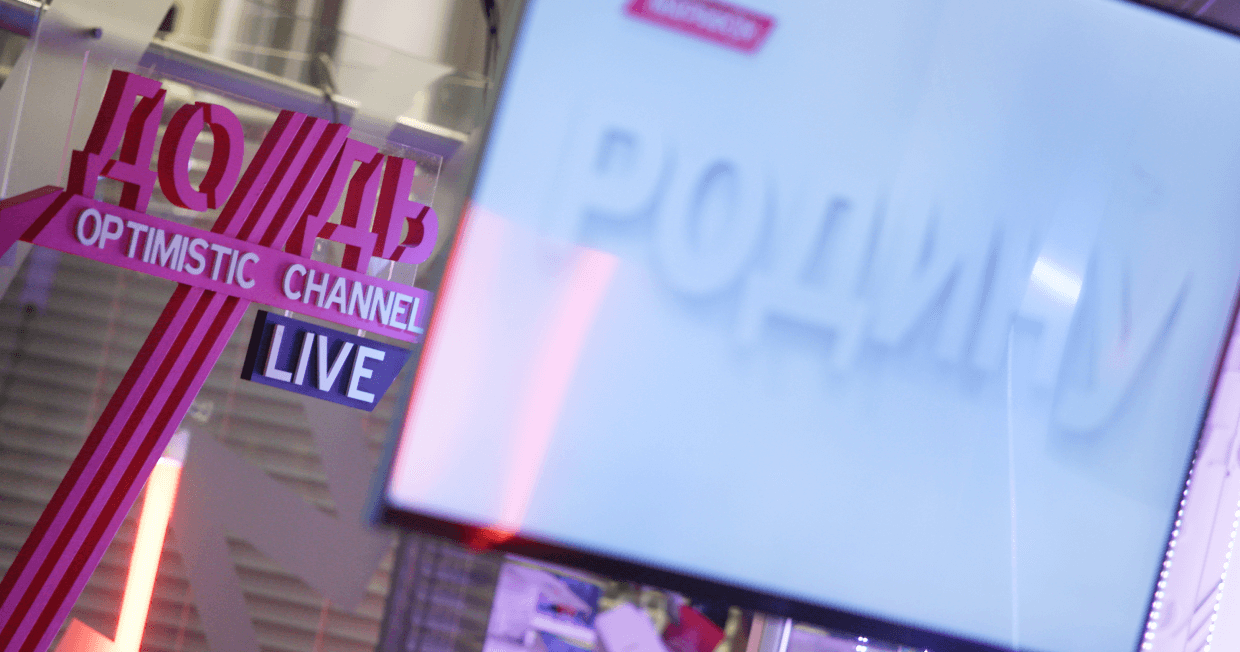
Independent TV channel Dozhd stripped of broadcasting license in Latvia
Latvia’s decision last week to take away independent Russian TV channel Dozhd’s permission to broadcast in much of Europe started with a slip of the tongue and quickly escalated into this year’s biggest media scandal. It led to the “cancellation” of a major anti-war Russian media source based outside of the country.
What happened?
Latvia’s National Electronic Media Council (NEPLP) stripped Dozhd on Tuesday of the local broadcasting license it received in June. Dozhd relocated to Latvia after halting its operations in Russia due to the threat to its journalists from wartime censorship laws.
The Latvian license gave the channel the right to broadcast in all countries signed up to the European Convention on Cross-border Television (most European Union countries and the U.K.). Dozhd had to stop broadcasts Thursday on the cable networks of European operators. Dozhd founder Natalia Sindeyeva had previously said that cable broadcasts generated 20% of the channel’s revenue.
Although the Latvian authorities expressed formal concerns about Dozhd in September, the reason for revoking the license was an incident earlier this month. It all stemmed from a catastrophic mistake by Alexei Korostelev, one of the channel’s presenters. Promoting an email address to which Dozhd encouraged viewers to share information about illegal conscription and inadequate provisions for soldiers at the front, he said: “we hope that we were able to help many soldiers, for example with equipment and basic amenities.”
It was an obvious error. Since the start of the war, Dozhd has held a strongly anti-war position — and has never organized anything in support of the Russian army.
Immediately after the broadcast, Dozhd editor-in-chief Tikhon Dzyadko apologized and deleted the recording of Korostelev’s comments. The following day, the channel announced it had dismissed the presenter, who had worked for Dozhd for eight years (this, in turn, sparked its own conflict among editorial staff and management). But this was too little, too late. Within a few days, Dozhd lost its license, and Korostelev was banned from Latvia.
Korostelev’s words, and their consequences, sparked intense criticism. Some Ukrainians and others — mostly from Eastern Europe — were joined by Russia’s “old emigres” in accusing a new generation of exiles of Russian imperialism. The Latvian Association of Journalists and the European Journalists’ Organization came out in defense of Dozhd, as did prominent Russia expert Sam Greene of King’s College, London.
What is Dozhd accused of?
The NEPLP revoked the license citing the Latvian State Security Service, which said that the channel was jeopardizing national security. All of the regulator's grievances against Dozhd are detailed in the full text of the decision to remove the license. Three of these violations has already led to administrative cases against Dozhd in Latvia:
- Failure to broadcast in Latvia. As a condition of its license, Dozhd was required to broadcast programs in Latvia. The verdict states that this was a matter of national security: in the event of an emergency, TV channels should halt their programming and alert the population of what’s going on. Latvian-speaking viewers of Dozhd would not get that warning. Dzyadko responded that the channel had promised to launch Latvian subtitles from Sep. 1 (and did so, albeit a day late). And, next year it was planning to introduce a Latvian overdub. All this is expensive and technically complex, especially for a channel with limited resources.
- Describing the Russian army as “our army” and broadcasting a map showing Crimea as part of Russia. In early October, a Dozhd presenter described Russia’s army as “ours” on air. At the same time, Dozhd broadcast a map showing Moscow-annexed Crimea as part of Russia. The NEPLP judged this to be “disinformation,” suggesting the map might imply Latvia recognized Crimea as part of Russia — and that the phrase “our army” could give the impression Latvia’s military was part of the Russian Armed Forces. As a result, Dozhd was fined €10,000. Dzyadko said the map was a technical error and added that many European channels had made similar mistakes. As for “our army,” Dzyadko said this was a “rhetorical device” intended to convey to viewers that the war concerns all Russians.
- Korostelev’s comment. The report concludes that the presenter’s ill-advised words could be interpreted as an indirect appeal to the audience to provide material support to Russian forces threatening the security of Ukraine, Latvia and other European countries. Dzyadko said at the end of last week that Korostelev would not be returning to his role (the day before, Sindeeva suggested the opposite).
Why the world should care
On the one hand, a scandal of this scale involving Russian-language media could only have happened in a Baltic state. The region has a unique mix of proximity to Russia (and the associated history of violence and imperialism), a significant Russian-speaking population and a large number of independent Russian journalists who have fled their home country.
Of course, Russian propagandists were quick to take advantage of the situation.
On the other hand, the whole saga is a reminder that the “canceling” of Russians — fair or not — is a real phenomenon. It is similar to blanket bans on issuing Schengen visas to Russian citizens, or blocks on the funds of Russian citizens in European banks.
It’s not appropriate to get bogged down in the rights and wrongs of these processes while the war continues. However, as expert Greene points out in his article, the Latvian decision is unhelpful to anybody who is opposed to the war. Dozhd is the only mainstream TV channel in Russia that holds a strong anti-war position, telling Russians every day about the horrors of that war and retaining some ability to influence public opinion.
Russia designates The Bell a ‘foreign agent’
We expected it for a long time — and it finally happened. The Ministry of Justice added The Bell on Friday to its register of so-called foreign agents (back in the spring, our founders, journalists Elizaveta Osetinskaya and Irina Malkova, were put on the list).
-
The decision to list The Bell as a foreign agent was taken without any court hearing or investigation, so we do not know precisely why we were included. It is possible we could find out in court, if we try to contest the decision. However, it is hardly likely that we would win a case in a Russian courtroom.
-
At the moment, there are almost 500 individuals and organizations on the Russian government’s list of foreign agents. The number was rising even before the war, and has only grown more rapidly since. Now, the list includes almost every independent media outlet, blogger and artist that has spoken against the invasion of Ukraine.
- Recently, the Russian authorities introduced a separate list of “individuals affiliated with foreign agents.” In all probability, this will include all independent journalists. Apparently, The Bell was the first media outlet to be subjected to this rule: all our staff have been listed in a separate column of the “foreign agents” register. At present, legal restrictions only prevent these “affiliated persons” from standing for election in Russia. But that could change: the authorities have already toughened the laws on foreign agents once this year.
- What does it mean in practice when an organization is listed as a foreign agent? Well, if you relied on advertising to survive, you can kiss goodbye to that business model. If you relied on donations, be prepared for the fact that part of your audience will be too scared to continue supporting you.
- However, we are not about to give up. The state’s objective is to hamstring independent media. But we will continue to work from wherever we can.
Why the world should care
The war in Ukraine has completely changed our lives and our work. Journalists in Russia face greater risks than ever before. Repressive new laws threaten up to 15 years in jail for objectively reporting on events. More and more people – including the founder and editor-in-chief of The Bell – find themselves listed as “foreign agents”.
We are continuing our work, and we believe that this is more important than ever. What we do best of all is investigate the financial situation around the Russian government – and the war will end when the money runs out. The Bell has never hidden its content behind a paywall or asked readers for money. We have always paid our own way. However, in the new political climate, Russian independent media can no longer raise money through advertising. Our business model is in ruins.
We don’t want to charge a fee for our newsletter and as long as it is possible, we will continue to circulate it free of charge. However, if The Bell is to continue its work, we need your support.
The ‘merchant of death’ returns to Russia in prisoner swap
International arms dealer Viktor Bout returned to Russia last week after 14 years in a U.S. jail. Bout has been a star of Russian propaganda throughout his incarceration. And his return home was an excellent illustration of the strange relationship between the Russian authorities, Russian propaganda and the Russians who wind up in foreign jails.
- Bout, a notorious arms dealer who supplied al-Qaeda and various drug cartels, was captured as part of a U.S. sting operation in Thailand in 2008. He was then extradited to the U.S. and sentenced to 25 years in jail. Since then, Bout has been a totem of Russian propaganda: the Russian Foreign Ministry regularly demanded his release and state-controlled RT’s editor-in-chief Margarita Simonyan became his loudest supporter. Simonyan has spent a lot of time campaigning for Russian “political prisoners” in U.S. jails and RT hired Maria Butina as a columnist after she served time in the U.S. for illegal lobbying ahead of the 2016 presidential election.
- Simonyan was quick to celebrate Bout’s release, in particular because he was exchanged not for jailed ex-marine Paul Whelan, but for U.S. basketball star Britney Griner. “They wanted to swap Bout for Whelan, but they got Griner. Because, given a choice between a heroic spy, a decorated marine who suffered for his service to his country, and a drug-addicted black lesbian who suffered for vaping with dope, they made the obvious choice. That’s why we’ll win,” Simonyan said.
- It’s not exactly clear why Bout was so important to the Russian authorities. But a man who spent 15 years flogging stockpiles of Soviet weaponry around the world has to have good contacts in the Russian intelligence services. During his time in U.S. jail, Bout kept silent, apparently betraying no secrets.
- Russia’s concern over Bout contrasts sharply with the Kremlin’s usual indifference toward Russians in foreign jails. You don’t have to look far: in Belarus a journalist from the influential and slavishly pro-Russian Komsomolskaya Pravda newspaper is on trial after winding up in prison in 2020 on a trumped-up charge of insulting Belarusian President Alexander Lukashenko. The fact that Lukashenko’s regime is totally dependent on Russia, and Komsomolskaya Pravda is reportedly Putin’s favorite newspaper, has not helped the journalist. Meanwhile, wartime prisoner exchanges with Ukraine usually unfold in starkly contrasting ways: returning Ukrainian prisoners of war feature in big televised ceremonies. But, in Russia, the authorities only recently started releasing videos of PoWs being met at the airport.
- Unsurprisingly, Bout’s first interview went to RT’s Maria Butina. The highlight of the recorded encounter released Sunday was Bout’s complaints about how he suffered from U.S. prison food, specifically burgers, “cooked to death” fries and chicken nuggets. If anybody in Russia’s jails watches RT, those comments might provoke outrage: 440,000 convicts in Russia can only dream of such food.
- And Bout has not waited long to nail his political colors to the mast: he announced Monday that he was joining the ultra-nationalist LDPR party. He’s not the only member of the party suspected of ties to Russian intelligence: Andrei Lugovoi, who is wanted by U.K. police for poisoning Russian dissident Alexander Litvinenko in London in 2006, is a LDPR State Duma deputy.
Why the world should care
The story of Bout’s release and its portrayal in state media highlights the odd relationship between the government, its propaganda outlets and ordinary Russians. In this case, it’s particularly clear how the government and Russia’s propagandists live in their own worlds.