
Translated material
Dark aleins
The Minister of Foreign Affairs of Belarus was the absolute clone of the deceased Make, only silent
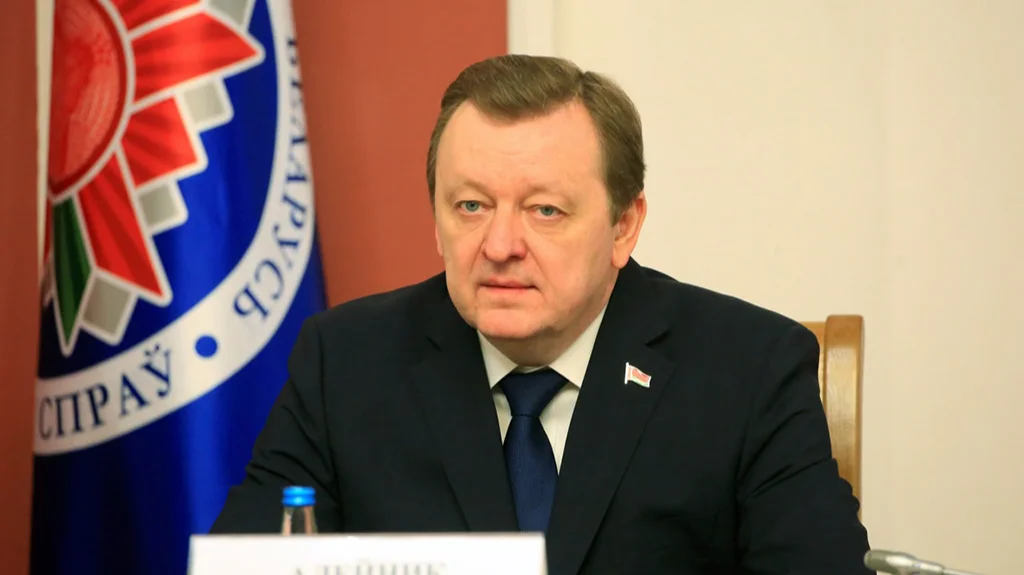
The new foreign minister Sergei Aleinik has a biography-exactly like his predecessor. The same Translation Faculty of Inyaz (with a difference of 8 years), the same diplomatic academy in Austria in the early nineties, the same gap in the biography, indicated by the stingy “Service in the Armed Forces”, the same work in the service of the Ministry of Foreign Affairs, in the representative offices of Belarus at international organizations (Make - Alainik - during the UN separation in Geneva).
The difference is that Vladimir Makei had a big break in the Midovo work, when he was first assistant Lukashenko, then the head of the administration, and Aleinik was not allowed to such a close distance. But he managed to visit the ambassador to the UK and the Vatican. In general, completely parallel biographies and an equal degree of Lukashenko's devotion.
Sergey Aleinik is 57 years old. In Minsk Inyaz, he was deputy secretary of the Komsomol organization of the institute. If the USSR had not collapsed, now Aleinik would probably already work in the Central Committee. But in 1992, both Aleinik and Makei quit the service in the Armed Forces and at the same time came to work in the created Foreign Ministry. They both sent them to study in Vienna - then there were special two -year courses at the diopacademic there, to which they often directed employees without diplomatic education from new sovereign states. In 1993, both were already considered diplomats. A year later, Alexander Lukashenko came to power, and after some time, when he announced a referendum on a change in the constitution in his favor, all the officials had a choice: to slam the door in protest or support a referendum and continue his career. Few decided the first, and most of them later ended up in prisons or in exile. Makey and Aleinik remained. And they did not lose: even in malice were never, the careers were successful.
Sergey Aleinik - of those who are not remembered by anyone and never. What Makei said and did, we at least remember: threatened civil society, scared the militants and explosives, thanked Russia for helping to prevent the Maidan in Belarus. And Aleinik was always silent. In any case, his public statements are not only not at the hearing of Belarusians - even the all -seeing Google does not give them out.
From the features of the biography of Sergei Aleinik, one can note the fact that Alexander Lukashenko “pulled out” of his ambassador to the British ambassador to the British suddenly from the prosperous London to Makes on July 20, 2020 - shortly before the day of the presidential election and, accordingly, began mass protests. The situation in Belarus was then already heated to the limit: Viktor Babariko and Sergey Tikhanovsky, Pavel Severinets and Nikolai Statkevich were arrested, and everything indicated that Alexander Lukashenko would not stop at the suppression of protests. And this appointment could only indicate that Lukashenko strengthens the foreign policy department (after all, you will have to explain with the Western ambassadors!) Reliable and devoted people who will not fail in conditions of arbitrariness and iniquity, will be ready to justify the regime on any rostrum and in any office.
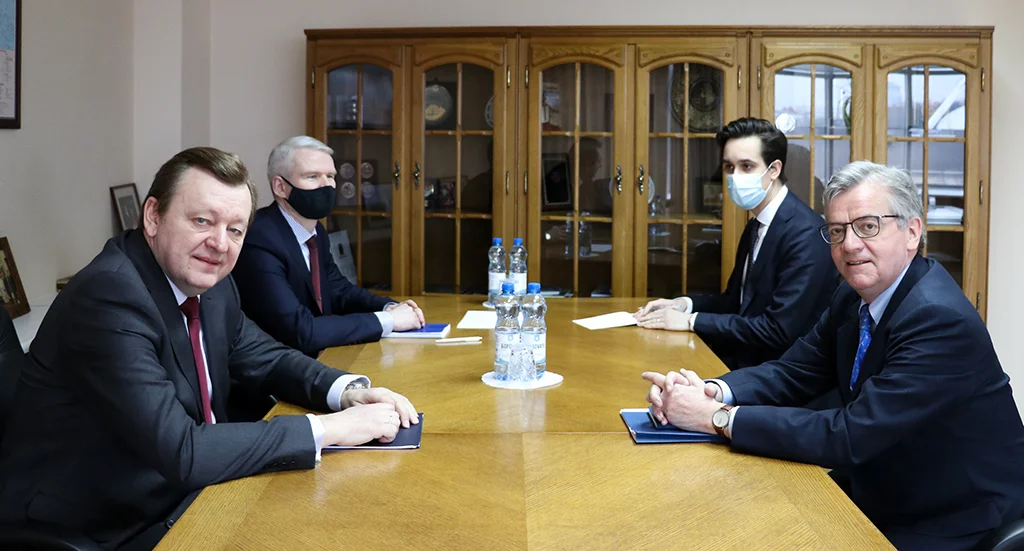
By the way, the Western ambassadors did not strive to meet and discuss too much. On January 28, 2021, Sergei Aleinik met with the German ambassador to Belarus Manfred Huther, who demanded the release of political prisoners. Aleinik also intersected with the ambassadors of Denmark and Italy, and each time the Ministry of Foreign Affairs briefly reported that the parties exchanged opinions. And not a single quote, not a single public statement. Over the past year, most of his meetings are representatives of Sudan, Palestine, Zimbabwe, China. And, of course, the papal nuncio. Aleinik talked to him regularly, as with other representatives of the Vatican, from the very time when he began to work as an ambassador under the Holy Thron. And here we can talk about undoubted diplomatic success: the Vatican sent to Belarus Nunzia Ante Yozic in October 2020, in the midst of protests and repressions. On November 3, he presented Lukashenko’s charity letters - at that very time, the head of the Belarusian Catholic Bishop Tadeusz Kondrusevich, who supported the protests, could not return to Belarus for several months. He is a citizen of Belarus, but upon returning from Poland, border guards declared his passport invalid. The Belarusian Catholics were outraged by the actions of Yozich, who handed the belief letters. Officials said about the undoubted success of Aleinik's diplomacy.
The new minister spoke out loud only on December 14, when the Prime Minister of Belarus Sergey Golovchenko represented his team: “The priorities of Belarusian foreign policy remain unchanged. The main priority of foreign policy is clearly defined by the head of state - this is the preservation and strengthening of sovereignty, independence, the development of economic potential and increasing the well -being of people. ” Normal bureaucratic speech, by templates and scripts. If you translate into a normal language, then the priorities of the foreign policy of Belarus are a search for partners to bypass sanctions and the maximum legitimization of the Lukashenko regime. The new minister may be able to cope with the first. With the second - hardly. There is not only diplomacy, but also medicine is powerless.