
Translated material
The point of Ehrenburg
Vladimir Pastukhov: How “rain”* washed off the halftones in the relationship of Russia and European
From the editorial office
This text is written by a person who lives in a free world and is not limited in his statements by the strange features of Russian legislation. Therefore, in the original text of the event, concepts and phenomena are named what they are, and as the whole world calls them. However, we were forced to bring the author’s vocabulary in line with the requirements of censorship. So all claims are to us.
Whatever the trigger of the scandalous review of the license for the broadcasting of the Rain television channel and however in the medium term this story ends, it revealed the existence of a problem that goes far beyond this scandal. This is the problem of the relationship of today's Europe to “Russianness” as such, that is, everything that is associated with Russian culture, language and statehood, regardless of what kind of wrap paper this “Russianness” is wrapped in.
The naive assumption that Europe can be needed “useful Russians” (in the actual terminology - “good Russians”), that is, in the context of the current situation - those Russians who oppose the special operation (for their identification they even offer to sign the declaration certified by the “international recognized body”) is not confirmed in practice.
Europe (at least that part of it, which directly borders Russia) is no longer needed by any Russians - neither bad nor good ones.
Of course, not everyone in Europe adheres to this opinion, but it is rapidly spreading through the continent and in most states neighboring Russia is already dominant. Rusophobia in the literal and natural sense of the word, that is, the fear of all Russian, rapidly captures at least part of Eastern Europe. Alas, there are good reasons for this.
Actions against Ukraine showed that Russia in the XXI century is ready to conduct campaigns of the XIX century with cruel methods of the XX century. For the same peoples, whose cultural code “Russianness” is inscribed in approximately the same way that the Tatar “Grandfather Babai” is inscribed in the cultural code of the Russians themselves, the special operation in Ukraine has become a conditional signal to the surge of instinctive fear to become the object of Russian imperialism once again. This led to a flash of total hostility to the country trying to become an empire again, and everything that can be associated with it.
Russophobia, which was talked about and continue to talk in the Kremlin, was not a reason and the reason for the special operation, but became its objective and inevitable consequence. To one degree or another, all Russians feel it today, regardless of their personal attitude to events. This is the objective reality of modern Europe, given by Russian emigrants sometimes in very unpleasant sensations with which they cannot always control.
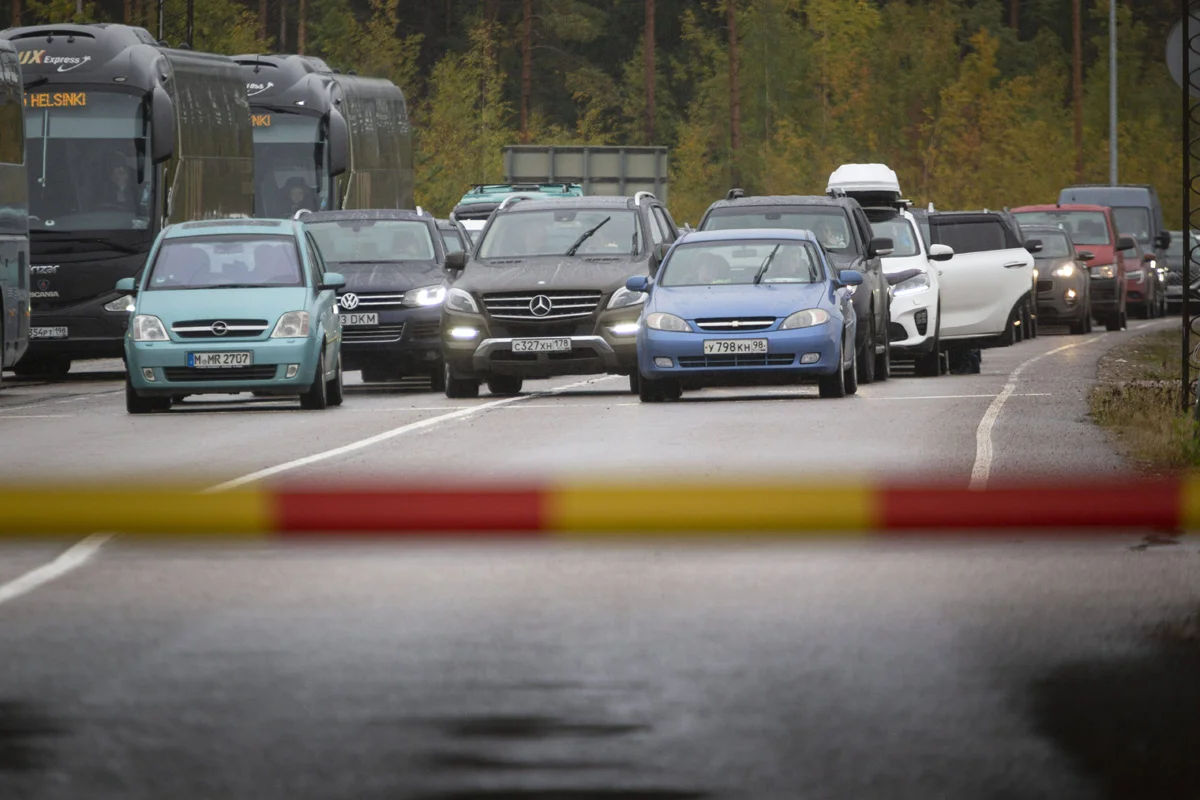
Russian fear
A few years ago, after the first outbreak of the conflict (“joining” the Crimea and the control of Donbass), which, taking the desired for the actual one, many of us considered an isolated episode, I argued in absentia with a journalist and political scientist Vitaliy Portnikov, who already in those days seemed to the vegetarian ones today, “cancel Russianness” for the purposes of national security. I then considered this measure excess; Today I understand that it was just Falstart, and Vitaly proposed before others what has now become the dominant paradigm of public moods in Ukraine and a number of other European countries.
Objecting Portnikov, I then referred to the “case of Erenburg”. Ehrenburg was one of the most often remembered by the Nazi media Soviet figures, the degree of hatred of which was obviously contrasting with its very modest status in the Soviet hierarchy. There were reasons for this. Erenburg played as a propagandist an outstanding role in the formation of the enemy’s image from the Germans.
He translated the discussion from the political and ideological plane into the ethnic plane and formulated the simple and understandable fighting army of the slogan “Kill the Germans!”.
Five years ago, the Erenburg formula in relation to recent history seemed to me a delusional imagination. Today it looks like a policy of politics in countries that have undergone a special operation, or awaiting their turn on the list of those who can soon become a victim of one. Relatively speaking, the events reached the so -called point of Ehrenburg, when all Russian became hated for tens of millions of Ukrainians, as well as for tens of millions of people who sympathize with them, primarily in the Baltic countries and Poland, where the fears of today have superimposed on the historical insults of yesterday's day.
You can relate to this rejection of “Russianness” in any form, but it is no longer possible not to take into account it for granted. Accordingly, each Russian separately and any Russian organizations (and even more so the media) that are in their own choice or will of fate in the territory of countries where such an attitude towards “Russianness” is dominant, are required to take this circumstance in their practical activities or at least develop a clear and intelligible attitude to it.
The error of "residents"
Many emigrants from Russia, becoming the residents of those countries where the rejection of the entire Russian is a state policy supported by a significant, if not mostly population, prefer not to notice the passage by these countries “Erenburg Points” and behave as if they were “ordinary Europeans”, but they were just “a little unlucky with Putin”. Unfortunately, this is not so, and in the eyes of the rest they are not like that.
The country bordering the country with Russia, agreeing to accept the lion's part of the new Russian emigration, including under some pressure of the European Union, do not experience any joy on this occasion.
The very fact of an increase in the “Russian element” on their territory is considered by them at best as a factor of serious discomfort, in the worst - it is precisely as a threat to national security. The qualities and properties of the soul who have come to the calculation are not taken, but you will not climb into the soul of each arrived. And if all this is also applied to a deep conflict between the Russian -speaking community and the indigenous population, as is the case in Latvia, for example, the situation becomes extremely explosive.
In such a situation, the very attempt to maintain its “Russianness” and even more to emphasize it, to claim to express an independent, “Russian” point of view, to stick out the preserved connection with the abandoned Russia, they are perceived by the local population in hostility, and sometimes as an insult. This is exactly what, in my opinion, has become the real reason for the scandal around the rain. From the television company, it was expected that it would be Russian -speaking, but at the same time Latvian in the spirit of the media, that is, it would translate the point of view of the Latvian community to Russia, but in Russian. Instead, the rain began to position itself de facto as the Russian media with the Latvian license. Such an option in the menu of the capabilities of the current Russian emigration is absent.
For Latvia, and even more so for Ukraine, Russia is an enemy without any nuances. Under these conditions, it is good for Russia, and not for Russia, and not for those who have accepted emigrants and their organization of countries, is perceived by local elites with poorly hidden irritation. The constant pedaling of the topic of the “future of Russia” is also outraged. What is the future of Ukrainians, for example, can Russian? It would be strange to expect from Ukrainians and their allies in the coalition so that they react to this issue philosophically, and not extremely categorically ...

To be or not to be?
Many (although far from all, of course) Europeans and very many (also far from all) emigrants from Russia today give different answers to the essential question: what to do with Russia?
When it comes to Russian culture as such, there are not so many supporters of the total Cansel Russia , although they exist. Nevertheless, the “sleeping beauty” of Tchaikovsky both put in London and continue to put, and the new season in La Scala, as I understand it, opened up by the garbage opera, despite the stormy protests of part of the emigrants. But when it comes to the fate of Russian statehood, the situation changes sharply.
With each shot in Europe, the number of people who adhere to, albeit secretly, an opinion that I, of course, can not be divided in any way, I just can’t do that “it would be comfortable for everyone,” if Russia as a state was not at all.
No - neither Putin's totalitarian nor anti -Putin democratic.
The revival of Russian militarism and expansionism led many in Europe to the belief that “democratic Russia” is utopia and that Russia will always be like this - that is, that is always hanging over the continent with a giant ice trump card, which at any moment can collapse on European heads, like vessels - Nevsky Prospekt. Accordingly, for supporters of this point of view - first of all, of course, for Ukrainians - one of the goals and the most important component of “Victory” is the destruction of Russian statehood in its current form in principle.
That is, neither the democratization of Russia, nor its modernization, nor even the revolution in itself a significant part of Europeans, by and large, are no longer interested in. Why? Because these are military operations and because Russia is an enemy. It means to demonstrate moral and political infantilism from the Europeans and even more so from Ukrainians at the moment of sympathy in emigrant vigils about the “fate of the homeland”. These moods, of course, are usually not advertised at the official and diplomatic level, although there are those who demonstrate their position openly here. Nevertheless, the spread of such moods in society is very widely, especially in countries bordering Russia.
Emotional dissonance
For a significant part of the Russian intelligentsia opposing the special operation, it was a complete surprise that they were not ready to accept in Kyiv and adjacent capitals with open arms. The fact that within Russia is considered a bold and risky expression of protest for people either for many months living with air anxiety signals, or expecting that it is about to call, it seems to be a miserable agreement.
Any attempt to demonstrate a “impartial” position, especially awkward, any desire to “play the BBC”-that is, in journalism “over the fight”-is perceived by this part of Europeans exclusively as an opportunistic position “both ours and yours”. Olena Stepova writes in the Ukrainian “observer” on the tail of the licensed scandal about “rain” as a “Putin Shapito”, which suffered a fiasco on tour in Latvia. Her logic is simple and straightforward:
Putin can arrest any person in Russia, and if so, since the journalists of the rain are not arrested, they exist with the permission of the FSB and a priori are its agents.
The pacifist position in general and “rain” in particular is also not “mitigating guilt”. A fairly accurate and laconicly designed thought expressed in the comments to my broadcast with Alexei Venediktov* Anna G. She wrote: “Anti -war position is now“ pro -Ukrainian ”. And the rain did not become "pro -Ukrainian", although I personally expected this from him. Now there are only two trenches, it will not work in the middle, you need to decide who is a friend and who is the enemy. The Baltic countries became "pro -Ukrainian", but the "rain" did not decide. " You can’t say better.
But how is Anna G. I realized that the rain did not decide? After all, all the correct words on the "rain" were pronounced, and in reality the journalists of the "rain" did a giant work to tell the truth. But Ukrainians and residents of the Baltic do not need the truth from the "rain" - they already know her. They need the oath of “rain” to their goals, their understanding of victory. They need “four“ yes ”in the“ Bulletin of the Arrestovich ”. They want the victory to be complete and uncompromising. And this is in their understanding - the elimination of Russia as an eternal threat.
This is the reason why the Russian emigrants and the “receiving side” are in permanent emotional dissonance with each other: for the most part, Russian emigrants were not ready to live up to the expectations of the majority in those countries that sheltered them.
"Refuseniks", "sympathetic" and "crusaders"
The saving formula about Putin's Politics remained far in the past. For more and more Europeans, not to mention Ukrainians, current events are not Putin’s policy, but the policy of Russia, and therefore all Russians, regardless of their personal position. Those who think so do not want Putin’s defeat, but the defeat of Russia, and are not going to separate one from the other.
Three circumstances need understanding today:
Russophobia in Europe is not fiction, but objective reality.
There are good reasons for this Russophobia, it is a consequence.
Personal position and merits in the “fight against regime” are no longer indulgence for Russians in Europe and especially in Ukraine.
Unfortunately, Russian emigration was poorly ready to meet with this rigid reality. Today it is split not only politically and ideologically, but also psychologically, depending on its reaction to progressive Russophobia. In the emigrant environment, three platforms spontaneously formed, which I would conditionally designate as “sympathetic”, “refuseniks” and “crusaders”.
The “sympathizers” prefer not to notice the mood of the mood and behave as if they arrived not from Russia, but from Mars. Although they themselves became strangers in Russia, for them Russia did not become a stranger.
They sympathize and empathize not so much where they are localized, and where they are no longer there, thus preserving the double loyalty of both the newly acquired and the abandoned homeland. Accordingly, they look at any question simultaneously from two positions: antagonists of the regime and protagonists of Russia. That is, of course, they are struggling with Putin’s regime, but not for the victory of Ukraine, but for the victory of the Russian democratic opposition with the help of Ukraine. In this scenario, Ukraine gives the role of a certain lever (instrument), with the help of which the opposition could turn Russia, that is, to finally do what could not be done without Ukraine. If everything ends the way they want, these people, apparently, will tell the Ukrainians: “Thank you, we ourselves ...” There is nothing surprising in the fact that in Ukraine and the Baltic countries the majority of the population refers to “sympathetic” without sympathy and do not appreciate their merits in the fight against the regime.
“Refuseniks” is that part of the Russian opposition that supports the idea of a total abandonment of everything that can be processed with Russia: language, literature, music, and so on, believing that the mention of Russia and Russians in any positive context is absolutely inappropriate today.
The same part of Russian emigration, as a rule, advocates that Russia is in the future divided into parts and is devoid of nuclear status. This part of the Russian community caught a new trend and saddled it. Today they would be about the most Ukrainians than the Ukrainians themselves, and the Latvians and Lithuanians, than the Latvians and Lithuanians themselves. They rally in front of the theaters, protesting against the prime minister of Russian operas, and applaud the recall of the rain license as too “pro -Russian”, from their point of view, media. It confuses a little when in their petitions they do not forget to indicate that they are descendants of the famous Russian philosophers and composers, which in this context seems somewhat inappropriate: either one or another. The “refuseniks” do not like “sympathetic” to such an extent that for the sake of combating them they often forget about Putin and his regime.
Between the “sympathetic” and “refuseniks” a thin layer of “people of remark”, a kind of “crusaders”, was closed - in the sense that they are ready to silently carry their “Russian cross”, without trying to throw it or shift to those who are even harder. In my opinion, in the most concise form, the attitude of this group to the situation and life was expressed by Dmitry Zelentsov in a commentary on the telegram channel of my son Boris:
“In my opinion, it is better not to express a publicly moral exhaustion to a Russian. Well, if they do not notice, but more likely - wandered in response verbally, they will reproach with the physical suffering of real casualties, and there is nothing to object.
As they said in one film, it seems, about the forcing of Sivash: "If you stumble, do not scream, die silently." And God himself ordered us to be silent. ”
You won’t say better: God ordered to be silent, remembering why this wave of Russophobia arose and spreads in Europe, remembering those who lose every day of loved ones, remembering, in the end, on whose territory all this is happening. But silent - does not mean to stop feeling, including feeling Russian. But silence does not mean to stop dreaming, including that Russia is revived not as an archive empire, but as a national, legal, democratic state. Но молчать — не значит перестать думать о том, как обустроить Россию в будущем, чтобы не повторить всех прошлых ошибок.
Просто не надо никому навязывать свои чувства, мечты и раздумья. Чувствуйте, мечтайте и раздумывайте сегодня так же, как и страдаете — молча. Но если кому-то не нравится, что русские продолжают сегодня чувствовать, мечтать и думать о будущем своей страны, то пусть он тоже корректно и вежливо промолчит. Нас действительно сегодня не нужно жалеть — и именно потому, что мы и сами никого не жалели. Но главное нам — не начать жалеть самих себя, не «качать» права человека, не поливать обидами уязвленное самолюбие, потому что это путь в никуда.
Лично я верю, что Россия вспрянет ото сна — далее по тексту…