Translated material
Kefir Stalin
About the origin and transformation of the famous pseudonym
From what source did Joseph Vissarionovich Dzhugashvili borrow his famous party pseudonym? Not long ago, a version was put forward that the future father of nations and supreme commander in chief could find him in Russian pulp literature of the second half of the 19th century. However, Viktor Shcheben, a professor at the University of Homegrown Science and Education (UDNO), believes that the true reason for the appearance of the surname “Stalin” should be considered a typo in a journal publication, and, as often happens, this typo was followed by others. Gorky publishes his witty hypothesis.
All of us, since February 24, 2022, have found ourselves in the face of advancing barbarity, violence and lies. In this situation, it is extremely important to preserve at least the remnants of culture and support the values of humanism - including for the sake of the future of Russia. Therefore, the editors of Gorky will continue to talk about books, reminding our readers that there is still a place for thought and fiction in the world.
Victor Shcheben (UDNO)
On the origin and transformation of the famous pseudonym (hypothesis) * The author is not responsible for any possible discrepancies and expresses deep gratitude to Elena Mikhailik, Mikhail Pavlovets and Mikhail Krutikov for their valuable comments.
The connection that has been established between the sought-after name and the repressed theme is very obvious.
Z. Freud. Psychopathology of everyday life
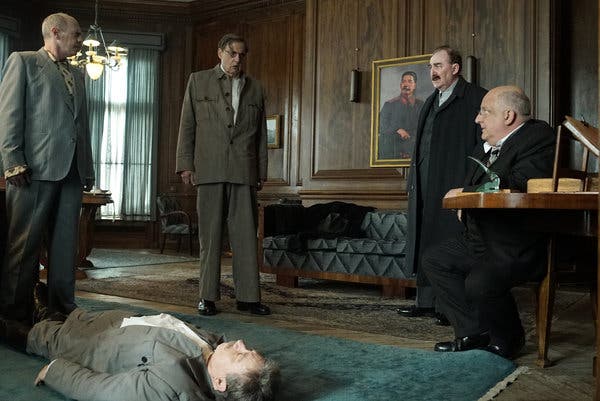
Yesterday Comrade Stalin called me darling. He said: “Darling, could you bring me a glass of kefir?” It’s strange, he never drank kefir and didn’t call me darling.
From the diary of Nikolai Sidorovich Vlasik (Vladimir Voinovich, “Displaced Person”)
1
The proposed note is inspired by the witty publication by Mikhail Weiskopf about the literary origin of the party name Dzhugashvili * “The Fierce Eyes of Stalin”: on the history of one pseudonym // New Literary Review, 2008, No. 90. . According to a respected literary historian, the “key” to this nickname is the ultra-romantic image of the avenger Stalin from the short story “The Horn”, included in A. I. Emichev’s book “Stories of Uncle Prokopya” in 1836 (speaking of Emichev’s prophetic gift, Weisskopf notes that among his characters there is also a certain Putin, who “is still a child, and he can be ruined forever in two hours”).
Commentators also mentioned other precedents for the use of the name “Stalin” in the literature of the 19th and 20th centuries. So, in the mid-1850s, the story of the writer P. P. Ershov (author of “The Little Humpbacked Horse”) “Panin’s Hill” was published, in which the romantic lover Alexander Petrovich Stalin appeared. In 1893, the Niva magazine published A. Koptev’s story “The Caucasus,” the main character of which was “a very handsome and stately brunette, in a white jacket... about 22 years old,” a graduate of the Moscow noble boarding school, Lieutenant Stalin, who was distinguished by “secular polish, pride and courage in dealings against the enemy.” The hero of this story became a victim of unhappy love and died in a case against the mountaineers. Poor Stalin’s comrades, the ending of this story says, remembered him with punch.
Let us add that a character named Stalin is also mentioned in the 1837 novel by a certain A.B. “Two Portraits and Two Disastrous Losses” - “a cavalry staff officer with black sideburns.” Finally, in 1872, a mediocre play by Mr. Ge (brother of the famous artist) called “Second Marriage” was performed in the capital, in which the wife of the landowner Stalin leaves her husband for the attorney Fatomin, “after which Stalin leaves with his entire family for the village.” Having taken away Stalin’s wife, Fatomin “is trying to wrest his estate from him,” and “the enraged Stalin” throws him into the river for this, “but since this river is too shallow, the attorney at law floats to the surface of the water and, in turn, throws - to the mercy of fate - Mrs. Stalin, who has bothered him.” (It’s remarkable that Stalin Ge’s name is “Boris Nikolaevich.”)
Meanwhile, we believe that the deep source of the “great pseudonym” (the expression of William Pokhlebkin) is not in the depths of the literary works of the 19th century about romantic Stalin lovers, like the avenging hero from the forgotten work of Uncle Prokopya, and not in the mystical play on words (A. A. Abrashkin’s version: “Stalin - Satanail”), but in one random typo associated with the Caucasus and, perhaps attracting the attention of an experienced and cunning conspirator.
Let us introduce the reader to our findings and considerations.
2
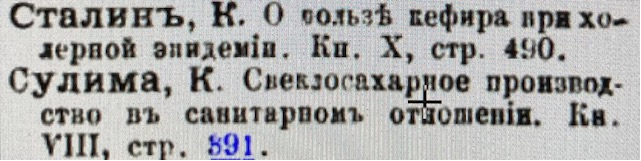
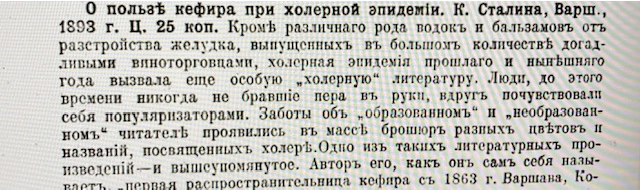
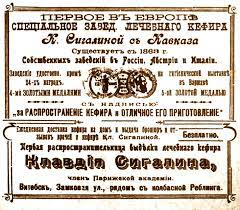
For the first time the name “K. Stalin" (it was in this form that it was used by I.V. Dzhugashvili in 1912) appeared in the magazine "Russian Conversation" in 1893 as a result of a typo in a review of a book about the benefits of Georgian kefir for all diseases, written by a Tiflis Jew, a popularizer of fermented milk products and a member of the French Academy, Claudia Abramovna Sigalina ("On the benefits kefir during the cholera epidemic. K. Stalin. Warsaw, 1893”; in the alphabetical index the name “K. Stalin” is given).
3
There is a well-known old Soviet joke about how a certain editorial office in the 1930s–1940s was fired (or shot) for a terrible typo in the name “Stalin” (it came out: “Sralin”), caused by the dangerous typographical proximity of the letters “t” and “r”. There is a hint of this story in “The Mirror” by Andrei Tarkovsky, and in Vladimir Voinovich, and many other places (including in the books of Tomas Venclova and Czeslaw Milosz). The collector of the “Staliniade” Yuri Borev, speaking about its origin, refers to provincial newspapers like “Makhachkala Pravda” (one Internet tabloid publication even has a copy of a page with the words “Lenin-Sralin party,” but it is possible that this is a photomontage).
I was lucky enough to find in the American press in 1953 a memoir article by the former editor of the Birobidzhan Star (1932–1938) Herschel Weinrauch (Grigory Vinokur) about how he made this typo and what came of it. Here is his story in my translation:
“The post of deputy editor of the Birobidzhan Star constantly put me in an extremely dangerous position. In America, a misspelled name in a newspaper can result in an angry subscriber calling the editor. In Russia, a mistake can cost an editor his life.
One night during the period of the purge of Jewish writers, I personally proofread all the proofs and corrected all the errors noticed by the staff. Every day, every newspaper in Russia published material about Comrade Stalin, even on the most insignificant occasion. In our material that day, the letter “t” dropped out of Stalin’s name.
I ran to the typesetters and made sure that the employee took the letter “t” from the drawer and put it in the typesetting. The printing press started working, and I got ready to go home.
Suddenly one of my employees burst into my office and showed me a freshly printed issue of our newspaper. I was horrified. Somehow the letter "r" had ended up in place of the "t", and now Stalin's name was printed as "Sralin".
In our language, "Sralin" is a rough word meaning defecation. And I called Comrade Stalin this word! I ordered the printing of the issue to be stopped and I personally destroyed the offending pages. Nevertheless, I could not sleep for the next two weeks, constantly in fear that one of my employees told one of my friends about this mistake.
If this happened, even though I corrected the mistake, I would be shot.”
This story is also included in Weinrauch’s biography, which tells about the fate of Soviet Jewry (the collapse of the Birobidzhan dream, the arrests and executions of leaders of the Soviet Jewish movement). The author, who found himself in America in the late 40s, was a witness in the case of Soviet anti-Semitism in the mid-50s (it seems that he also spoke on the Voice of America).
As far as I know, this is chronologically the first printed mention of the traveling anecdote about “Sralina” in the world. Surely Weinrauch either invented this story himself, or appropriated a well-known plot, inscribing it into the history of the persecution of Jews (this typo, which allegedly cost the lives of several proofreaders in the Caucasus, Central Asia, socialist Poland and Hungary, was common in mocking nicknames and anecdotes about the leader).
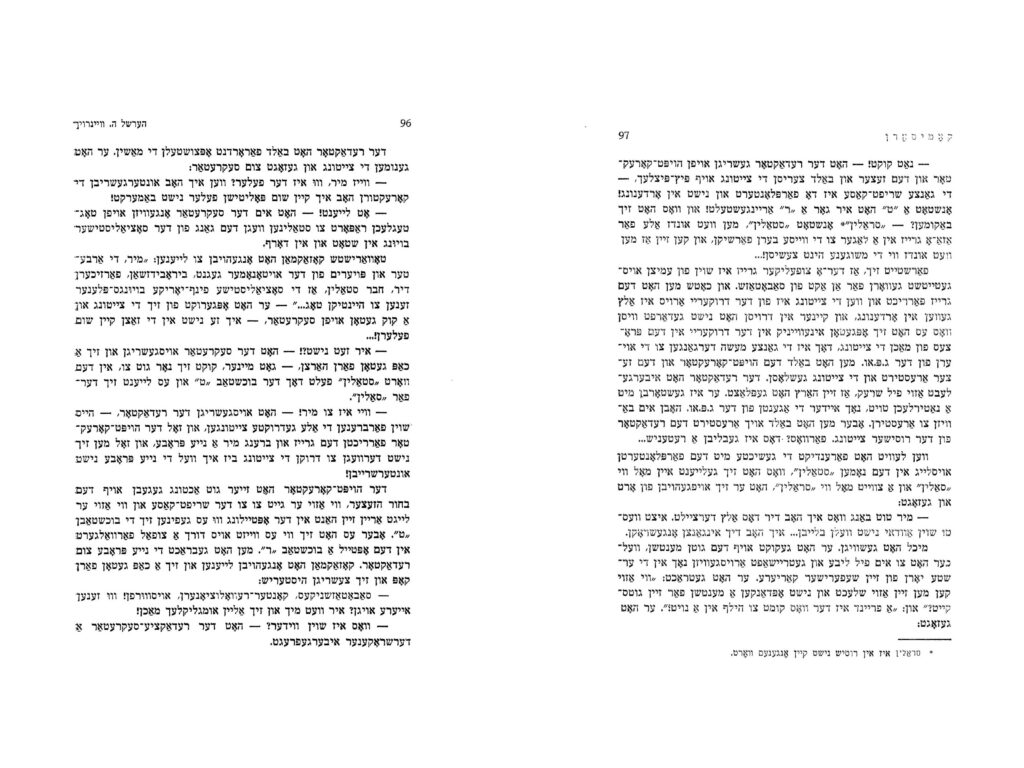
Weinrauch later retold the story of the typo in the “Birobidzhan Star” in his book “Commissars” (Komisarn, קאמיסארן: ראמאן), written in Yiddish, published in 1962 in Buenos Aires by the Council of Polish Jews (the basis of the joke, as I believe, is purely Jewish humor based on the tune of alte kaker - אַלטער קאַקער - playing, in particular, on the specific pronunciation of the sound “r”). Before us is a kind of verbal revenge for the doctors’ case and the impending deportation, disrupted by the death of the leader. (I will note in passing that there were actually cases with another “humiliating” typo “Stalin is a bastard ”, but they were apparently preceded by puns that played on Jewish pronunciation.)
In this scatological context, the case of the third famous anti-Stalin typo “the commander is shit ” (allegedly it appeared in a Central Asian Soviet newspaper) is interesting and instructive. In fact, this typo was presented in several publications of the late 19th and early 20th centuries, and for some reason most often in relation to the failed general Alexei Kuropatkin. For example:
“The Russian army, numbering about 200,000 people with guns and huge food reserves, could retreat without any haste, in exemplary order, which should be attributed to the merit and stewardship of the Russian shit commander.” * Foreigners about Russia // Historical Bulletin, 1905, vol. 99, p. 678.
Or a charming footnote in the fourth volume of the book “Russian-Japanese War, 1904-1905.” * St. Petersburg, 1910, p. 422 :
Resolution from the commander: “To the Chief of Staff. To the general summary of the opinions of the Army Commanders. Quite definite, like those of other Army Commanders, opinions. Everyone unanimously speaks out: 1) to launch an offensive upon the arrival of the 16th Corps and 2) that it is necessary to attack the enemy’s left front. December 16. Kuropatkin."
Finally, this typo appears in the description of the mission of M.I. Kutuzov (a great foul-mouthed man) in the third volume of “War and Peace” in the Sytin edition of 1912, ed. and with notes P. I. Biryukova, with drawings by A. P. Apsit (p. 266):
“An old man, as experienced in court affairs as in military affairs, that Kutuzov, who in August of the same year was chosen as a commander against the will of the sovereign, the one who removed the heir and the Grand Duke from the army, the one who, by his own power, contrary to the will of the sovereign, ordered the abandonment of Moscow - this Kutuzov now immediately realized that his time was over, that his role had been played and that this the imaginary power no longer exists" * Russian antiquity, 1872. P. 702. .
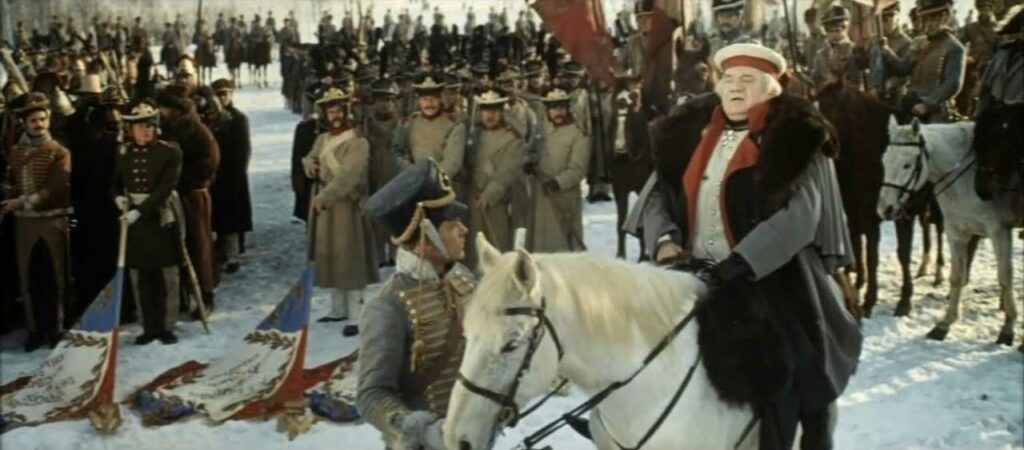
Half a century later, this typo, one might say, had a Freudian impact on the film image of the field marshal created by director Bondarchuk. Remember: “face and... into the shit”?
“while traveling in 1845 as commander and royal governor from Redu-Kale to Tiflis, Count Vorontsov stopped at Kopyev’s house in the city of Gori, where the Georgian grenadier regiment was located, reviewed this regiment and expressed his complete pleasure and gratitude to the commander.”
In other words, the rich soil for life-threatening puns related to the image of commander-in-chief Stalin, a native of Gori, was well prepared. (Speaking of the military motive within the framework of our topic, we point out that on March 9, 1953, the New York Times newspaper informed readers of one typo or slip that insidiously penetrated into the obituary of the leader of nations published in the East German trade union newspaper: “Joseph Stalin, the great researcher of Marxism-Leninism, the great fighter for the preservation and strengthening of war throughout the world, has passed away.”)
5
From all that has been said, we draw the following conclusions, which, of course, require further development.
The fear of proofreaders, recorded by contemporaries, of a typo or slip in the party name of Dzhugashvili was a psychological disguise of an old joke (old jokes), going back to Jewish (and generally minority) humor (it is significant that in one anti-Soviet Caucasian newspaper there is a deliberate spelling of “Ssalin”).
We can safely say that the pseudonym “K. Stalin,” who came to light like the name Lucifer, generated by an erroneous translation of a biblical verse, as a result of a typo in an advertisement for the excellent laxative qualities of Georgian kefir, ended his verbal biography (as well as the physical biography of his bearer, according to some accounts of his death reflected in the cinema) in the anecdotal feces that have accumulated in Russia since the 19th century.
“Everyone has screwed up,” as Joseph Vissarionovich himself prophetically told his associates, according to the memoirist.