
Translated material
"I myself am the best example of inclusion." As an athlete moving in a stroller, he became a motivational coach and starred in the series
Text: Sabina Babaeva Partnership Material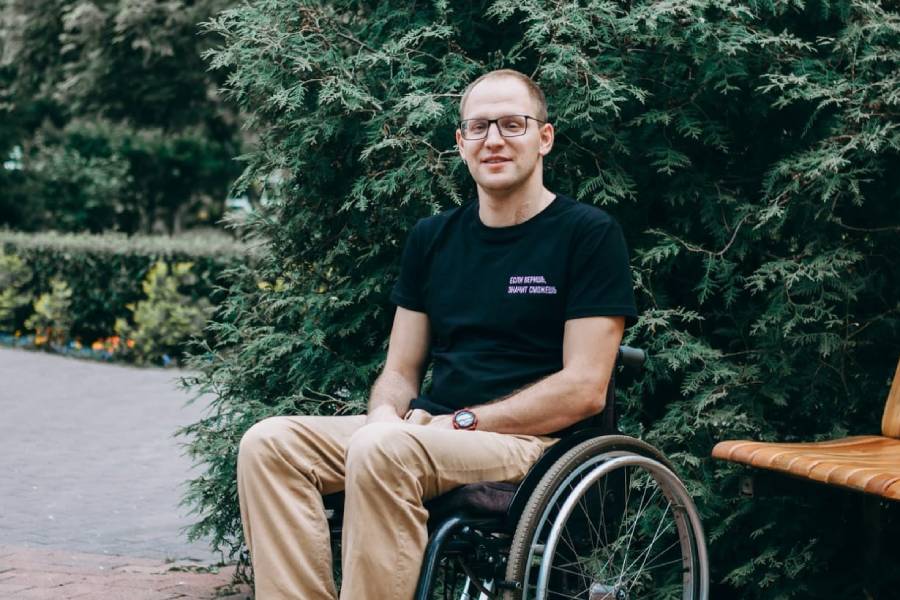 Dmitry Cheshev photo: Personal archive
 Dmitry Cheshev photo: Personal archive
 Dmitry Cheshev photo: Personal archive
 Dmitry Cheshev photo: Personal archive
 Dmitry Cheshev photo: Personal archive
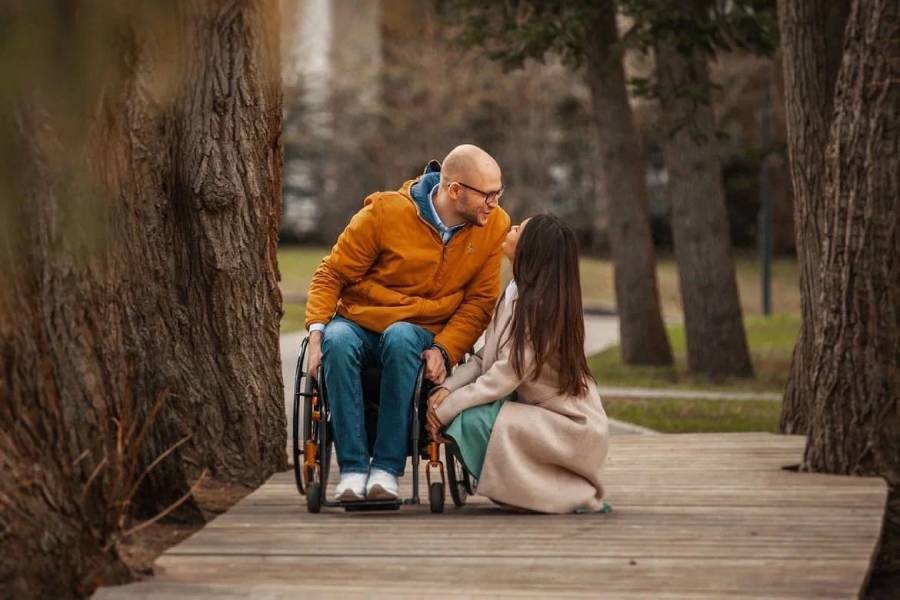
At the age of 21, athlete Dmitry Cheshev received a severe injury, after which he moves in a wheelchair. Now he is 33, he continues to play sports, acts as a motivational speaker and took part in an international project dedicated to inclusion. “Such things” asked Dmitry to tell about life after an injury and how he manages to change it for the better.
Dmitry Cheshev photo: Personal archiveIn an instant
Dima is from Khakassia. From four years I went on swimming, a candidate for master of sports. During his studies at Tomsk University, he was actively engaged in social activities, consisted of a trade union organization, the Russian Union of Youth.
“The public movement has always been part of my life. Sports - swimming, running and sports gymnastics, activity, creative direction have always been present in me. I also got injury for a reason, but actively doing something, ”Dima smiles.
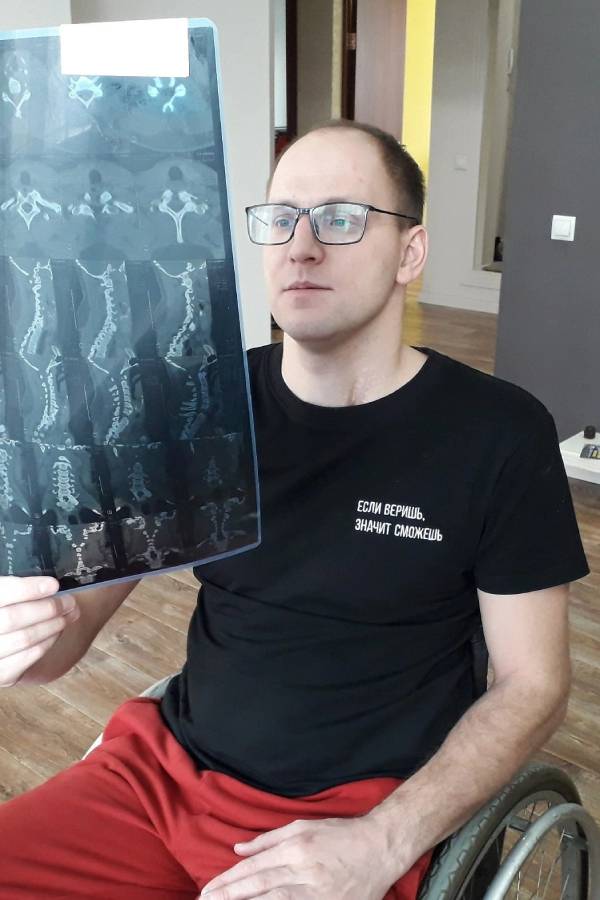
That day he trained in the gym and decided to make a somersault. During the jump, Dima fell, the main blow fell on the neck. As a result of the fall, he received a severe trauma of the spinal cord, which led to the fact that the young man was paralyzed.
“Salto for me and generally gymnastics is a part of life, a familiar thing. That day I also made a somersault two or three times, ”recalls Dima. “He landed normally, but for the last time he landed so unsuccessfully.”
Dmitry Cheshev photo: Personal archiveAfter the fall, Dima did not understand what happened. He lay on mats for some time in consciousness. Coaches and other guys approached him, they said: "Get up, get up, what are you lying?" But he could not get up: he barely moved his hands, tried to push off, but nothing happened.
“The first point immediately after the injury is generally a misunderstanding: how is it - I can't get up?! - explains Dima. - It seems like in consciousness, I seem to feel - although I did not feel the body below the level of my chest. This sensations, as it happens, has served or lay off his leg. It seems you see her, you have it, she tingles, but you don’t feel her. And so with the whole body below the neck is simply in an instant. ”
The coach squeezed his leg strongly, twisted his skin and asked if it hurt. Dima replied that it did not hurt that he did not feel anything at all. They called an ambulance, took him to the hospital, made CT. Dima woke up two weeks later in intensive care under the artificial respiration apparatus. He realized that something serious had happened, but thought that when he would be discharged, he would be healthy again, he would walk, feel everything and return to his former life. He will graduate from the university, complete all the work begun, will go to graduate school.
“Then I did it all. But at that moment I did not understand what was happening to me! Because I had no experience. It was impossible to compare [what happened to me] with anything like that. I thought that all this would end soon. ”
Dima spent three months in the hospital, and then he was taken home by ambulance.
“And this, of course, is still a sensation. Usually, when something happened, the person is taken to the ambulance to the hospital. But when home from the hospital is scary: you don’t understand what will happen next. ”
Completely limited by the apartment
Dima’s life has changed most of all in domestic plan. The 22-year-old athlete was in conditions absolutely not adapted to life in a stroller. The apartment was in the old five -story building, in which, of course, there was neither an elevator nor a ramp. Dima could not get free even into the kitchen.
“There is a passage, then a small kitchen, a table right away - you won’t turn around in a stroller.”
He could not get into the toilet or the bathroom on his own due to narrow doors.
You are used to getting out somewhere, going, doing anything, and here you are completely limited by the square meters of your apartment“These were the main changes that influenced the feeling of everything, because life continued outside the window,” says Dima.
He moved to his mother, and for some time his sister lived with them-until she graduated from the university. Nine years after the injury, Dima “developed a system”: in winter he lived in an apartment in Abakan, and in the summer he came to his grandmother in the village.
The first one and a half years, my mother did not work and was with her son all the time. Dima's condition worsened - after the injury he began a strong hypertonicity: his muscles strained on their own, shook, straightened, or bend at any time of the day. It was hard to live with this: it is impossible to calmly manage or dress.
Doctors tried to help Dima in different ways, as a result they stopped at the implantation operations of the Baclofen pump, which is enjoyed in the stomach. Baclofen, explains Dima, this is a substance that relaxes the spinal cord. The operation was done a year and a half after the injury. After it, the hypertonicity decreased, Dima became easier. His mother was able to go to work.
You learn everything again
Dima laughs, says that at first they were led by dementia and courage: he did not understand very well what was happening to him, he was sure that he would begin to run soon, so the cheerful mood never left him. However, it is now with him, when he already knows that he can no longer run - he now at least get up on his own and walk a little.
“You learn everything again, but you don’t understand how difficult it is, seriously, how much difficulties you will meet. When you are young, you have a lot of effort, there is no negative experience, you, of course, are very confident in yourself: you will succeed! - says Dima. - I owe a lot to the family. There was definitely no despondency. There was energy, there was a desire, there was a mood, that we will [try to do everything], we will cope, we will solve problems as they arrive. ”
Dima says that over time began to better understand his condition, communicating with doctors, rehabilitologists, and specialists. They explained to him his situation and what to do, how to live on, to feel good and so that the stroller would not limit him.
The athlete has developed a schedule for rehabilitation classes. Dima begins the day with exercises. In the morning, after awakening, he feels bad due to hypertonicity-physical activity helps to alleviate the condition.
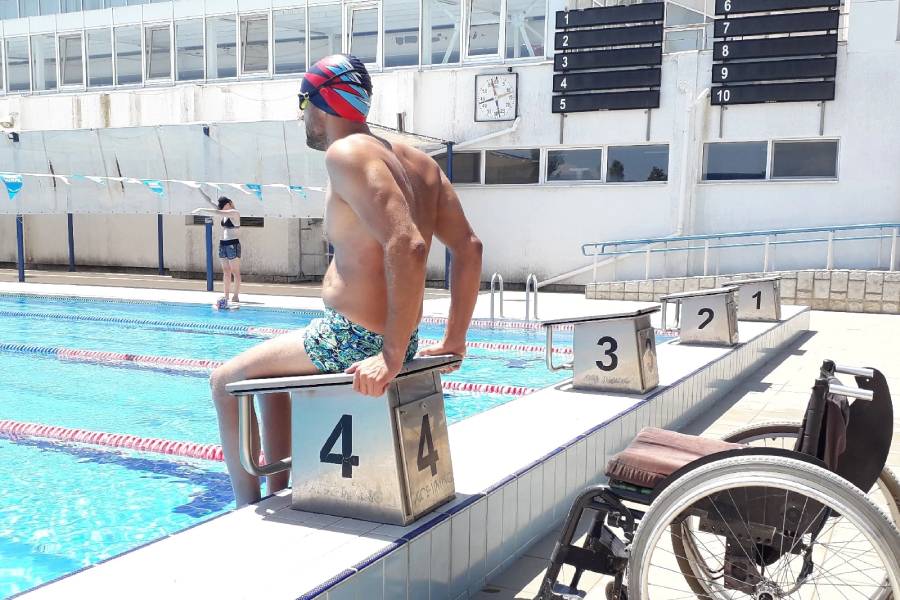
Dima trains in the evening. Every day he needs to spend several hours standing - near the Swedish wall, for example - to straighten up and feel good. And the young man is still swimming.
Dmitry Cheshev photo: Personal archive“I came to this - it turns out, I can swim, I, it turns out, will not drown in the water! And this swimming moment is very good for rehabilitation: water helps a lot in restoration. ”
Now Dima can already stand and even walk a little - he manages to go through several tens of meters with the help of bars or walkers.
You manage to strive for something
When Dima lived in Khakassia, he was asked how he manages to be so cheerful. He answered simply: "If I feel bad, I do this, and it seems to help." They began to invite him to various events - they asked to talk about the experience of life after an injury.
“Once I came to school, a friend invited me there. “Come to school to my child-he is a high school student, tell the youth how to not give up, otherwise they are all some kind of inactive now, they don’t want anything, they don’t seek anything, and you kind of in a stroller, you live in a small city and at the same time manage to strive for something.”
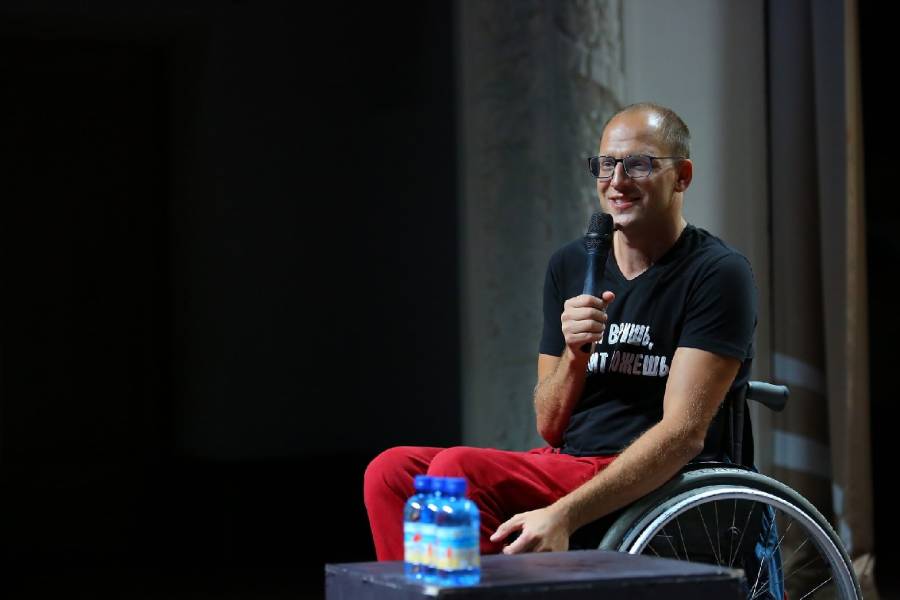
Dima began to act as a motivational speaker - he shared his history with people, knowledge of “how to use all the possibilities that we have, how to maintain life energy and overcome difficulties on the path to our goals.” In this, not only sports experience helped him, but also a philosophical education.
Dmitry Cheshev photo: Personal archiveLater he had programs of speeches on the topic of vitality, self -confidence, including he talked about life in a wheelchair for people who only faced it. Over time, he realized: in order to develop in this area, you need to move to Moscow.
In addition, one of the main reasons for moving to the capital was a comfortable, affordable urban environment. Public transport in Abakan is not adapted to people with disabilities. In Moscow, Dima also attracted the availability of medicine, the ability to contact different specialists.
I am the best example of inclusion
Dima moved to the capital a year ago with the bride Olya. They have been together for several years: we met in Abakan at an event where the young man spoke.
When Olya and Dima are purchased for a week, it is most convenient for them to hang bags with products on his stroller, he laughs.
"People think that Olya does everything in our pair."
In fact, they do everything together: they drive for groceries, cook, and are far away. If Olya cooks, Dima washes dishes, and vice versa.
Dmitry Cheshev photo: Personal archiveNow he continues to act as a motivational coach and works in the Foundation "more than you can." This organization helps people with disabilities, mainly youth with cerebral palsy, play sports, participate in amateur competitions.
Recently, Dima was offered to star in a mini-series about non-borders Inclusion inclusion. In each episode, participants from different countries tell an inspiring story about overcoming difficulties. They debunk stereotypes about people with disabilities or share “instructions ” - which is important to consider in a truly inclusive society. One of these stories is about Dima. Episodes with his participation can be seen here .
“The main task [of the series] is to show inclusiveness, and I myself am the best example of inclusion, because I am well involved in public life. Usually in those events where I participate, I am one person with disabilities, and then a quarter of all participants had a rather serious degree of mental or physical disability. I saw that it works: people from different countries, different ages, with disabilities and without, amateurs and professionals just work together, study with each other, help each other . ”
The next creative laboratory of the “Inclusion without Borders” project will be held in April 2023.
* * *According to Dima, this year people have increased the need for his help as a motivational speaker. This is due to the fact that many were faced with the experience of experiencing moments such as "life was divided into before and after."
“Especially at the first time after the start of the“ special operation ”, when everyone realized that somehow we had to live with it. And I had a similar situation: life was divided into before and after and as before will no longer be. ”