
Translated material
Premature birth. What parents need to know and how to get help?
Every tenth child in the world is born ahead of schedule - approximately 15 million children annually. In Russia, for 2018, 97,074 premature babies were born - approximately 6% of the total number of all born. On November 17, World Day of premature children is celebrated - “such things” asked experts to tell what it is important for parents who were faced with premature births.
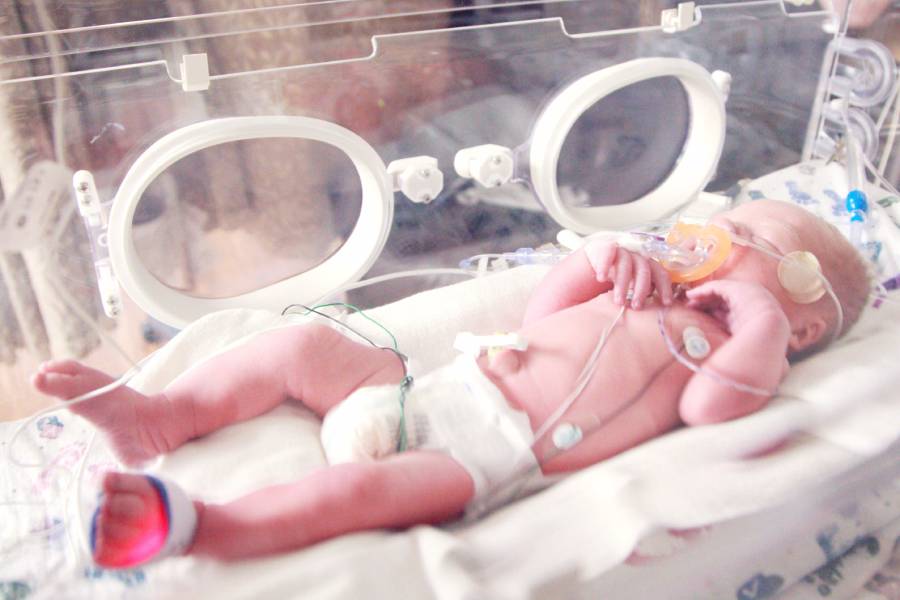 Photo: Sharon McCutcheon / Unsplash.com
Which child is considered prematurely?
Normally, the child is born for a period of 38-40 weeks. If childbirth occurs earlier, then his organs systems are not sufficiently formed - the risks that the child will receive complications higher for children born at extremely early stages.
“A child is considered prematurely born at a period of less than 37 weeks. Almost all children born earlier 32 weeks cannot breathe themselves and need respiratory (respiratory) support with the help of artificial ventilation devices, ”says Marina Nagogan, doctor of medical sciences, a leading researcher at the Obitz, gynecology and perinatology named after Kulakova.
Experts of the European pulmonary fund (ELF) determine the four degrees of prematureness:
- mild degree of prematureness (34–36 weeks);
- the average degree of prematurity (32-33 weeks);
- Deep non -prematureness (28-31 weeks);
- Extreme shortness (less than 28 weeks).
Since 2012, the Russian Ministry of Health has established criteria, according to which children born in a gestational period of 22 weeks are considered prematurely. It is important that the second criterion is observed by this, according to which the child is recognized as live -born - weight from 500 grams.
Lawyer Diana Mustafina-Bredikhina previously mentioned that the Ministry of Health determined these figures on the recommendations of the World Health Organization (WHO), but since 2018, the WHO materials are formulated on “extreme prematurity”, where the lower border was established in the formulation of “less than 28 weeks”.
In the Russian medical community, the question of which terms is correctly considered minimal for resuscitation measuresremains debatable. “In fact, the WHO standards are not determined and the lower boundary of live and stillbirth was never determined,” Bredikhina explains .
How can you understand that childbirth will be premature?
It is difficult to single out specific risk factors for premature birth - in most cases they occur for unidentified reasons . But poor nutrition of the mother, smoking, artificial fertilization, placental detachment and multiple pregnancy can provoke premature birth.
If there is a threat that the birth will be premature, pain begins, a deterioration in the condition occurs, blood pressure increases significantly, blood discharge appears. The woman is hospitalized in the perinatal center, where she is under the supervision of doctors.
What long -term consequences can be for a child?
Premature children need warmth (therefore they are placed in an incubator), the observation of specialists and properly selected diet, enriched with vitamins and minerals. Children born at a period of less than 32 weeks receive food through the probe. At a later date, minerals are added to breast milk, and if it is not, then in special mixtures for premature babies.
Experts regularly monitor the premature child in heart rate, saturation, respiratory rate and blood pressure.
The sooner the period at which the child was born, the higher the likelihood of diseases even with timely rehabilitation“For example, diseases associated with vision are usually manifested a month after childbirth. With a disease such as short -lived retinopathy, an immature retina is formed in the child, and with the growth of blood vessels, the retina can occur, ”says Marina Pologan. At this moment, the child should be under the supervision of an optometrist in the perinatal center so that you can prevent loss of vision.
Almost all premature children need respiratory support, but some are excommunicated from it for the first few weeks, others develop lung diseases. In deep -and -handed children born for a period of 32 weeks and less, bronchopulmonary dysplasia often occurs. At the same time, children cannot breathe themselves, because their lungs are insufficiently developed. The main treatment of this disease is breathing support using special devices (for example, Ivl or Sipap ).
During the time while the child receives breathing support, his lungs ripen, their mass and volume increase. When the child can breathe himself, the breath with the help of the apparatus stops.
If a child has a prolonged oxygen dependence, then it can be written home, if all other indicators are normal: he has good tests, he can swallow it independently, there is a sucking reflex. At home, the child will breathe with an oxygen concentrator and be under the supervision of a pulmonologist. The time at which the child receives respiratory support depends on the gestational period and on the general condition of the child.
Other complications relate to the state of the nervous system and motor development, so the parents of children who were born before the deadline will have to more often pass screening from the pediatrician.
What should be the process of treatment and routing?
“This is the most common question that our consultants are asked. What to do next? Where to go? Depending on the questions, we switch parents to our specialists or on equal terms of consultants - those who have experienced the experience of the birth of a premature child, ”says Natalya Zotkina, founder and director of the charity assistance to premature babies“ Right to Miracle ”.
All parents of premature babies have one common route: intensive care unit, a pathology department - and further dynamic observation up to a yearFurther, depending on the complexity of the diagnosis of the child, he is under the supervision of a specialist.
What are the support programs?
“Some special benefits for premature babies and parents of premature babies are not provided for federal legislation,” says lawyer Diana Mustafina-Bredikhina.
Legal assistance - consultations, how to get admission to intensive care, how to apply for a disability for a child or draw up the necessary documents, - the specialists of the Foundation “Right to Miracle” provide. According to Federal Law No. 119 , parents have the right to receive admission to the child at a time when he is in intensive care.
The Foundation "Right to Miracle" has existed for six years and provides support to families with premature children. The fund helps to obtain the necessary equipment for children with a severe form of bronchopulmonary dysplasia who need oxygen therapy at home and/or control of blood saturation with oxygen. Parents have the opportunity to get an oxygen concentrator and a pulsoximeter with a neonatal sensor for the child, which monitors the pulse frequency in newborns and the level of blood saturation with oxygen. The fund provides oxygen equipment for children under the age of two years.
One of the fund programs is an online school for parents with video tutorials, which gives useful information about the child care in a hospital, rehabilitation and legal aspects. For convenience, courses are divided into three blocks:
- for parents whose children are in the resuscitation and pathology department of newborns;
- for parents whose children are only discharged from the hospital;
- For parents whose premature children have the risk of forming neurological conditions or have already received disability.
Are there any psychological support programs for families?
Parents of premature children need psychological support. Experts note that parents, as a rule, often experience high anxiety, guilt, fear of the future. There is a risk of postpartum depression. Mom, who, after the birth of a premature child, needs support, can get it for free from the consultants of the Foundation “Right to Miracle”, who work in perinatal centers.
Foundation specialists (psychologists, lawyers, neurologists, neonatologists) accept calls on the hotline 8-800 555-2924 throughout Russia.
In the fund there are online mutual assistance groups that parents of premature children lead. Parents become equal consultants and also accept calls on the hotline , support, share experience and give the necessary recommendations on how to survive the complex stages of nursing a premature child.
“They accompany mom from the moment she can cope herself,” says Natalya Zotkina.