
Translated material
ChatGPT chat boot is often called the "Google killer." So often that even Google himself was agitated
This is how it will change the search on the Internet
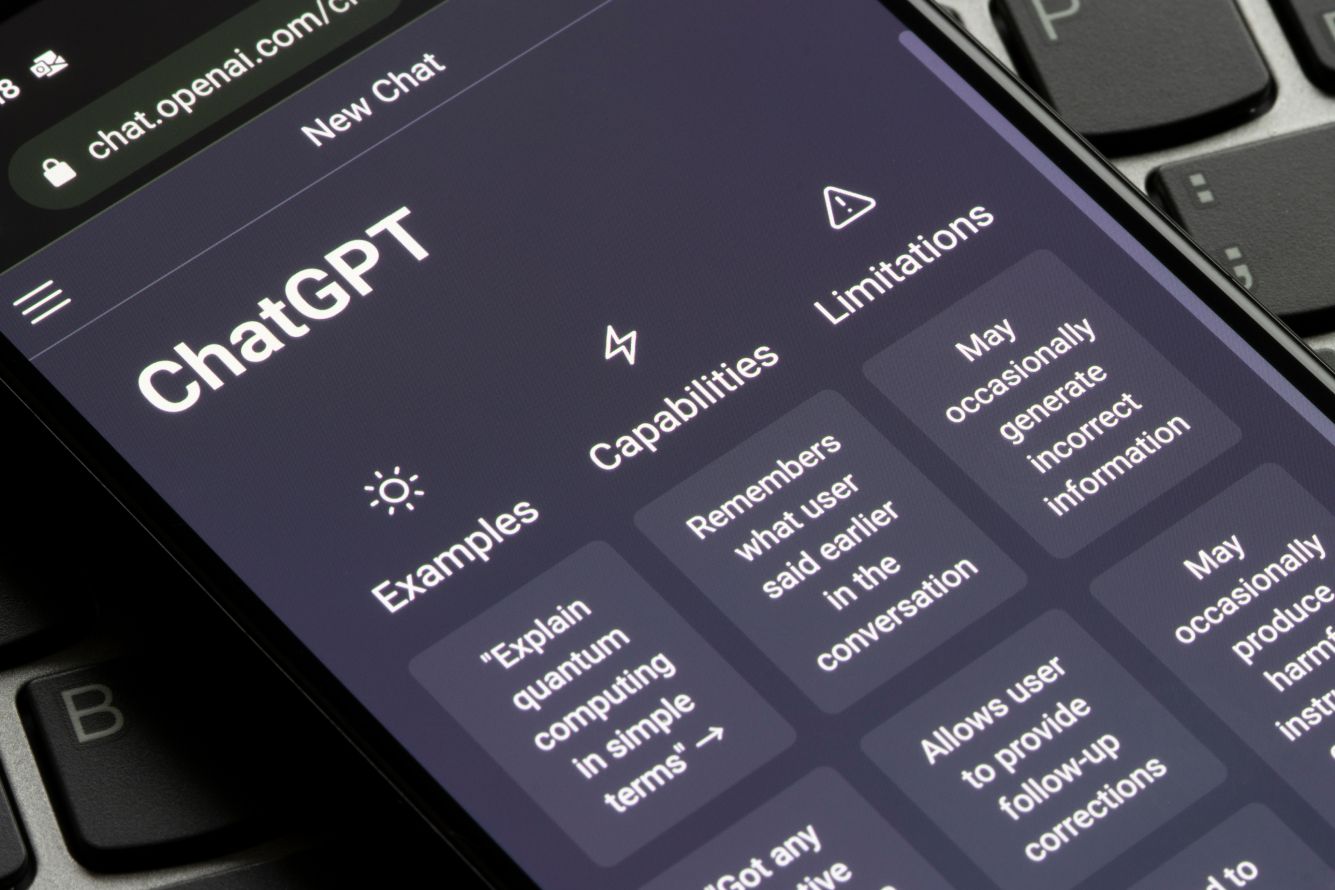
To find something on the Internet, most people around the world use Google search engine. She has unexpected competitors - for example, the younger generation makes a choice in favor of Tiktok . The situation may change with the development of a chatbot with artificial intelligence of Chatgpt from Openai . As the New York Times found out , this is also afraid of Google itself.
The media often write that ChatGPT is Google's “killer”. Is it so?
The ChatGPT release-a chatbot under the control of artificial intelligence-took place less than a month ago, on November 30. From this moment, the media and enthusiasts ask him that they would have used to google , that is, they check how effectively the model replaces the usual search engines.
On the one hand, there are many complaints to Chatgpt - and they are explainable. The chatbot is at the beta testing stage and periodically makes actual errors (which Medusa also wrote about). According to the relevance of the results, the Openai project sometimes loses Google, as it has “limited knowledge” about events after 2021 , does not have access to the Internet and may, looking very confidently, inadvertently “ lie down ”. And also often needs a facts .
At the same time, it is extremely convenient to search with ChatgPT due to a simple correspondence format. Instead of a list of sources in the issuance of a conditional Google (and the need to independently study the contents of the links), the chatbot gives a specific and laconic response . It is enough to enter any request and wait a bit, and then, since the previous dialogue is “not forgotten”, and the context is perfectly recognized - easily clarify the details (or ask for a reformulation) and get an even more relevant result.
Analysts and journalists with caution indicate the great prospects of ChatGPT and that the chat bots with AI will eventually change what the Internet POIS looks like.
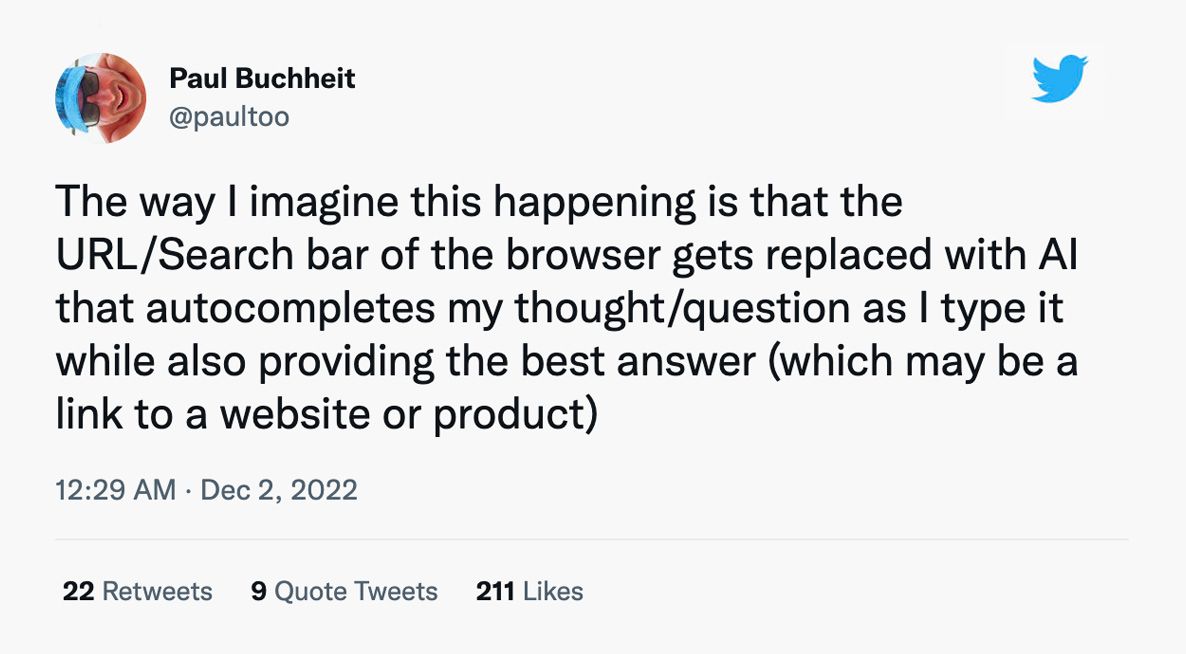
The fact that the Openai chat boot poses a threat to Google is confirmed by Morgan Stanley Analyst Brian Novak. But he emphasizes that the model cannot yet compete with traffic with the corporation and at the moment is not able to make people completely abandon the “googling”.
More recently, the Google leadership, apparently, did not consider Chatgpt the threat of its business model. So, on December 13, the CNBC channel told how Google employees asked the managers if they consider those resonance around ChatGPT a missed opportunity for their company. Such a question arose, since Google has similar language models , but uses them mainly to improve the search and other own services.
To this, the head of the Google Sundar Pichai and the head of the artificial intelligence unit Jeff Dean explained that Google’s “reputation risks” are too high to launch the product-an analogue of ChatGPT for universal use: the company fears that such a chat boot will be too “raw” in ethics and security matters. Pichai and Dean also told his subordinates that this is normal - that the corporation "develops more conservatively than a small startup."
What exactly changed inside Google after a month of open testing ChatGPT
The main threat to Google is associated with advertising, which brings a maternal company, Alphabet, more than 80% of income. The monopolist’s corporation is afraid to lose part of the market against the backdrop of the obvious advantage of ChatGPT, which consists in the absence of advertising and links to other sites (at least at this stage).
Surely Google takes into account the fact that Openai receives billionth investments from Microsoft, which in theory can use the achievements in the Bing search engine.
Ironically, but Google has independently developed AI and chat bots for many years. For example, the LAMDA tool, whichbecame widely known outside the IT community in the summer of 2022, when an engineer was fired from Google, who said that the algorithm created in the company has a mind . There was no confirmation of this (however, the capabilities of the chatbot were still impressed by many), and the corporation called the reason for the dismissal of the employee data disclosure. It was LAMDA who was mentioned at the December meeting when employees asked the leadership of “missed opportunities”. In addition, the transformer architecture underlying ChatGPT was invented precisely by Google researchers.
According to The New York Times, in less than two weeks, the situation inside Google has changed significantly: the publication writes that the top management of the corporation announced the “ red code ” due to the potential competitor. Nyt learned about this from the internal memorandum of Google and audio recordings made at strategic meetings, where it was discussed how to develop artificial intelligence. According to the publication, Pichai himself participated in the “Glorious Meetings” on this topic. As a result, the company set the following tasks:
- Development of products operating on the basis of AI. Several teams will take them at once, including Google Research and Trust and Safety , which is responsible for “making the Internet safer for everyone”;
- development of its own neural network, which will compete with Dall-Eaccumulated in the IT industry (it also came up with Openai), which creates images according to user textual needs;
- Organization of a AI conference, which should take place in May 2023. At the event, prototypes and finished products can be represented (but so far there are no announcements).
NYT explains Google's “conservatism”: the company fears that its analogue of Chatgpt will generate “false, toxic and biased” information. That is why Lamda is so far available only to a limited number of testers. According to NYT, at one of the meetings, an employee of the corporation invited the authorities to join the race of such and tools and warned that otherwise “the industry could go forward” without Google. But the company is not going to rush: at meetings, top managers promise subordinates that they will not release prototypes of products that do not comply with security standards.
As Nyt suggests, because of the current business model, even the perfection of the chat both risks not solving the Google problem, but only to aggravate. “Google has an obvious problem with the business model. If Google gives you perfect answers to requests, you will not click on advertising, ”says a former Google and Yahoo Avadala, who is now busy with Vectara startup.
A new wave of chatbot, led by ChatgPT, Nyt notes, can really “re-miss or even replace” a traditional Internet Poisk. Professor of History from the University of Washington Margaret O'Mara, who studies the Silicon Valley, summarizes in a conversation with the publication:
No company is invincible. All of them are vulnerable. It is difficult for companies that have become extremely successful in any one that determining the market, it is difficult to compete “in the second act” with someone completely unlike.
Sergey Star