
Translated material
"Ticket to the Universe of Orwell." Passport history in Russia
90 years ago, on December 27, 1932, the CEC and Council of People's Commissars of the USSR issued a resolution "On the establishment of a unified passport system for the Union of SSR and mandatory registration of passports." Passportation was introduced "in order to take the best to take into account the population of cities, working villages and new buildings and unloading of these settlements from persons not related to production and work in institutions or schools and not engaged in public-residential labor (with the exception of people with disabilities and pensioners), as well as in order to clean these settlement, criminal and other anti-community and other anti-social elements ".
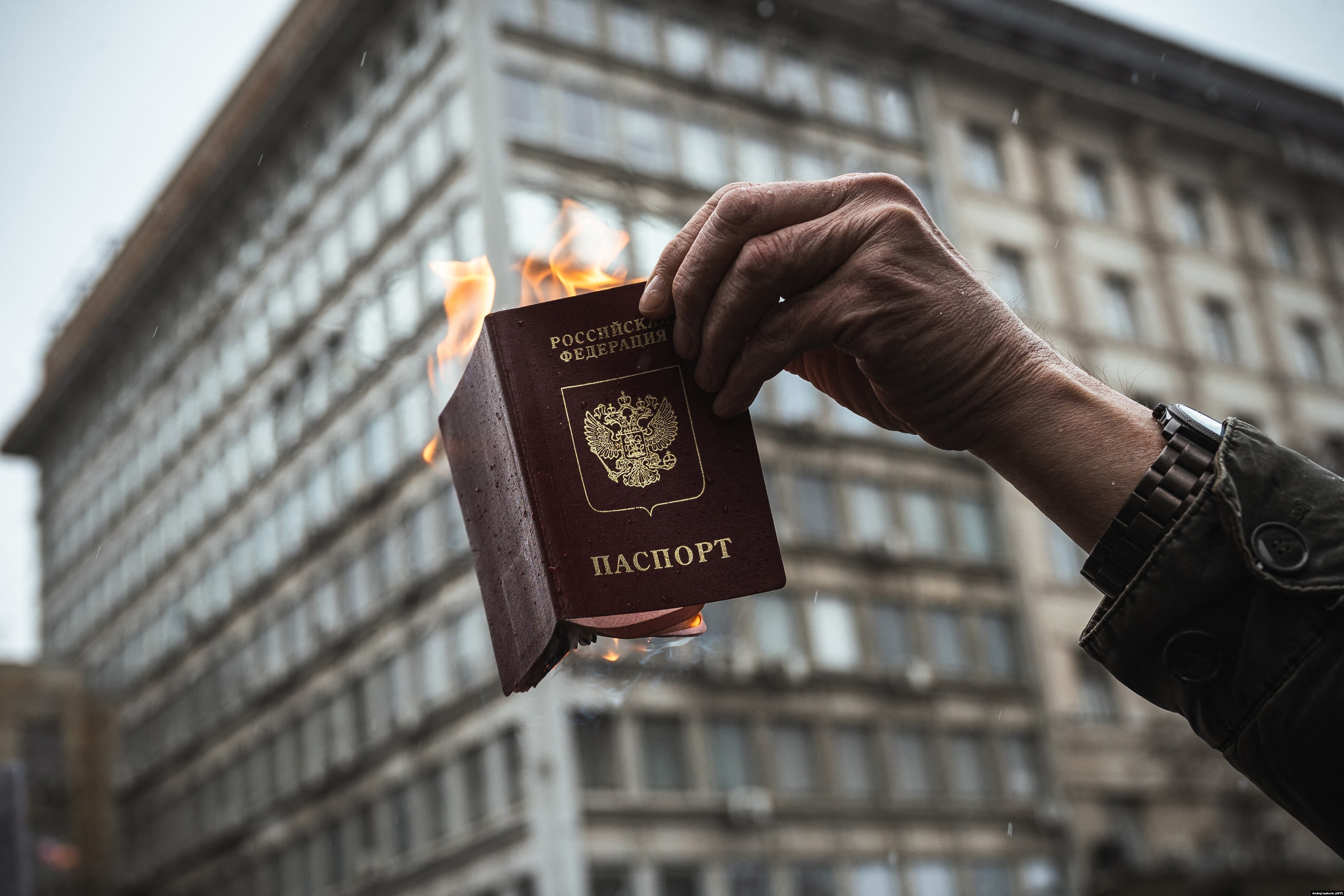
Today, the passport of a citizen of the Russian Federation is toxic, more than ever. But he began, like all decent passports, invented by officials to protect the boundaries entrusted to him, so that "and the fly would not fly" without appropriate permission. Flies, of course, flew - after all, what they love does not know borders. Well, people have long had to "straighten documents."
Exit visas: from the Old Testament to Soviet power
Even in the Old Testament, the book of Nehemiah, contains the following words: "And I told the king: if the king is benevolent, I would give me letters to the Zaretny Registers so that they give me a pass, until I get to Judea." From the further text it follows that the king was graceful, and Neemia acquired a “road diploma”, where visas were put in all countries that he passed in the way to Palestine. Probably, even then, five centuries before the Nativity of Christ, this was the most common thing.
Naturally, in Rus' (as soon as it more or less determined its boundaries), such documents appeared for the "departing". About 350 years ago, to cross the border, it was already necessary to submit a petition to receive a letter of literacy. And if someone did not "beat the brow", then he risked getting another place or completely losing this brow.
The Cathedral Code of 1649 read: "But who will go to another state without a passage of literacy for treason or what other bad, then he will find tight and execute death." Unauthorizedly traveling abroad "without bad" (unless, of course, they managed to prove it) could get rid of a slight fright, taking part in the reality show, which the ancient border guards arranged-"for that, the punishment is a whip, so that it was not possible to do so."
And under Peter, the first passport was introduced for movement within Russia - however, not for everyone, but only for the serfs who were allowed to go to work in other provinces. The need was serious: it was necessary to build a fleet, drain the swamps, and Petersburg did not want to stand without peasant bones. And in order not to get confused with the taxes that the landowners paid for every peasant soul, passports were invented.
It is interesting that the peasants in Russia were the first, and then the last to whom internal passports were issued.
Since the mid -19th century, former criminals began to be subjected to (to follow their movements) and prostitutes who were given out "yellow tickets" who combined personality certificates and a medical book. Lenin, a person of half a peasant (according to the father) of origin, which, as you know, was constantly "limited in rights", sending either to prison or exile, the word "passport" hated. Sitting in London, where he managed to run, by the way, on a fake passport, in 1903 he wrote:
"It is necessary that passports should be destroyed in Russia (there are no passports in other states for a long time), so that not a single officer, not a single zemstvo boss dare to interfere with any peasant to settle and work, wherever he wants ..."
As soon as the Bolsheviks came to power, they all these "royal documents", following the Lenin Testament, resolutely canceled. True, there was enough decisiveness for a short while, it very quickly became clear that in Russia without pieces of paper - nowhere. The revolution tore off millions of people from the place to place from the villages to the cities. Understand who, who is “their own” and who is “alien”, who for the “whites” or the “red”, did not seem to have any opportunity. Attempts began to replace the passport with labor books, metrics, and various mandates. But this poorly helped control the migration of the population, which in huge quantities sought to move from the hungry province to the relatively well -fed capital. In the twenties, the same "apartment question" who "ruined people" on the observation of the Bulgakovsky Woland, who had come to Moscow and Leningrad, created. And in Siberia no one wanted to live. And this saddened the country's leadership.
Therefore, in 1932, passports were returned - but not for everyone.
Stalin ordered to issue a passport and allow the residence permit only "class to close" inhabitants of large cities. And all "dubious", with bourgeois origin, not working and not students - to expel away.
Two years after the start of certification, the population of Moscow and Leningrad decreased by half a million people - they grabbed non -passports right on the street and sent to Siberia, where they died by starvation.

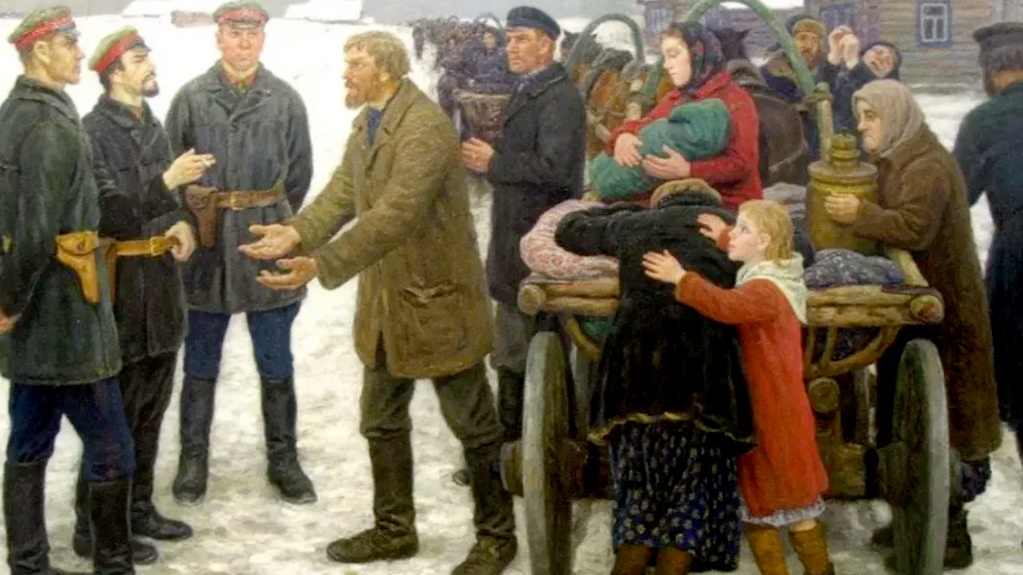
The peasants, in accordance with the testaments of Lenin, were not supposed at all, under any circumstances. And in the cities they had nothing to do. Sit in your village and do not go further than the next!
This continued until the beginning of the 70s of the XX century, when the elderly Soviet government decided to admit that the peasant is also a person. Moreover, this was already a rather rare person: urbanization in the USSR was in full swing, the villages were dying. One way or another, the peasants began to issue passports, but since it was a troublesome and non -construction matter, they completed it only by 1981. That is, the last “peasant attached to the ground” in Russia disappeared approximately the same when personal computers appeared in the United States and the first reusable spaceship took off.
However, the first computers by that time appeared in the USSR. They helped to achieve the zenith of Soviet passporting-finally it was possible to accurately calculate all their citizens and make databases on them. Now any policeman, having detained a citizen, could press several buttons on the switch and find out the whole history of his sins. The passport reported where the citizen lives, to whom he is married, how many children have ... the passport spoke about the person!
Soviet officials liked it so that the word "passport", which was hated by Lenin, became universal in the 80s. "Passport" was issued to construction sites, real estate objects, cars, electronic devices and even land plots. Passports appeared at refrigerators, bulbs and electric boilers. It was difficult to find at least one product in the USSR, with which his passport would not lay. Even in a box with condoms was a "passport of the rubber product". However, this did not help too much in overcoming borders. In the West, without any passports, they did better.
But on the other hand, passports sometimes helped to overcome the boundaries of people. And this is another conversation, difficult.
How Przhevalsky deceived a Chinese official
For centuries, not everyone has been issued foreign passports in Russia. We can say only to the chosen ones. The recent statement of the Prime Minister of Estonia that "visiting Europe is not right, and privilege" could well have sounded from the mouth of government officials, in tsarist Russia, in the USSR.
Pushkin, for example, did not get such a privilege. He, because of his "Gavriliada" (insulting the feelings of believers) and friendship with the Decembrists (extremist organization), lived "disadvantageous" all his life.
Under Nicholas, the first exit from Russia was generally strictly limited, almost like under Stalin. Especially for the younger generation, which did not receive "vaccination" of traditional values. Until 1833, nobles were forbidden to export children from Russia at a "tender age" - from 10 to 18 years old. In order to apply for the right to a foreign trip, it was necessary to submit an appropriate petition. The nobles, if the police department had no questions for them, was allowed to leave for several years, representatives of other classes - for a shorter time.
But even if the state almost had no doubt about the loyalty and moral principles of the one to whom the foreign passport issued, it still hesitated. Well, okay, let him have a patriot. But suddenly he wants to deceive not the state, but one of the fellow citizens? And run away. Maybe he, for example, has huge card debts or did he promise to marry a neighbor's daughter? How to find out about it? Therefore, who wanted to go abroad for six months had to submit announcements three times in all newspapers in St. Petersburg and Moscow, notifying his intention of compatriots.
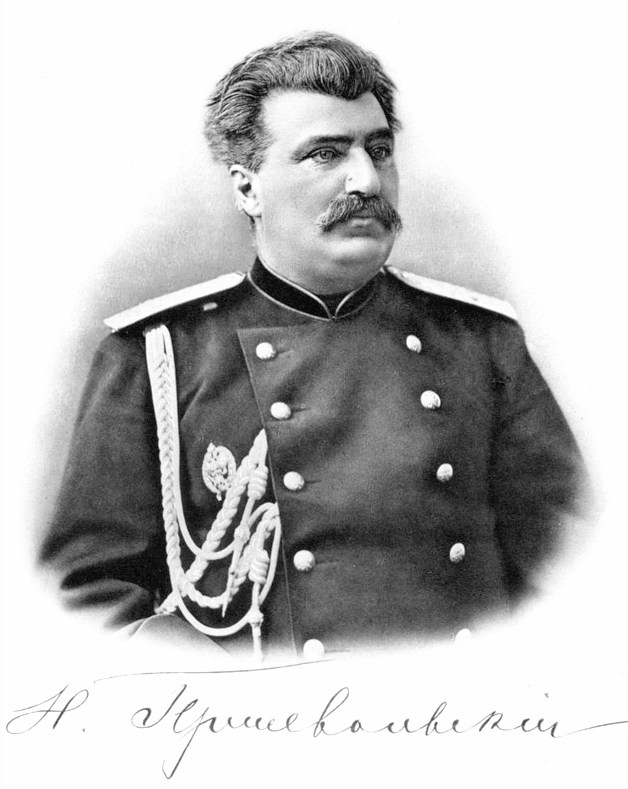
The Russian passport for foreign travels in those days looked rather inconspicuous, like a leaf -folded leaf, and sometimes made a wretched impression on foreign border guards. Especially in the East, where the splendor of documents was treated with great attention. There is a historical joke associated with one of the first travels to China Nikolai Przhevalsky, when the Chinese refused to believe that this modest piece of paper was on one of the boundaries of the Middle Kingdom. "Here we have passports look like this!" - He said importantly, taking out and unfolding a long scroll to the traveler. Fortunately, Przhevalsky had with them the “Moscow Vedomosti” - a fat multi -page newspaper, on the first lane of which an article about his travels and a photograph of the scientist were published. "Vedomosti" made the most favorable impression on the Chinese.
- ABOUT! Yes, this is a passport! He exclaimed with admiration, and immediately put a large round seal in the newspaper.
However, the power of Chinese laws in those days often ended about thirty meters from their guardian, and no seal saved the local residents from sudden attacks, with suspicion of aliens from the West. Therefore, Przhevalsky himself, without unnecessary diplomacy, has repeatedly said that "the best passport for China is the ability to shoot quickly and accurately."
It is not surprising that until the end of the 19th century, Russians abroad were noticeably fewer than foreigners in Russia itself. But everything began to change rapidly at the turn of the century, on the eve of the first Russian revolution. It was then, in 1897, that passports, which allowed to freely go beyond the Empire, began to be given to all those wishing citizens, including students and even artisans. These were no longer “passing letters”, but quite similar to modern books, where (though not necessarily) a photograph of the owner could be glued. And, of course, many, having received such books, went.
They left, fearing political persecution after student unrest, for economic motives, to study ... They left for resorts, give lectures, and wagon in a casino. In a word, everything is as always. Moreover, at the end of the 19th century and until the beginning of the First World War, it was possible to move freely within Europe itself without any passport control. It was canceled, since officials and border guards did not keep up with the development of railway transport, transporting millions of people from the country to the country. This "primitive Schengen" stunned the Russians who escaped abroad and instilled in them a feeling of unprecedented freedom, which, as it seemed to many, could be achieved in Russia. It is enough to overthrow the tsarist government ...
In 1917 they overthrew him, and shortly after this border closed.
Aristocrats among people without fatherland
During the Civil War, millions rushed outside Russia. Most emigrants who fled from the new government had no official papers for foreign travels. People left with pre -revolutionary passports, with ordinary personality certificates, with military books ... who had something. Moreover, almost without documents, the last parts of the White Army were chosen from Crimea.
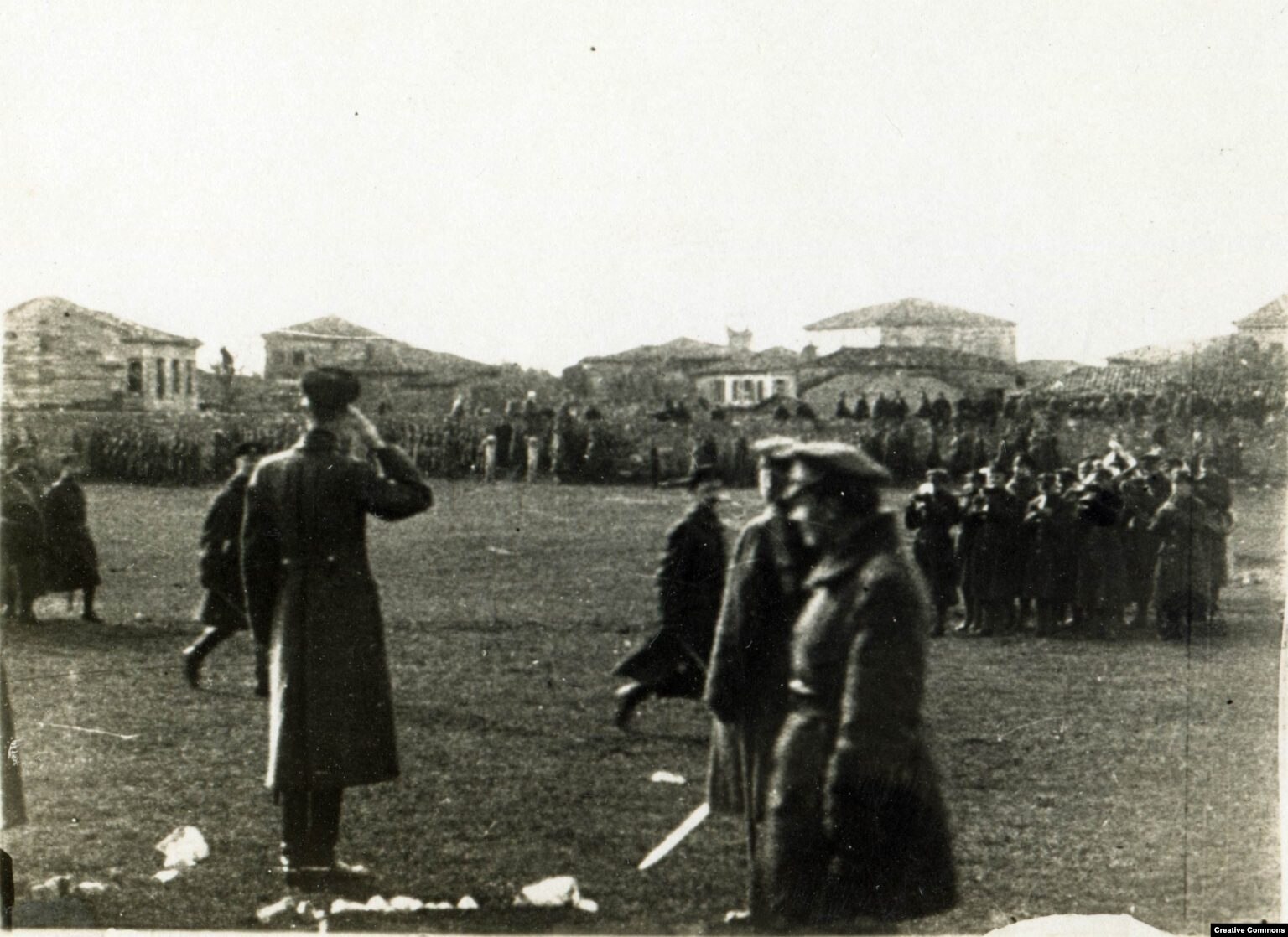
In Europe, primarily in Berlin and Paris, where many tried to reach, the status of all these people remained uncertain. At any moment they could be sent in an arbitrary direction, to any neighboring state, as ordinary tramps without documents. Often they did it. True, the borders immediately after the war remained relatively "transparent", they could again be secretly and again, but such a vagabond life was not suitable for everyone.
And precisely then, in 1922, for Russian emigrants, a "lifebuoy" appeared, which made it possible to obtain legal status in many countries. The Nansen Passport, which was invented and into circulation, was the famous Norwegian traveler and polar explorer Fridiof Nansen.
Nansen really loved Russia, for decades was friends and collaborated with many Russian scientists and members of the imperial family, and the revolution, and then perceived the civil war almost as a personal catastrophe. At the same time, the authority of Nansen as a public figure and philanthropist by the beginning of the 20s of the last century was unquestioned, and any project quickly collected the necessary donations that always “worked” very effectively, even at a time when no one wanted to help Bolshevik Russia. So, for example, it was with the Committee of International Assistance to the Fasting “Honest Word of Nansen”, thanks to which in 1921, during the hunger collapsed in the southern provinces, it was possible to save the lives of more than a million people.
Since 1920, Nansen served as the Commissioner of the League of Nations for Refugees, and it was then that he began to coordinate his project of the “Mistress Document” with the leaders of many countries, which was created specifically for Russian emigrants. The owners of such a passport could move between the countries of the Geneva Conference, and the restrictions provided for persons deprived of citizenship did not apply to them. By 1922, the majority of Europe and the United States agreed to recognize the Nansen Passport, and after 20 years it acted in 52 countries of the world.
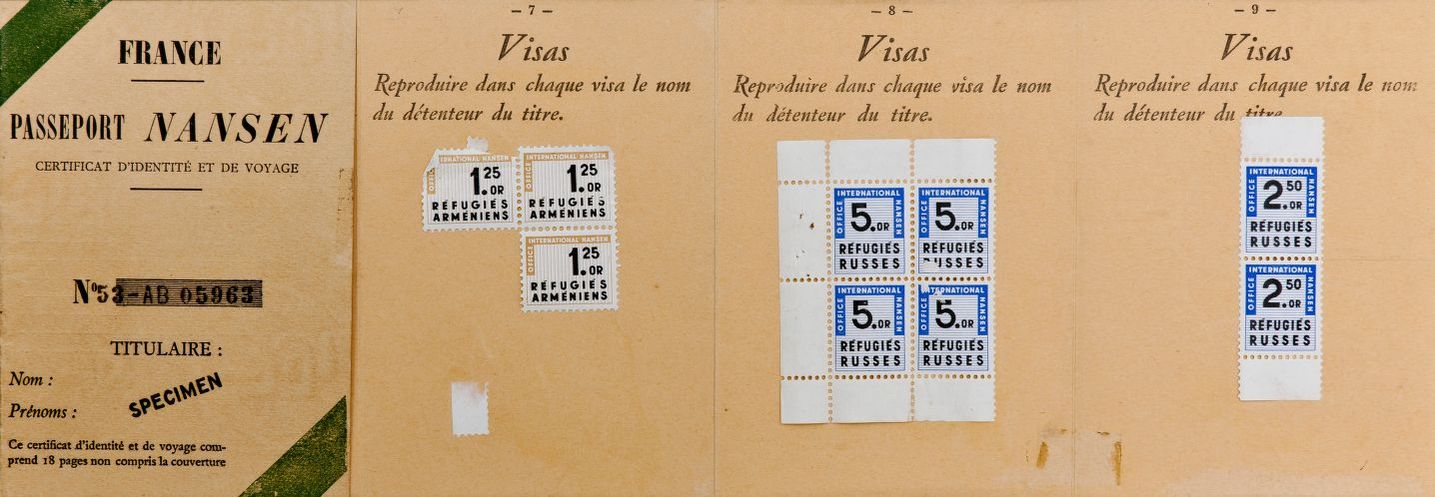
It was a modest book that was given to everyone who could certify their identity (that is, he had at least some document) and prove that he is a refugee. However, such evidence was then the departure of a person from Soviet Russia. After issuing a passport, instead of printing, a five-franc bracer (sometimes with a portrait of Nansen) was glued into it-and it was precisely because of it that the phrase "Nansen's passport" was widely included in everyday life. Of course, this was not a passport of a “citizen of the world”, but only a travel document with which its owner could move from the country to the country for a year or two until he chooses a place of permanent residence, where he could count on obtaining citizenship. However, many Russian emigrants, not wanting to become citizens of any other country, except Russia, lived on the "Nansen passports" for decades.
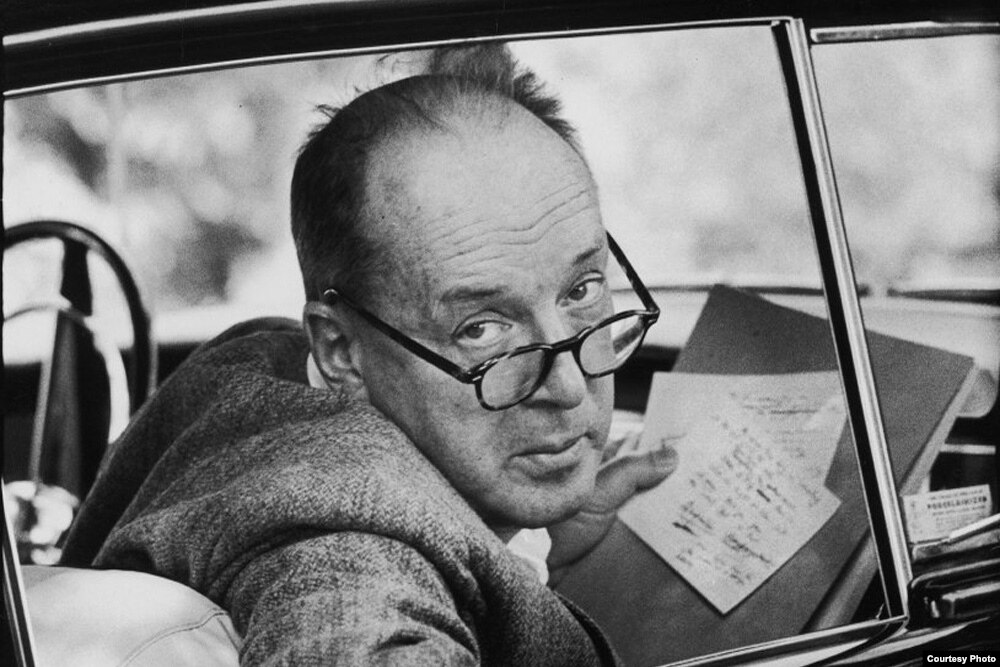
In the very first years of such passports, 450,000 were issued, and among their owners - hundreds of Russian celebrities: Nabokov, Rachmaninov, Repin, Stravinsky, Bunin ... True, not everyone perceived the Nansen Passport as a gift of fate - the same Nabokov once said that a person with such a passport "felt conditionally released conditionally." But it was still better than nothing, because, according to the apt remark of one of the heroes of the remark, the owners of the "Nansen passport" in those years were "aristocrats among people without the Fatherland."
Since the spring of this year, new Russian emigrants have been talking about issuing to opponents of the Putin regime “Nansen passports 2.0” or, differently, “good Russians passports”. The idea seems to be not bad, but almost no one in the world seems to be already believed that Russian can be good. And in European politics there is now no public figure, similar to Nansen, who could throw a rescue circle to the new exile. So the salvation of the drowning again becomes the work of the drowning themselves.