
Translated material
Navalny's war
As a politician and his supporters opposed Putin and hostilities in Ukraine: he is because of the grill, they are from emigration
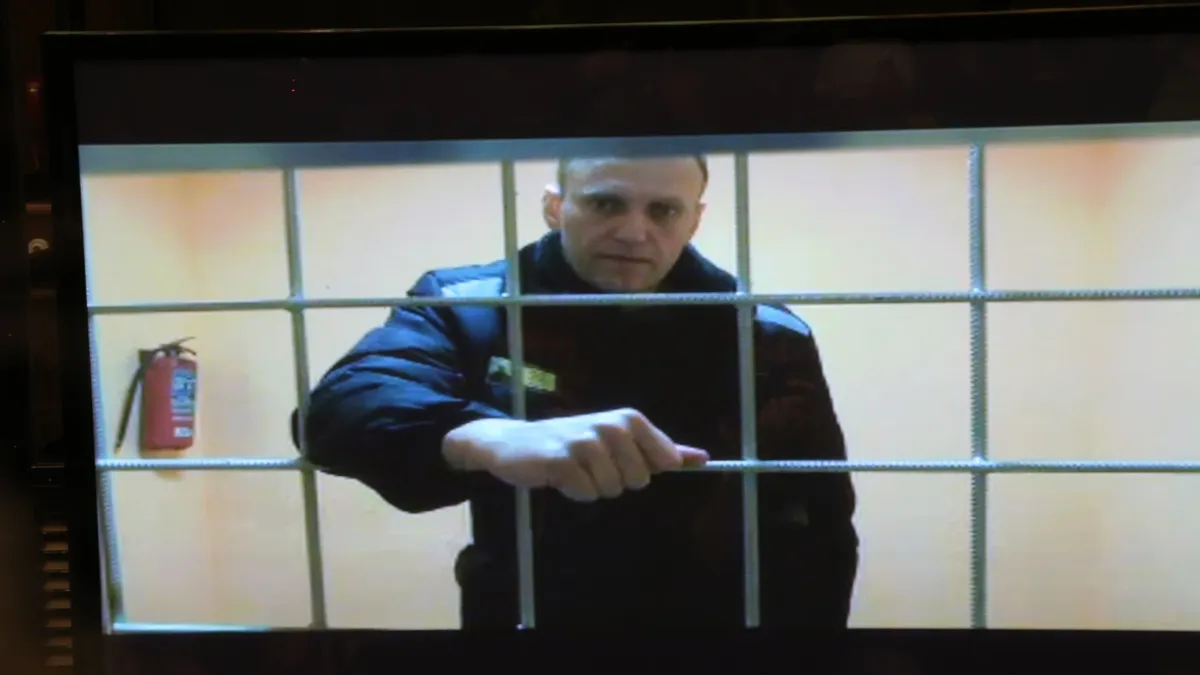
Against the backdrop of the war in Ukraine, Alexei Navalny, who remains the main political prisoner of Russia, and his supporters are back into the background, but still continue to work: the video of the Channel “Popular Policy” gain hundreds of thousands of views (at the beginning of the war the number of spectators sometimes exceeded a million), and the list of people against which Supporters of Navalny demand to introduce sanctions is replenished. The launch of the “underground” network of headquarters, which was announced at the end of December, can generally become a milestone in Russian anti -war resistance. Alexei Navalny, who is now in a colony of maximum regime of the Vladimir region, continues to speak out against the war and almost does not leave the schizo. The correspondent of Novo-Europe, together with political scientists, analyzes the main projects of the Navalny team over the past year and talks about what happened to them after the start of the Russian invasion of Ukraine.
"Popular policy"
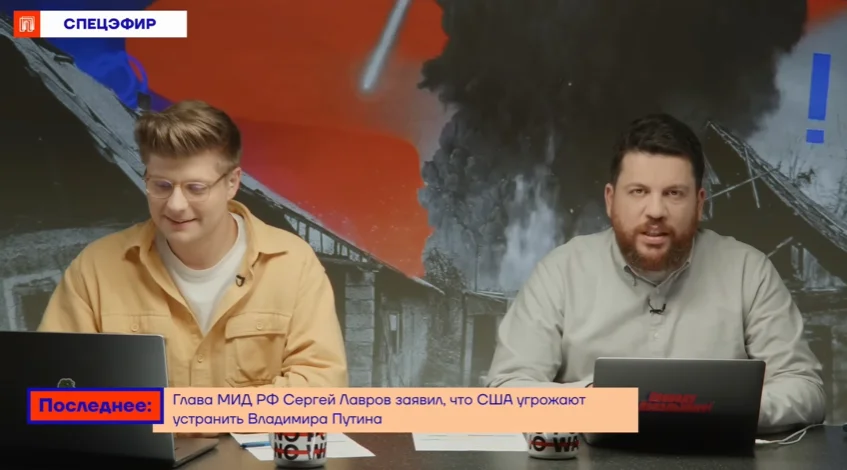
- Good evening friends, you turned on the Channel "Popular Policy". The main political button, a place where they tell the truth about Russian politics and call a spade a spade. We are talking about the war and crimes of Vladimir Putin, ”the young man in a black jacket and a blue shirt say on the camera.
This is an employee of the Corruption Foundation (FBK) Ruslan Shadadinov, who served on the New Earth last year, where the security forces were illegally taken out in December 2019. Next to him is another ally of Navalny - investigator Georgy Alburov. The next one and a half hours they will discuss the latest news: massive missile strikes in the cities of Ukraine, the fall of the Ukrainian missile in Belarus and the announcement of the Ministry of Internal Affairs of the Ministry of Internal Affairs of the journalist-investigator Khrista Grozev, mass searches from journalists and deputies in Russia. As usual, guests will connect to their conversation: Mundary Sergey Tsukasov, journalist Michael Naki, lawyer Mark Feigin. All this in the framework of the direct broadcast of the YouTube channel “Popular Policy”-perhaps the most famous project of the Navalny team launched after the outbreak of war. Here such broadcasts are held every day.
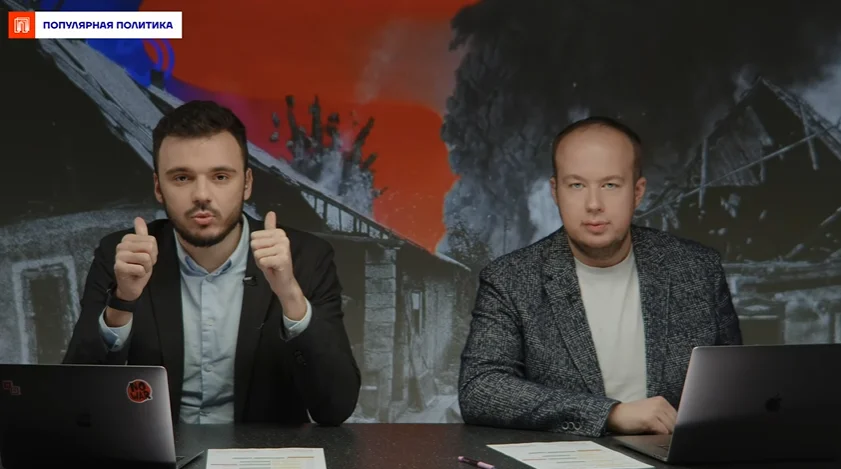
According to the director of the Corruption Foundation Ivan Zhdanov, they thought about creating their own media for a long time, and with the name “Popular Policy” in 2014 they tried to release the newspaper in the spirit of the “political tabloid”. Despite the fact that the politicians already had a Navalny Live channel with its software net, they planned to make a journalistic project in the FBK, designed for a wider audience, not so much involved in their political processes, Zhdanov says.
Initially, the channel was planned to be launched in the summer, but the war made its adjustments to these plans, and issues began to go out in the early days of Russian aggression in Ukraine.
The hosts were the Employees of the FBK, ex-coordinators of the headquarters and journalists of independent media: Ruslan Shavedinov, Ivan Zhdanov, Kira Yarmysh, Maria Pevchikh, Dmitry Nizovtsev and the former Echo of Moscow, Michael Naki.
- Soon you will have the same access to information as in my prison. That is, no. The “echo” is closed, the “rain” is closed. Everyone is blocked, even if you hung from head to toe with the dies “Foreign Agent,” - in such words, announced the new uncertain media Alexei Navalny from the colony.
The launch was successful, and the first issues quickly began to gain hundreds of thousands, and sometimes millions of views (now from ten to 400 thousand people come to the video). Several programs come out on the channel: daily news; “Martial law” (this program provides a weekly final summary of hostilities); “Zombie -player” with a former rain journalist Ilya Shepelin (in fact, this is a review of the “creativity” of Russian propaganda). Regular genre: an interview about the war with Ukraine, domestic policy and the economy of Russia. The guests are most often experts - economists Sergey Guriev and Maxim Mironov, military analyst Yuri Fedorov, publicist Dmitry Bykov - and public faces of Ukraine: advisers to the head of the office of President Vladimir Zelensky, Alexei Ardelovich and Mikhail Podolyak.
“The effect of the channel turned out to be strong enough in this year, we created a large media from scratch,” Zhdanov assesses the show. - We have regular viewers, many of them do not even know that we had previously engaged in political activities. For example, they can recognize me on the street, come up and say: “Oh, you are a leading“ Popular Policy ”,” although I am not even a journalist. A completely new audience has appeared. In the last month we had 11.5 million unique spectators. The channel continues to grow, for November 30 thousand people signed up for it. In summer, the number of unique viewers reached 10 million.
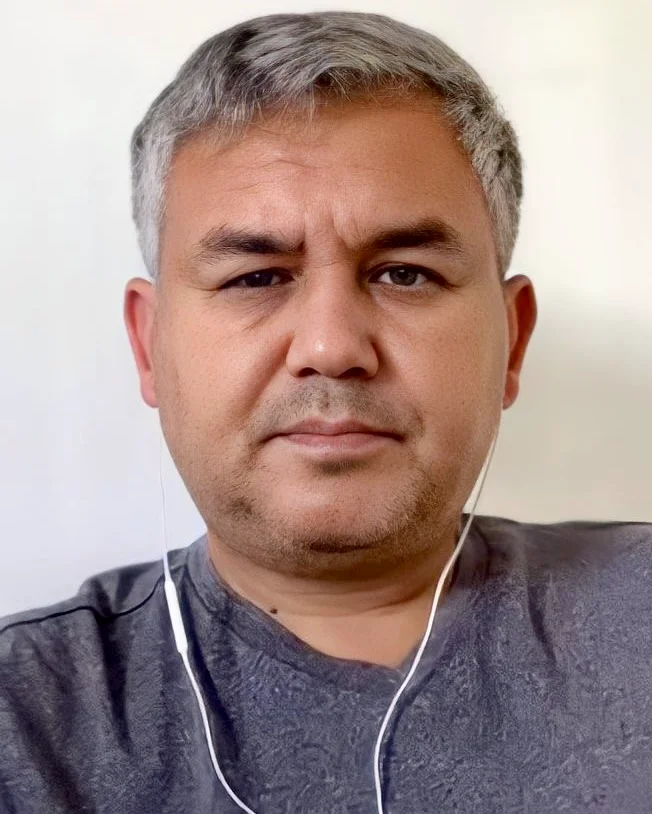
According to political scientist Abbas Gallyamov, initially the target audience of “Popular Policy” still remained for the opposition of the traditional - city middle class and “elite”. But after the start of mobilization, people loyal to power joined the audience.
-For loyalists, “Popular Policy” has become something personal, regarding both their and their loved ones. A request for truthful information has appeared, ”the political scientist explains. -Of course, many of them previously thought that the authorities were not saying something, but while the war for them was only a show that was shown on TV, and they look at it from the sofa, it was not important. After mobilization, the war became a factor in their personal life, and they rushed to the Internet to watch what it is in reality. Of course, supporters of the authorities are unlikely to look at the Navalny team, but oscillating citizens can.
In the fall, it became known that the leading programs due to stories about the crime of the Russian army were massively accused of articles about “fakes” about the Russian army and “justification of terrorism”. Leonid Volkov, Love Sobol, Dmitry Nizovtsev and others fell under the sight of the Investigative Committee. But politicians, for whom the repression from Russia is far from news (in fact, that's why they work from emigration), this does not stop. In addition to “Popular Policy”, they continue to develop the Navalny Live channel, and also regularly issue investigations. Not so long ago, the Navalny team issued an anti -corruption investigation about Timur Ivanov, the deputy Minister of Defense of Russia Sergey Shoigu, and even earlier - an investigation into General of the Russian Army Sergei Surovikina.
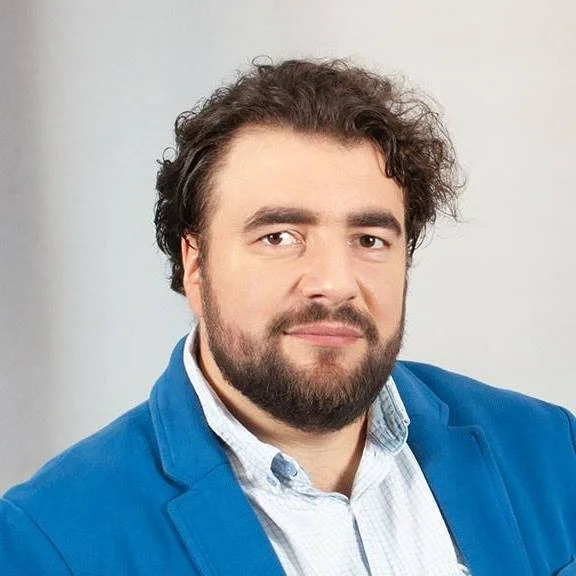
At the same time, political scientist Ivan Preobrazhensky believes that a strong media activation of Navalny's supporters rather interferes with their positioning as a political movement. The entire project “Popular Policy” is certainly anti -war, but it is far from at the forefront of the pacifist projects of the Russian opposition (namely, the reaction of political movements should be the most significant for this request). In addition, the concentration on the media moves them away from real political actions. But this is a problem not only of wartime: as Preobrazhensky notes, it has been developing since Alexei Navalny ended up in a colony.
"List 6000"
The development of the media is not the only thing that the Navalny team was doing in the last year. According to Ivan Zhdanov, the comrades -in -arms of the policy work in three areas: information, international and internal (it includes Russian projects for which field work is needed, for example, investigations). Such a distribution was established a year and a half ago. The inclusion of Russian oligarchs, officials, politicians, and security forces in sanctions sheets is considered their most important task in the international direction.
Alexei Navalny called against the Russian elite back in 2015, and in 2021 the corruption Fund published its first such sanctions list-it included 35 billionaires and security officials, as well as people who directly participated in the persecution of Navalny.
Some of the persons listed by politicians subsequently really fell under the sanctions of the EU, the USA, Canada and Great Britain (though not all).
In the spring of 2022, the comrades -in -arms of the politician went further and published a list of 6,000 “corruption and warfarers”, who made Russian aggression in Ukraine possible. Politicians divided the list into 16 categories that included the “organizers of the war” (members of the Security Council, as well as military personnel and accomplices of Russian occupation; here Vladimir Putin), “propagandists”, “corrupt officials”, “key security forces”, “heads of regions”, “united Russia functionaries” and others. Work on the document is still being carried out, and now it has already 6793 surnames.
- After the invasion, a lot of requests began to come to us: “Tell me, who do you consider the main thing surrounded by Putin?”; “Tell me, who do you consider responsible for the war?”; “How does it all work?” Says Zhdanov. - We felt our expert significance in the issue of how the Russian government works, and decided that it would be correct to give our recommendations for entering [some political figures] to sanctions lists, because often [countries] are made there people who do not have much influence on Russian politics.
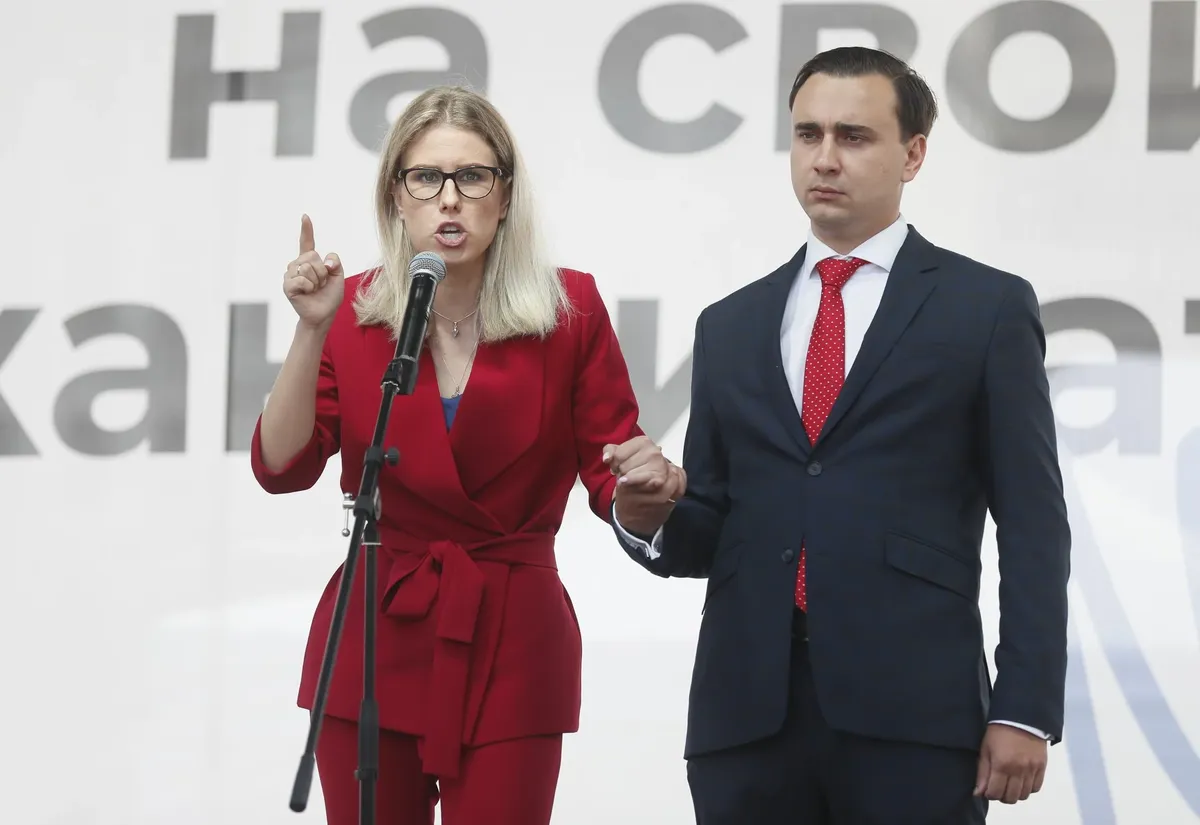
Zhdanov adds that the formation of a list is only part of the work. Against the top officials, Anti-Corruption Foundation collects a package of evidence of their guilt. The importance of the tasks set, according to the director of the FBK, does not even need to explain: “The people responsible for the war, on the one hand, must be punished, on the other hand, they must see what they may lose if they are on the side of Putin.” At the same time, questions already arose to the list: for example, in the summer, politicians were excluded from the list of NTECHLAB founders Artem Kukharenko and Alexander Kabakov, who were engaged in the Moscow person recognition system. As Leonid Volkov assured , for this they managed to "carefully repent."
Despite the scale of the work done, the implementation of the desired sanctions policy is not too fast. In May, Leonid Volkov met with the supreme representative of the European Union for Foreign Affairs and Security Policy Josep Borrere and the deputy of the European Parliament Guy Verkhofstadt to discuss the “List 6000”, after which the European Parliament supported the resolution in which the EU countries recommended taking into account the proposals of the FBK for sanctioned policy. Then the politicians met with members of the US Congress in Washington on the same issue. However, whether sanctions were imposed precisely on the recommendations of Supporters of Navalny and against whom publicly is still unknown. Zhdanov assures that there really are such people, but he cannot name their quantity and names.
“In the last update of the European Union ( the ninth package of sanctions was the adopted on December 16 - approx. Ed. ) There were a lot of people, including governors who, I would like to believe, were made there according to our recommendation,” says the director of the FBK.
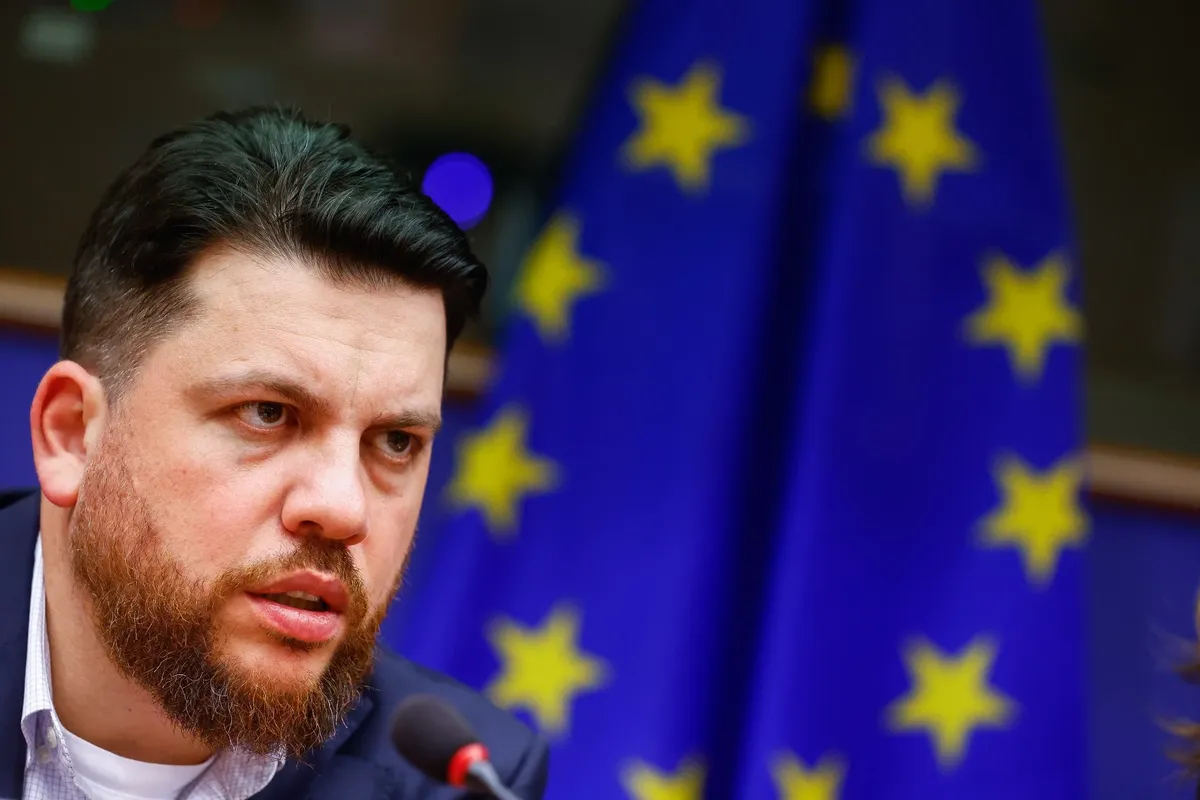
Abbas Galyamov positively evaluates the idea of the FBK demanding the introduction of sanctions - "supporters of the opposition will like such projects." In addition, for the governments of Western countries, Navalny is a good landmark. However, the political scientist notes that there should not be random people in this list. The FBK, in his opinion, is often recorded in their list of people exclusively according to formal criteria, including those who exactly oppose the war.
Ivan Preobrazhensky in many ways agrees with this: he indicates the size of the list - too large for spot sanctions. According to the political scientist, any politician understands that no one can administer such a list. At the same time, at the beginning of the war, according to Preobrazhensky, the lobbying of the sanctions policy made sense: the team of Alexei Navalny took a fairly tough position on this issue compared to other Russian opposition. FBK added even disputed figures to the list, showing its rigidity in relation to cooperating with the Russian regime. However, the public concentration on the “List 6000”, as in the case of the media work, became the weakness of the FBK, Preobrazhensky adds: anti -war initiatives were not visible behind him, for example, projects for the assistance of Ukrainian refugees.
Resistance within Russia
The problem of the Navalny team also consider low work on resistance within Russia. So, despite the fact that at the very beginning of March, Alexei Navalny from the Vladimir colony called on the Russians to go to daily protests against Russia's invasion of Ukraine, and calls for promotions sounded from the Streams of Popular Policy, they clearly failed to lead street anti -war resistance at the beginning - the calls of the Vesna movement (in early December, the Russian authorities recognized them as an extremist organization).
At the same time, in early December, the ally of Navalny Georgy Alburov said that the FBK paid 19 030 034 rubles for anti -war rallies.
As Abbas Galyamov notes, after the start of the war, the supporters of Navalny in the media review were significantly lost, especially when compared with 2021, when they literally headed it. According to the political scientist, this happened for objective reasons: during the war, they were no longer the main enemies of Putin, but the Armed Forces of Ukraine. The fate of the regime is decided on the battlefield.
“Since they still remain the moral leaders of the Russian opposition as people who have been the most rigid, consistent enemies of the authorities for many years, at some point when a real, serious protest begins in the country, they will be able to regain the leadership automatically,” Gallimov argues. - Their recent statement that they renew the work of the headquarters through the Darknet, if this plan is implemented, will become a big step forward - if they bring coordination to the non -organizational activities of those who are now disagreed with the regime.
The fact that the Navalny team is going to resume the work of their headquarters throughout Russia became known in October this year ( their work was terminated in 2021 due to the risks of criminal cases of an extremist organization. - approx. Ed. ). Politicians began to restore the contact network and offered those who wanted to join the work of the headquarters to fill out the questionnaire, indicating the region that they know well or in which they are. They called everyone: "Artists, lawyers, hackers or just people who are ready to spread leaflets."
At the end of December, updates appeared in the project. According to Ivan Zhdanov, more than thirteen thousand people responded to the proposal of Navalny's supporters. To coordinate their work, the FBK developed a platform in the Darknet (the site is registered on the Onion domain, which works only through the Tor browser), you can connect to it by disposable login and password, which should come to fill the questionnaire. After registration, participants in such a partisan headquarters will be able to communicate in a chat with coordinators (interviews with them) and see a list of tasks that need (but not necessarily) to complete.
According to Zhdanov, the late launch of the project, for the tenth month of the war, is due to the fact that the risks for people in Russia have changed a lot. In the FBK, they are accustomed to use the electronic mail databases for communication with their supporters, but now such an interaction has become very vulnerable, especially when you consider that the state "has a very strong one in traffic tracking."
-After they started to carry out mobilization, even according to surveys it became clear that many people are in a state of panic, they want to do something. There is a request for some coordination. We began to think what to do with this and got to the point that we came up with a safe thing. Inside this system will be people with different risks, ”says the director of the FBK.
To cooperate and unite with other organizations that already work “on Earth” (for example, with feminist anti -war resistance), FBK is not considered effective and rather advocate “healthy” competition.
Protest from the grate
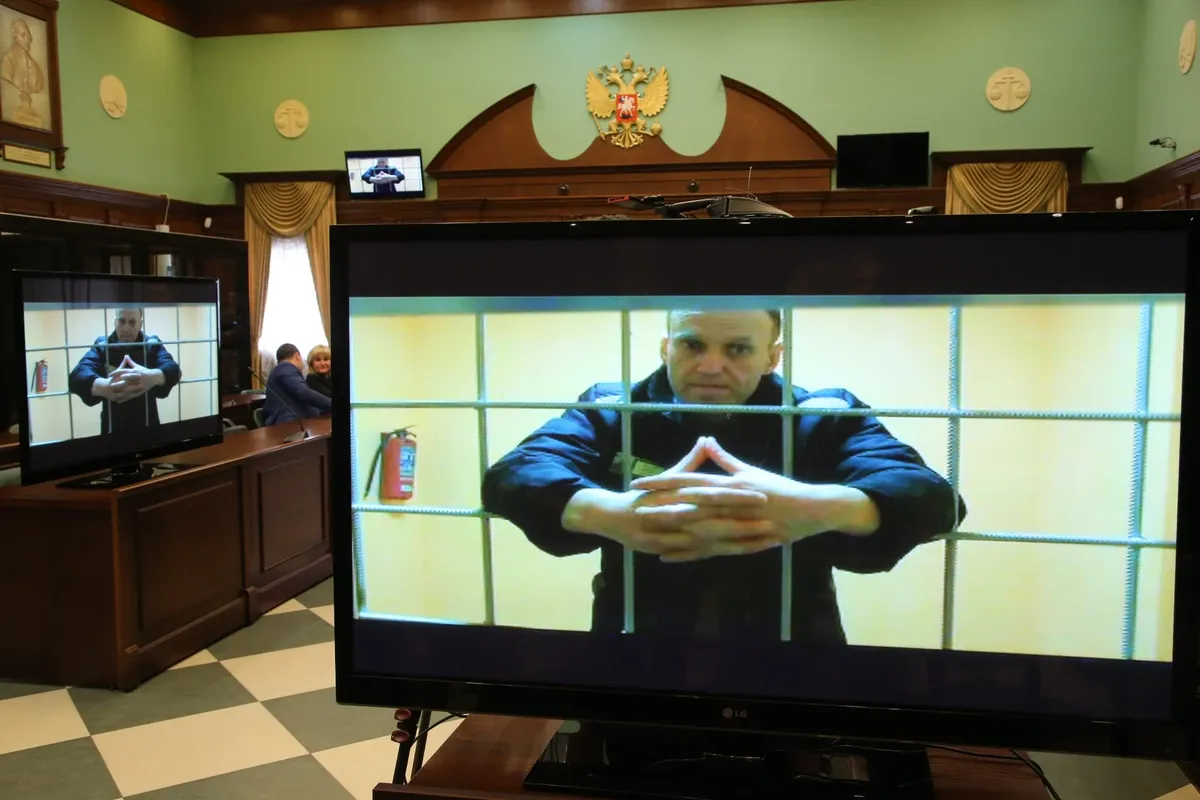
Alexeynavalny himself cannot actively participate in resistance for objective reasons: since 2021 he has been in the colony after the court, at the request of the FSIN, replaced his conditional term in the Yves Rocher case with the real one. Since then, the number of criminal cases against the politician only continues to increase (now six criminal cases have been opened against the politician), and the alleged terms of its detention are only to increase. Already after the start of the war, on March 22, the Moscow Court of the Moscow court at a visiting meeting in colony No. 2 in Pokrov of the Vladimir Region sentenced Navalny to nine years in a strict regime colony, finding him guilty of particularly large fraud in collecting donations from supporters and disrespecting the court when considering the case of slander for a veteran. After that, the policy was sent to a maximum security colony-IK-6, which is located in the village of Melekhovo and is famous for the tortures of prisoners. Условия содержания политика там постоянно ухудшают: его то и дело отправляют в штрафной изолятор, а свидания с адвокатами усложняют до невозможности.
Несмотря на это, в августе соратник Навального и президент Anti-Corruption Foundation Леонид Волков рассказывал в интервью «Новой-Европа», что команда политика все еще находится с ним в тесном контакте. На стратегическом уровне он буквально руководит всей работой ФБК и все проекты, которые они осуществляют, — либо реализация его идей, либо Навальный лично их утверждает.
Для людей, не связанных с ФБК, голосом Алексея Навального в последний год стал его инстаграм. Все это время Навальный продолжает высказываться против войны:
с момента признания российскими властями «ЛДНР» в феврале 2022 года политик опубликовал более 70 постов, значительная часть которых была о войне в Украине.
24 февраля на его странице появилась видеозапись, сделанная на судебном заседании в исправительной колонии №2 в Покрове по уголовному делу о мошенничестве в особо крупном размере. В своем выступлении Навальный назвал людей, которые развязали войну, бандитами и ворами, а основной целью боевых действий — отвлечение россиян от их реальных проблем.
— У меня нет никаких других способов коммуникации с внешним миром, тем не менее, я для протокола замечу и прошу отразить, — это и есть мое ходатайство, поскольку это единственный мой способ обращения к суду и к миру, что я против этой войны. Я считаю, что эта война, которая сейчас идет фактически между Россией и Украиной, развязана для того, чтобы отвлечь граждан России от проблем, которые есть внутри страны: от деградации экономики, обеднения населения. Эта война приведет только к огромному количеству жертв с обеих сторон, к разрушенным судьбам и продолжению обнищания граждан России, — заявил Навальный в суде.
2 и 11 марта политик призывал выйти на всероссийские антивоенные акции протеста, 5 марта — высказался против военной цензуры, а в апреле комментировал убийства мирных жителей российскими военными в Буче.
Бесследно такое сопротивление для политика не проходит: после перевода в колонию строго режима его начали постоянно отправлять на сутки в штрафной изолятор (важным триггером для первой отправки стал также рассказ Навального о создании профсоюза «Промзона»). Как рассказывала создательница «Руси сидящей», правозащитница Ольга Романова, в интервью «Новой газете Европа», штрафной изолятор в строгом режиме — это одиночная камера, куда переводят заключенного, дают ему новую форму, подвергают досмотру. Условия там сравнимы с пыточными: в течение дня человек не может делать фактически ничего, кроме как сидеть на табуретке, прикрученной к полу. Общение с другими заключенными запрещено, передачки тоже.
В первый раз о том, что Алексей Навальный оказался в ШИЗО, стало известно 15 августа, уже 24 августа он попал в штрафной изолятор второй раз, а 7 сентября — в третий. Но политика это не остановило: осенью Навальный снова высказывался на суде и говорил о начавшейся мобилизации.
— Я постоянно сижу в ШИЗО. Никто не скрывает политического контекста вокруг этой ситуации, — заявил Навальный. — Чтобы иметь и защитить свое право выступить против преступной мобилизации, из-за которой десятки тысяч семей лишатся сына, брата, отца, право выступить против того, чтобы сотни тысяч наших людей отправляли убивать невиновных таких же людей, я посижу в ШИЗО, и вы мне рот не заткнете. Это преступление против моей страны. Я молчать не буду, и, надеюсь, все, кто меня слышит, тоже молчать не будут. Потому что то, что происходит сейчас, гораздо страшнее, чем любые сутки в ШИЗО. Это вовлечение сотен тысяч людей в преступление, которое делает Путин.
Всего за полгода Навальный отправляли в штрафной изолятор девять раз. Последний — 13 декабря: формально за то, что в разговоре с сокамерником политик употребил слово «блядь».
Новые сутки в изоляторе каждый раз это отражаются на здоровье Навального. Как рассказывает сам политик, у него начала сильно болеть спина (при этом доступ к медкарте он получить не может, как и не может узнать, какое лекарство на самом деле ему колют), а после каждых 10 суток в ШИЗО Навальный теряет по 3,5. килограмма. С августа политик провел в штрафном изоляторе 85 дней.
Политологи уверены, что сейчас невозможно оценить, что было бы эффективнее: чтобы Алексей Навальный был на свободе или чтобы он сидел. В том числе заключение Навального невозможно оценить в контексте войны. Да и, как полагает Аббас Галлямов, сейчас значения это особого и не имеет: «Зря он сидел или нет, мы сможем оценить только после того, как в России начнется настоящая революция»:
— Пока можно рассуждать. Допустим, находись он сейчас на свободе, то сидел бы в эмиграции и был бы как [политик Геннадий] Гудков, или [бизнесмен Михаил] Ходорковский. А сейчас Навальный сидит в тюрьме и создает себе политический капитал, так как он становится оппозиционером, который лично пострадал от режима. Он становится российским Нельсоном Манделой, у него появляется дополнительный инструмент, который сможет притянуть к нему электорат. Его становится по-человечески жалко. Мир знает примеры, когда революции делались из эмиграции, но точно также он знает примеры, когда революции начинались из тюрем. Как оно будет на самом деле — еще посмотрим.