
Translated material
"Not everything is so clear!"
What do Russian citizens think about a special military operation
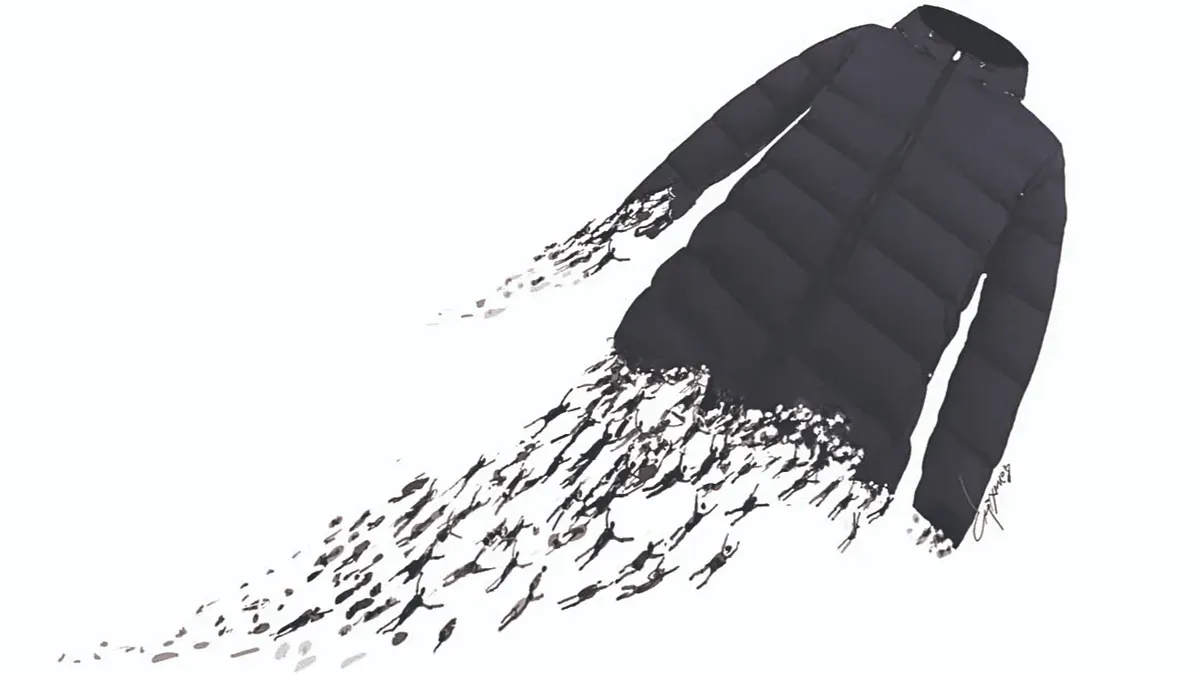
The experiment of the “new”: we compared the data of the survey of our readers with the data of the All -Russian survey. The conclusions refute the stereotypes that have prevailed under the influence of propaganda.
At the end of November, the Levada Center (included by the Ministry of Justice in the register of foreign agents.-Ed.) Conducted another monthly all-Russian survey, in which the respondents asked questions about their assessments of the current situation, expectations for the next year, as well as the attitude of military operations in Ukraine. The editorial office decided to ask some of the same issues to its regular readers - the accomplices of the “new” (which, despite the fact that the newspaper has suspended its traditional release since the end of March of this year, continue to support it materially and morally). The essence of the experiment: to compare the opinions of the population as a whole with the ideas of their readers. Roughly speaking, to compare the opinion of the “averaged” Russian with the opinion of a person who is used to using alternative information. Over four thousand answers were received immediately. Which of this parallel survey came out-assessed by Lev Gudkov, the supervisor of the Levada Center.
Immediately make a reservation that the readers' answers, the language of professional sociology, are “not representative” for the complex, age and educational composition of the Russian population as a whole. It is possible that the answers of the accomplices may not fully coincide with the opinion of the aggregate reader's audience of Novaya Gazeta. Any such newspaper online survey reproduces the views of the most active and critical part of the reader audience that responds to the editorial program policy.
Nevertheless, a comparison with the results of a national sociological study allows us to evaluate the parameters, characteristics, opinions, interests, as well as features of understanding the situation in the country of that part of Russian society, which, due to censorship, administrative and police restrictions, is actually devoid of representation in the political, media and in general-in the public space of the country. The repressive policy of the state allows for propaganda to argue that these people are, as it were, in nature. Or they are at least outside of society, they are undesirable elements, traitors, the “fifth column”. Meanwhile
The proportion of people with the same views as the audience of Novaya Gazeta is from 15% of the adult population (the consistent core of this social set) to 25%, sharing the main attitudes of this group
(although not all of them or - not to the same degree of consent, that from the point of view of sociology is normal for the distribution of opinions in society).
Moreover, this is not just a certain social massif, but what is called the “indicative” group. For a sociologist, such a set serves as a kind of indicator of possible or deferred changes. These are opinions of a more educated, more informed and less prone to propaganda irradiation of a part of the Russian population, which affects (although not immediately and not fully) on the establishment of other groups of the population. The problem is the “lag of delay”, the time of the society’s perception of the views of the advanced group.
The nucleus of readers of “New” is formed by educated people aged 35–55 years, as a rule, on average more secured than the bulk of the population. These are mainly residents of capital or large cities (relatively speaking - the middle city class), who have a wide information horizon and know how to find a variety of sources of information. Multiple sources of obtaining information include online publications, including independent telegram channels alternative to officialdom, and information from social networks, however, excluding the federal television channels, although the latter do not enjoy the same demand and trust as the population as a whole. Such a community has means of a more complex interpretation of events, and therefore a more objective picture of reality. In this regard, prohibit one, two, three, etc. Publications diverging with propaganda, as power does, is pointless, since new sources of information immediately arise in the modern world.
The first thing that has to be noted in the “new” answers received from the accomplices is the dominance of the negative assessments of their life and the life of their family: 89% of the Novaya Gazeta responded to the deterioration of their position, and the option “has become much worse” prevails.
The expectations of the near future are equally gloomy:
85% believe that in the coming 2023, life in Russia will be worse than at the moment, and the share of extreme pessimists (“much worse”) is already 68%, and not 47%, as in estimates of the current position.


The assessments of the population on the Levada Center survey are less dramatic, but also far from optimism. The main mass of Russians (53%) The situation has not changed recently (which, however, does not mean that before that it was “prosperous” or “satisfactory” from the point of view of the respondents, since the fall of real incomes of the population lasts a number of years), 30%“worsened”, “improved” only in 16%. However, the respondents of the Levada Center preserve a certain, although not too significant supply of faith or illusions that the situation will improve next year (31%hopes for this); They think that at least the situation will not deteriorate - 27%. At the same time, exactly the same amount is very gloomy about the next year. In other words, the population as a whole, in contrast to the described advanced group, retains a certain resource of trust in the state, or rather, the paternalistic hopes that power is able to withdraw the country out of a state of long -term economic stagnation and political crises of the last decade.
The main reason for social pessimism and uncertainty is an alarming expectation of the consequences of a special operation in Ukraine and the ongoing confrontation policy.


In this regard, there are no significant differences between the readers of the “new” and the population of Russia: current events in the war zone bother everyone who answered the corresponding question on the newspaper’s website (100%) and 80% of respondents during the Levada Center survey.
Among the readers of the “new”, the opinion of his failure was established (as the absolute majority thinks - 89%!). Other opinions express about 2%.


The main mass of the population (namely 54%), which is more under the influence of television propaganda, believes that “everything is going according to plan”, that “the operation is successful”. Only a little more than a third of the Russians Levada-Center considered their unsuccessful. The recognition of the very fact of failure, especially among older people who retain faith in Russia as a great power endowed with the right to dictate their will to other countries, <...> psychologically impossible. This causes shock, indignation and depression. <...>
A sharp decrease in the finished fight followed after the September announcement of partial mobilization. It was perceived by many <...>, as the desire of the Russian command and political leadership to overcome the problems that arose in the zone of military operations by increasing the number of military personnel there.
Supporters of the special operation - and these are mainly elderly people (youth in the structure of the population is a relatively small part), they themselves are not subject to call. Therefore, their support for the continuation of hostilities is purely symbolic.
<...> However, both of them are increasingly inclined to the fact that peace negotiations should come to replace military operations (I am not talking about the realism of such wishes, but only about the massiveness of such moods). In this regard, the accomplices of Novaya Gazeta and the majority of the Russian population think in a similar way: 82% of those who answered the “new” and 53% of the Levada Center respondents who answered the questions of the “Levada Center” hoped to terminate military operations in favor of peace negotiations.


And, accordingly, the party “continuing military operations” among the accomplices of the newspaper is only 10%, and among the population, such opinions are much wider (41%).
But now there are still fewer of them than supporters of peace negotiations. ( And this is the most important conclusion of the survey. - Ed. )


With the mood prevailing in society to begin peace negotiations, the Audience “New” is expressed more definitely and decisively. The installations of Russian youth (according to the All-Russian survey of the Levada Center) are approaching in this regard to the opinions of readers of Novaya Gazeta:
68% of young Russians at the age of 18–24 would like to stop military operations and begin peace negotiations; Whereas among older people, especially pensioners, the “party of military operations” is still superior to the “Party of Peace negotiations” - 49/43%.