
Translated material
For "outstanding enemies"
How the Law on the deprivation of citizenship of “extremists” continues to resolve Belarus and whether the Russians who left is to prepare for a similar measure from Vladimir Putin
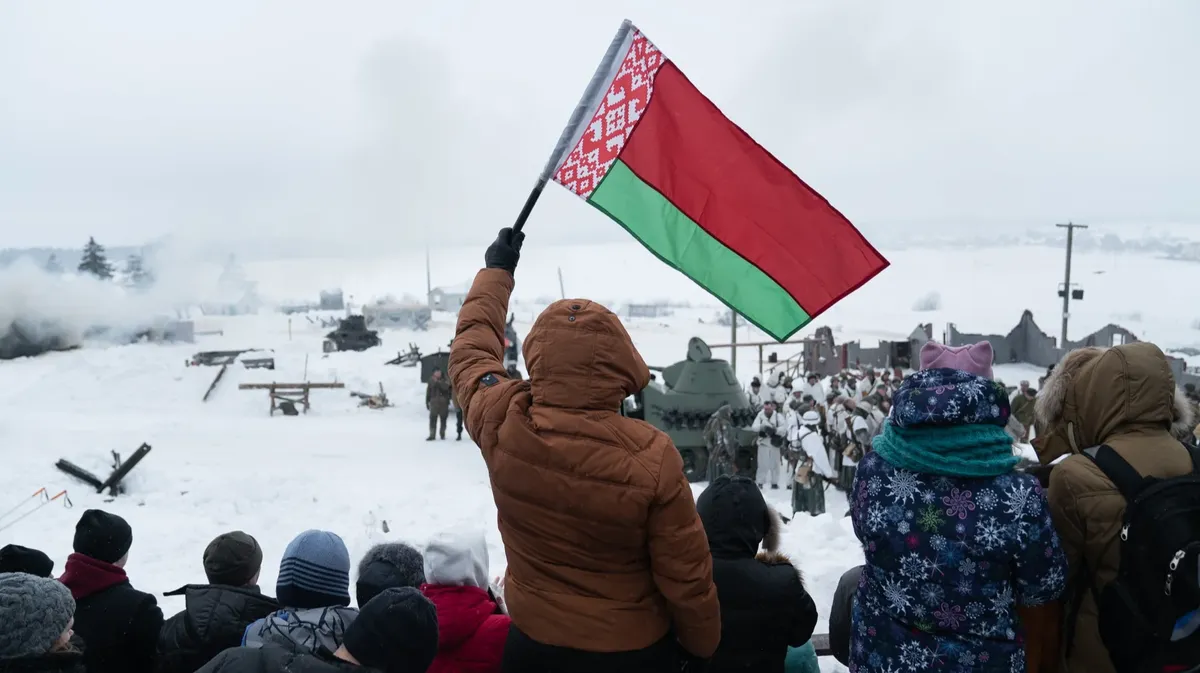
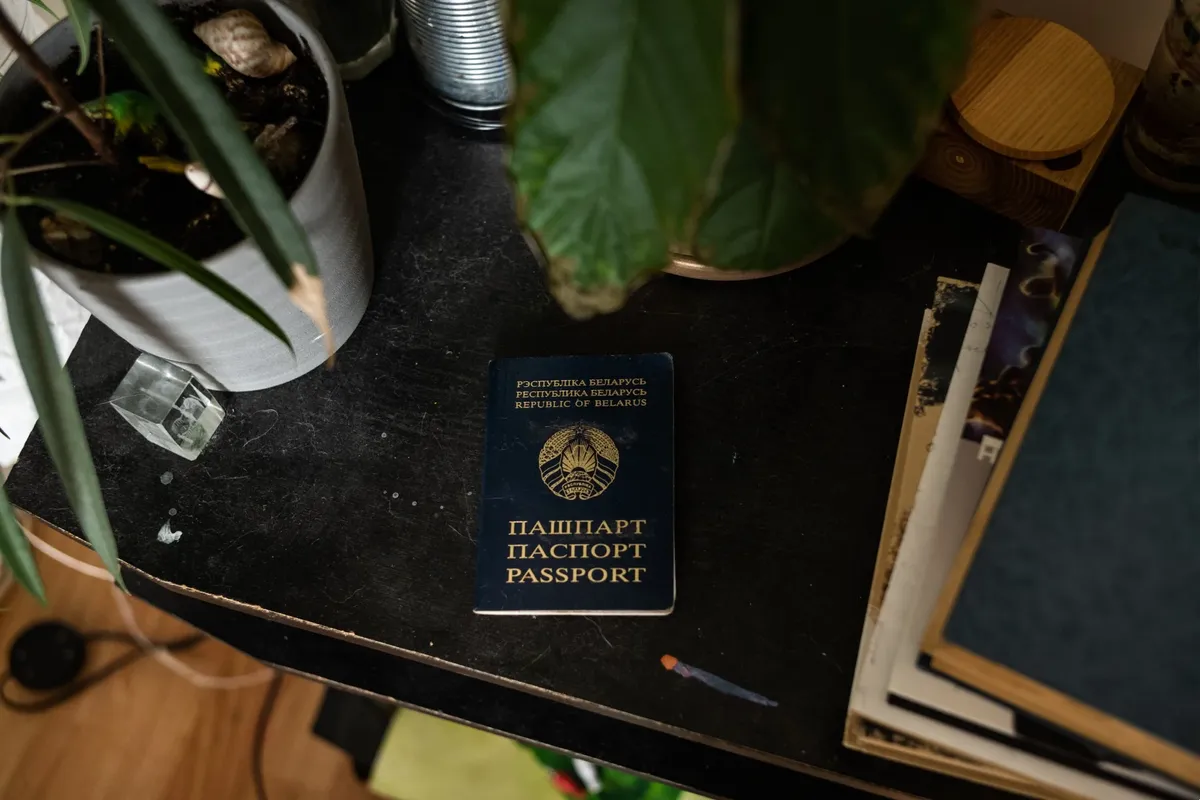
Last week, Alexander Lukashenko, who occupies the chair of the President of Belarus, signed a law that allows the deprivation of the citizenship of Belarusians, in absentia convicted of “extremist” articles or for causing “serious harm” to the republic. In total, the law lists 55 articles of the Criminal Code, the verdict for which can lead to the “deprivation” of the Belarusian passport. Among them: participation in the riots, inciting enmity, creating an extremist formation. At the same time, the measure provides for the possibility of loss of citizenship “by birth” - this can lead to the fact that thousands of Belarusian oppositionists will potentially become Apatrides. Although experts have so far predict isolated cases, according to the Ministry of Internal Affairs of Belarus, at the end of December in the list of persons involved in extremist activities in the country, there were 2,263 people.
The correspondent of Novo-Europe talked with the invited expert of the Carnegie Foundation for the international world Artyom Shreibman about what this law means for the Lukashenko regime, how he will affect the lives of Belarusian emigrants and whether the Russians who left for the war in Ukraine are preparing for something similar in the implementation of Russian President Vladimir Putin.
Artyom Shreibman
Belarusian political scientist, invited expert of the Carnegie Foundation for the International World
- Why is Alexander Lukashenko to deprive the emigrated Belarusians of citizenship?
- To a large extent, this is a propaganda move. As in the Soviet years, when citizenships were often deprived of dissidents, the authorities of the Republic of Belarus (RB) have a desire to show that society is monolithic and united, and there are people who are not more part of it, who put themselves among the enemies. De facto, [according to the authorities of the Republic of Belarus], they already act as agents of foreign influence, which means they should not be considered Belarusians. In addition to this, the authorities believe that deprivation of citizenship will close these people enter the country for a very long time.
According to the same principle, the authorities have already forbidden to run for presidents to those who at least once in their lives received a foreign residence permit. That is, in Belarus, they are sure that all these norms will last long and reduce the likelihood that all these supposedly enemies will return to the country and build a political career here. The measure will not provide real additional pressure on the left Belarusians who fall under this law.
People whom the authorities of Belarus consider to be so outstanding enemies that they are ready to launch this procedure for them, and so could not return to the country under the current regime and could not even change their passport.
Before the law, they were doomed to walk with their passport until its expiration and somehow solve this problem. So I don’t see a direct punitive effect here, I see only a propaganda effect.
- When this idea arose and why did they begin to implement it right now?
- It is fair to say that it appeared in the fall of 2021, when the project of the new Constitution was published ( the Constitution of Belarus was changed in February 2022 - ed. ). It had an interesting article that Belarusian citizenship cannot be deprived, but it can be stopped. Previously, the Constitution clearly forbidden to deprive people of citizenship [by birth], but this addition appeared in the new version. It is clear that it appeared in order to adopt a law in the future that would not contradict the constitution. It’s not that this is a big problem for the Belarusian authorities, but they try to avoid too obvious contradictions what is written in black and white.
After the Constitution was adopted in February last year and in March she entered into force, it became possible to deprive people of citizenship, and the legislative process began. In the fall, he was launched and only now brought to the end. So, I think, a bureaucratic long logic was more in the issue of acceptance. Many bureaucratic laws in Belarus are adopted with a long delay and often they legalize what they already use in the country. And now, before the law can be applied, it should pass for another six months. In addition, in order to execute it, people will need to be condemned in absentia and pronounced them. Only then, Alexander Lukashenko will be able to make a decision on deprivation of citizenship.
- Do people convicted before its adoption fall under this law?
- If a person was convicted in absentia, then yes, he can be deprived of citizenship. But correspondence sentences in Belarus were also legalized recently, people were judged only if they were in the country ( Alexander Lukashenko signed a law providing for the appearance in Belarus of the correspondence and trial of the accused, if he remains outside the republic, last year. The first correspondence sentence was passed at the end of December - Ed. ). So now the processes over the leaving Belarusians are just beginning, the first sentences were issued just a couple of weeks ago. Then they will be brought to politicians, activists of key opposition headquarters, journalists and editors, as well as fighters of Belarusian volunteer formations in Ukraine.
- What do you think, how much deprivation of citizenship will be a mass history?
- The adopted law allows the deprivation of citizenship in absentia convicted under 55 articles of the Criminal Code. Theoretically, it can be applied to absolutely all the former protesters who left the country, because the law provides for sentences under articles related to riots. It can be applied to all leaders of independent media and blogs, because it is from the point of view of Belarusian power extremist activity, and to all politicians.
If desired, the practice can be stretched for thousands of people. In the first year, it will be some signs of single cases, but it is difficult to predict. Nothing prevents them from making this process massive.
- How technically it will be difficult to terminate citizenship?
- In Belarus, it will be easy, just can be canceled by a person’s passport within the country, and he will not even be able to enter him back. Can they say through Interpol that a person’s passport is invalid or lost ( Belarus remains a member of the Interpol - Ed. )? Probably, they can, and thereby complicate the life of those Belarusians who will cross the borders, leave the European Union. But, I think, then Interpol will soon stop accepting these requests - just like he stopped accepting many other requests from Belarus after several high -profile occasions.
A good question is what will happen to the obligations of people who have stopped citizenship within the country. If one of them has alimony or debts. It is clear that the property will be arrested by that time, but otherwise? How will this be resolved? If these are some shares of business, how will they remain with a person, how is the passport invalid? But these are all bureaucratic little things.
- How difficult was this step for Lukashenko from a political point of view?
- Absolutely simple. Now Alexander Lukashenko is ideologically relied on a very narrow group of loyalists who have long demanded this decision and support any repressions. He has long ceased to be a mediator, to appeal to different groups of society: like Putin in Russia, he is now relied only on hardlayers, ultra -state. Those whom he could disappoint, he already disappointed in 2020. And those who support him will support this measure.
This is not the only revival of Soviet practices in Belarus in various directions: from the constitutional system to repression, from ideological control at enterprises to the lists of unreliable, which cannot be hired. Accounting for political characteristics at admission to universities, ideological training in universities and schools. All this is now resurrected. So [the deprivation of citizenship] is only one of the elements of resiovetization, the mass introduction of Soviet practices into the repressive system of Belarus.
- Why is this happening?
- This is natural, I would even say, the biological reaction of Alexander Lukashenko to the crisis of legitimacy. After large -scale protests, the regime realized that he needed to be consolidated.
But Alexander Lukashenko has no other ideology except the quasi -Soviet.
This is a non-communist regime, in a sense, the left dictatorship, so the Soviet Union is the only thing that it has to search for identity.
Therefore, many repression exists in the field of historical policy against historians who interpret the history of Belarus not in the Soviet channel.
- How long are these reactionary measures for resiovetization, the same deprivation of citizenship, long -term?
- I do not think that the authorities generally think about it in terms of long -term planning. But even if this is a purely reactionary thing, this does not mean that it will not last long. I think that the authorities of the Republic of Belarus will be very difficult to abandon the convenient mechanisms of ideological and repressive control, so they will most likely hold as much as the regime exists. And in general there is nothing more constant than temporary. Even [Michael] Gorbachev did not immediately cancel Soviet repressive mechanisms. So [in the case of repressive measures in Belarus] in design, this is a reaction, but in quality - this may turn out to be a new property of the Belarusian regime.
- How does the new law on deprivation of citizenship change Lukashenko’s relationship with Western countries? A couple of months ago, we were already discussing that after the start of the war in Ukraine, Lukashenko was trying not to break even more relations with the West and sometimes even tries to expose himself to a certain mediator in the international arena.
- This is just another brick in the wall, which he erected in 2020. This brick fundamentally does not change the fact that the wall exists. Therefore, I do not think that the West will somehow seriously respond to the fact of the adoption of the law. When Svetlana Tikhanovskaya is deprived of citizenship, I am sure that the West will probably respond. In addition, obviously, there will be some decisions related to the fact that the canceled Belarusian passports will operate in the West, and they will be recognized, despite the decision of the Belarusian power.
Otherwise, I do not think that it is worth expecting something. In Belarus, Rutino tort people every day. Already several people died from political repression. Therefore, I doubt that this will fundamentally change. The internal political repression of Alexander Lukashenko has long gone beyond the horizon of what the West has reacted immediately to.
- How common is the practice of depriving only citizenship in authoritarian countries, including in the post -Soviet space? Or Lukashenko here is a pioneer?
- No, of course, no. Kazakhstan and Azerbaijan still retain this opportunity at the legislative level, but this has not been used massively for a long time. The most famous cases of citizenship losses were during the USSR and Nazi Germany. Other examples must be searched.
- What problems will the loss of citizenship lead to Belarusian migrants?
- As I said, this can create problems for the first Belarusians, to whom they will have time to annul the passports through Interpol, if they cross the boundaries of the European Union. In addition, formally, until the law is canceled, for Belarusians the absence of citizenship will close the opportunity to use consular services, receive certificates, permits, birth certificates in Belarusian embassies. But most people who can fall under this measure, and so they were rather not used by these services, since many are afraid to even go to the embassies.
Otherwise, the issue of passports has long been acute for many in the Belarusian diaspora, and they work on it. Poland and Lithuania have already begun to offer mechanisms to solve this problem, except for political asylum and obtaining a “Geneva” passport ( refugee passport recognized by all countries-subscriptions of the Geneva Convention on refugees in 1954, giving the right to enter these countries, with the exception of the state from which the foreigner left, receiving the status of refugee , ed. ). It is possible to get a local residence permit for international protection or on other grounds. In Poland and Lithuania there is a humanitarian residence permit to which you can get Travel Document, it is also called a foreigner passport - this is a document that replaces the passport within the European Union and some other countries. So there are ways to solve this problem, and if Belarus will enable this measure massively, maybe new ones will appear.
- What do you think, is it worth the Russians in the future to expect similar measures to deprive citizenship from Vladimir Putin? Sometimes it seems that Belarus goes one step ahead of Russia in repression, so if something happens in Belarus, Russians need to start preparing for this.
- You do the right thing to get ready, Putin really borrows a lot, but not all. You also have your local practices, for example, the status of a foreign agent or recognition of an unwanted organization. These are such intermediate paths between the usual status and extremist.
We have none of this, we immediately proclaim [disagreed] extremists. People immediately become outlawed - any interaction is interpreted, as an assistance in extremist activity, up to six years in prison.
- Therefore, “extremist articles”, which can provoke a termination of citizenship, affect such a large number of people?
- Oh yes, I myself am an extremist three times. Yes, my channel is the media for which I write, and one chat in which I was recognized as an extremist formation, so I am an extremist three times. Any comment to the independent Belarusian media is up to six years in prison, it is extremist activity. There is a famous military expert in Belarus, Yegor Lebedok, who remained in the country until the last and was recently sentenced to five years in the colony simply for a comment on independent media. Not even for the content, but for the fact itself. So I think that in Russia the distribution of such practices will continue sooner, the criminalization of the opposition, which will affect not only Navalny's supporters.
- Is it worth thinking about the loss of citizenship?
- Honestly, it is impossible to predict this. The deprivation of citizenship is Soviet practice, and Putin has an authoritarian, or even totalitarian, if you think that way, Renaissance occurs against the background of ultra -right positions. This is the fascist of the Russian regime, this is not communism. In Russia, there is no return to most Soviet practices, you have more pre -Soviet, imperial manners. In Russia, the Bolsheviks are to blame for creating Ukraine. In general, sooner or later, the Russian authorities will begin to try to make the most toxic citizens who have left the country. The inner field is cleaned, and the regime must continue to look for enemies. So he will find them outside Russia, but whether he will fight them not only with polonium or newcomer, but also legal ostracism, God knows him.