
Translated material
"We saw Europe through Finland." Why former teacher Finnish theater
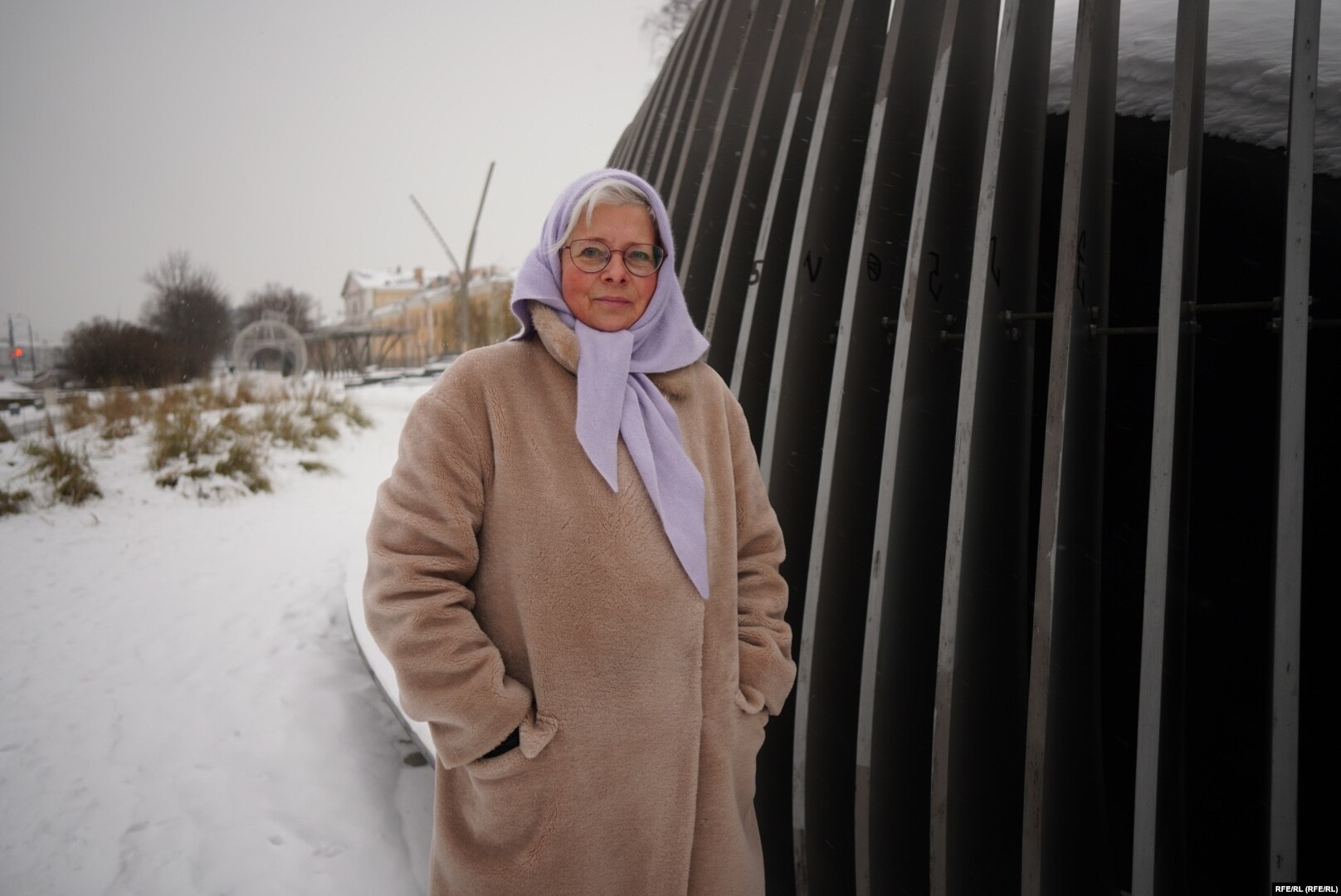
In December 2022, 62-year-old Olga Milovidova from St. Petersburg resigned from the 204th school, in which she taught Finnish for three decades. He says that with the outbreak of war it became more difficult to work there: "The power from the school and from me personally cut off the piece." Now Milovidova opens the Finnish Theater in St. Petersburg because he believes: "Both foreign languages and theaters are now especially needed by young people in Russia."
"I did not make a deal with a conscience"
She recalls how in March the first pedagogical council after the war called in the school with an in -depth teaching of foreign languages.
- I thought so: the war always remains a war, whatever it is. And I was sure that all my colleagues think so. Because as a result of it, civilians also die. My colleague, a young teacher who recently came to school, was surprised at my position and said: "How can you think so?" He even highlighted the word “so” in his voice, ” says Olga Milovidova,“ but what, there is a standard, how can you think, but as you can’t? He began his position with the words "there is an opinion." Whose opinion is this? There is my opinion, there is your opinion, and we can discuss each other's position. And there are, it turns out, just someone's opinion, and it suddenly became very significant.
I remember very well this rhetoric in Soviet times, which can now be safely called peaceful. And his second phrase: "We, teachers, sovereign children." What is it?! Teachers, it turns out, are unintentional children to whom the sovereign gives landmarks. This confusion surprises me: the concept of "homeland" is constantly united with the concept of "state". The state is a vertical of power that imposes its vision from above. And the state has nothing to do with the homeland. That is, if the state takes care of the country and its people, as relatives! Homeland, clan, parents, people, nature - one -rooted words.
At that time, she still worked at school, although "the authorities from school and from me personally cut off a piece. Already cut off a lot, but if it were cut off at a time, I would probably die from pain." On December 21, she still left school.
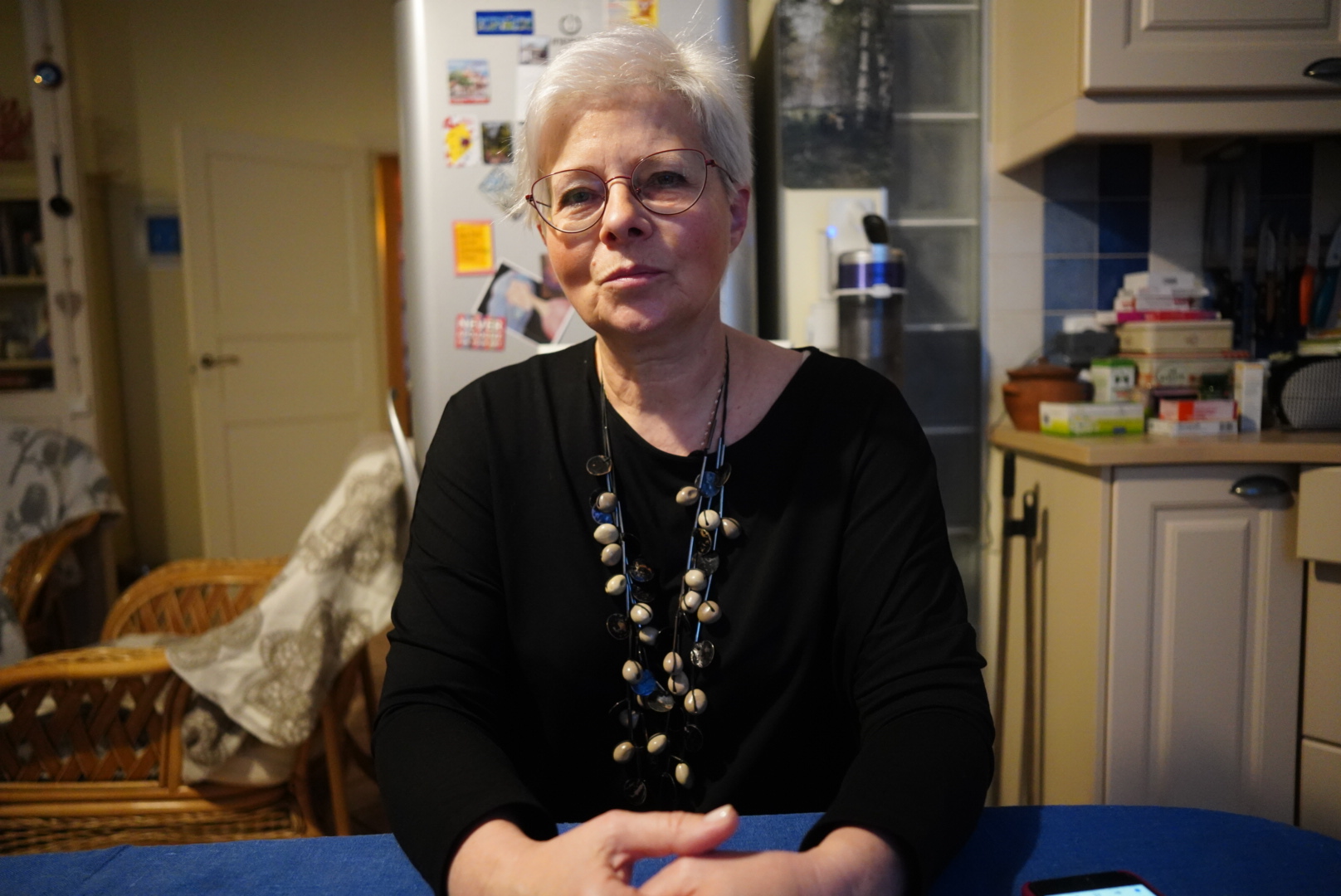
- Why did I quit? The result was quite logical: all our suffered, adulthood picture of the world gradually collapsed. The school in 2019 celebrated 30 years of teaching the Finnish language. Moreover, we were the only school that had such a high status - the School of Subtime of the city of Turku. And I assumed that the series of anniversaries associated with our achievements would begin further. For example, 2023 would be the year of the beginning of a new Dutch project - our school collaborated in the field of information technology with the Lyceum Montessori in the city of Gaaga. In 1993, in the 204th school, we first received an email from the Lyceum Montessori, ”she says. - It was a time of bright, important for the formation of things. And when now all this is questioned, and foreign languages become inappropriate, the design activity of the folded, cooperation with cities and countries ceases to be part of our lives - this is just a deadly disappointment. The reasons for my departure from school are ideological, I am teaching the Finnish language, but I will clearly not return to pedagogical institutions. The decision to leave the school, which I gave 33 years of my life, was difficult, but I did not make a deal with a conscience.
"There are still many unnecessary ones"
Many disagreements with the war from its region emigrated to Finland. Olga decided to stay in Russia: "Because there is a family here and many more who were still united."
Her “Finnish history” began in childhood: when she was 9 years old, in the Pioneer Cosmos camp of the All -Russian Theater Society, children were offered to play the festival of youth and students in Berlin, the detachment where Olya was the chairman, Finland went.
“We all dressed in blue-white, dancing a flying-anenka,” recalls Milovidova. -And I asked my mother-philologist to write to me in Russian letters a greeting in Finnish and read it.
Olga dreamed of entering the Swedish department of the Filfak of the University of Leningrad (now SPbSU), but the set was made there once every two years, therefore, having consulted with her mother, she entered the Finnish, Swedish language, who wanted to study, she did not leave Olga - she began to study it in the second year. Finnish Olga incredibly fell in love, calls him a "rebus."
- I always adored mathematics, intellectual tasks, so this language is one of these tasks. Here is the simplest example. We have a Russian verb "fall" with you. Snow falls, morals fall, an apple falls on Newton's head, a person falls on the battlefield. And in Finnish it will be another word every time, ”says Olga.
Then she discovered Finnish poetry for herself, she wrote poetry in Finnish. But with living Finns, the Soviet student managed to get acquainted only in the third year, during the Olympics-80, with some of them she is still friends.
Olga graduated from the University in 1982 with a red diploma, in Finland she had never been by that time, but she was invited to work in a house of friendship and peace with the peoples of foreign countries.
“We saw Europe through Finland, my work in the House of Friendship-it was the happiest nine years old, for the first time I was released in Finland in 1984,” says Milovidova. - But since 1986, I began to bear the idea of a school with an in -depth study of the Finnish language.
Olga sat in Leningrad libraries, archives. She found out that even after the revolution in Leningrad and the huge Leningrad region then there were about 200 schools, where children studied in their native Finnish. She secured the support of public education officials, and in 1989, school No. 204 on Millionnaya Street, in the very center of St. Petersburg, became a school with an in -depth study of the Finnish language, and Olga Milovidova became deputy director. Later, three more such schools appeared in St. Petersburg.
The “Finnish” school on Millionnaya lasted 10 years, then it became a school with an in -depth study of foreign languages and the number one in it became English - then in St. Petersburg, like throughout the country, the course began to unify education. In 2002, Olga defended her dissertation in Finnish at the University of Juvyanskul on the topic of intercultural interaction in the field of education, becoming the first foreign graduate student to protect themselves in Finnish. By that time, she left school, but she did not break the connection with her. She was invited to the RSPU named after Herzen, although the dissertation was not recognized. And Olga wrote another "modeling of the process of teaching the Russian language as a foreign in the Russian-Finnish network dialogue" in 2007-already on the basis of the domestic university, defended in Russian. By 2014, Milovidova returned to the 204th school again.
“The time was very interesting, design,” she recalls. - Constant cultural and educational exchanges, interesting exhibitions. We strengthened ties with the city of Turku - the twin of St. Petersburg, at the Association of International Cooperation created the Society of Friends of Turku.
But other processes were also in parallel-since the beloved 204th was no longer a specialized Finnish, the level of teaching decreased. There are fewer children in the central district of the city - Petersburgers left the resettled communal apartments. By 2017, part of the ancient complex of school buildings, entering the Moika, 13, was transferred to the Investigative Committee for the organization of the Cadet Corps there. It is possible that the 204th would generally cease to exist, everyone would have taken the Cadet Corps, but the parents protested, wrote letters.
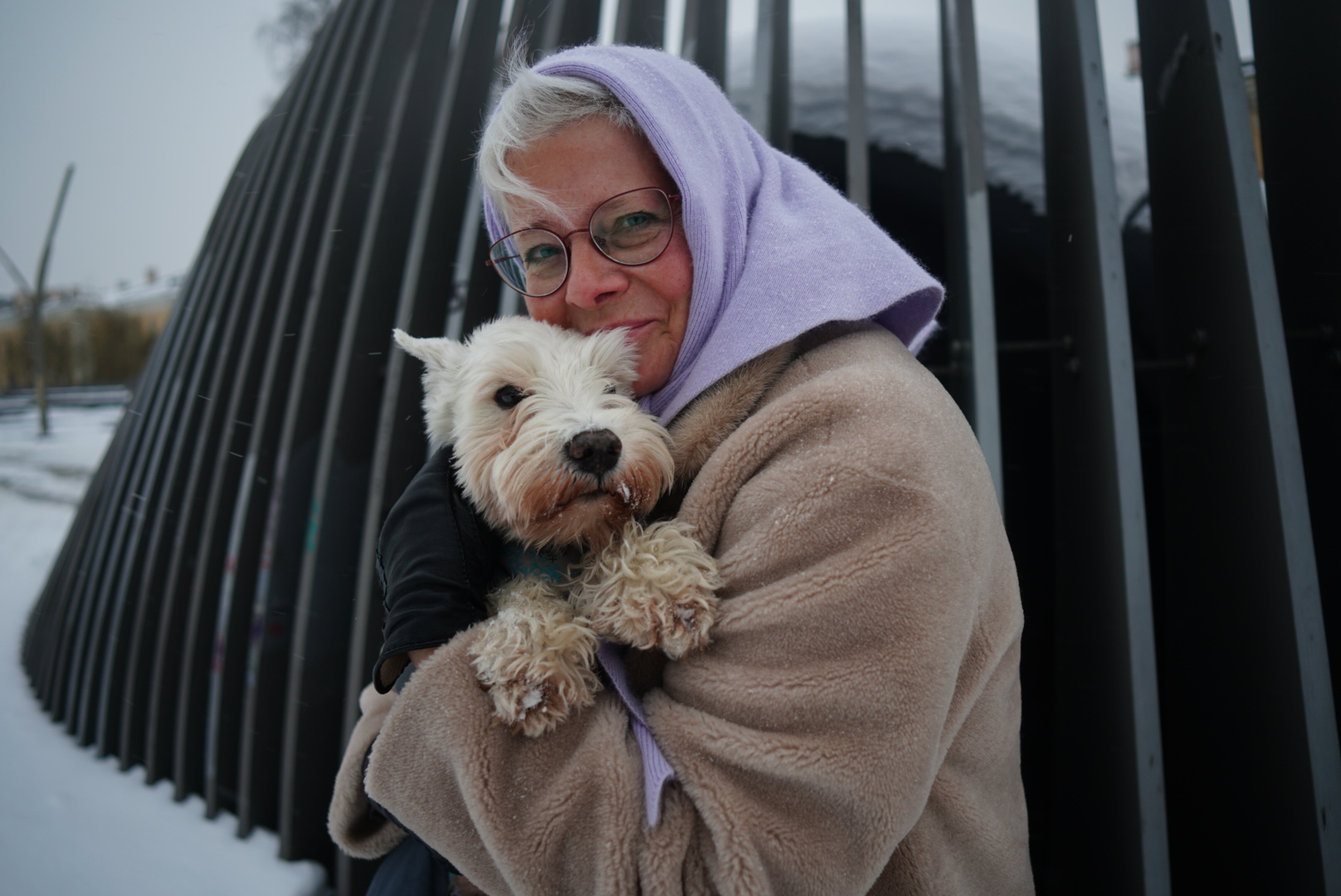
In November 2021, Olga Milovidova was awarded the high award of the Government of Finland-the Knight's Order of Leojonan Ritarikunnan Kunniamerkki, but because of the pandemic of coronavirus, she could not go to Helsinki-the Order was awarded to the Consulate General in St. Petersburg in January in January in January 2022.
“For me on February 24, it became a guillotine,” says Olga. - All plans collapsed, all cooperation. The Finnish Turku no longer twist Petersburg, the Finnish flag that always hung at school was removed. And terrible military events continue in Ukraine.
Back in 2021, Olga in the theater library found many plays in the Finnish language and even then thought about how they could be put: Milovova has a diploma of a professional actress and work experience in the inclusive theater.
- As if the providence itself directed me again. Even before all these terrible events, I began to think about the theater, all the more there are theatrical technologies in the same Finland, when the actors learn the play, not knowing the language, drawing the attention of the viewer not only to speech, but also to plastic, facial expressions, gestures. Few people remember, but in Leningrad until 1937 there was a State Finnish Theater. The extermination of national theaters in the Soviet 1930s turned into generally accepted practice. Today, almost no one is studying the Finnish drama fund - and these are 402 texts stored in the department of dramatic censorship of the theater library. A quick viewing is enough to be surprised at how diverse and versatile was the Finnish National Theater in the Russian Empire and how dramatically its fate in the USSR developed. It is hard to believe, but the Finnish Drama Theater was state -owned. The state gave rise to the state and killed. Here is such a sad story, ”says Olga Milovidova. - All theaters, all languages should manifest itself in education and in culture. The Finnish Theater is always needed where "all the flags are visiting us." There was already a Finnish theater in St. Petersburg, and let it be again.
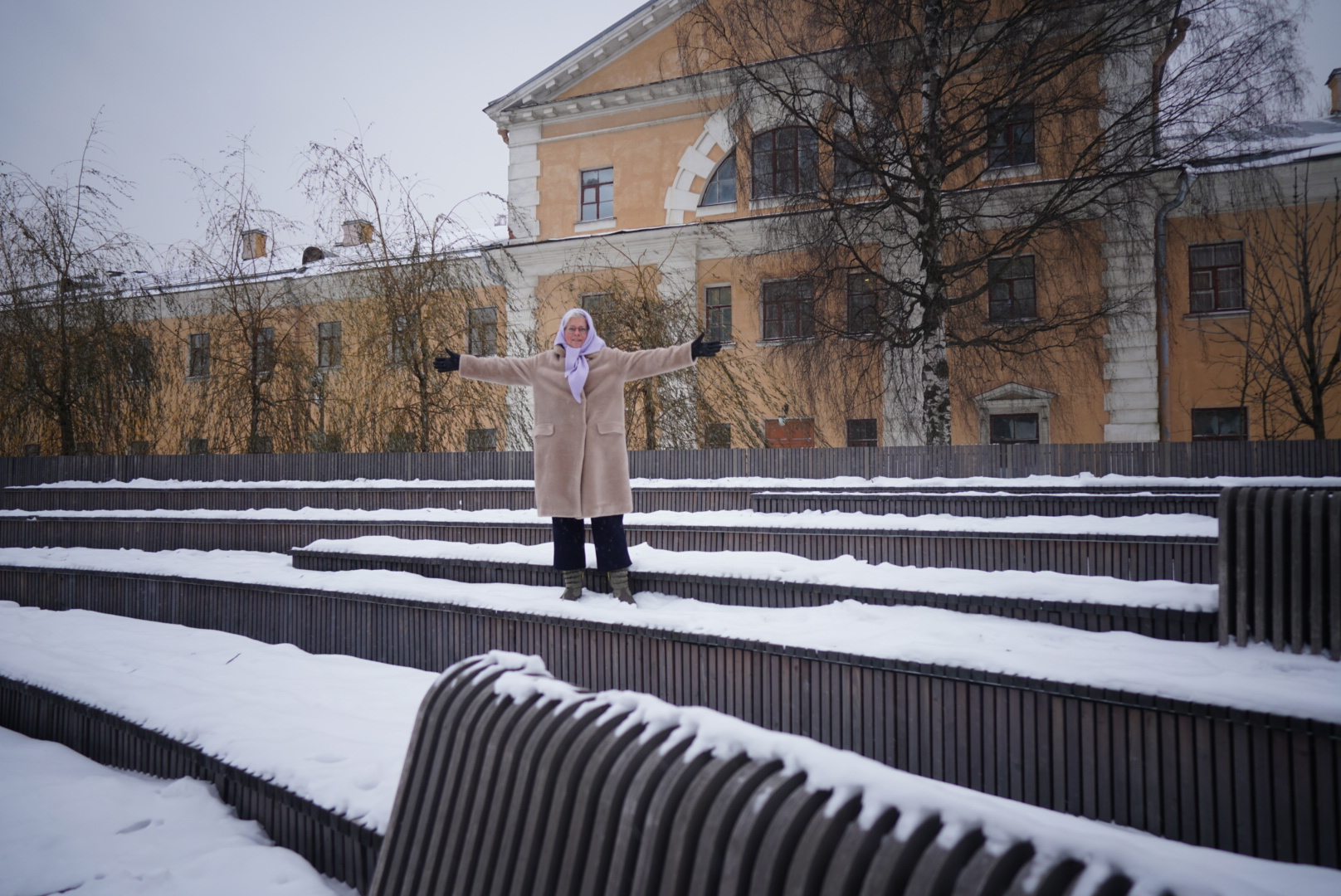
Her project has a name - "Theater Bridge", producer - Pavel Smirnov, it became possible to purposefully work in the department of dramatic censorship of the theater library.
On January 25, on Tatyana's Day, the Studio-Laboratory of the Finnish Theater of St. Petersburg will open. Actors and students of acting universities were already found, some are familiar with the Finnish language, some were not.
- With every minute, I understand that I am doing everything correctly: on January 25, we open the laboratory, on January 30 we play the first performance in the "mansion" theater - in the Finnish and Russian languages. And it is very interesting and inspiring.
To the question - are the enthusiasts of the theater "Theater Bridge" of the Counting for Ino -Agents - Milovidova answered:
-As for the "influence": we have three large ethnic groups: Slavic, Finno-Ugric and Turkic-and all of them are on our land, because the Russian Federation is not a mono-ethnic country. I'm not afraid of anything! I am sure that people interested in culture, the history of the country will go to the Finnish Theater. Those who know the language as the language of their ancestors will come here. Izhora land - first of all, the Finnish -speaking land (part of St. Petersburg and the Leningrad Region is located on the territory of the Izhora land, on which Izhors lived in the XII - XVIII centuries. - SR) . A modern St. Petersburg youth will come here, who will probably think about this: what is impossible today in Russian-well, let's try to do this in Finnish.
The Russian authorities blocked our site. To continue to read the publications of the North. Realities, set the VPN services we approved: Nthlink , Psiphon , Lantern , Orbot . If one of them stops working, turn on the other.