
Translated material
The leader of the leader
How Soviet poetry made God from Stalin, referring to the darkest and deeper areas of folk memory. Cultural essay
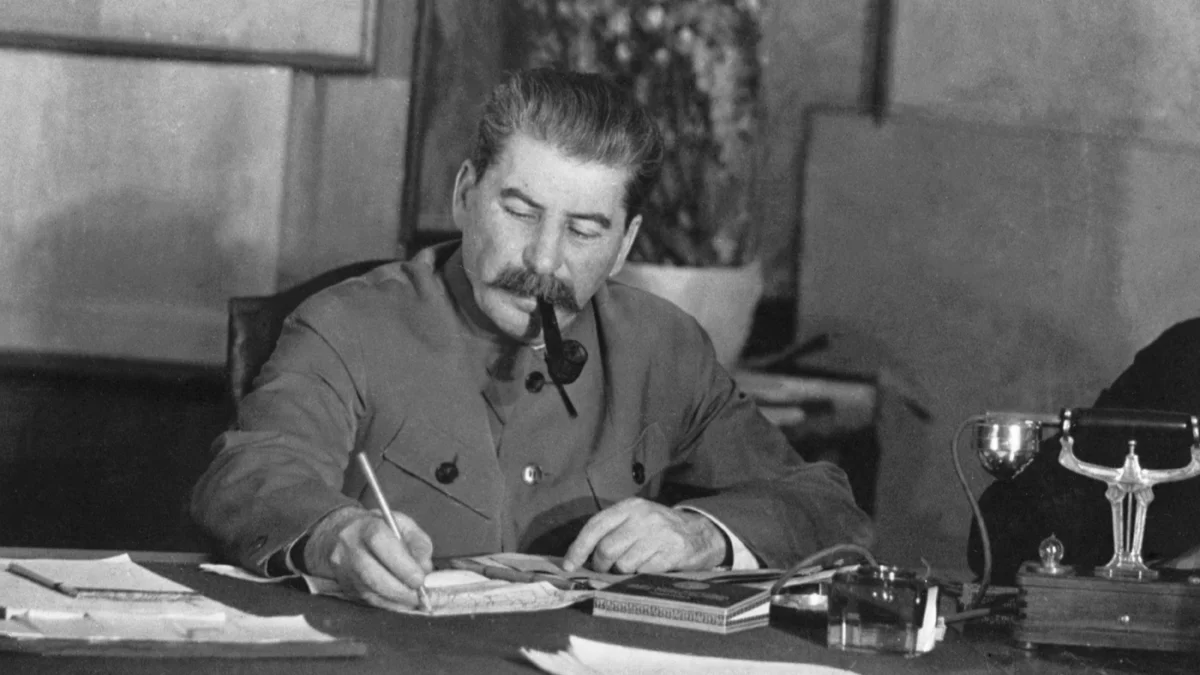
The Stalin era was the time of constructing and creating new meanings - multi -level in its form, but surprisingly simple and archaic in content. Having proclaimed the continuity of revolutionary transformations, it was basically completely counter -revolutionary, strove for the maximum simplification of social relations and the construction of a monolithic, which was not capable of transforming a totalitarian state. In the context of world cultures, the constructed construct was more close to the monumental states of antiquity with their cyclopic architecture, the pyramidal public system and the cult of the god-king.
Art has become a special tool for creating ideologically true narratives that are so necessary in the state of universal control. In the implementation of this task, a special role was assigned to literature. She had to not only approve the new dictionary, lay the basis of the architecture of public memory, but also to come as close as possible to serving the Sacred sphere.
Folk stylizations in poetry about Stalin in the mid-30s-early 1950s are directly related to the introduction and fixation of the idea of the leader as a force that penetrates all that exists and determines the world order.
The texts of the Stalin era demonstrate an attempt to create an idea of the leader as the leader of the main life processes. At the same time, it should be noted a gradual evolution of the image: from the omnipotent ruler with delegated divine powers to the image of the hero God, who gained his universal power through a victory in a fight with chaos. Note that, as in the pre -axial cultures, the battle with the destroyers of the order is permanent, with the only difference that in the most ancient myths these forces are represented by htonic evil spirits, and in the Stalinist discourse - a dissent that acquire an aggressive form of pests, enemies of the people, fascists, etc.
The victory in the Great Patriotic War and its sacralization played a decisive role in the design of the cult of Stalin as a hero god with unlimited functions, because the war was a direct embodiment of a world fight of good with evil, the birth of a new era and confirmation of the correctness of the chosen leader of the course.
The matrix of the myth of the victory in the Great Patriotic War is rooted in the representations of the first world civilizations.
Stalin, saving the world from the “brown plague”, formally differs little from the ancient Egyptian RA, fighting with the snake Apop, or the Babylonian Marduk, destroying the goddess of Chaos Tiamat.
It is such battles that usually consolidate the championship of the hero god over all the other gods, and the winner himself acquires the features of the sole ruler. That is why the victory in the war finally legitimizes Stalin as the owner of limitless power and completes the image of the Almighty God - the Creator, the patron and guard of the world.
Since the mid-1930s, poetry has rooted in the mass consciousness the idea of Stalin as a sacred omnipotent entity, addressing the darkest and deepest areas of cultural memory. The techniques of such constructing will be: giving an object by supernatural properties, the presence of sacred epithets and attributes of divinity. In poetic texts, the following stable semantic codes that translate the divine status of Stalin-Vyzha can be fixed:
Creation and destruction. Stalin seems to be a reserve of a resounding and at the same time destructive energy, which is most often accumulated in his breathing.
Stalin as a deity requiring a victim.
Stalin’s smoking tube as an attribute and divine gun.
The breath of God
Soviet poetry interprets Stalin’s breathing in a very special way - it loses the low -powered biological component and acquires various magical properties: to endow life, revive the dead and even express thought. The breath of God is the very content of the highest being, a certain energy with which he converts the world.
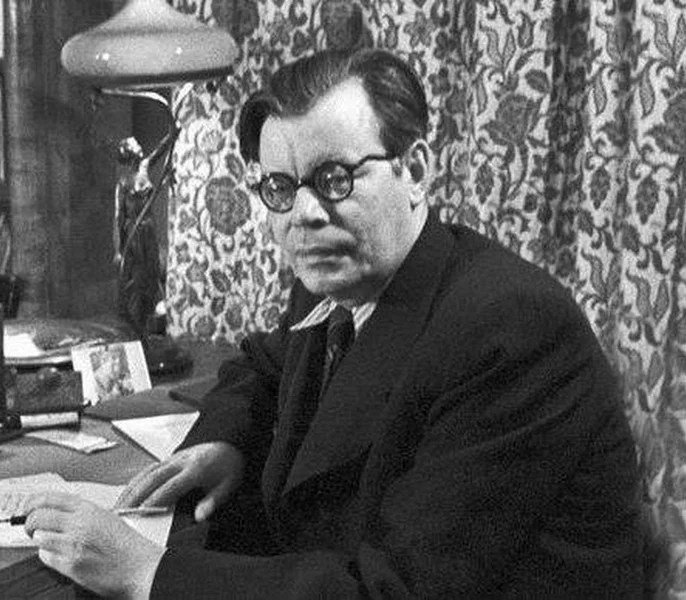
In the poem by M. Isakovsky, “Song of Stalin”, the leader seems to be a demiurge god walking on the earth and rewarding his children with great gifts abstracts: victory, vital force, knowledge, etc. The quintessence of such forces is precisely the “breath of the Stalin’s heart”: “He warmed the breath of the heart / polar nights gray, / He pushed the mountains steeply, / Paul in the clouds.”
Here, the Stalinist heart is attributed to a completely inhuman ability - to breathe.
It seems that this image turns to the ancient idea of the heart as the center of reason. Since Stalin’s breathing has the function of transforming and building the world, it becomes clear why his heart breathes, but not beating.
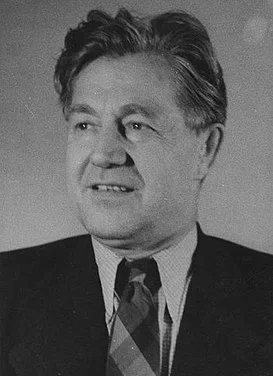
The same technique is used by A. Surkov in the “heart of the world”, attributing to the Stalin’s ability the ability to become a resettlement of thoughts and aspirations of the whole people, a kind of megasver of the whole country: “At night, when the noise / behind the gray towers of the Kremlin, / all the nations, hidden thoughts / opens the Earth. // Enter in the heart of an endless one / our thoughts, thoughts, fate ... ”And then the leader’s heart, having processed and inventing the information,“ exhales ”her, as in the poem of Isakovsky, in the form of the world that make the world:“ All the dreams and thoughts of human / Stalin carried his heart in his heart. / That is why in his minted speech / we will learn time. ”
However, Stalin’s breathing is related not only to the creation of life, but also to the world of the deceased. The text of one of the “folk” songs of* Dagestan dedicated to Stalin is a multiple repeated formula “Stalin - something - for”.
He is a “roof” for those suffering from a cold, and a “cool garden” for exhausting from the heat, and “wings” for those rising to heaven, but it is especially interesting that Stalin “breathing” for the descending underground.
And this metaphor sounds extremely dual. Of course, we can assume that this refers to the air necessary, for example, to the miners, however, there is a great temptation to interpret the "descending underground" as the dead. And to introduce Stalin as the breath of those who depart, it means connecting him in the popular consciousness with the cult of death.
A similar topic is developed in his poem "Golden Mountain" Azret Budaev. Stalin, as usual in oriental chants, acts primarily as something luminiferous, defeating the darkness of poverty, slavery and ignorance. What can I say, because the Golden Mountain is Joseph Vissarionovich himself. However, in addition to the light -resulting properties of celestial origin, the leader is attributed the ability to incite the power of life in the one in whom she extinguishes. It is not known how the author of the poem represented this process: either the leader performs resuscitation with the help of artificial breathing dying, or releases a stream of life -giving smoke, or smokes a weakened one, like his tube ...
In any case, Stalin is a deity that has the right not only to create life, but also to return it to the non -living.
At the same time, an amazing cocktail of the properties inherent in it: sunlight, earthly fire and heavenly fire, breathing and wind - create a deity omnipotent, as if incorporating the properties of all elements and forces. These often were deities that have the obligation of a constant battle with the forces of chaos and darkness. The most striking example is the myth of the eternal wandering of the god Ra, who drove a nightly underground on his boat in order to give the sunlight to the dead. At the same time, every night the boat of the solar God strives to absorb the forces of darkness, led by a snake Apop. If this happens, the world will disappear, a docative chaos will come. Stalin, like Ra, is in an eternal battle, and the connection with the space of living and dead at the same time is a symbol of absolute power, the ability to maintain universal balance.
Sacrificial fire
The theme of sacrifice in the name of Stalin actively sounds in the poetry of the late 30s-early 50s. The desire to die for the leader is declared by singers, songwriters and akyns of all small and large peoples of the Soviet state. One of the most accurate explanations of the thirst for manic sacrifice was given by A. Surkov in the poem “Leader of the People”: “For the joy of people to live, / We will give your blood a drop by drop.” In other words, in order to live, Stalin needs human blood, a human sacrifice. And again, literature fixes us one of the most archaic representations of human civilization:
People do not have value outside the needs of the deity, they were conceived and realized as cattle or labor. The reason for creating people in almost all ancient religions is the laziness of celestials and hunger. The aroma of sacrificial smoke is what deities crave from their earthly servants ...
The poems of Marusi Plakhova, published in the journal Pioneer for December 1939 **, look amazing in this context. In them, the girl describes a farewell bonfire in the Artek camp, which is gradually converted into a sacrificial flame addressed to Stalin: “And it seems more strictly for fiery brilliance / evening shadows on the protrusions of the mountains. / And thoughts rush far / to the one whom the Earth knows. / And with a wise smile, the gentle leader / followed from the Kremlin. ”
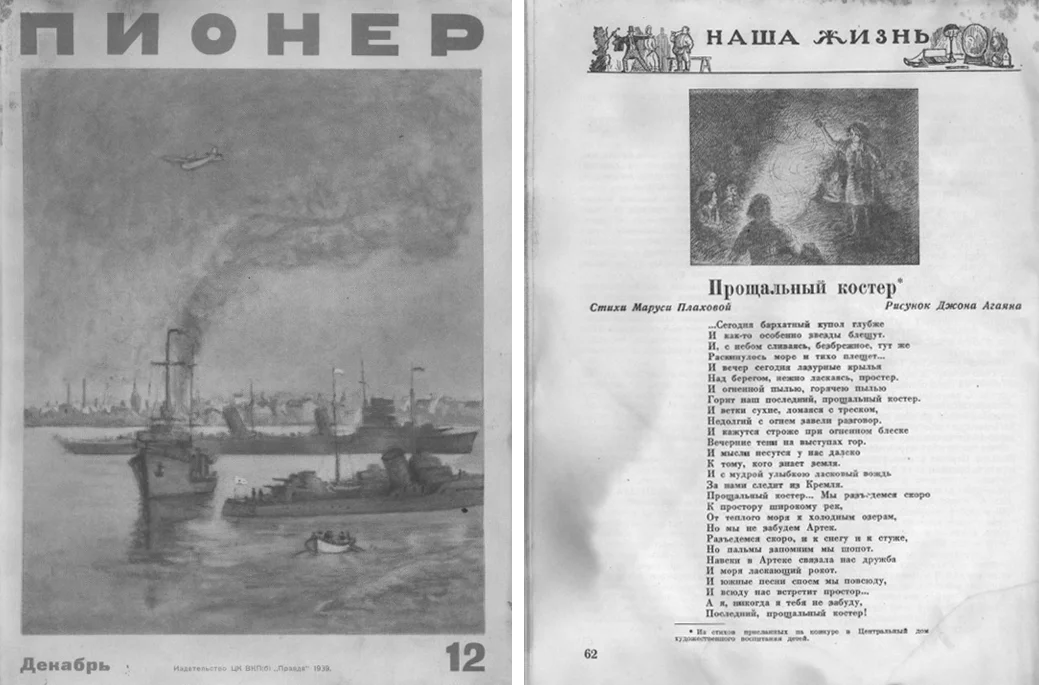
The leader is transformed into a god, sweetly inhaling the smoke of the “last” fire, which further enhances the analogy with the ritual of sacrifice. And the children present at the same time are more likely a virgin priesthood than pioneers. Stalin, sitting in the Kremlin and following everyone, of course, is in the Kremlin of heaven, ascended above the ground, and his affectionate smile is nothing more than a smile of contentment and satiety from the absorbed sacrifice ...
Stalin's smoking tube as an attribute of God
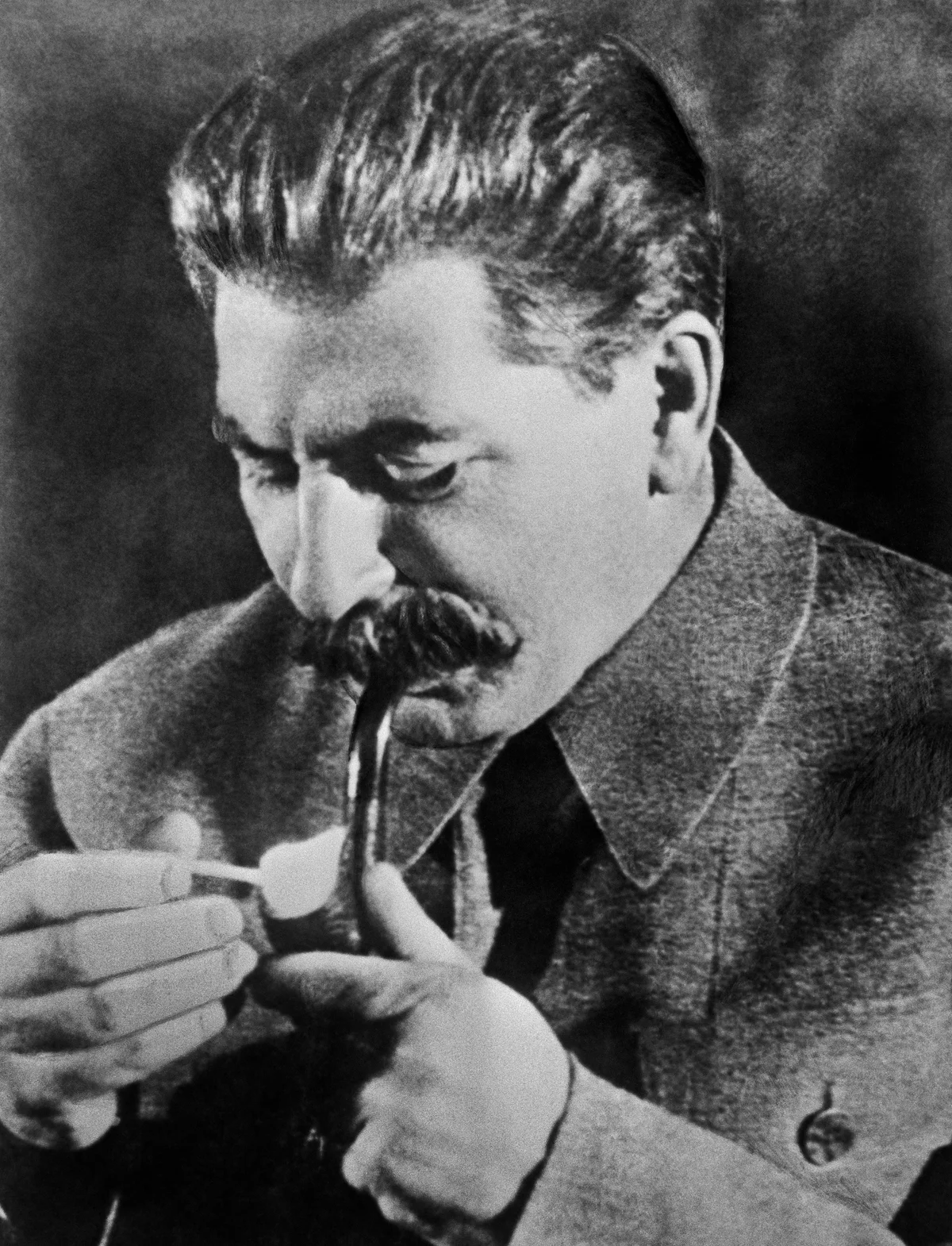
A smoking tube occurs in the texts, first of all, as an object that replaces or identifies Stalin, an object that can be mentioned without calling it himself. Stalin is so great that it does not fit into words and has no worthy form to finally come true in the physical world. But here is a tube! The Stalin tube, appearing here and there, points to the reader the invisible presence of the master, as if dissolved in everything or taking an unexpected form.
An example is the poem by K. Chichinadze "Caucasus-Stalin". Numerous laudatory epithets that emphasize the power and power of the Caucasian mountains, at first glance, have a very remote connection with the leader, because Stalin’s name is never pronounced there. However, when we read that “clenched cleeln, / like a pipe is curved by Rion,” it becomes clear that the Caucasus is Stalin himself. A comparison of a mountain river with a pipe should cause a melting connotation with the leader.
Stalin, who smokes the huge stone light of the Caucasus, also occurs in the final line, threatening no less, but a world disaster: “And if, as a limit to sprinkle it, / the vulture will take at least a span - / The whole world of volcanoes / The whole world is a shake again”.
The identifier tube appears in the poem by Evgeny Dolmatovsky "The Legend of the First Salute." It is by the tube that the reader must find out who leaves the usual headquarters “Emka” and moves “gaiting elastic” to the porch of the village hut. The name of the "great friend of the people" is never pronounced in any of the lines of the poem. The only evidence of the reality of the accomplished miracle of the Divine embodiment is just a “familiar tube”, which is mentioned in the text twice: at the time of Stalin and at the time of his thought.
The function of the smoking tube in such texts is by no means utilitarian, it is sacred. Let us pay attention to the mysterious atmosphere of the presence of Stalin. The author either avoids a direct description of the hero, or refuses to pronounce his name aloud.
Nalness, Irrealism is the only possible context of the appearance of the Divine.
Such a fusion of God and the subject is recorded in a number of cultures. The presence of the deity was often designated through the image of its divine attribute, not even bothering itself with the spelling of the sacred name. It is enough to carve on the stone what is an instrument or symbol of God: a solar disk for Ra or Shamash, a scepter for Ninurta, a pen for Maat, etc.
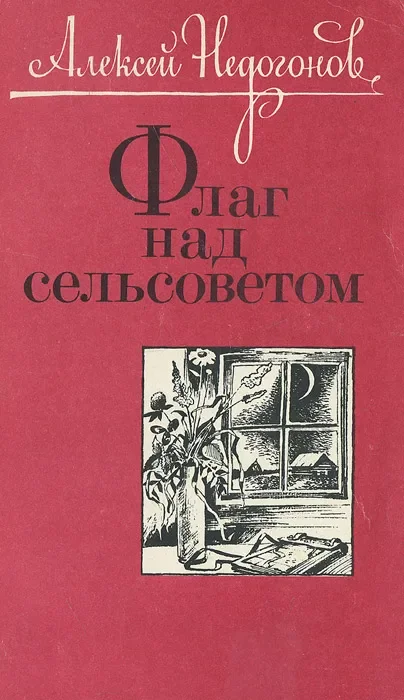
The appearance of Stalin in the poem by Alexei Nedogonov “The flag over the village council” seems delightful. The dream of a simple collective farmer, in which she meets a leader, is a traditional form of communication of a deity and mortal. The texts of the ancient Sumerian culture are replete with cases when the king goes for advice to his heavenly patron and remains in the temple for the night to see a dream-fanity. In such a dream, God usually comes to man in a kind of allegorical form. Only by special signs, the sleeper understands who is in front of him.
So the heroine of Nedogonova’s poem wanders in a dream through the endless field and meets Stalin himself. The girl, perhaps, would not have believed in the possibility of the leader’s presence in her dream if he had not smoked a “carved pipe”.
At the household, earthly level, the smoking tube is associated with the processes of combustion and breathing. But when we consider the subject in the context of the sacred, smoking changes its content, turning into a divine act of nutrition, creation or punishment.
And the quintessence of the ideas about Stalin as the Lord of the afterlife is the poem "Spark" by Dmitry Kedrin. Events occur during the war, that is, in the sacred space-time. A simple soldier gives a smoke to the sergeant before the battle, from him the light runs to the lieutenant, then to the major and then the chain reaches Stalin himself. The shooter, who lit up the first cigarette, has long died, he “lies in the grave of the fraternal and puffed”, but his light is still on in the Stalinist tube. Dmitry Kedrin, synthesizing in his poem the oversized fire of resurrection and the eternal fire of commemoration, created a completely different image of a ritual sacrifice that feeds the supreme God.
The Stalinist tube acts as a certain mini-cream where millions of souls burn, and sweet smoke from this combustion inhale, saturated, the supreme god.
If we try to find an analogue of the Stalinist tube among the list of all divine guns, such as the thorough or lightning of Zeus, then the ancient Egyptian Holy Urey , which decorated the forehead of the pharaohs and deities, will be the closest in its functions and even external outlines. The golden curved cobra is a symbol of unlimited power and at the same time deadly weapons. There is even a legend about how humanity, having rebelled against Ra, was destroyed by the rays of his Urey.
Obviously, the deadly of the Stalin tube could not be recorded in official or pseudo -people's poetry. However, you can find some evidence in alternative literary sources, such as jokes and ditties. These genres often demonstrated the most critical attitude to reality and pronounced social fears. It is in them that Stalin’s smoking tube acquires a distinct connection with death, punishment, injury:
Hello, Comrade Stalin!
Where is your pipe?
I made me in war
The cripple is a stump ...
or
Stalin often smokes the phone,
He values her very much!
When Stalin is frowning -
The whole republic is trembling.
The famous joke about how Stalin has lost his pipe fixes the transfer of punitive functions from people to the subject. The smoking tube, which in fact has not disappeared, becomes the reason for the arrest of people who confessed to its non -existent theft.
Soviet poetry of the mid-30s-early 50s. Without exaggeration, a unique cultural phenomenon. She managed to walk along the way, to the opposite logic of art, i.e. From creative freedom to institutional enslave, from understanding reality to the construction of a cultural phantom.
The main purpose of the poets was the sacralization of power through the texts and the legitimization of its concentration in one person - Joseph Stalin. A free artist turned into a temple priest.
Such an amazing metamorphosis is explained at least by the fact that the great experiment on the modernization of society, conceived by Stalin, was actually an extreme degree of archaization and duplication of public systems of five thousand years ago.