
Translated material
Interview with a Petersburger, who lived for 27 years in the Basevich house
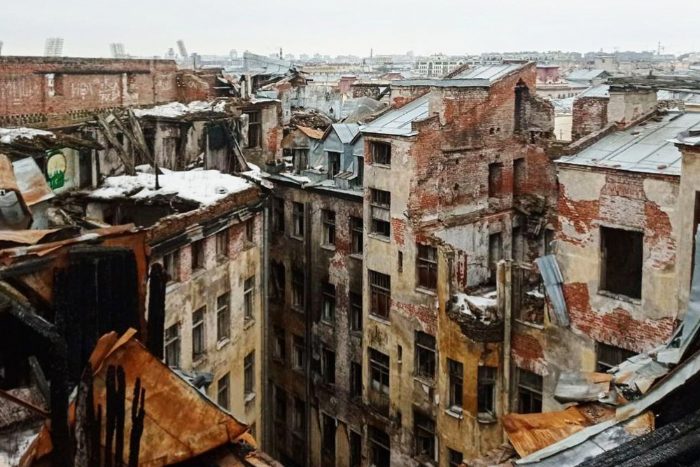
In St. Petersburg, the struggle for Basevich’s house continues - a profitable house of 1912 in the style of Modern. At the end of December 2022, the Kuibyshevsky District Court suspended the building permit on the site of the house and a nearby square. They want to radically reconstruct the building in the interests of the Dance Academy Boris Eifman.
In 2008, the house was recognized as emergency and began to resettle. Some residents refused to leave him until 2013.
“Paper” spoke with physicist Dmitry Doinikov, who lived in Basevich’s house for almost 27 years, about how, as a result of a long chain of exchange, his family settled into the house on Bolshaya Pushkarskaya, who lived there and why he was not against the destruction of the building.
- How and when did you settle in the Basevich’s house?
- I have a very book family and this has a simple explanation. My cousin, Veniamin Mikhailovich Benchin, in the early 1920s organized a bookstore at the Putilovsky factory, later-several more book shops and a book trade school, was a head teacher at a book trade technical school.
When he was under 90 years old, he offered his niece - my mother - to crucify. There was almost no private property in the USSR, so everyone was somewhat dependent on the state - this led to the emergence of such a thing as a “chain of exchange”. About 10 tenants participated in our chain of exchange and we were terribly needed because they gave two apartments, which means that the opportunity to settle. One apartment was on Novoismailovsky and belonged to grandfather, the second - ours, in the village of Metallostroy.
As a result, we drove in the winter of 1983. The worst thing is that my grandfather did not reach this apartment. He was already so bad that he naturally died in a week of moving in an apartment with our friends, where he was waiting for the opportunity to settle on a large Pushkarskaya, 7, and then another five days in the hospital at the Vitebsk station.
The situation then developed very unpleasant: he did not have time to register in the apartment and one of the rooms in our apartment was about to move away to the state, but the bathroom was not in the apartment and the problem of the “extra” room was removed. If my memory serves me, the problem was solved by a bunch of paperwork and ... "great heartfelt gratitude."
- Who lived in the Basevich’s house when you drove there? How did the social composition change?
-Basevich’s house has always been a complex cloak and for all 27 years that I lived in it, the composition of the residents changed there and these people did not have any single portrait. I can’t say that I talked a lot with them.
There have always been a lot of people associated with the housing office in the house - why, I do not know. And in the house of Basevich there were an unusually many carpets in which the "right people" kept their cars. The brownies were such a size that the American limousine could calmly fit there-from the side, by the way, wheel-lane cabinets were installed on the side of all arches.
As I recall, the best apartments were on 3-4 floors from the main facade - the rooms there reached 30-40 meters, the ceilings were above three meters, but it seems that there were no stucco molding inside. I don’t know who lived there, but my mother could not remember.
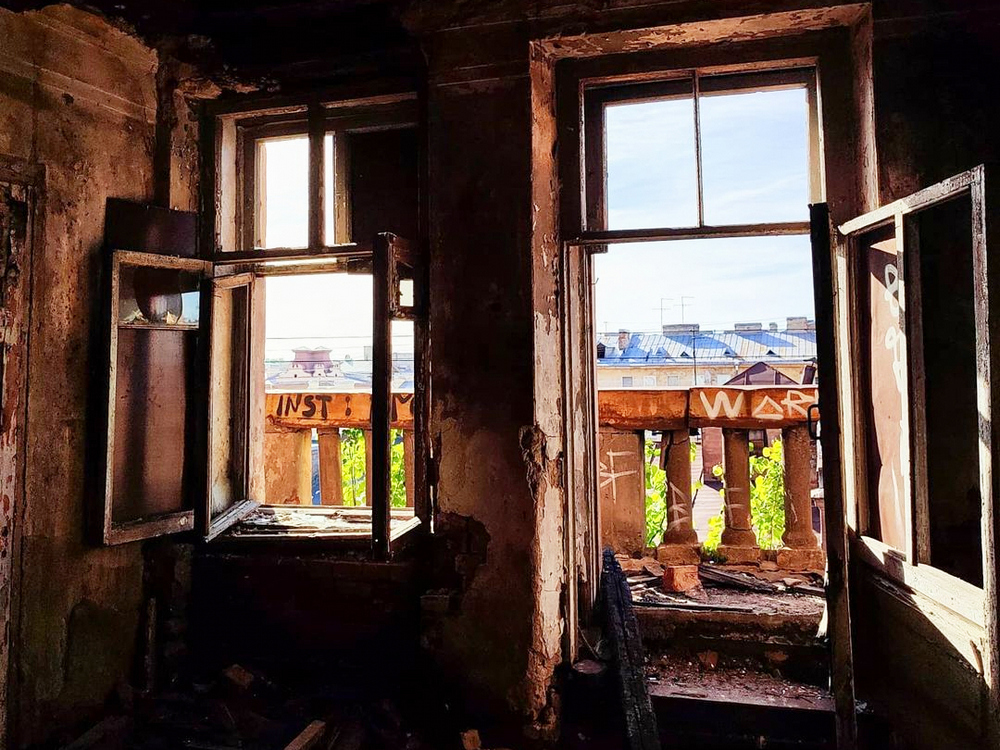
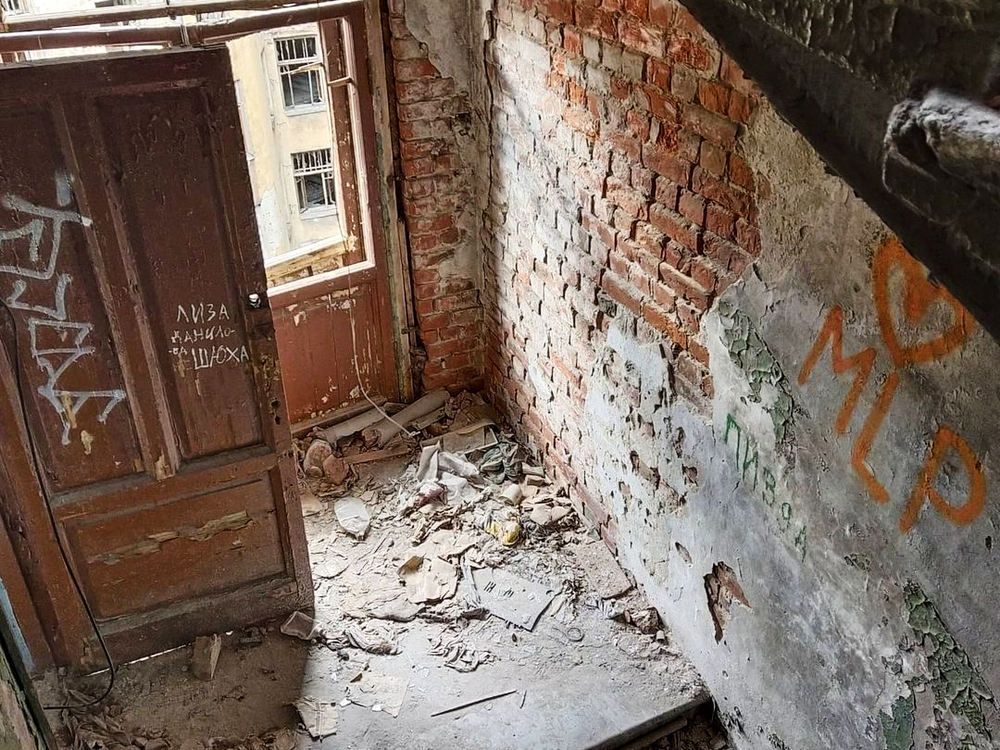
No matter how strange it may sound, the cleanest staircase was in the farthest section of the house. All the apartments were privatized there and they the longest interfered with the resettlement of the house. It is terribly ridiculous that the worst and poorest part of the house at the end of his story was the best-the owners on their own restored the landing, and someone broke up additional windows in the firewalls. When we left in 2009, people there still resisted.
The work of ZhEK in the late 1980s was already very weakened. In the open attics, we always lived homeless-as far as I remember, there was always someone there. I was constantly running there to release an air cork from the pipe - if this is not done, then the house risked freezing. This happened for the first time in 1990 - then we broke the pipes and we dried almost a hundred volumes because they were flooded with water. After that time, such freezing became a constant danger to us and, of course, the composition of the residents became more marginal from this.
I realized that it was time to agree to exchange with the state in a new building, when an early migration service began to break up to us early in the morning - they were looking for illegal migrants. Naturally, we did not have such in the apartment.
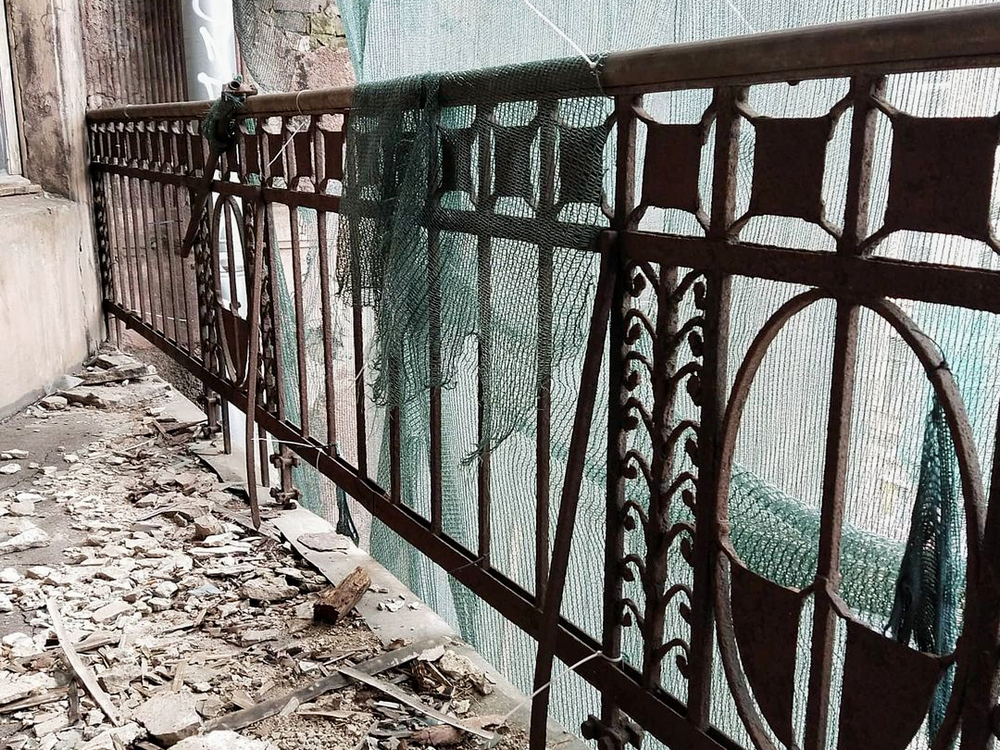
- What are you missing, why are you missing?
- For walks with a dog. We had a large dog - a Russian Black Terrier - thanks to her I felt confident and absolutely calmly walked around all the passing yards of the Petrograd side.
We then proceeded the entire Petrograd side - from Petropavlovka to Malo Prospekt, Petrovsky Island and so on.
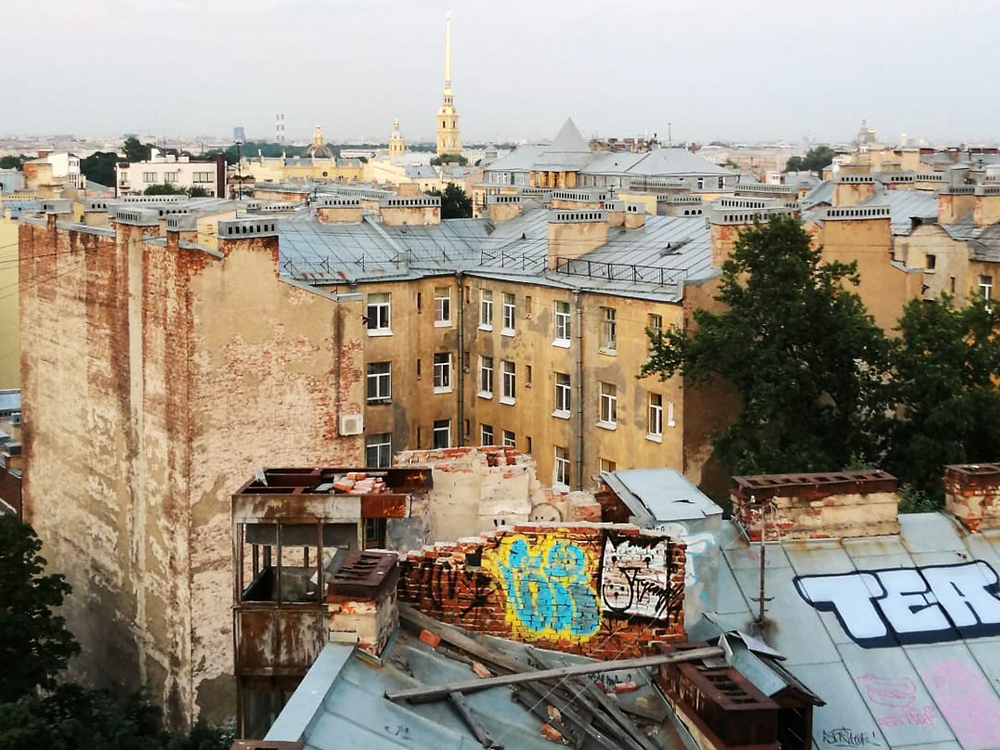
We also often got out of the roof, but sober - drunk there could not go out at all, there was such a steep roof. You could sit at the very top and look at the city. In good weather, when all the dust was blown away from the center, Kupchino could be seen. The Baltic Hotel, and the TV tower, and other dominants were visible.
- Who are you? What are you doing?
-I graduated from the Physics Faces of St. Petersburg State University in the early 1980s-then there was such a terrible thing as a distribution, but I successfully got to the Academic Institute, and I had no need to change it. I had many interests, there were never less than two works-I combined something with something all the time, only in the last 12 years this need has disappeared.
Since I am not the first physicist in my family, I looked at my loved ones and realized that I did not want to work for the industrial-turn complex. And for example, I am very grateful to Soros-in the 1990s he gave a lot of money to Russian scientists, only so that they continue their developments in Russia.
And for the past 12 years I have been working in an international project - ITER.
- When did you leave Basevich's house?
- In 2008, the state started an exchange with us for not very favorable conditions for us. We already privatized the apartment and wanted to change it to two different ones, but we were intelligibly explained that no one was interested in the market value of our apartment. Therefore, we had to go bypass ways and cost it much more than a bottle of cognac, but I, again, I don’t know the details.
In March 2009, we left for the end of the Optics and Bogatyrsky Prospekt.
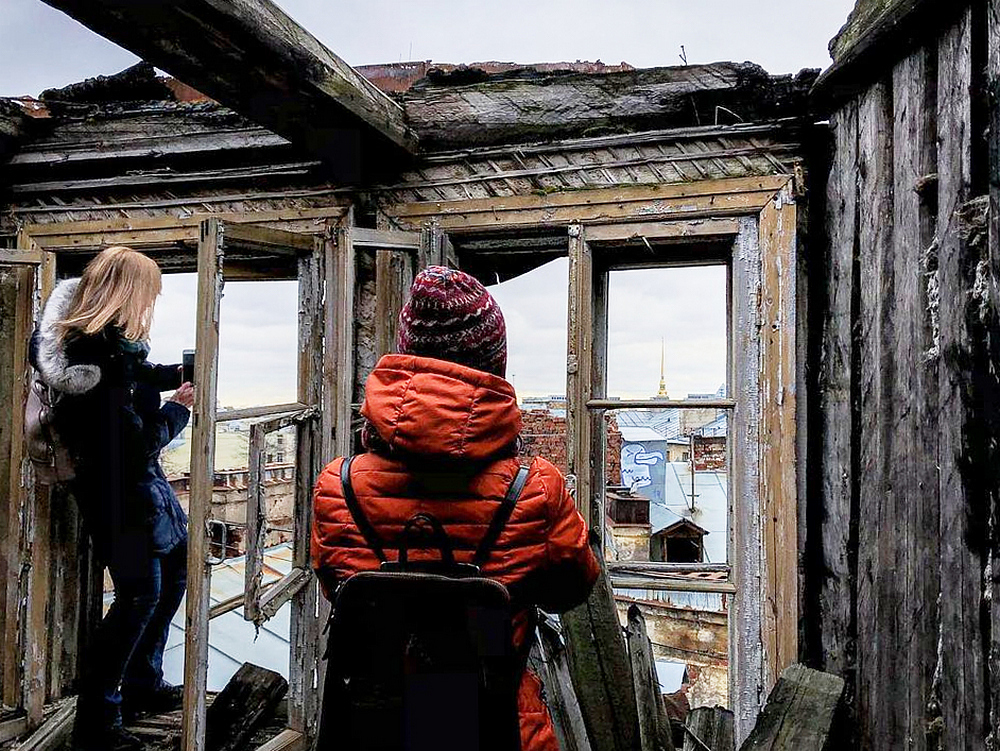
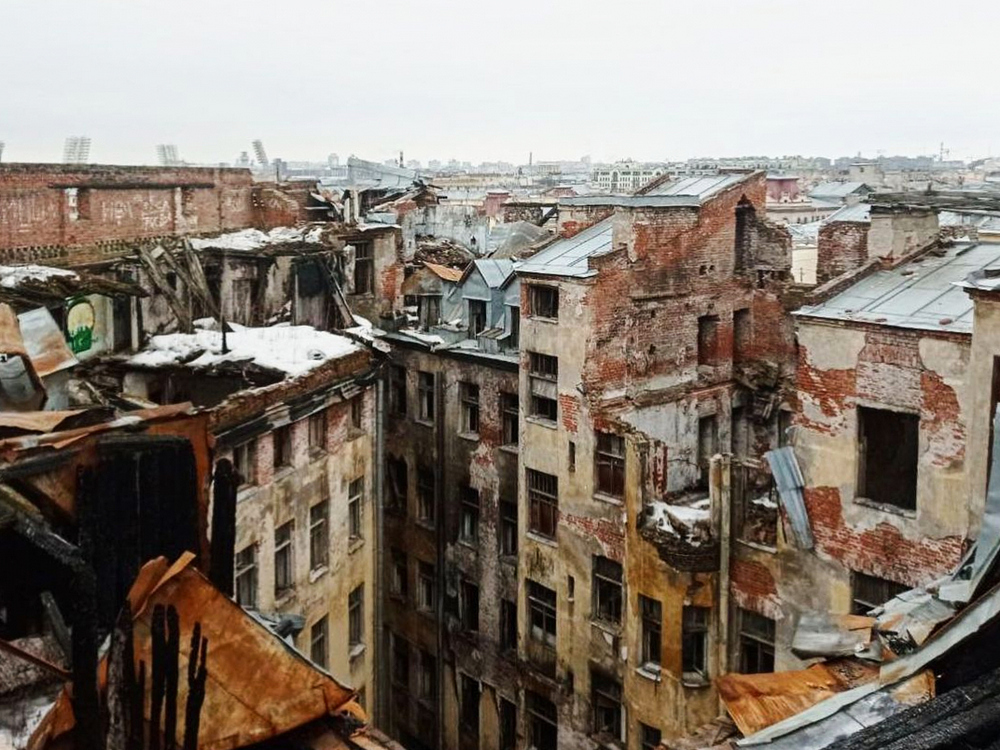
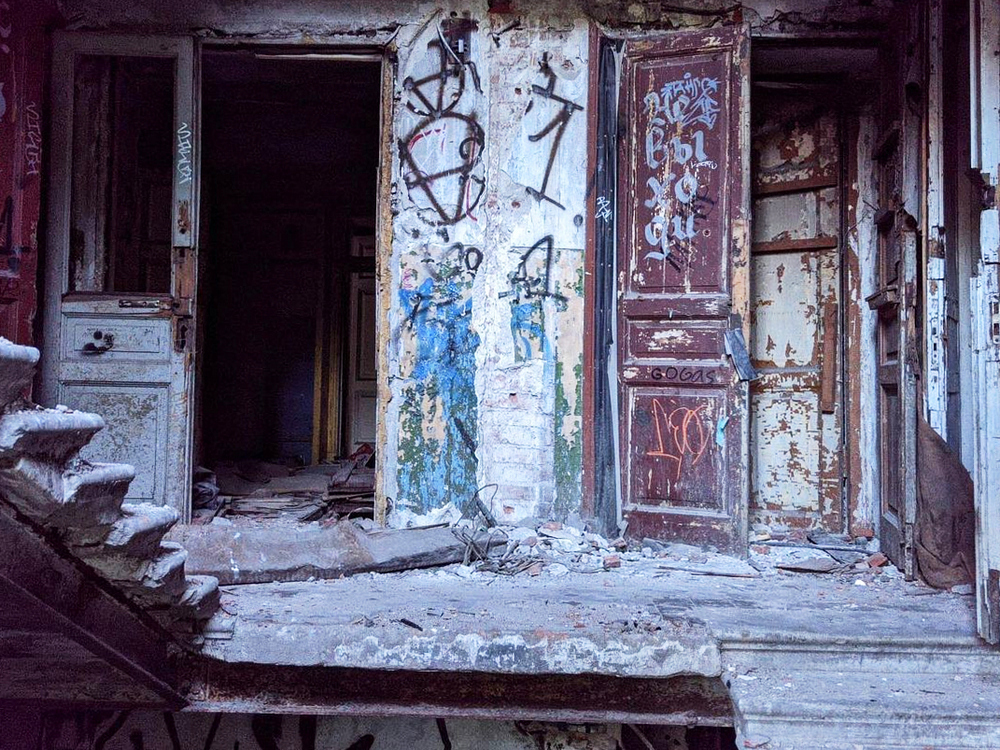
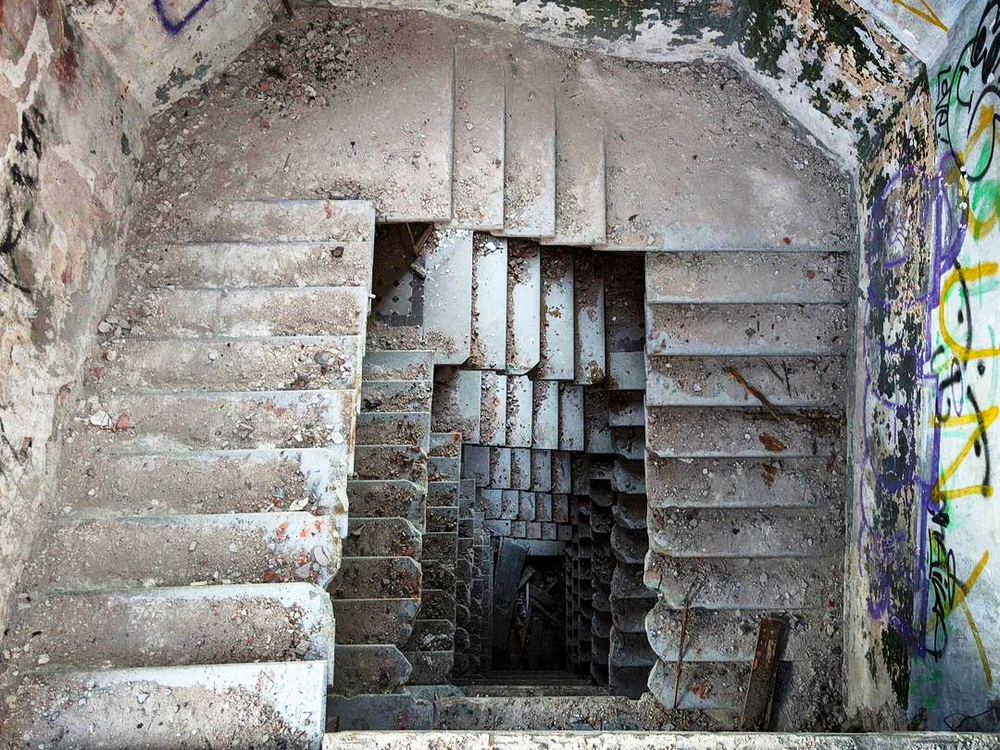
- How do you feel about what is happening with the house now?
- Come on so. Basevich is not an architect, but an engineer of the Vitebsk station. Some interesting technologies were used in the house, such as steel beams with wooden filling, decent ceilings, because in the home-breasts, where the beams, the stripes appeared from them.
Of course, now it is not such terrible conditions as in the 1980-90s. Previously, there were such Ikarus buses - and these were good buses - when they departed from the stop, a diesel exhaust was drawn to our yards. The windows could only be opened at night, the lighting in the apartments is also terrible.
Basevich’s house - he is in himself, he is a hive. It is completely pointless to try to save him. It was an ordinary apartment building that was built to pack as many people as possible in the limited space of the site. I don’t understand what they are protected so much, I don’t understand what to fight for this house: stucco moldings, fireplaces, stained -glass windows I don’t remember, the layout is corridor, terrible. This is not a fountain house!
What else to read:
- Damned Old House: 7 entities of Basevich’s house - the main abandonment in the center of St. Petersburg
- What is known about the project of the hostels of the Academy of Dance Boris Eifman in the Basevich House