
Translated material
Brazilian rebellion
Supporters of the ex-president Bolsonar defeated government buildings in order to "save the country from the left." What is behind the split of the Brazilian society?
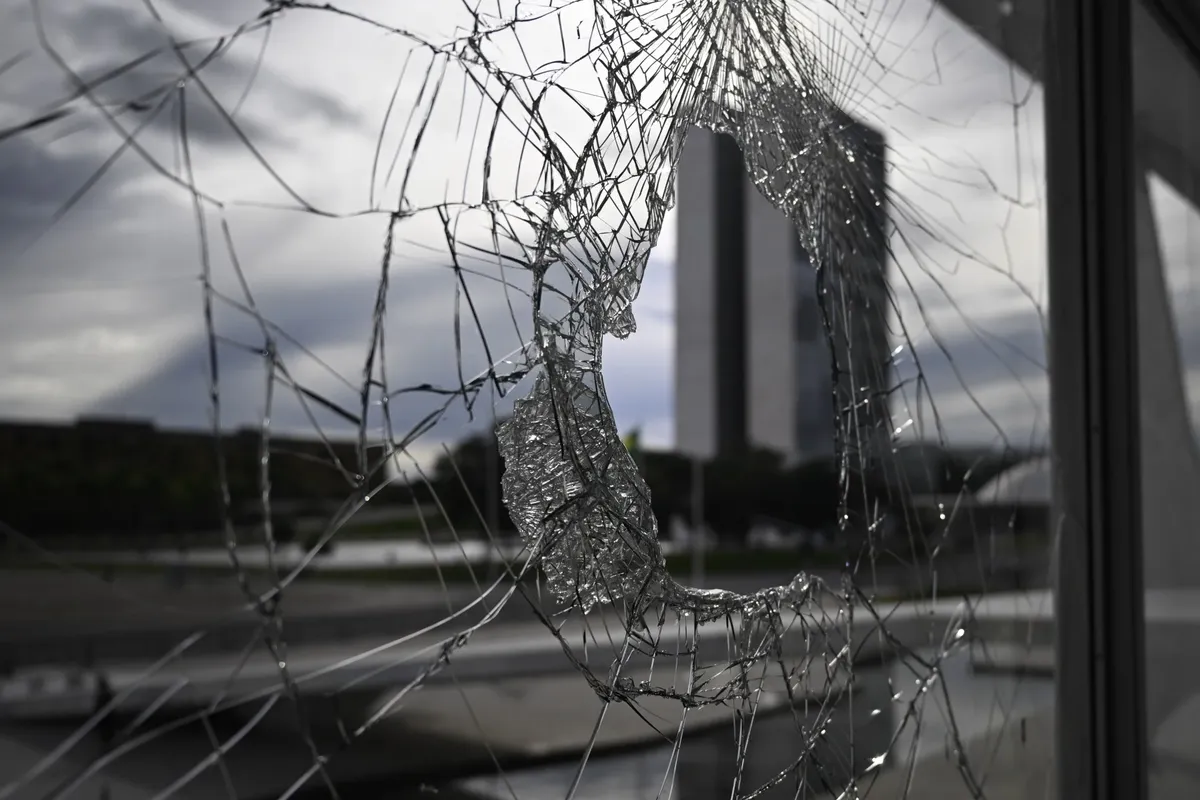
On Sunday, January 8, 2023, in the capital of Brazil, the thousands of supporters of the former President Zhira Bolsonaru made a monstrous pogrom in the buildings of the National Congress, the Presidential Palace Planult and the Federal Supreme Court. Broken glass, broken furniture and computers, damaged paintings and sculptures, water -filled cabinets and meetings are a physical measurement of the incident. But the measurement is no less important: the city of Brazilia was built in 1956-1960 from scratch in the Central Nagoria and was supposed to, according to the plans of the architect Oscar Nimeyer and Urbanist Lusio Costa, become a symbol of a new, directed into the future of a democratic country that breaks with the colonial and authoritarian past. Huge ramps leading to the main entrances to the National Congress and the Presidential Palace personified the unity of society and democratic institutions, and the glass walls of these buildings and the buildings of the Supreme Court - transparency of state power. A crowd of pogromers now rose along these ramps, which methodically crushed glass walls with the help of improvised means.
To save the country from democracy
The reason for these events was the results of the presidential election, the second round of which took place on October 30, 2022. The right -wing politician Zhir Bolsonaru, the president of the country in 2019–2022, lost 2 million votes or 1.8 percentage points (49.1% versus 50.9%) Luis Inasiu Lule da Silva, a levocentric policy, which served as president of Brazil in 2003-2010. The country turned out to be split in half, and the main watershed was not so much between the right and left, but between the supporters of the preservation of democratic institutions, which Lula called for, and the conservative part of the society, which supported the authoritarian discourse of Bolsonar, an open supporter of the military dictatorship, which ruled in Brazil in 1964-1985.
Bolsonaru came to power under the slogan of the struggle against the “ deep state”, representing, in his opinion, not the people, but only the mercenary interests of those who are the beneficiaries of state institutions: mired in corruption of officials, politicians, deputies, judges, journalists. Over the four years of his presidency, Bolsonaru came into conflict with the Supreme Court, the Supreme Electoral Tribunal, the leading media, part of the parliament and the governors of the States. The main focus of his politics, within two years preceding the elections of 2022, was a public discredit of the electoral system and, in particular, the electronic voting system, which he, without any evidence, considered it unreliable and accused in advance of preparing for his personality personally. Many months before the election, Bolsonaru said that he recognized their results only if he won.
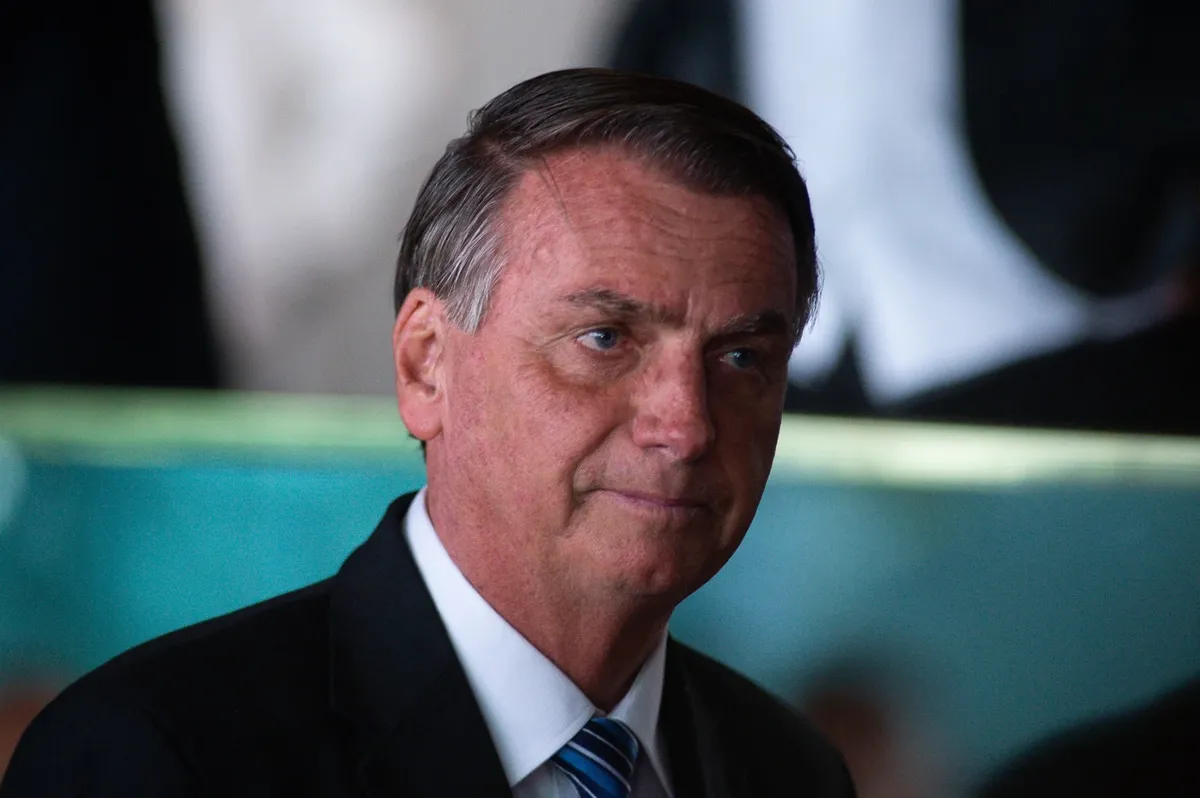
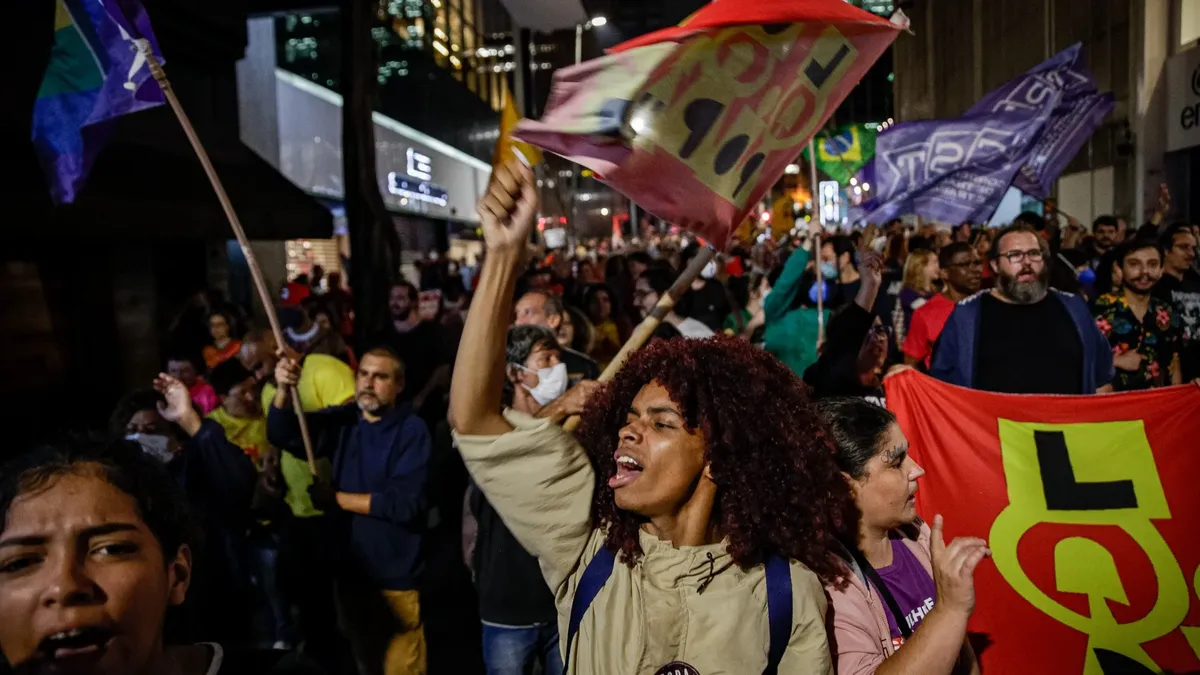
Having lost the election, Bolsonar was silent for a long time and over the past two months he did not recognize his defeat. The inauguration of Lula held on January 1, 2023 took place in the absence of Bolsonar, who flew to Florida (USA) the day before, in order to avoid the traditional transfer of the presidential tape from the previous president to the elect. Radical supporters of the Bolsonaru immediately after the announcement of the election results considered them false and blocked the main highways, paralyzing - with the sympathy and connivance of the road police - the country for several days. After the road lock was removed, the Bolsonarists moved to the locations of the regional commands of the Armed Forces and the Main Headquarters of the Ground Forces in the capital, demanding that the armed forces intervene and, having canceled the election results, would not allow Lula to come to power. In other words, Bolsonaru supporters openly called the military for the coup. For two months, very well -maintained tent camps surrounded military command in the capitals of the States and the largest cities; Only in the state of San Paulo there were 34 of them.
All this time, a very difficult process of transferring power, political bargaining around the creation of new ministries and the distribution of state posts between representatives of the parties, from which Lula sought to form a wide coalition in parliament, where after the elections he had a minority, was taking place. It is clear that under these conditions, both the Lula and the new ministers responsible for safety, least of all wanted to aggravate the conflict and, apparently, hoped that the Bolsonar’s reluctance to openly lead the protests lead to the gradual resorption of the protesters, and the problem would be solved by itself. Moreover, the new leadership of the Armed Forces appointed by Lula announced its unconditional support for the democratic constitution. The new Minister of Defense, the right -wing politician Jose Musio, said that the right to protest is the most important component of democracy, even if these protests occur in the immediate vicinity of the location of the armed forces.
How to organize a rebellion
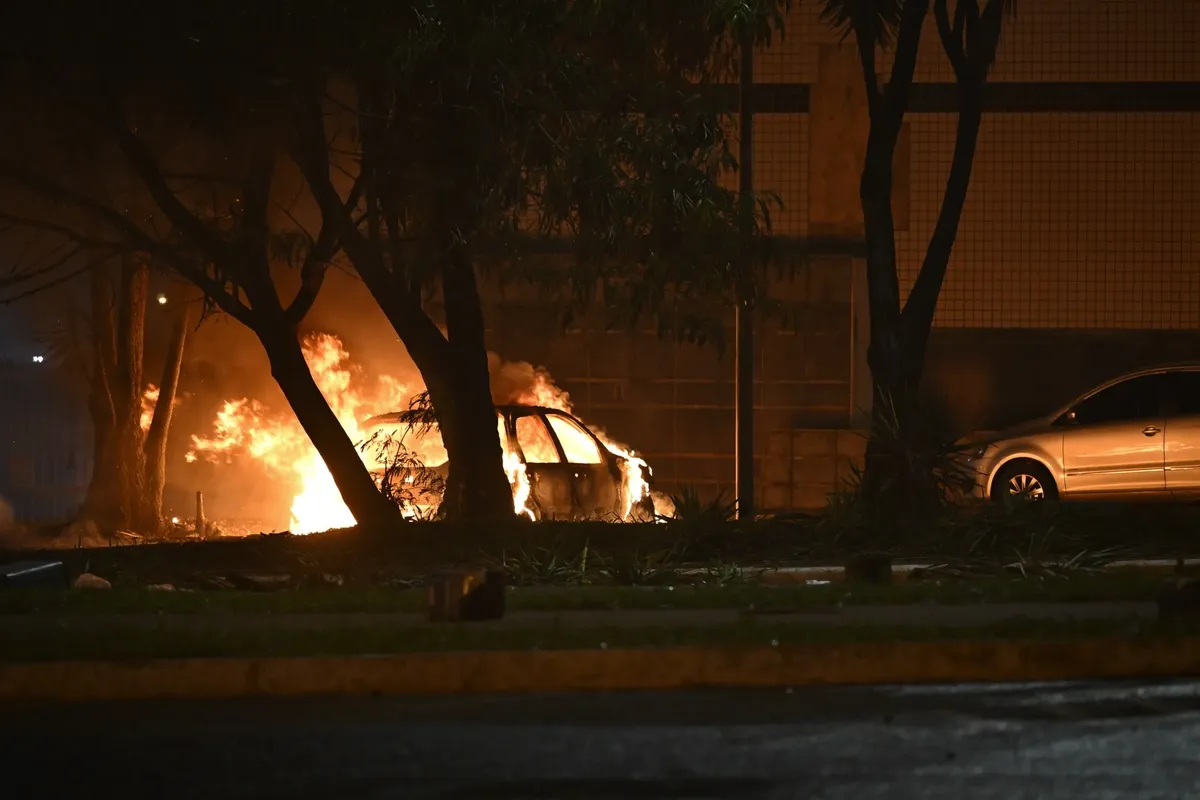
The problem, however, did not resolve. After the inauguration, when, it would seem, everything was calmed down, and the newly elected parliamentarians were on vacation until January 31, the tent camp of supporters of Bolsonaru in front of the main headquarters of the ground forces in the capital, barely numbering 200 people, suddenly grew by the end of the first week of January to 4 thousand. Chats of Bolsonaru supporters on social networks were filled with messages that offered a free bus in Brazilia with paid three meals a day and return home on January 15 (which is very generous, given the huge Brazilian distances). There were about 150 such buses, as it turned out, was about 150. It was at them that most of the pogroms came to them, who built in a highway column and passed 9 kilometers that separated the military headquarters from the area of the three branches of government, where they smashed the designated branches of power for two and a half hours. At the same time, the participants of the pogroms, dressed in T -shirts of the flowers of the national flag and the form of the Brazilian football team, shot many thousands of videos and selfies, which were posted on social networks, counting, probably on complete impunity.
And here endless questions begin. Obviously, the action of such a scope could not be spontaneous, it was organized and generously financed. Since the army did not respond to the calls of the protesters and allowed Lula's coming to power, the calculation of the organizers was apparently to create chaos, to force the armed forces to intervene and take over the leadership of the country. A special police unit, which was supposed to protect government buildings, could not have any resistance to many thousands. Moreover, the military police escorted the column of demonstrators throughout its nine -kilometer march, the purpose of which was to fight the riots. As it turned out later, the Brazilian National Intelligence Agency warned the Federal District Security authorities that in the coming hours attacks were expected to attack government buildings. On Saturday 7, on the eve of the pogrom, the new Minister of Justice Flavio Dino set the governor of the federal district, the old ally Bolsonaru, Ibaneis Rosha, the new party of Bolsonarists from other cities was sent to the capital. In other words, it was a rebellion, which many were known in advance about preparing for.
In tramp places
Unlike the attack on the Washington Capitol on January 6, 2021, the surprise factor in Brazil was completely absent. There is no doubt that the capture of the Capitol inspired the Brazilian pogromers. This is the case when, according to the commentator of the Spanish newspaper El País , "the banana republic came from the north." The proximity of these two rebellions is more than obvious by the nature of the political leaders who inspired them; According to the composition of the participants and the style of their behavior. This resemblance is far from accidental and, as the Foreign Policy magazine writes, goes beyond a simple coincidence. Bolsonar called Trump his teacher, openly imitated him in his domestic and foreign policy, and repeatedly met with Trump and his advisers over the past years. One of the recent meetings of the Bolsonaru team with Trump took place in October, immediately after the election in Brazil, and at the beginning of 2023, one of the three sons of Bolsonaru, Eduardo, the deputy of the Brazilian Congress, met with Trump and his assistants in Florida and discussed the “next steps” in a telephone conversation with Steve Bannon, the sad former strategist of the Trump team.
At the same time, much more important than the direct connection between Trump and Bolsonar, the deep similarity of social and political processes that develop in the two largest countries of America seems to be. The phenomenon of the right -handed populism that arose in the middle of the last decade in the United States fell in Brazil on prepared soil. Four times in a row, from 2002 to 2014, in the presidential election the left-wing forces were won, based, on the one hand, on low-income layers and the population of the more backward states of the Brazilian northeast, and on the other, to modern highly educated and democratically configured groups in large cities. Traditional ruling and dominant groups - supporters of conservative views - gradually realized that democratic institutions ceased to fulfill the main, from their point of view, function: to ensure their order and stability. Democratic legal acts, which for a decade and a half opposed the left -wing elections, could not remove them from power and, ultimately, lost their influence.
This political vacuum filled Bolsonaru, who for the first time in almost four decades of democracy was able to consolidate right -wing conservative forces around him. In the 2018 elections, the most highly profitable, most educated groups of the population of the most economically developed states voted for Bolsonar. The same thing, despite the extremely unsuccessful presidency of Bolsonar, was repeated in 2022: in the political demarcation of the Brazilian society, a deep social, geographical and racial split showed, reflecting racism deeply rooted in Brazil.
“Who are these people? Where did they come from? " - asked herself to be a liberal democratic community after the victory of Bolsonaru in the elections in 2018. The events of January 8 showed the face of the most radical part of “these people”. These are mostly white men (although there were women and few blacks among them), representatives of the Brazilian middle class, who, no matter how wildly, came to protect democracy as they imagine it. Under the slogans of the law and order, the protection of national traditions and Christian values (from the threat from the left), they smashed the institutions that ceased to provide this protection.
A public opinion survey conducted in the footsteps of events and published on January 10, 2023 by the Brazilian agency Atlasintel reflects a very bizarre and, unfortunately, a very sustainable picture of a social and political split in Brazilian society. In general, three quarters of the respondents completely condemns “barbarism”, made by radical Bolsonarists. But among those who voted for Bolsonar, the majority believes that this barbarism can be justified. 39.7% agree that Lula did not win the election; Among the 90% voted for Bolsonar, he still believes that he scored more votes than Lula. 36.8% of respondents advocate that the military intervene and cancel the results of the presidential election (“against” 54.1% are opposed; 9.1% “do not know”). Only half of the respondents (50.2%) consider Bolsonaru responsible for the invasion of government buildings, 42.7% disagree with this.
Who protects the constitution
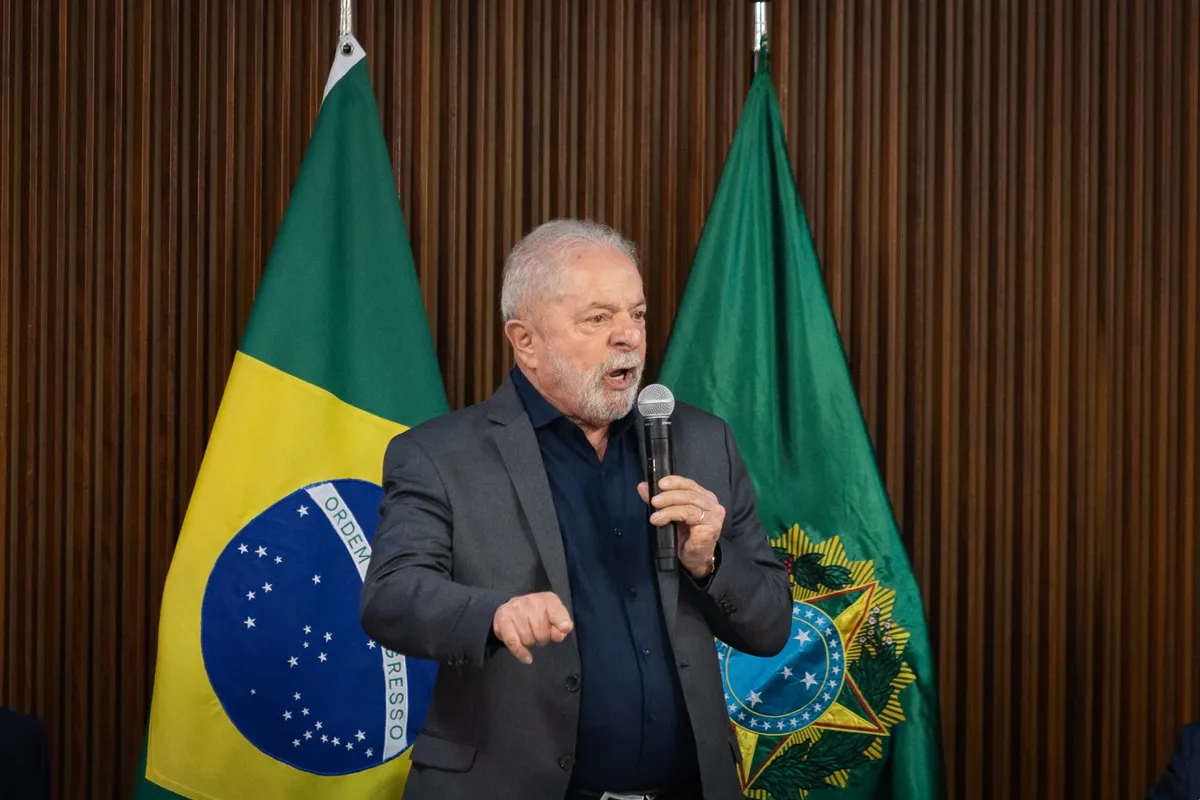
This is the situation in which Lula begins its already difficult presidency. Both in the elections, and especially after the pogroms, Lula acts primarily not as a left -handed, but as a defender of democratic institutions, around which he seeks to create a political coalition in the country in general and in the National Congress in particular. The events of January 8 give him an undoubted political advantage over Bolsonar - few politicians dare to protect the methods of struggle demonstrated by his supporters. Lula received support from the heads of the Chamber of Deputies and the Senate, from the Supreme Court, and held a public meeting with the governors, to which all 27 chapters of the Burzilian states arrived, including the closest supporters of the Bolsonar. The obvious and loud political defeat of the latter opens up to Lula a certain, although, apparently, short-term window of possibilities.
The main problem is the punishment of participants, organizers and instigators of “going to three branches of power”, as well as those who financed it. The police and the military detained about 300 people in place, another 1,200 was arrested during the acceleration of the tent camp. Women and elderly people were released, about 1,100 detainees left, who should be transferred from the police academy to prison. The Supreme Court arrested the former military police commander in the Federal District and issued an arrest warrant of the security secretary of the Federal District, Anderson Torres. He was the Minister of Justice in the Bolsonaru government and, by a strange coincidence, is also currently in Florida. Lula introduced the Federal Security Department of the Federal District and temporarily removed his governor from the performance of duties.
The list of responsible ones is exhausted by this. The complete investigation and unconditional punishment of all the perpetrators is extremely important, without this, Lula’s presidency will be seriously weakened, and the threat of repeating such events will be preserved. The absence of an approximate punishment will undoubtedly undermine Lula's position among their own supporters. Here, a lot will depend on the Supreme Court, which, in difficult conditions for the transfer of power, has so far ensured the complete compliance of the law and which the Bolsonarists have declared their main enemy.
At the same time, taking into account the number of supporters of Bolsonar, especially among the police and the military, and their moods, it is dangerous to “go too far”, thereby provoking a new surge in protests that can take an even more dangerous form (fortunately, no one died and was seriously injured). In addition, Lula, for obvious reasons, seeks to avoid that these events and their consequences remain the main and only point of the government agenda. He calls to focus on the main problems of the country: poverty, inequality, unemployment - on the decision of which it ultimately depends on whether his third presidential term will be successful or not. In any case, Brazil will have very difficult times, and it remains only to hope that the march to the Square of the three authorities failed completely and will not become an analogue of the fascist black -browned march to Rome, which opened Mussolini, who opened the road to power.