
Translated material
Profession - to be a person
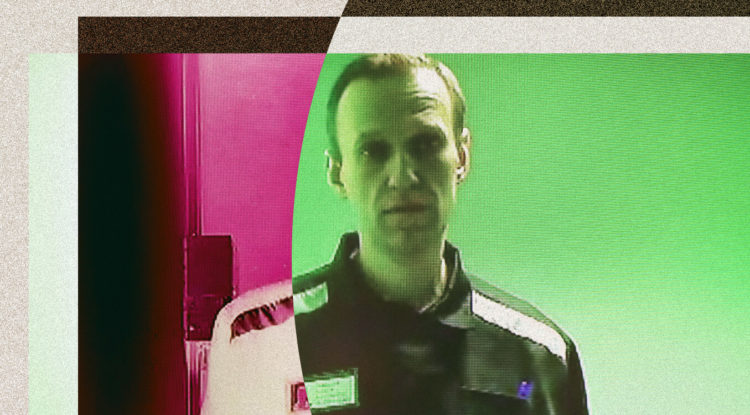
The author of the letter of doctors in support of Alexei Navalny - about why it is impossible to treat people and be out of politics
An open letter of Russian doctors requiring Alexei Navalny medical care was addressed to Vladimir Putin, but was redirected by the Presidential Administration to the Federal Penitentiary Service. This “cold” was told by one of the authors of the appeal - the Moscow surgeon Alexander Vanyukov. It turns out that the structure, the actions of which are appealed in a letter, is granted the right to give an answer to this appeal. However, regardless of the FSIN reaction, the very fact of such a collective letter of doctors, most of whom are in Russia, is an extraordinary event and a manifestation of solidarity. At the request of the “cold”, Vanyukov explained why doctors cannot remain outside the politics today and how the doctor’s civic position affects his professional duties.
In order not to miss the main materials of the "cold", subscribe to our Instagram and telegram .

"What can I do?" This is not a question, but an answer. The response to claims presented to people working in a large organization, especially if this organization belongs to the state. It is easiest for me to speak for the healthcare system. Doctors, nurses, orderlies - parts of a huge, clumsy mechanism. This mechanism, judging by the name, should be merciful and humanistic. But mechanisms do not know how to feel. Only people who manage them can make them serve for good or evil. Getting inside a similar system, a person quickly adapts to its standards.
In the Russian healthcare model, a paternalistic model of behavior was adopted. We, doctors, treat the patients with condescending-grievously. We remember what should be treated, and we know how exactly - the patient's desires are secondary. We treat patients as children who are not able to make decisions. The doctor knows better. This logic applies to other professions. The mechanic knows better what to repair in your car, the seller knows better that you want to buy, finally, the government knows better how you live.
It seems to me that this mechanism requires reassurance. Coming to work, we must first remember for who we do this. We work with people and for the sake of people. Not for the sake of operations by themselves, not for the sake of pharmacological companies, not for the sake of bureaucracy, numbers and reports. All our activities are built around a person, and it is important not only to cure him, but also to help. The patient is our ally and partner. Our priority task is to earn his trust.
How exactly? First of all, to be honest. And honest in everything, not only in the installation of diagnosis and treatment. Any professional is primarily a person. Therefore, if we are talking about a professional position, how can we avoid civil position? We should not use white robes as camouflage from reality. We live in our country, among other citizens of this country and in the same way we experience the results of the management of this country.
When we say that doctors outside politics are cunning. Doctors outside politics are only in their professional field. For us, the patient’s political affiliation should not really matter, but, as representatives of one of the most educated layers of society, we simply must participate in his political life. In ancient Greece, the participation of citizens in politics was not the right, but the obligation of a citizen. I feel this duty today.
Self -censorship is very strong in us. For many decades we have been taught not to stand out, not to talk too much, to do our job and at least be silent, and better - to support the decisions of the leadership. In fact, if you think about it, we are not threatening us so much. If we ask any of us what exactly he is afraid of in the case of his own direct statement, few will be able to answer. We are silent so that "what does not happen." And what did not happen - we do not know. And this is also a matter of honesty. What can be said about a person who cannot say what he thinks?
Yes, there is pressure from colleagues, relatives, relatives. We are used to such a manipulation: "We raised you, we give you a job, and you risk let us down." This is another broken logic. Any work is a mutually beneficial process: you hired me because you need me as a specialist. Performing my work well, I develop a company, clinic, industry. The speculation on a sense of gratitude, on personal relationships - is not honest. “Sign then”, “agree to this” - violence is hidden behind such soft requests. It is important not to forget this.
After the start of the war, the state actively sends doctors to the occupied territories to assist the victims. Several charitable organizations collected assistance to "children of Donbass." Is it possible, opposing the war, to participate in this? On the one hand, these actions look like help: we support the civilian population who fell into a boiler of hostilities. But, on the other hand, who caused these actions? Can we go with a humanitarian mission on behalf of our country?
In my opinion, no. Of course, we are obliged to support the victims, but, acting on behalf of the aggressor, we will legitimize aggression: “I beat you, let me have your wounds bandage, because I am good.” No, I'm not good. I beat you. It seems to me that today Russian philanthropists and doctors can work at the front only on behalf of international organizations.
Another obvious thought that is important to speak: the expression of one's own opinion does not discredit the place of work. On the contrary, freedom of expression and statements of employees is a sign of a healthy team. The doctor of the state hospital is not a servant to the official and the head doctor. I can agree that only an authorized press secretary can speak on behalf of the entire institution, but on your behalf it is possible and necessary to speak yourself.
A closed system, which is also medicine, is clumsy and conservative. She is interested in maintaining herself for herself. The closed system loses in speed, in development and ceases to notice errors. A closed system always turns people into overseers and prisoners, and participants do not even notice this. She hides mistakes, does not know how to work with them and eventually dies. It is like a community of residents of the house, which on the third day cease to notice a broken light bulb. They get used to that it is dark in the entrance, and do not even try to change this light bulb. But anyone who got into this entrance for the first time will immediately notice that there is no light in it. In a closed system, distrust is born. And how can medicine exist if patients do not trust her?
The trouble of Russia is that we already do not trust anyone. We are looking for a familiar doctor when something has got sick with us, but not a single mechanism can work if some of his gears are reliable, while others are not. We must open the systems in order to keep up. We must provoke others to the statement of our own opinion, and not force him to hide. We must be people, not functions.
A letter in defense of Alexei Navalny, who signed more than 600 people, is a step that is surprising in modern Russia. But I believe that gradually we will come in small steps to the same thing that our ancestors came to thousands of years ago. When to support the weak, to help the suffering became the natural need of mankind - and the only condition for survival. But we will never come to this if we go under the sound of the march. We will go this path if each step is made by a separate sensitive person, and not a huge clanging army.