
Translated material
Exhaust protocol
Estonia announced the intention to transfer frozen Russian assets to Ukraine. We explain whether it is possible and whether it is worth waiting for such actions at the level of the entire EU
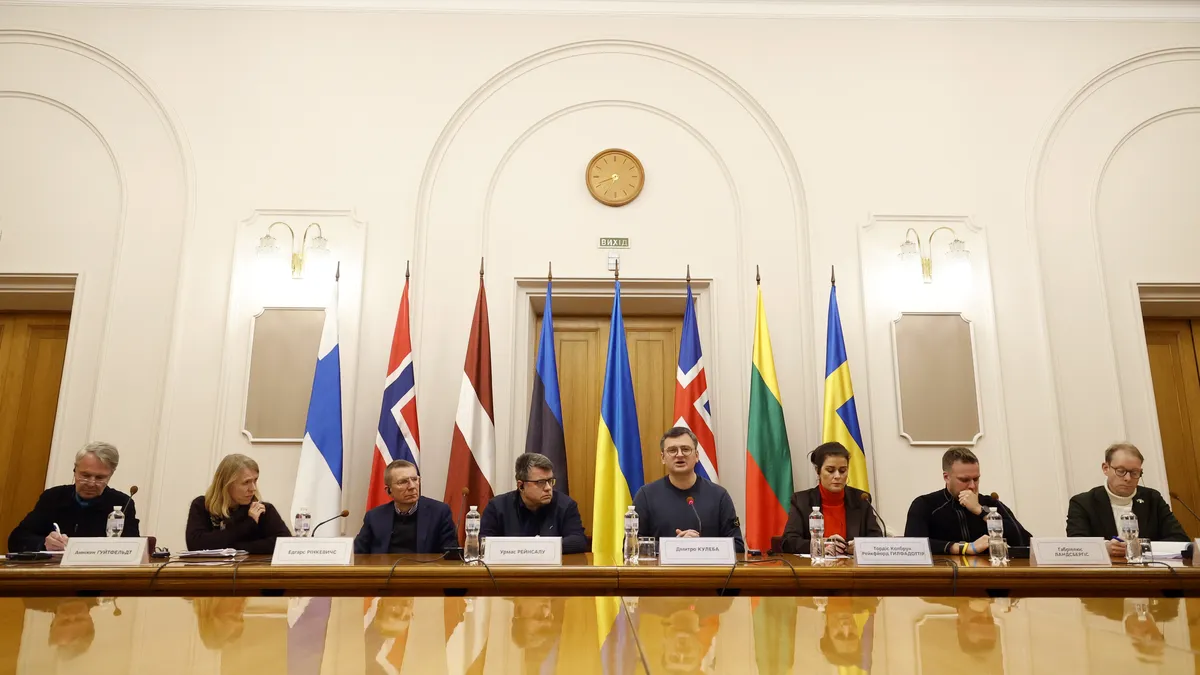
Talk about the fate of frozen Russian assets has been conducted in the EU since the beginning of the war. Politicians at the European and national levels argue about whether there are legal mechanisms for the seizure of these assets in favor of Ukraine, and if such mechanisms are not enough, then it is possible to create them without violating the fundamental human rights and international law. In January of this year, the dispute entered a new round. Estonia authorities, without looking at the position of the European Commission and their other colleagues in the Union, said that they would soon intend to submit their own plan for the transfer of Russian assets in the country to Ukraine.
Together with European politicians and experts on international law, Novyevropa understands what fate awaits the frozen assets of Russia, how realistic the prospect of using them to help Ukraine and what is hidden behind the new initiative of Tallinn.
Immunity assets
Since the beginning of the Russian invasion of Ukraine, Russian assets in the European Union and other Western countries have been frozen. The decision affected both 300 billion dollars of reserves of the Russian Central Bank and about 19 billion dollars belonging to Russian business, which was under sanctions. According to the data received by the American publication Politico, 90% of the frozen assets of Russian oligarchs in the European Union are concentrated in Belgium, Luxembourg, Italy, Germany, Ireland, Austria and France. In addition, the sanctions affected 7.5 billion Swiss francs - although this is only 5% of all Russian assets in Swiss banks.
At the beginning of the war, a consensus was formed in Europe regarding the need to confiscate the property of the Russian oligarchs involved in the war. For this, the European Commission has created a special group
“Freeze and Seize” (“freeze and seize”), the purpose of which was the coordination of the actions of the national governments to arrest and, “where it implies the national law”, the confiscation of the assets of Russian and Belarusian oligarchs that fell under sanctions. Despite the fact that cases of successful confiscation have not yet been reported, $ 19 billion of Russian assets, it is allegedly frozen precisely due to the coordination efforts of this group.
At the same time, as emphasized by the chairman of the European Commission Ursula von der Lyain, at the EU level there are no worked out legal mechanisms for confiscation of property among individuals. Charles Michelle, chairman of the European Council, spoke about the need to develop these mechanisms in the last May.
However, the question of the confiscation of frozen state reserves of the Russian Federation - unlike the assets of Russian oligarchs - became much more debatable.
In favor of this in the spring of 2022, the Baltic and Slovakia countries performed . Ursula von der Layen also spoke about the possibility of such measures in May, although she emphasized that the frozen national reserves of Russia are formally under immunity.
Such immunity has several reasons.
Firstly, it is ensured by the usual international law, that is, the legal custom, which is supported by court decisions. In particular, this was confirmed by the decision of the UN International Court in the German judicial trial against Italy.
Secondly, some international acts substantiate this immunity. In Europe, this is the European Convention on the State Immunity of 1972 , which was signed and ratified by Austria, Belgium, Germany, Luxembourg, the Netherlands, Switzerland and the UK. At the UN level , the UN Convention on the jurisdictional immunity of states and their property was adopted, although it will enter into force only when it will be ratified in 30 countries.
Thirdly, immunity is ensured by national legislation of states. In Russia, for example, this is the Federal Law “On the Jurisdictional Immunity of a Foreign State and the Property of a Foreign State in the Russian Federation” of 2015. Similar measures exist in the EU states.
By the end of 2022, the European commission made a specific proposal on how to use the frozen assets of Russian oligarchs and the Russian state. It was decided to create a special fund for the investment of these assets (both state and private) and transfer income from investments in favor of Ukraine. After signing a peace agreement with Ukraine, the state reserves of Russia can be returned to it, and part of the frozen 300 billion dollars is credited as reparations in accordance with their certain volume. The date of the creation of such a fund and the publication of more specific rules of work has not yet been announced.
Estonia takes the initiative
At the national level of the EU country and the partners of the Union relate to such initiatives with varying degrees of readiness. Germany, for example, is waiting for an official draft directive or bill from European institutions. Switzerland quite openly declares that she is not ready to transfer assets. In explicitly, the transfer of Russian assets to Ukraine is supported only by Slovakia and the Baltic countries. Estonia is most active here, which is preparing to offer its own mechanism for confiscating assets.
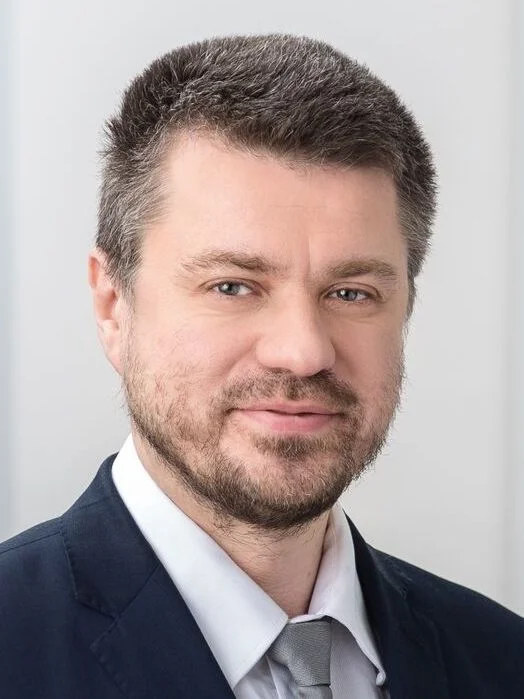
“Since the European Commission is not advancing in making a decision on the use of these assets, Estonia took the case into its own hands and begins this process on its own,” with such a subtitle, in early January, the commentary of Estonian Foreign Minister Urmasal Reinsalu, the largest Estonian newspaper Postimees.
Seeing the lack of consensus in the European Commission, the Estonian government, according to Reinsal, decided to create a “legal structure” that would allow the use of $ 20 million Russian assets frozen by the Estonian authorities.
From a legal point of view, Reinsalu proposes to start from the principle according to which "a country that caused damage must pay reparations."
Estonia, the Reinsalu emphasizes, should become an example for other countries and create a legal precedent so that "[all the rest] act faster." By the end of January, says the representative of the Estonian Foreign Ministry Mikhkel Tamm, the Estonian government will prepare a detailed plan for the confiscation and transfer of Russian assets to Ukraine.
This initiative enjoys support in Estonian political circles. The deputy of the European Parliament from Estonia and the former Foreign Minister Marina Kalyurand in the commentary of Novo-Europe confirmed that she supports both initiatives-the pan-European and Estonian national. At the same time, Calyurand indicated that "both processes occur in parallel and equally important." This position emphasizes that plans for the confiscation of Russian property at the EU level and at the level of individual member countries, although they can mutually complement each other, do not necessarily depend on each other-participants can act independently, guided by their own considerations.
So far, the Estonian initiative, however, calls Skepticism experts. Calyrand remarks: “[Confiscation plan] should be 100% legally correct in order to withstand possible contesting in the courts.”
Under the protection of international law
International Law Specialist, lawyer, partner of the NSP Law Bureau Sergey Glandin believes that Estonia’s plans may directly contradict the laws of the European Union.
Glandin refers to the 17th article “ EU CHARTIA on Fundamental Rights ”, according to which “no one can be deprived of its property, except for considerations of public benefit, in cases and on the conditions provided for by law, and with the payment of fair compensation for its loss.” Of course, Glandin notes, Estonia can amend his Civil Code and give any institution (for example, the Ministry of Justice) the right to apply to the court with a claim for the confiscation of these assets.
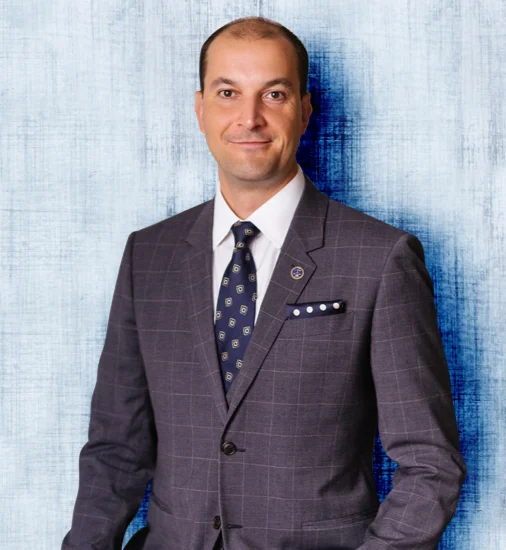
However, in this case, the "formal owner will have equal procedural rights in this trial." If the Russian side in this process refers to violation of the 17th article of the Charter, the case will probably be transferred to the EU court. Further, Glandin predicts, the consideration of the case can take up to one and a half years and, most likely, will end with recognition of the correctness of the Russian side - "everyone will remain with their own."
The opinion of Gsalondin is also shared by the professor of international law and security of Tallinn University Tina Pauste. In an interview with Estonian ERR, she also refers to the 17th article of the UN Human Rights Declaration , according to which "no one should be arbitrarily deprived of their property." Theoretically, Pauste says, these restrictions could be bypassed by the decision of the UN Security Council in case of "violation of international peace and security." But in reality, it is impossible to release such a resolution or amending the mechanisms of the UN functioning, while Russia retains the place of permanent member with the right veto.
The capabilities of the national level
However, there are ways that can allow confiscation at the national level, said Sergey Glandin.
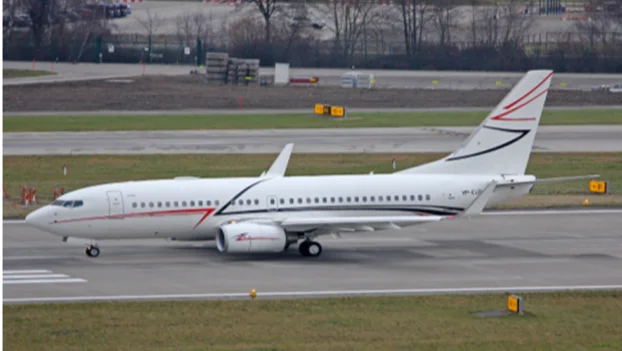
The first is the application of criminal law and holding accountable for violation, for example, the norms on sanctions with the recognition of assets by the actual instrument of committing a crime. This is a fairly common practice-in this way, the US Department of Justice decided to confiscate the Boeing 737-7em, owned by the Russian Lukoil. The basis was the sanctions adopted by the Ministry of Trade, which prohibit transporting aircraft produced in the United States to Russia or from Russia without special permission.
The second method of confiscation at the national level can be built on the application of legislation on laundering money. The competent authority (most often law enforcement agencies of the state) may recognize the origin of some financial assets criminal and apply to the court for their confiscation. This method, however, can only be applied in relation to financial assets, and not, say, yachts or real estate.
Both of these methods, Glandin emphasizes, do not need additional legal study - all the necessary norms are already contained in the national legislation of European countries, including Estonia.
Another option is offered by Tiina Pauste. It consists in “counter -meters” - actions in response to a similar violation from the opposite side (in this case, Russia). However, firstly, these measures are limited by the very scale of violations, and secondly, they must have the property of reversibility. That is, if Russia (or individuals) will return to compliance with international law, assets will need to be returned. So this method looks suitable for “freezing” assets, but not for their confiscation and transfer to a third party.
In any case, even at the national level, confiscation without court litigation will not work.
Considering how long the trials are, especially if they switch to the EU level, the value of the undertaking itself seems doubtful - money for the restoration of Ukraine is needed now.
At the same time, Sergey Glandin considers the current plan for creating a fund and investing Russian assets to make profit with the possibility of returning them quite viable. The option in which the EU changes or adapts fundamental regulatory acts (the EU CHARTION OF FOREVAL RIGHTS) is unlikely. Such a policy would require a revision of the principles of European integration and a wide political consensus of European elites on this issue. Now this question is not even on the agenda.
Towards the election
Estonia's ambitious plans become more understandable if you pay attention to what is happening in the political life of the republic. On March 5, Estonia will be held parliamentary elections and a new composition of the ruling coalition and government will be determined.
Strengthening the positions of right -wing forces in Estonian politics has been observed throughout 2022 - since the beginning of the Russian invasion of February 24. Against the backdrop of the “hawkh” rhetoric, Prime Minister Kaya Kallas and the ban and the ban on entry into the country for Russian tourists, the rating of her party (the liberal “Estonian Party”) was noticeably strengthened . If at the beginning of 2022 it was approximately equal to the rating of the opposition conservative people's party (national conservatives)-22%, then a year later exceeded 30%, while competitors were far behind.
The growth of popularity allowed the Kallas party in the summer of 2022 to change the main partner in the ruling coalition with the Left-Gentric Party, which is supported by the majority of the Russian-speaking population of Estonia, to the national conservative party of the Fatherland. It is in the ranks of the "Fatherland" that the current Foreign Minister Urmas Reinsalu is the author of applications for confiscation of assets.
According to the latest survey data , the support of the ruling “reform party” is 31%, the “Fatherland” is 6%, and the Social Democrats (the third coalition partner)-9%. So in the current conditions, Callas could only form a minority government with a support of 46% of voters.
The confrontation between Europe ongoing Russian aggression is one of the main components of the election race in Estonia today. Most likely, Estonian politicians are aware of the legal difficulties that they will have to face when trying to transfer Russian assets to Ukraine. However, within the framework of the election campaign, these steps are beneficial from the point of view of the struggle for the attention of conservative voters. The actual fate of Russian assets in Estonia will be decided after the election, and, most likely, the Estonian initiative will yield to a softer - pan -European one.