
Translated material
Man of the day: Oscar lines
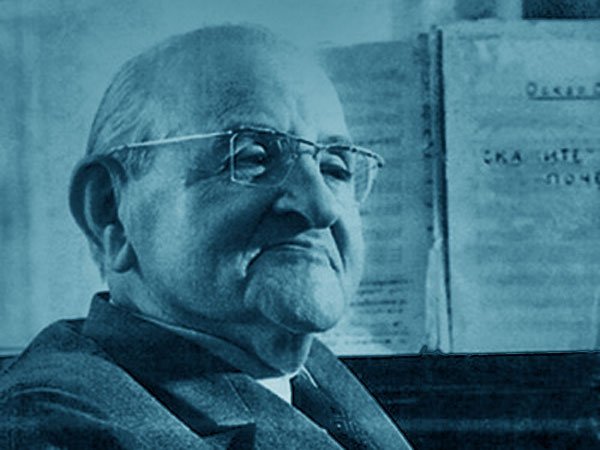
On January 18, 1893, an Oscar of the lines, composer, “king of tango” was born.
Personal business
Oscar Davidovich Lines (1893-1975) was born in Dinburg (now Daugavpils, Latvia). He was the youngest of eight children in a musical Jewish family. Father David Markovich lines was an army musician, played on several instruments (flute, clarinet, piano). In an effort to give the children a good education, he achieved permission to leave the city, where the Pale of Settlement of Jews passed, and moved to Petersburg. Already at the age of 10, the Oscar of the lines composed his version of the romance “I loved you” to Pushkin’s poems. At the age of 13 he entered the St. Petersburg Conservatory. In 1912, the first romances of the line were published, and in 1913 - his first waltzes “Dream in the trenches” and “Dream in a foreign land”. In the same years, lines work in cinemas as a pianist-illustrator and acts on the stage as an accompanist.
In 1921, the lines moved to Riga, where the main years of his life and creativity passed. He spoke for a long time with regular concerts at the famous Dance Cabarer restaurant "Algambra", as well as in the Otto Schwartz cafe-restaurant. In addition to making music, lines, he constantly tried to implement a variety of commercial projects - he published books, magazines and musical collections and even opened his Barberin restaurant, in which he himself played on the piano. However, all his business executions invariably ended in collapse.
Having gained fame as a composer and the author of the songs, the Oscar of the lines toured the world, lived in Paris, Berlin, Harbin, Alma-Ata and Moscow, but invariably returned to Riga.
In the 30s he took part in the competition to create the state anthem of the USSR.
After the outbreak of World War II, the line of lines managed to leave Riga to Alma-Ata, where even before the war his sister Lisa settled. In the war years, he gave hundreds of concerts in hospitals, wrote several patriotic songs (among which - “We will win”, “Front driver”). He acted as a composer, soloist and accompanist. In 1944, he became the second pianist in the ensemble V. Korally and K. Shulzhenko.
After the war, light dance music of the Western model was banned in the USSR. In 1948, after the famous resolution of the Central Committee of the All -Union Communist Party of Bolsheviks (b) on the Grand Friendship opera, V. Muradeli, known as the decree on the fight against formalism in music, Oscar line excluded the line from the Union of Latvia composers: “The line does not meet the goals and objectives of the LSSR IC”. Request requests did not help - from Moscow, from the Secretariat of the Union of Composers of the USSR, refusals invariably came.
Most hits are immediately included in the list of “undesirable to execution”. But formally it was not completely banned, and therefore began to send his own works to the leaders of pop groups, rewriting, remaking and arranging them for specific performers. In these years, he wrote mainly instrumental music. The composer had to earn a living, as in his youth - he accompanied in cafes, restaurants, sanatoriums and rest houses.
In the Soviet Union, new records with notes of songs and instrumental compositions began to exit only in the early 1970s.
The Oscar of the lines died on June 22, 1975. He was buried in the Jewish cemetery in Riga.
What is famous
An outstanding melodist, nicknamed during his life “Tango King”, the Oscar of the lines turned this salon style into a nationwide postin.
The Glory of the “King of the Tango” Oscar won the lines in the 1930s, which the heyday of his work fell. Almost all the melodies written by him at that time quickly became hits.
In the pre -war period, lines with his orchestra toured around the world. The records with his songs were produced by the largest studios of European grams with huge circulations.
Musical bestsellers “Black Eyes”, “Tell me, why?”, “Last tango” and “Tired of the Sun”, according to numerous experts, were included in the list of the best tango in the history of its existence.
In total, the Oscar of the lines wrote more than three hundred tango, as well as many romances, foxtrots, waltzes and a half.
What you need to know about
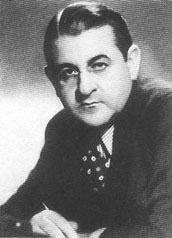 Oscar lines
The famous “Black Eyes” - the first tango of the Oscar line - was written in 1928 to the words of Alexander Perfiliev. At this time, the line, who took up the publication of his own magazine in Riga, broke out an affair with secretary Lenibman, for which he threw his family-the wife of Louise-Angela, daughter of faith and son Eugene-and transferred the magazine publishing house to Paris. Just in 1928, the Argentine Carlos Gardel, founder of the Tango-Pesenie genre, toured Paris in Paris. Perhaps he heard his lines there.
The magazine, however, quickly collapsed, the Libman left the composer, the money was over, and about six months later the Oscar of the lines returned to the home. His wise wife stoically withstood and forgave.
This love story was the impetus for the bright surge in the composer's work. One after another, several songs appeared, which glorified the name of the line. “Blue Eyes”, “My Last Tango”, “When Spring comes again” and the famous tango “Oh, these black eyes”, which soon began to play the whole world.
The colossal success of Strokovsky tango was also facilitated by its very successful interpretation, made by the London pop orchestra leading the popular pop violinist and conductor Marek Weber, the famous HMV (HIS Master's Voice) gramophone recording. The notes Weber received a line from the very line - he came to Germany in connection with the publication of his works in April 1929. On the record came the tango “Black Eyes” and two more Strokovsky foxtrot in the interpretation of Weber: o, my boy! And "Yasha Komer."
World fame to the line came with the help of Peter Leshchenko, whom he considered the best performer of tango “black eyes”. Their friendship began with the arrival of Peter Leshchenko in the Latvian capital in 1930. It was in Riga, with the support of the pianist line, the dancer Pyotr Leshchenko went on stage as a singer.
Leshchenko sang an Oscar’s essays everywhere and released the recordings of his songs at the most famous European studios. The timbre of his voice was very beautiful, singing was extremely expressive and filled with amazing warmth, so the success of the records of the Russian emigrant was fantastic.
Direct speech
“Small stature, red, unusually easy to climb, amorous, he made the impression of a person who is easily given everything. Even in the last years of his life, he could not stand talking about age. “I'm not 80, but two times 40,” he said, ” an article about Oscars the line “ The king composes tango ”.
“He tried to publish everything - from magazines to art classics and boulevard literature. The publications diverged badly, and the non -explicit circulations gathered for years in the wide corridors of his rented apartment. Another thing is musical publications! Here the lines felt the conjuncture, printed his own and other people's works, and the collections were sold out quite quickly, ” - Marina Mikhaylev. "Who is the Oscar of the lines?"
“There was complete silence. No official speeches, no telegrams of condolences. And suddenly, like a thin silver stream, a melody poured - “black eyes” sounded. This was played on the violin Pavel Muller. Then the violin fell silent for a moment and sang again - "Sleep my poor heart." Tears performed before the eyes of their friend who escorted the last path, ” Konstantin Sokolsky about the funeral of Oscar Line .
5 facts about Oscars line
- The Oscar of the lines opened the Barberin restaurant near the Alexander Nevsky Church in Riga, but did not take into account that, according to the laws of that time, the sale of alcohol within a radius of 500 meters from religious structures was prohibited. He suffered huge losses and went to jail for his debts. Being behind bars, he wrote a tango called "Bankrot".
- The Oscar of the lines participated in the work on the music to the movie "Kotovsky", and also starred in this film in the episodic role of the accompanist in the White Guard tavern.
- On June 22, 1975, when an ambulance arrived at the Oscar, he joked, played for the doctor on the piano, signed a record for him. And after a few minutes he died.
- In 2012, the Riga Russian Theater named after M. Chekhov staged a line dedicated to Oscar, the play “Tango between the lines” of the playwright Alexei Shcherbakov.
- Raymond Pauls dedicated to Oscar a line of the song “The king composes tango” (to the verses of M. I. Tanich)
Materials about Oscars string
Marina Mikhaylev. Who is the Oscar of the lines?
Article Oscars line on Wikipedia
Tango "Black Eyes". Pyotr Leshchenko sings