
Translated material
Muscovites are erased by memory
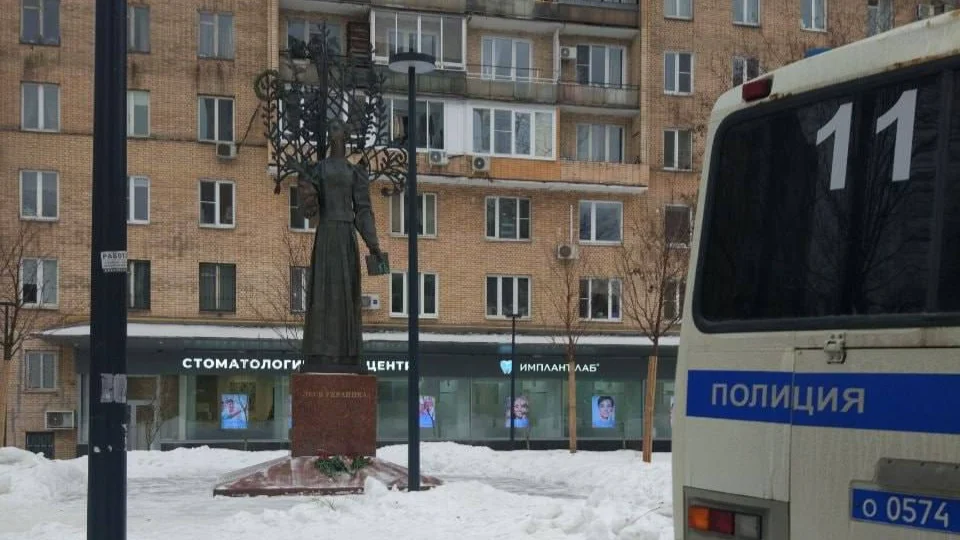
Police delay people carrying flowers to a spontaneous memorial in memory of the dead in the Dnieper. This memorial is forbidden to even take pictures
UPD
According to the ATS-Info, at the monument to Les Ukrain in Moscow, Ekaterina Varenik was detained , who came out with a single picket "Ukraine is not enemies, but brothers." She is being taken to the police department.
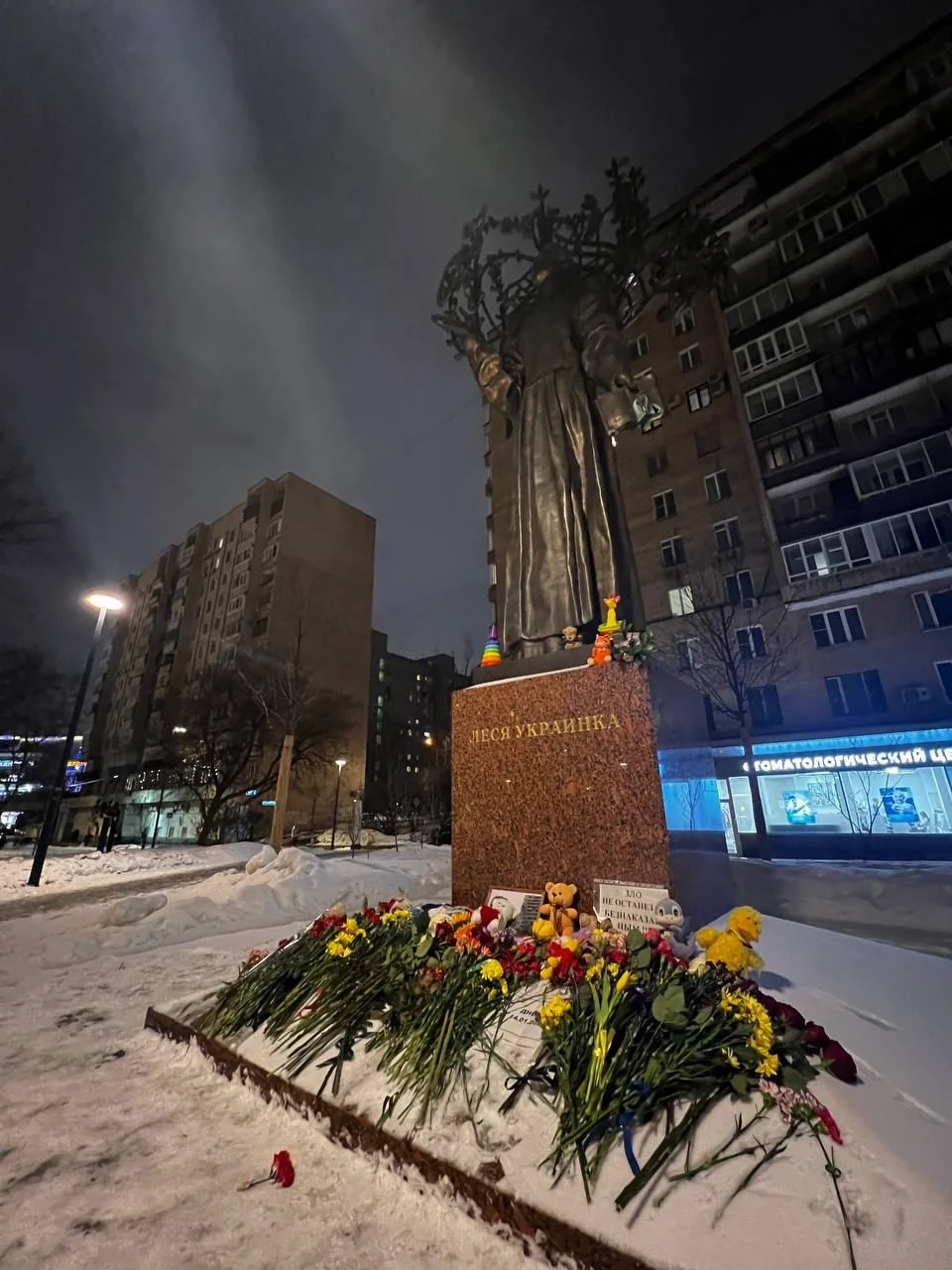
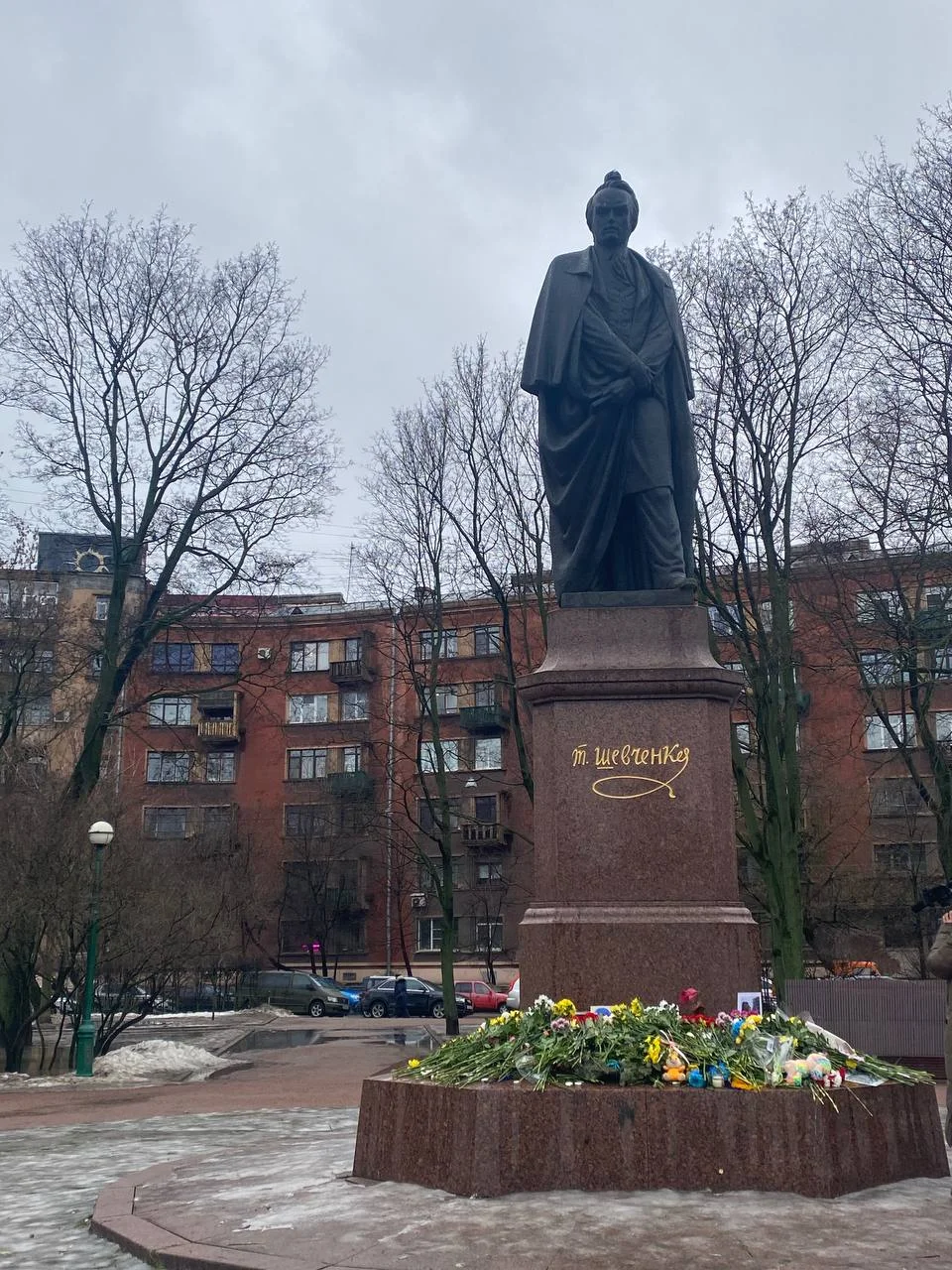
The monument to Lesa Ukrainian on Ukrainian Boulevard in Moscow has been drowning in flowers for a week now.
On January 14, the K-22 missile fell on a multi-storey residential building in the Dnieper, dozens of people were under the rubble. At the moment, 46 people are considered dead, among them six children. 79 people were injured. Some are still considered missing. According to the mayor of the city of Boris Filatov, it is possible that it will not be possible to find the bodies of some dead.
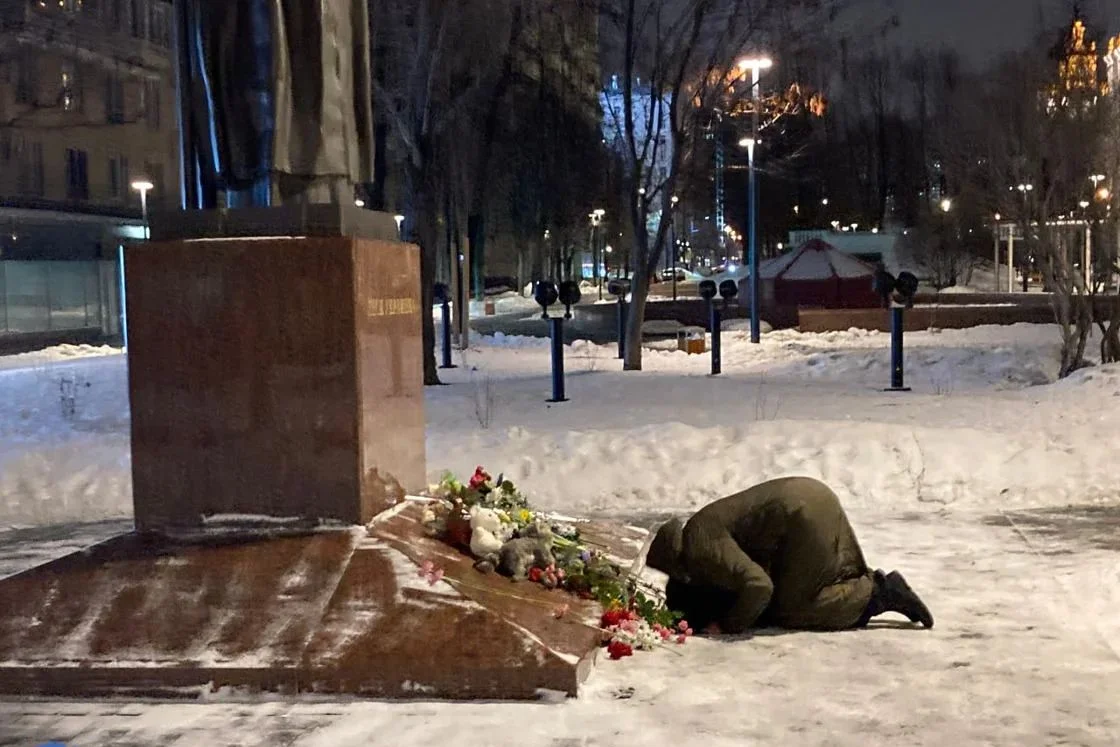
The reaction of Muscovites to the tragedy was not protests and processions - but a silent laying of flowers. On January 16, near the monument to the Ukrainian poetess Les, the first flowers, children's toys and photos of a destroyed house appeared. This attendant, in general, the monument turned into a sign of indifference and human grief.
On the first night, the memorial was liquidated by utilities. The next morning he appeared again - and was again destroyed. Every night, public utilities clean the flowers, trying to erase this memory - but during the day people light candles again and showing the foot of the monuments with cloves.
Representatives of the SERB movement appeared at the monument - they shouted provocative speech. The police pulled up behind Serb. Inspections of documents and the first detentions began. A woman who came to lay flowers with a dog was brought in a car zakak. The mongrel stayed on the street, whined, she was taken to her neighbors.
In the evening of January 20, on Ukrainian Boulevard, deserted and quiet. In the dark, the monument is easy not to notice, but - as an identification mark - literally a meter from it is blinking with lights by a police car. Without leaving her, employees carefully observe everyone who approaches the monument. The laying of flowers in such proximity to them seems anxious and unsafe act. As soon as I stopped next to the monument, the car door opened. I pretended that I was just walking past, and the policeman immediately returned back to the salon, making sure that I was not going to approach the monument.
That same evening, Elena Sannikova, a Soviet political prisoner and current activist, visited the monument. She told me that the police, referring to a kind of resolution, forbids even just photographing a spontaneous memorial - so that there are no “provocations on the Internet”.
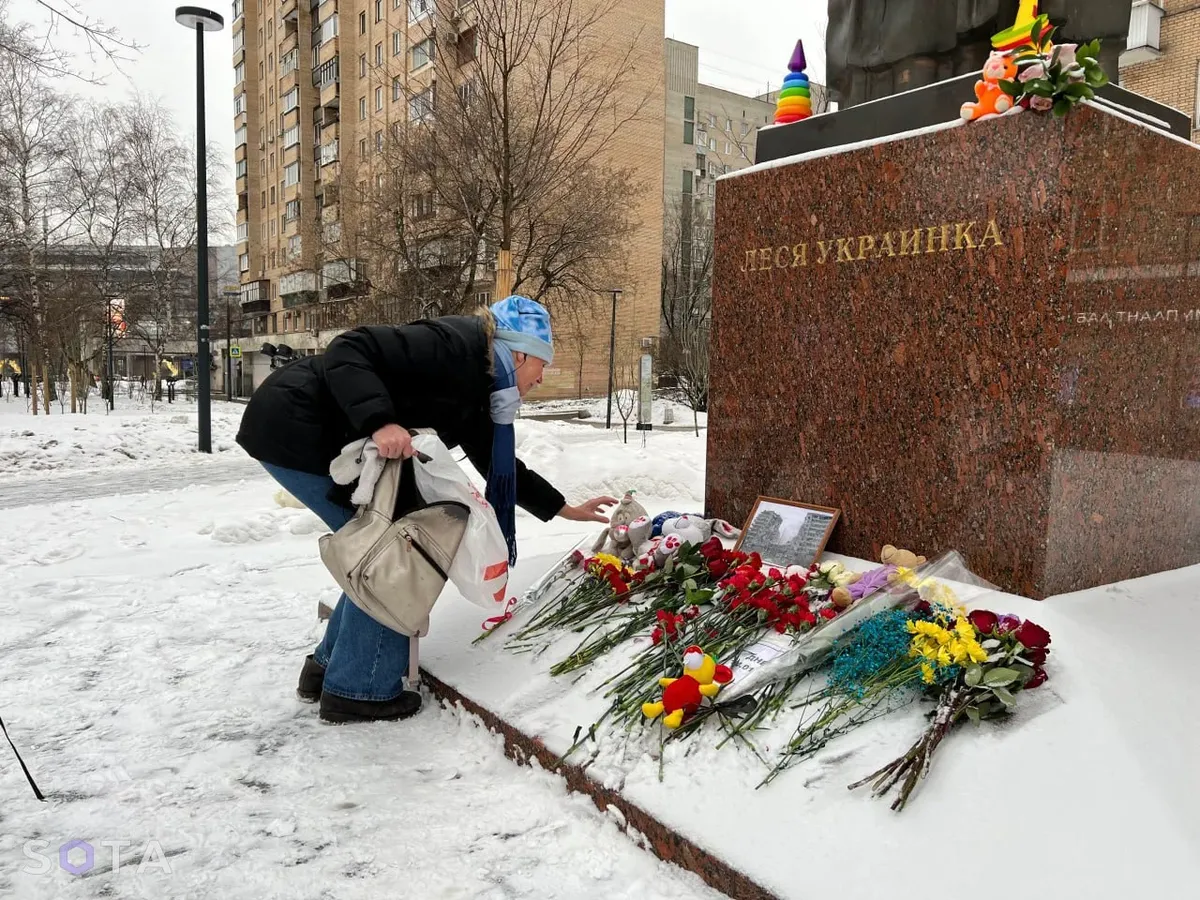
“I came to lay flowers in memory of all those who died in a residential building in the Dnieper, as well as about all those who died in peaceful houses of Ukraine for the whole nightmare,” Elena told me. - brought two roses: white and pink. There were a lot of flowers at the foot of the monument, and also toys, candles, large beautiful apples. Nearby was a police car with flashing lights. Two policemen checked the documents from the girl, examined her press card. I walked past them, laid flowers to the monument, photographed a monument and twice photographed flowers at the foot. Immediately a very young policeman came up and demanded to delete the photos, saying that it was forbidden to photograph here. As if there is such a decree, the order of the authorities. Where is it? He spread his hands: they say, he does not have with him, but it certainly exists. I asked him not to interfere with me, to give a little to stand silently, but he literally stood above his soul. When I was about to leave, he did not let me step: they say, delete the photos. It was not a request, but a demand. And his behavior was not that aggressive, but somehow disgusting. I deleted one photo, he demanded to remove the second.
Meanwhile, another woman came up and began to lay flowers. He immediately told her that it was forbidden to photograph. I asked to somehow reasonably explain this ban, he did not really explain anything: the authorities, they say, ordered that there was no provocation on the Internet ... What provocations?
I began to leave - he is behind me, and the second from the car went to me. I turned to them, looked into my eyes, asked if they had a conscience. I was joined by a girl whose documents they checked when I came. She said that she also demanded to delete photos, although she showed a press card and an editorial task.
That's the question - who creates provocations? They create. Well, they put them here, there is this car with a flasher, well, let them sit, bask. How can you go and interfere with people who came to honor the memory of the dead: children, old people, women, ordinary civilians? Softly say, very ugly when representatives of the authorities behave like that.
After all, this is the initiative of the people. Muscovites found an outlet here. After all, it is simply very difficult in your soul, when you hear about destroyed houses, about the mass death of people, you are aware of the scale of this grief, a nightmare. It is unbearably difficult. And the flowers ... Maybe at least one of the victims will see. "
Elena was released safely and without checking documents. The police even resigned themselves to the fact that she never deleted her second photo.
Monument to Lesa Ukrainian in Moscow is not the only memorial dedicated to the tragedy in the Dnieper. In other cities throughout Russia, similar points of memory disappear, disappear and re -arise. The monument to Taras Shevchenko became such a place in St. Petersburg, Novosibirsk, Krasnodar, Omsk, Yekaterinburg and other cities of the country.