
Translated material
Be Russian, resist death
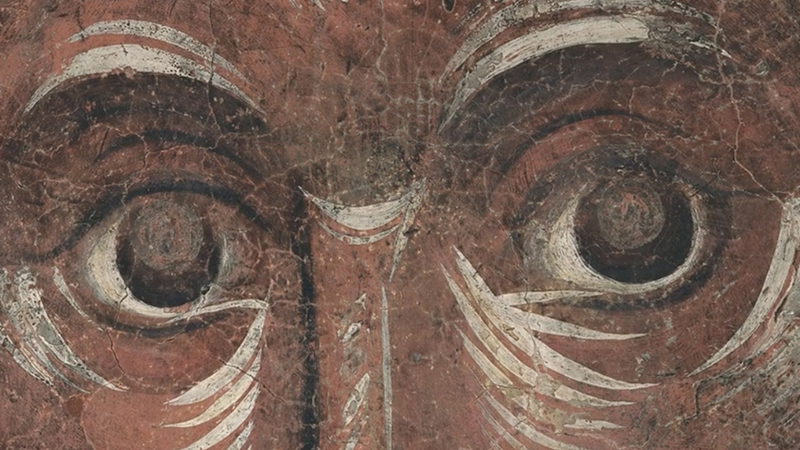
We were lost between the nation and the empire, between Russian and Russian, between Soviet and anti -Soviet. Therefore, on our behalf it is easy to start war, it is easy to cancel us and we ourselves are not averse to canceling ourselves. We have no present, but there are a lot of contradictory past. The Russian future is crushed by the prophets of post -core celestial Russia, Orthodox demon and patriotic clowns of various stripes. What to hope for?
George Ivanov has a well-known poem “It’s good that there is no Russia”, which for some reason Russian nationalists love very much. They wear it on T -shirts, often quote in their blogs. The point, perhaps, is that after the 20th century, after the Bolsheviks and the USSR, old Russia can be approved only through denial. The poetess Irina Odoevtseva, the wife of Ivanova, said that this poem is apophatic: only through the denial of the poet, experiencing the loss of the former world, entirely connected with Russia, can mention him and resurrect him (this is the other well -known poem of Ivanov “and I don’t remember your Russia, and I don’t want to think about it”).
It is difficult to think about the Russian future, when the authorities of the Russian Federation destroy their people live. When on the agenda is an apophatic breakthrough to a certain new Russia through the abundance of Russia existing. The ideologists of this war habitually use the gap between Russian and Russian , by understanding a certain muddy cultural and ethical substance, which allegedly can affect people of any origin and citizenship and continue to fasten all those living in Russia. The initiators of this war, compensating people for their political lawlessness with an increase in the "source" territories, try to spread the allegedly supra -ethnic "Russian project" as far beyond the borders of 1991. A vicious and poorly calculated expansion logic promises to grind what post -Soviet Russia is. The frankness with which the journalist Olga Andreeva expressed how the logic of the boundless “Russian world” was sunk into my soul leads to ordinary subnapital chauvinism that decomposes society.
“In our heads, everyone has the sky Austerlitz, the great culture of the unity of people and God.
And we don’t have to poke our passport or your dirty sheets in the face. In Russia, with its Udmurts and Chuvashs, the normal national feeling is not expressed in the distinction between national supplies, but in their unification.
When a Jew says “we are Jews,” he has in mind the Jews born of a Jewish mother.
But when we say “we are Russians”, we most naturally mean everyone who studied with us at the same school and wrote a graduation work on the role of personality in the history of “ War and Peace ” .
The very idea of tough national distinction was brought to Russia to those nations for which this issue is fundamentally important. Those who live in this national paradigm nourish their culture with it, their personal identification. Most often these are relatively small peoples, which in this way protect their national integrity. But we do not live like that. We are of little interest to us. We are interested in the sky Austerlitz. ”
Easily moving from the “worldwide responsiveness of the Russian soul” to the persecution of the peoples, witnesses to the sky Austerlitz meet with those who seek to reduce the Russian to something homeodod, cleansing it from the imperial and Soviet “multinational”. Then to peasant life, freed from the influence of the West, the Soviet and post -Soviet multicultural city. That to ancient Novgorod, which seems to symbolize the lost path of European democracy. The dream of simple happiness in the finally acquired by the Russian cozy house of the national state was expressed by the eccentric ideologist of the new nationalism Konstantin Krylov. He also put into the concept of “non -Russians” all the fear of labor migrants and many other alleged enemies of the Russian people who had overcome him. Hello to the deceased Konstantin from the Russians, who, escaping from mobilization, use today a visa -free regime and hospitality of many residents of Central Asia.
Such is the optics in which the solution to the problem of large Russia, which is dangerous with all its vast territories between the post -Soviet democoderman and such a jerk of the future, is seen in the creation of a certain fantaside Russia of a small one, that is, through isolation, reduction, and cutting off the excess. The Asian layer is most often superfluous. As if instead of reflecting the complex picture of the life of the peoples and cultures of the era of the empire, the complex relationship of colonialism and modernization of the USSR era, it is better to just get rid of all this as a historical ballast. And the point is not marginal (re) amateur designers of Ingria or some Republic of Chernozemye. The point is the objective fatigue from the cargo of large conflicting stories and territories, in a misunderstanding of what to do with all this next.
The Bolsheviks knew what to do next, they really walked the most difficult roller in the old imperial multinational and created their own Russia, their Russians, their Ukrainians and other “Soviet nations”, hoping to eventually gather them into a single Soviet people. This had a lot of death and destruction, a lot of emasculation and violent overputing. There was a lot of this, which is why we cannot return to any “roots” today. This had its own huge project of the future. That which is now not even close, except for the project of the future Dugin's cosmic nonsense or Okhlobystin screech. That is why the failed communist future still causes so much enthusiasm that a mistakenly seems stupid nostalgia. That is why the most zealous exposure of Bolshevik utopia cause only bewilderment. What did you bring to us, realists? French roll? The road to the temple with a demoniac priest? We have been waging war for 70 years, we were taught that life is a fight? Give 20 calm years and you will not recognize Russia? After the 93rd, we stopped any war and went into private life. Oil in the zero could give us a new social sphere, new science, new industrialization and post -industrialization, but became a fuel of conformal depolitized consumption. Consumerism, leading to the devouring of others and oneself - is another, Pazolinian ghost of death, fascism and self -destruction, already vague in Russian space.
The departure in the 90s and eventually made us, Russians as a community and Russians as a community, powerless before the war, unleashed on our behalf. And then and now. There was time to return home, but there was nowhere to return, and now there is nowhere to go, and there was no home.
To construct Russian, as well as the Tatar, Kalmyk and any other, inevitably will be again - groups with appropriate identities living in Russia. And what will be Russian then, and what will no longer be, what the borders of the Russian will be, what the common Russia will be (or this political space will be called somehow differently)-all this will almost inevitably be decided not in the Kremlin offices, where crafty formulations such as “ Russian language as a state-forming people” are invented, and send a nation that has been sitting in a demographic pit from the 90s , under the fire of a quality modern Artillery, with all their might, bring the country closer to showdowns, redistributions, civil and national confrontations in the spirit of the same 90s , or even worse.
Russian nationalism smells of death. But this does not help us answer the question that the anti -war opposition is tormented - why do men dutifully go to the military registration and enlistment office, even if they do not want to fight? Why is the mother often not against their sons go to war? Is there the same gloomy will to self -destruction?
Perhaps the fact is that in a depolitized society, a man’s connection with the war turns out to be for him the only political connection - the only connection with his homeland, with the country, with the large - the imaginary, necessary community. Everything else is work and family, football and creativity - private life ... And if so, then questions like "How can you not share power and country?!" They really lose their meaning as soon as a person receives a summons. Not understanding how our private interests are related to the interests of society and the country, we do not understand how the interests of the regime differ from the interests of society and the country. Therefore, “to run humiliatingly, they called on is to go” ... All this is our common problem, including those who had the desire and opportunities to escape.
What can be the Russian future? How to cope with the inevitable expansiveness of our history, culture, language and the same obsessive traction to the unattainable "normality"? With the obsession of the past and no less dangerous desire to forget it as soon as possible?
One can only hope that the continuation of Russian life, in addition to experiencing different types of responsibility for the Putin war, will be associated with some simple practices: friendship, love, work, family, good neighborliness ... Practices that can re-build ties, collect a destroyed society. Practices that germinate not from the great history and great culture, which require a large revision, are not from the post -Soviet flawed cult of private life, and, of course, not from the expands of "traditional values". And from the need for survival. From the same need that moves mobilized mothers and wives today, requiring soldiers to return home. Resistance is one of such simple practices - not as an imperative and ethical value, but as a way to survive. To survive not only personally, but also collectively, to defeat the death that the “Russian project” carries, killing and dying today in Ukraine.
And only after that there will be a chance to change our so -called The cultural code, which, contrary to all ideologists of acidic cabbage soup, is basically available for transcoding.