
Translated material
From Afghan to buchi
Alexander Cherkasov and Elena Racheva about the history of Russian war crimes
Sergey Medvedev: Bucha, Irpen, Kherson, Mariupol - these names of Ukrainian cities today sound as a catalog of Russian war crimes. Meanwhile, these crimes are not unique, they have a long history. The war of the USSR in Afghanistan , Russia's war in Chechnya, South Ossetia and Abkhazia, Russia's military operation in Syria were examples of mass murder of civilians. Why are the perpetrators not punished? What are the origins of violence created by the Russian army? With us, Alexander Cherkasov , the former chairman of the Council of the liquidated human rights center "Memorial" , and Elena Racheva , researcher of the Faculty of Sociology of Oxford University.
Video version of the program
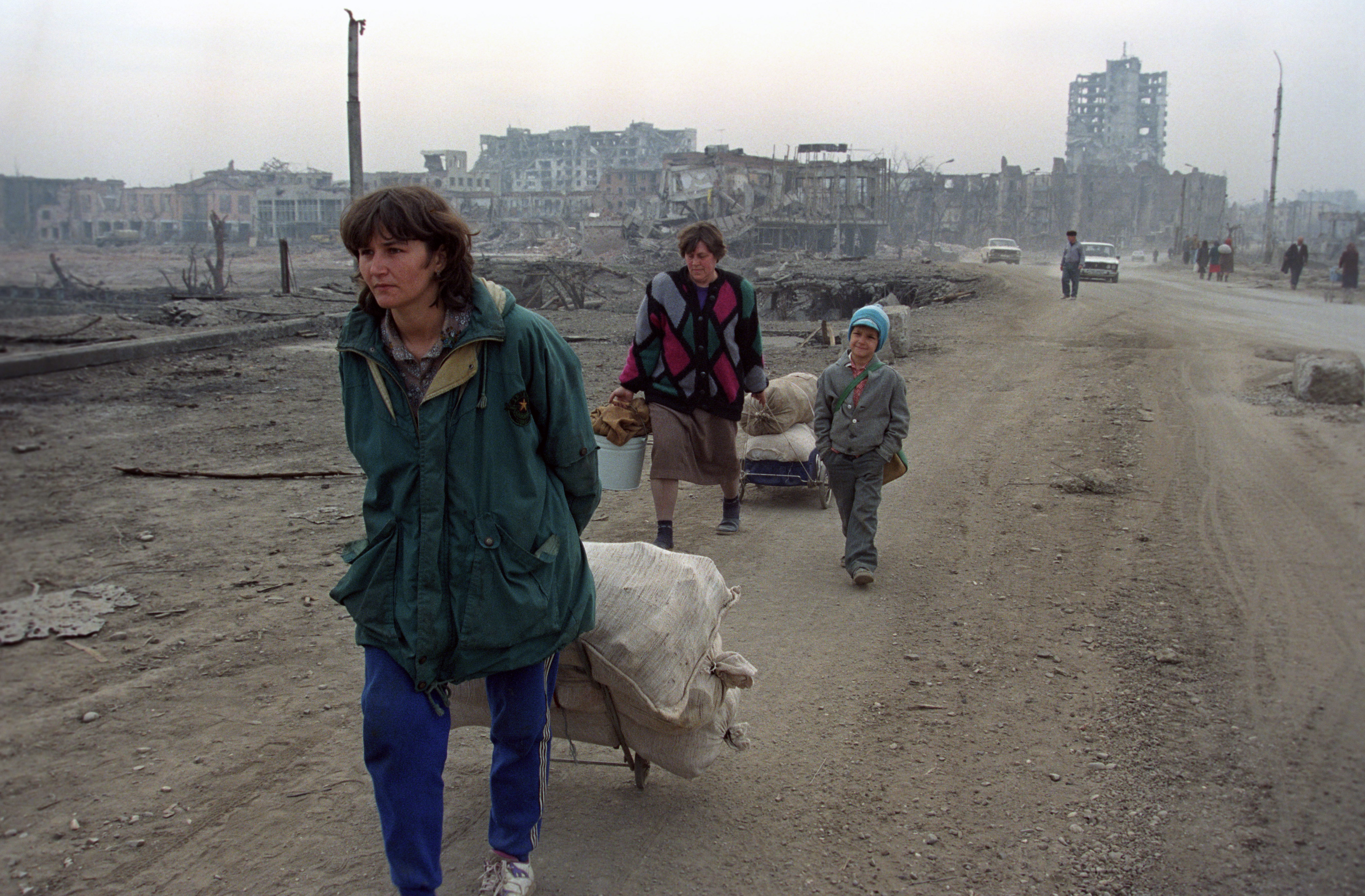
Alexander Cherkasov: The first and second Chechen war , Syria, Ukraine - here we observe the reproduction of the same crimes, the same way of action. At the same time, the prospect is a little distorted now. The first Chechen war was more bloody than the second, twice as many human losses. In total, from 30 to 50 thousand civilians died in the first Chechnya - this is more than the current grades in Ukraine. It’s just that then attention was not focused on this, and it passed by. But the cleansing of the Samashki - a bloody punitive operation, the stripping of new Aldes in 2000 - this is the eve of what we saw in Bucha. A chain of crimes, a chain of wars, a chain of impunity ensures the reproduction of these crimes. The officer corps of all post -Soviet armies consists of those who passed Afghanistan, and beat the "hail" along Grozny, according to Tskhinvali, according to Donetsk - this is all coming from Afghanistan.
Chechen wars, Syria, Ukraine - here we observe the reproduction of the same way of action
Sergey Medvedev: Maybe this is even a continuation of what was in the Second World War?
Alexander Cherkasov: Even before her! The first use of cluster cassette bombs is November 30, 1939 in Helsinki, after which the USSR was expelled from the League of Nations. And photos from Helsinki after those bombing are quite consistent with modern photographs from the Dnieper.
The Soviet Army was preparing for a total war and waged a total war into the Second World War. The assault on cities during the offensive is, in fact, their destruction. They walked in Stalingrad, from where the civilian population was not evacuated, but the battles in Budapest and Berlin were the same. Then, after the war, we again prepared for a total war with the West, with NATO, for the offensive using nuclear weapons, weapons of high power and indiscriminate action. It was for this that they were preparing up to the collapse of the USSR. At the same time, attempts at the army’s reform were drowning, where the accuracy of the use of weapons at least increased and the administration of troops improved. It was not needed. And the first war, in which the Soviet Army massively participated and officers gained their combat experience, this is the Afghan war. It went from Afghanistan: filtering technologies, secret prisons and much more.

Sergey Medvedev: Elena, such a tradition of indistinct use of violence is something laid down in the Soviet and then in the Russian army? Or did all major conflicts showed one or another degree of electoral violence towards civilians?
Elena Racheva: This is a question, on the one hand, of human nature, and on the other, how much the army is regulated, how much the soldiers obey the orders, how much these orders are checked and how these orders look. I was engaged in the consequences of wars in Afghanistan and in Chechnya, interviewed the participants a lot. There are two problems. The first is the absolute dehumanization of the enemy: "In Afghanistan, we fought not with people, but with some wild barbarians, about whom we were not interested in thinking, which we did not perceive equal." On the other hand, this is a complete dehumanization of soldiers. When I interviewed the officers who held great positions, they talked about their soldiers as the same barbarians, with whom we must somehow contact and discipline. There was no value of human life: neither soldiers nor enemy. This clearly gave an effect: people had no restrictions, no framework for either their enemies or their soldiers.
It is difficult to compare with other countries. It seems to me that in Vietnam there was a similar chaos and the absence of any regulations, but at the same time there was a large campaign, where they talked about war crimes. We had nothing like that. And the repetition of such military campaigns can occur endlessly until they are worked out.
There was no value of human life: neither their soldiers nor enemy
Sergey Medvedev: At least a million Afghans were killed! Was this problem discussed?
Elena Racheva: I have not met anything! They write about the reasons for the war, about Afghan politics, but there is nothing dedicated to the Afghan people. And during the interview, I heard about some common mass of Afghans, but not about specific people. There was no feeling that there was such and such a person, I remember him, he had such a fate: for example, he helped us, was our translator. There is no feeling that we are fighting with living people: we are fighting with a certain mass that does not break up on personality. I traveled a lot of museums in the Afghan war in Russia, and everywhere about the same exposition: it is dedicated to weapons, battles who died in a particular region, and then Burka, a female robe, some two landscapes of the Afghan desert, and that’s all. The feeling that we are fighting with some exotic people who dress differently and live in a strange landscape, and that they are people - this was not the case.
Sergey Medvedev: Here is some kind of monstrous colonial optics of absolute disconnection of these people.
Elena Racheva: Also, the information background was committed by another. There was a common narrative that we are helping the Afghan people: we are building roads and schools, we bring food. I don’t know how part of the Soviet population believed in this, but I think quite significant. The people whom I interviewed told me that, going to this war in the early years, they did not understand at all that they were waiting there. They really thought that they would build roads in some distant exotic country, where you can still buy Western things cheaply. A few years later, when the first texts began to appear in the newspapers that coffins are returning, that a giant amount of money was spent a month on a war in Afghanistan, then people began to understand what was happening there, and the attitude towards the soldiers who fought there also began to change.
Sergey Medvedev: And do the Afghans veterans have no injury because of the murders of civilians?
I can’t imagine how people who have committed all this in Buch will live with it
Elena Racheva: This is a difficult question. People who did not see the enemy were mortars or drivers, were injured much less than those who directly contacted the enemy. I still remember the story of a beautiful man who fought in Afghanistan, and then in five more wars. He walked in some village and saw a hut. He was sure that the enemy was hiding there, threw a grenade, and then went there. And it turned out that there was not an enemy, but a woman with five children. All of them were killed. He still remembers this picture. And, apparently, in many ways he built his whole subsequent life, having this scene before his eyes. I can’t imagine how people who have done all this in Buch will live with it. The volume of this injury will be even larger.
Alexander Cherkasov: On the Second Chechen War, we have well documented. In Russia, there was a total impunity of these crimes: only four court decisions were about four thousand violent disappearances. But at the same time, there are several hundred decisions of Strasbourg, which make it possible to name these crimes widespread and systematic practice, to argue that these are crimes against humanity that have no statute of limitations.
Sergey Medvedev: Journalist Arkady Babchenko discusses the war crimes of Russia.
Arkady Babchenko: Three quarters of the country lives according to the Auie law. Almost all youngsters now have AUE tattoos on the wrist. What could be expected from this country when it comes to the neighboring one?! The most important entertainment is to kill the next area, and then they gave you a gun and a tank, and said: "Go and kill the Ukrainians." This is just happiness for them!
Wherever Russia comes, it arranges genocide. She always wages all wars along the same pattern. From a million to two million people were killed in Afghanistan, because they came, demolished the village, and entered the ruins. With Soledar, Bakhmut, Wandering, Raisins, the same thing happens. They kill everyone to the right and left, everyone demolishes, and then they say: "We occupied Soledar." Soledar, Makeevka, Volnovachi no longer. In the same way, they occupied the formidable, he was just demolished. Ukraine still has an army, tanks, aircraft and 40 million people, and the Chechens had only Kalashnikov assault rifles. Russia did everything I wanted there.
Three quarters of the country lives according to the Auie law - what can you expect from this country when it comes to the neighboring one?!
Sergey Medvedev: Lena, is the mechanics of violence the mechanic itself? Is this what people do on Earth, or is there an order, or is it not discussed at all?
Elena Racheva: Based on my interviews, I would think that the last one. People remain in an absolute vacuum, legal, team, and they are given to do everything they want. You can steal, looting, kill. If you do not see a person in the enemy and there is no commander who gives clear orders nearby, then anything you want is allowed.
I had an amazing conversation with an officer who fought both in the first and second Chechen war. He explained how much harder it was to work in the second, because in the first rags fought, and in the second - contractors, for money, a certain number of hours with a certain vacation, then they left, and it was impossible to force them to do anything. And when the rafts fought, at first they had no motivation at all, but after the first murdered soldier they told them: "Here, the enemy killed your comrade." And then these people, blinded by hatred and fear, did everything they told them because they had motivation. Based on this, I can conclude that if you take revenge, if you do not believe in abstract fascism in Ukraine, but you see people who died next to you, then you can go to any war crimes, because you are blinded.
Sergey Medvedev: Sasha, is there an understanding who makes up the main array of people who create all these crimes - shoots, shoots direct guidance on the entrances of residential buildings? Are there any parts that are most different?
Alexander Cherkasov: This must be considered separately in each case. Samashki in 1995 was protected not by conscripts, but by special forces of the Ministry of Internal Affairs and internal troops. In 1999, General Troshev’s troops advanced from the east in Chechnya, and they have one way of action, primarily negotiating, and on the other hand, General Shamanov’s troops, and here, primarily massive indignant violence, the planning of operations so that the civilian population does not spare. For example, an operation in the village of Katar-Yurt in early February 2000: in the village, where there were residents, refugees, they specially launched militants, then closed the ring and began to grind all this with bombs and missiles.
These are crimes against humanity that have no statute of limitations
In general, discipline within some part is the work of her command. But besides diffuse violence, there are frankly criminal practices that are not conducted by contractors and not conscripts. Here is such a famous Igor Strelkov, who from 1999 to 2005 as an FSB officer coordinated the abduction and disappearance of people in Chechnya. This is what the Kadyrovites are now doing, and this cruelty cannot be attributed to costs. This is a cold -blooded criminal practice of structures, which are organized criminal communities. This is the coordination of the actions of the FSB, GRU. In the case of laid, after all, there is not chaos, there are allocated groups for detention, groups for the maintenance of detainees, groups that are torture. And such a crazy system acts, and the investigation covers it, stopping any possibilities of investigating such crimes.
Of course, the mood and method of action of some riot police is important. But more importantly - the installation from above, generals who are not punished for their crimes. Shamanov had to be judged, and Strasbourg directly spoke about this, but he received a promotion, but there was no trial. And most importantly - Strasbourg then indicated that it was necessary to change the charters, instructions and the training system in military academies in order to exclude the repetition of crimes. Nothing was changed. In the same military academies, Syrian officers were also trained, so Aleppo is so similar to Grozny. Moreover, people involved in crimes, then became teachers and chiefs of military academies!
Sergey Medvedev: Recall the same General Surovikin, who transferred his criminal practices from Syria to Ukraine, was appointed for this.
Sergey Medvedev: says the writer-documentary player Polina Zherebtsova .
Polina Zherebtsova: For ten years since the beginning of the Chechen war, I kept diaries. It was monstrous! Dirty propaganda on both sides, bombing, hunger, cold and poverty. In Chechnya, three years before the start of the war, pensions, benefits and salary disappeared. People were starving, enduring the last, engaged in Barter. But to this, bombing, missile strikes and stripping were added, the Russian military grabbed civilians. In our area, a Russian civilian, Chechens and Ingush was shot: "so that there was an international", as the military joked. The civilians were terribly injured, subjected to violence, murders, meaningless executions. The family in the neighborhood shot a Russian man, a large father, only because he did not shave his beard. "If you have a beard, then you are an action movie!" - the Russian military told him.
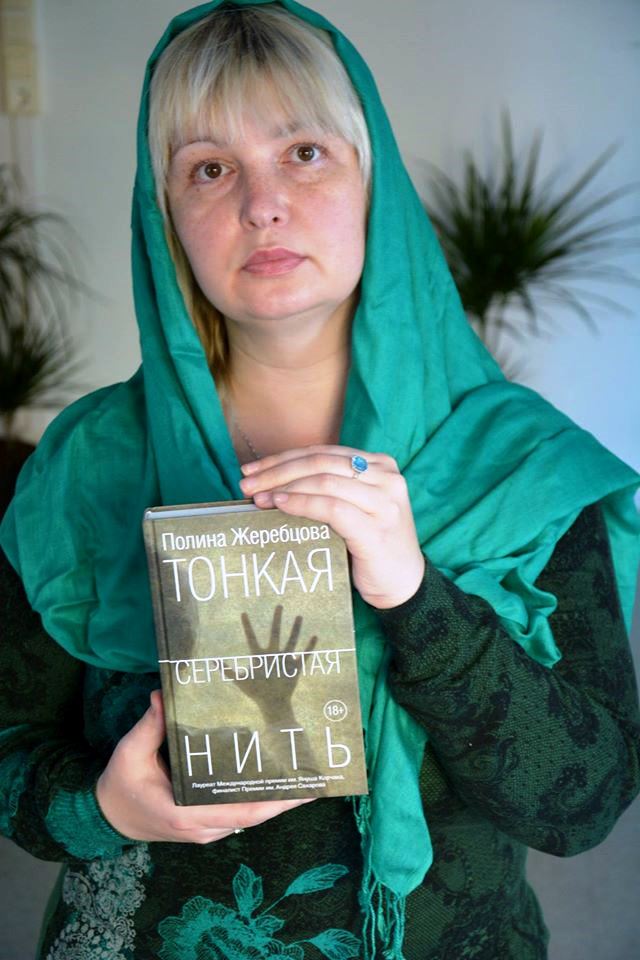
Sergey Medvedev: Polina's diaries "Ant in a glass bank" are clearly imposed on the picture of what is happening in Ukraine. 20 years ago, literally the same thing happened - shooting at the entrances, littered residents in separate entrances, executions, a continuous ten -year practice of violence. Sasha, can we say that the Chechen lessons have not been learned by Russian society at all?
Alexander Cherkasov: Here is the story that we studied. The terrifying video recording of 2017, when in Syria people who speak Russian and do not very hide their faces clog a person with sledgehammers, dissect and burn.
Sergey Medvedev: This is the famous "Wagner" execution of the Syrian.
The system acts, and the investigation covers it, stopping any possibilities of investigating crimes
Alexander Cherkasov: "Memorial" tried to achieve the punishment of the perpetrators. They submitted documents to the Main Investigative Department with the requirement to conduct an audit and initiate a criminal case. They tried to pretend that this was not for a long time. Then we appealed to the Basmanny Court with a complaint about inaction. After the appeal, cassation instances confirmed that this is not even a refusal to initiate a criminal case based on the results of the audit, but a refusal to conduct an audit: "There is nothing like that, we will not check." This is a very terrible, unthinkable lawlessness! But in the same way, the refusals to conduct inspections and the initiation of criminal cases were in the first Chechnya. And it turns out that the beginning of the 90s, the story of such a happy democratic time is much more monstrous than we could imagine.
Elena Racheva: Of those people with whom I spoke, no one realizes what they did. Before that, I talked with people who were in the Gulag guards, prison chiefs, doctors. And there the same thing: people lived their lives, survived until 70-90 years, survived the collapse of the USSR, began to live in a new state and made no conclusions. After all, if you participated in something like that, saw routine violence around you, if you normalized it, you cannot get out of this violence without the collapse of your own personality. Neither the former guards of the Gulag, nor former war veterans, because for them this would mean a complete revision of their own identity and the decay of all that they believed in. In this sense, they are interested in never doing this work.
Will their state make this work? If there is another state with other values, with the greater value of the human person, with a greater Nuremberg process and the investigation of these crimes, then it may happen. Without such a movement from above, nothing will change.