
Translated material
Fear
“House on the Embankment” and his other books by Trifonov wrote from nature, and in nature there were his life, heaviness in his soul, pain in his heart, a feeling of misfortune and what he himself called “spiritual nausea”
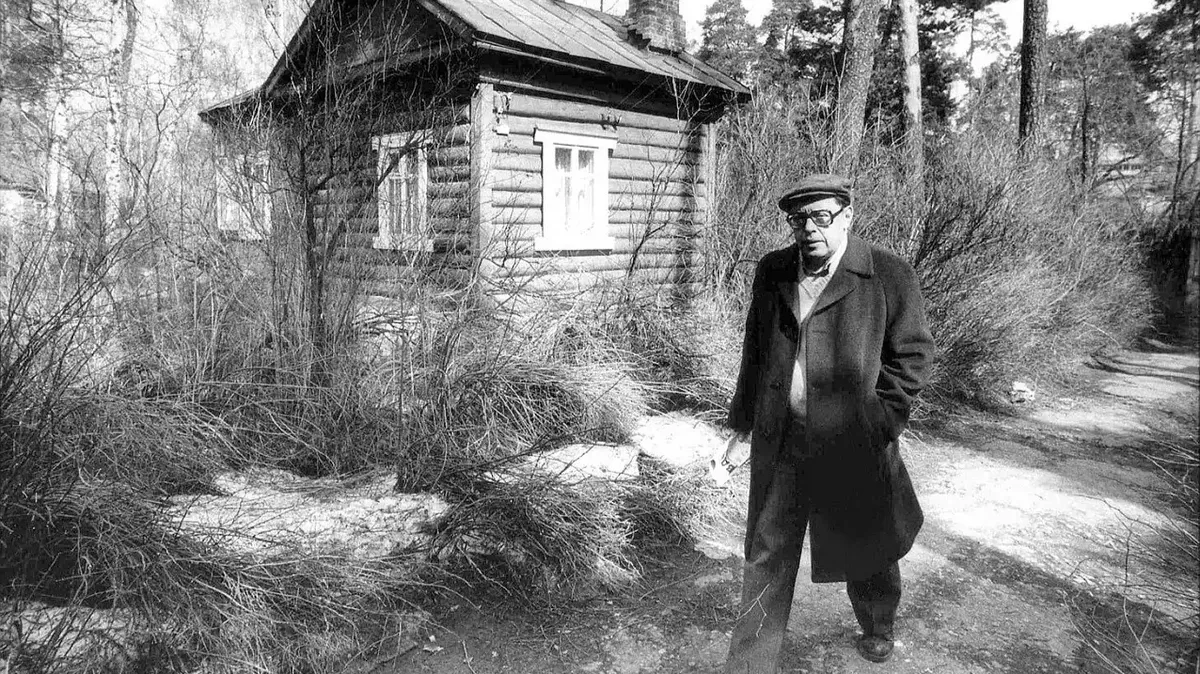
“Today my mother woke me up and said:
- Yura! Get up, I have to tell you something.
I wiped my eyes.
Anya got out of bed.
“Last night,” Mom began in a trembling voice, “we had a great misfortune, Dad was arrested,“ and almost cried. ”
We were in a dullness ...
I have no doubt that dad will be released, dad is the most honest person ...
Today I have the most terrible day ... "
So the boy Yura Trifonov wrote in his diary on June 22, 1937.
And after eight months, on April 3, 1938, he wrote down:
“Tonight came from N.K.V.D. And they took the mother. We were woke up. Mom kept cheerfully and left in the morning. Today I did not go to school. We were alone with my grandmother, Anya and Undi ...
On the 7th let's go with Anya to find out what kind of prison is mom. Misfortune…"
What he did not say in this diary entry - the fact that when he and his sister, crying, ran out of her mother in the stairwell, his mother said to them: "Whatever happens, do not lose a sense of humor." And left for eight years.
The boy Yura began another life.
April 24, 1938
“In a small room there was a man of 20 people. About 30 min. We waited for the window. All faces are sad, sad, tearful. Soon the window opened, and I got in line. When my turn came up, I showed the warrant - 1861 and my student ticket. I was told that Mamul in Butyrka prison: obviously, she was arrested in the case of the pope, since he is also in Butyrki. On the 11th I will go to transfer money to both dad and mom. ”"Now I read the" war and the world "of Tolstoy."
"Oh-ho-hoa !!! Handra attacked me !!!
Mom aaaaaaa !!!! aa !! I flood for ... .. "
“Now, when the elevator door slaves, I’m cringing and waiting for the call, behind which the door will open, and the agent N.K.V. will enter.”
A thirteen -year -old boy, he stood in an endless queue in front of the window of the reception room on the Kuznetsk bridge and in front of the windows of prisons. He saw the pale tearful faces of people in queues, found out, having arrived at four that they were accepting the money up to two, patiently arrived again, heard at school from the last lessons, traveled, traveled.
I was looking for my father in Moscow prisons. There was no father in Butyrki, in the “sailor silence” a person with an “amazingly unpleasant physiognomy” refused to give information because there was no preliminary record. “Come on May 21, sign up, and in a month you get an answer.” I traveled in prisons, from one to the other, on the subway and on trams, I was in the May heat in a coat, sweated and tormented from stuffiness. And the father was shot in March.
He was looking for his mother in Butyrki, again stood in line to the window, looked at the bewildered, embittered, “blurred with tears”, miserable faces. I went again with transfers around Moscow in the heat and stuffiness. "Drank kvass for 10 kopecks." Each time, passing in the corridor past the mailbox, he put his hand into him. But there was nothing there.
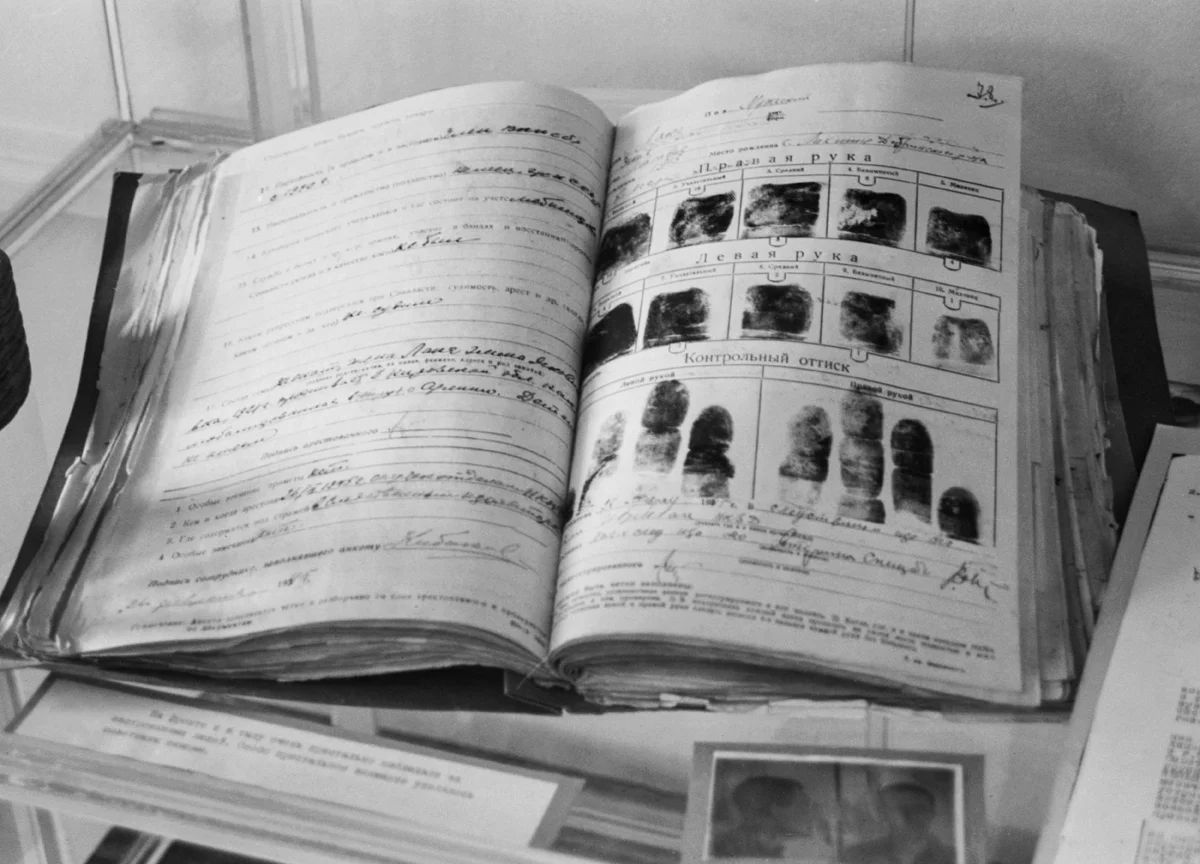
June 20, 1938
“On the same day, my grandmother arrived and brought my mother’s letter, she was wrapped in some kind of piece of paper. Mommy wrote that she drives up to Sverdlovsk, tells not to lose heart and not to worry about herself. The letters are barely visible, the letter is written on a small piece of paper. On the side of the postscript: “Comrades, who will find this piece of paper, let him send at the address: Moscow 72, st. Serafimovich, d. 2, apt. 137. Yuri Trifonov. "And on the envelope the inscription by children's handwriting.
“We found this piece of paper on the Mountain crossing. Sverdlovsk. "
Good guys. Poor Mommy, and so I feel sorry for her. "
He was teased in the courtyard, saying that his father shot the dogs, but now he would not shoot, he was sitting in prison. “Yurochka freaks out, all in his father. Dad is sitting behind the grille! ” They brought to tears, this gave them pleasure. He forced himself not to cry in sight, fought with them.
There was a diary - only he could tell himself. But even here it was not possible to hide.
November 2, 1938
"Writer! - With contempt, the grandmother, whom he called “Babishka” told him with contempt. - Writer! "November 15, 1938
“I walked and thought that Ganka, the rooster and Vovka, have, they all have mothers who care about them, but I don’t have it.”
Life collapsed - a solid, kind, warm life with dad and mom, in a large government house, imperiously rising above the surrounding alleys and hibars, in a house where the watchmen in caps, life with a nanny and home schooling of foreign languages. She collapsed overnight, collapsed with pain and blood, collapsed inexplicably for a boy of thirteen years old, but not only for him.
Thousands, millions of people could not explain what happened and why they were judged on the demonstration processes of the old Bolsheviks, and they admitted everything, and why people who were the heroes of the revolution and the creators of the Soviet state disappeared yesterday. That was Trifonov’s father.
He and his grandmother and sister were evicted from the government of the government, from his native four -room apartment on the fifth floor to the room in the communal apartment. "Those who leave this house cease to exist." But he did not stop. Throw out of happiness, thrown out of childhood, outstretched from cute warmth into an unacceptable life, he carried questions: “For what? How, what is the reason? Why?"
These questions lay in it with a heavy load - heavy not only because there were no answers to them, but also because it was forbidden to look for answers. It was dangerous to push the front, party picture of history-Oleography with the triple profile of Marx-Lenin-Stalin-and look into the opened gap. There, in the dark, smelling damp of the cellar, the gaps of the faces of the faces of the people crossed out of history, and among them, a silent black -haired man in round glasses, his father, vaguely glided.
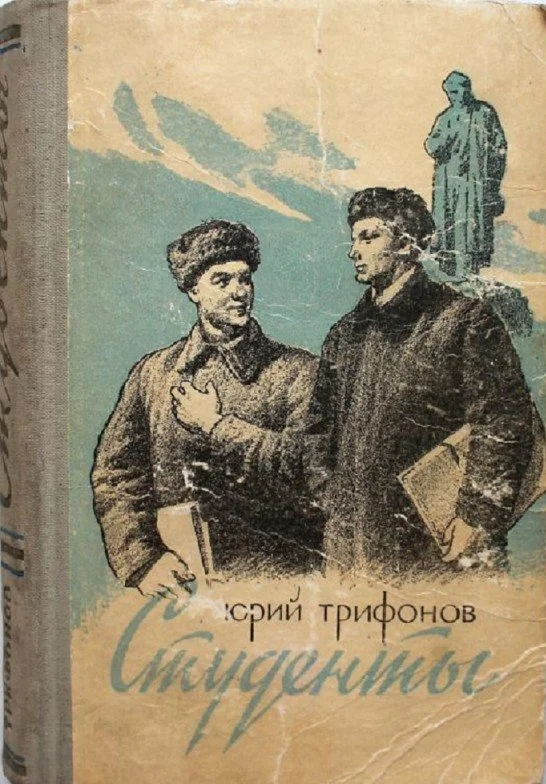
In the first novel of Trifonov, “Students” are Moscow, there are its streets, lanes and metro, there is a gray house, which he will then call the house on the embankment.
The protagonist Vadim Belov during the war serves in the fire team of the Leninsky district, on duty on the roofs - like Trifonov himself. Mom Vadim, Vera Sergeevna, a livestock specialist, just like Trifonova's mother. Evacuation - to Tashkent, as it was with him. In Tashkent, “Toske Tomila is relentlessly. And there were no letters from the father. And in March there was a notice that the father died. "
He wrote - "In March." He knew that his father was shot - in March. Where did he clean his secret knowledge about his father when he wrote this “correct” romance stricled according to the given patterns?
He was not in the war, they did not take to a military school (in vision, and the questionnaire did not fit), so he said about the war in his first novel in the passage of the Soviet newspaper.
He wrote about the “spectacular, unclean air” of abroad and about what he could not see, but what had to be written: “Under Pilzen, he saw how four American soldiers beat a huge old black shower, and two officers were at a distance and looked with interest.” And he also wrote that "the highest manifestation of human genius, it seemed to him, was the genius of leaders, the ability to inspire people to a high goal and lead behind themselves."
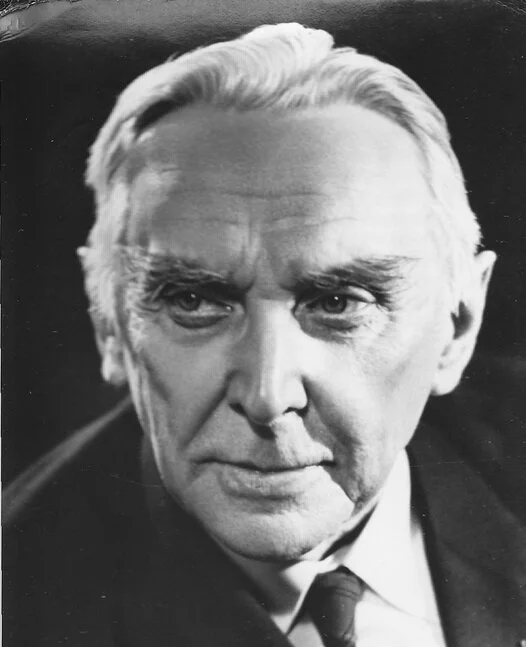
The young writer Trifonov was protected, promoted by his first secretary of the Union of Writers Fedin. At the Literary Institute, he studied at his seminar. Fedin, without reading, recommended the novel “Students” by Twardowski, he printed in the “New World”. The novel was nominated at the Stalin Prize. Did Stalin read the phrase about the “genius of the leaders”, was it written for him and about him? Stalin asked: "Is that Trifonov a son?" “The one that he knew in the Turukhan exile and whom he ordered to kill,” and, having received an affirmative answer, with a pencil corrected the second degree premium to the third degree.
What power, case or intrigue threw up the first novel by Trifonov - we do not know. On the one hand, he was ashamed of this socialist realistic, written by the wooden language of the novel and asked his acquaintances not to read, and on the other hand, without the slightest shame, he talked about his victorious procession into Soviet literature with this novel.
It was a duality inherent in him, but not only to him - the duality of the whole Soviet life, where they wrote one, thought the other, said one thing, did another, published one thing, and read samizdat.
It is amazing that the graduate of the Literary Institute, where Soviet writers were grown incubatorly, wrote a condo book in twenty printed sheets and received a bonus and all -Union glory for it, and the fact that he turned his back to his success and went the other way. He could rivet such bricks one after another - he conceived after the “students” of “graduate students” - but could not. This happened not in a year and not in two, but a long, slow immersion in himself, during which he lit up, not knowing how and about writing, and sitting without money, and experiencing a family tragedy (his wife died), and immersed himself in depression, and wrote sports reports, but here he was successful in advance, that is, he entered the narrow circle of people who were sent abroad to the border Tournaments.
There is no literature without a thought of death. In Zvenigorod, in a quiet day, he looked at the sky, at the trees and - twenty -twenty -year -old - thought about death. “That's how it would die - decorously and benevolent, with this incredible, spilled everywhere in the soul - how nature dies!”
Every year he went deeper there, into the darkness of the forbidden past, where not only people disappeared, but "entire nests, tribes with their life, conversation, games, music, and their daughter cannot be found." He led his private research, meeting with the old people who made a revolution, who knew Stalin and his father. I wrote in the diary what they told him, but changed his last name - caution above all! - Because he could not exclude that his diary would fall into strangers - whose hands are known and will serve as evidence. And not only caution, but also fear, the very fear that was sitting in every Soviet man, from Marshal to the janitor, driven into the subcortex, pressed into the genes of "completely insignificant, blind, formless, as a creature born in a dark underground, is a fear of unknown, to do contrast, to stand contrary." What is unknown? No, it was very known what - but it was impossible to say about it.
It was impossible to say anything about what he wanted to say, what he was thinking intensely and persistently for decades, decades of archives and extracts, oral stories of the elderly and reading provincial newspapers from the time of the revolution, decades of persistent trip through the dark, abandoned labyrinth of history, in which he wandered, like Digger, with his own, personal lantern. The novels began and for a long time lay in the desk. In these searches of the departed and wandering on the catacombs of the past, he developed his own way - a way to talk about what it is impossible, it is forbidden to talk. “The writer’s task is to tell about what is outside the book” (Diary 1973). But for such a writer you need a reader who understands that it is outside - unnecessary, but existing, silent, but most important. “The reader must try not only what the book tells about, but also what it wants to express.”
He had such a reader - the Soviet intelligentsia, who knew how to read between the lines and see what is behind the pages.
He wrote about them and knew them, he knew how only relatives and relatives could be known, to the pain of relatives, to the longing of relatives, - he knew their life in close apartments with gatherings in the kitchens, knew the imported Czechoslovak ottoman, the subject of envy of the neighbors, and prestigious Bulgarian cups, knew intrigues when a person was invited to the celebration of the New Year, not because they were good with him, because they were good at him, because they were interested in him, for he works in Centerkino, and a request for the film was filed there, he knew engineers who, during the lunchtime, driving chess blitz in his design bureaus, knew all this life with carpets and televisions, with an early view of the “Time” program, with a shortage of shortage, when everything was with a shortage, with the shops “Diet” and “synthetics”, with a dream of a cooperative apartment and a dream of a cooperative apartment and a cooperative apartment The car, knew the great value of connections with the right people - this was called "blat" - helping to buy a white turtleneck in GUM, with an overpayment.
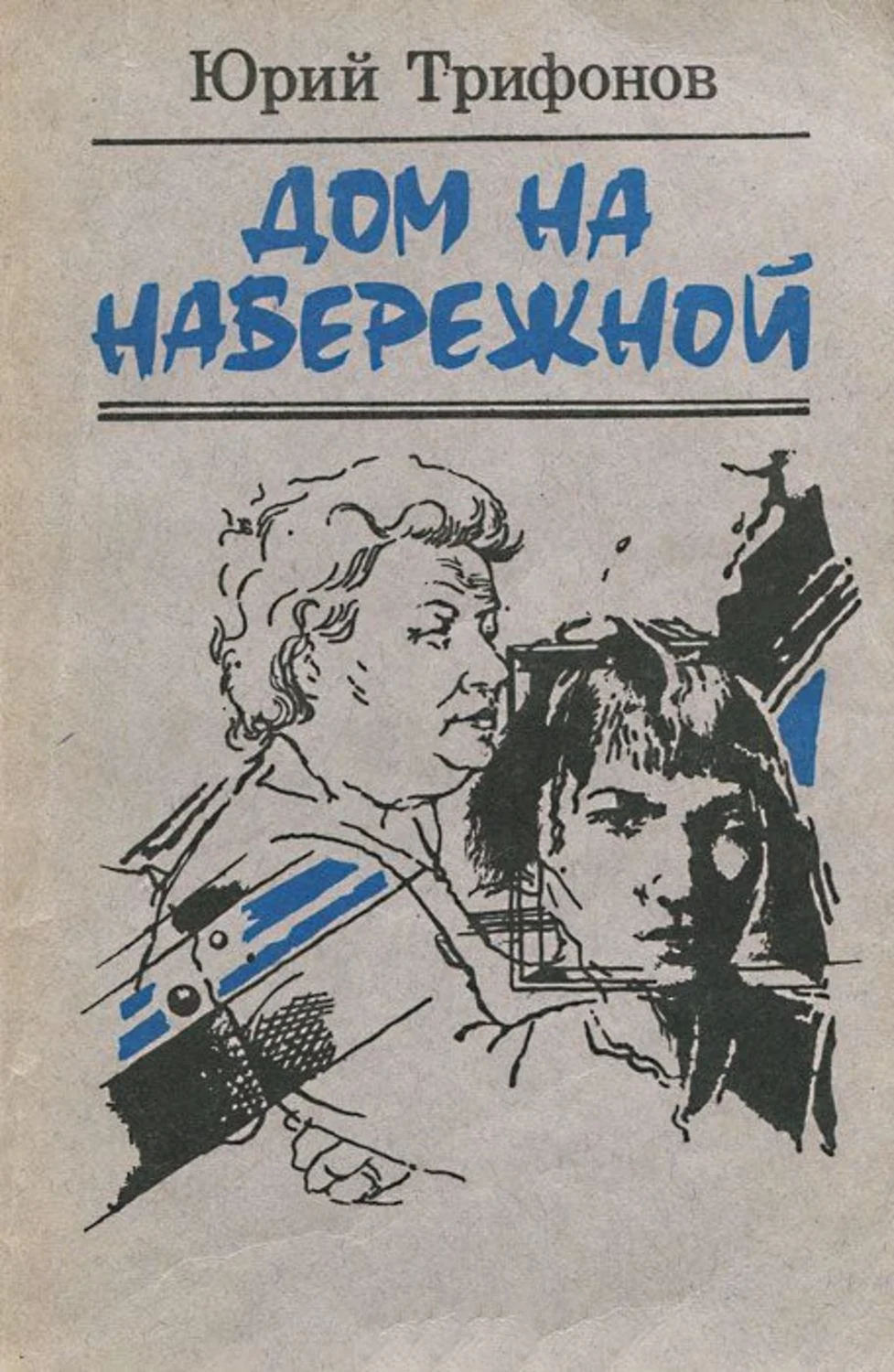
In the “House on the Embankment”, the father of the protagonist, Glebov, repeated him, taught him: “Do not lean out! Caution!" And you will be careful if from childhood you know how people are taken away at night. And in the letters of Trifonov, which he wrote to his mother in the camp, the NKVD exhausted the most harmless words, suspecting something that the normal mind could not understand. So - caution in a word, in behavior, in a letter, in everything.
Trifonov played all Soviet games, was neither a refuser, nor anchorem, nor a dissident. He distinguished even the "special writer's smell of well -being."
They offer to speak at a meeting on the issues of the Soviet historical and revolutionary novel - acts. It is necessary to go to Tallinn for the All-Union meeting of writers (what do the writers need to confer among themselves, and for some reason in Tallinn?)-goes. If he rests in Dubulti, then in the House of Creativity. It is found with a woman who will become his third wife in Berlin (she is also in a foreign exchange) is something unthinkable for ordinary Soviet life, where all are completely non -traveling. He goes to Venice, to Congress dedicated to Tolstoy (there is nowhere to talk about Tolstoy - only in Venice). He was included in the composition of the delegations of the Union of Writers - along with his future wife. He was in America, in Denmark, in the Czech Republic traveled for two weeks to small towns. In the "House on the Embankment" he gives a trip to Paris, to the Congress of essays, Glebov - a scoundrel.
Immersed to understand others, who knew his soul in the smallest detail, he, of course, also knew the price in himself. “The artist and deeds are muck, it is plebeian,” says Susanna in the novel “Time and Place”.
When the question of the publication of the novel “The Old Man” was resolved - and the case was delayed, stretched for days - he sat by the window, looked out the window, knocked his foot monotonously, waited. He lived inside Soviet literature, to be outside - in Samizdat, in Tamizdat - he could not, did not want to. Write to the table? Not for him, from the young, Litinostsky years, the "dazzling dream of printing" owned. “Do not sleep all night ... wait for the decision of fate” (the words of his wife).
Lived inside the system, loyal to the system, inscribed in it. After all, what is dissidentity? The rejection of life, what it is. But there is no other thing.
But inside he knew the price of what he lived in. “However, this corpse will rot for a long time” (this is about the USSR, so he wrote in the diary in the last year of his life). And precisely because he lived inside the system, he knew its window and a hole, rose along its steps - that is why he knew a feature that cannot be crossed. They called to the non -certificate almanac "Metropol" - refused.
I did not want to choose between the plus and the minus, black and white, I wanted to go through a narrow way between opposites - my own way. And nothing to lose at the same time. "And I want to live here, print here and write what I want."
In St. Petersburg, his grandmother was hiding in the pre -revolutionary underground Bolshevik with the party nickname “Comrade Vasily” - Stalin. He modestly refused dinners, ate bread and beer. Then the grandmother sent money to Stalin to exile - he asked very much to help him, with tears he prayed to save from cold and hunger. He asked him to send him old underwear - cold, frost - she bought everything new for him and sent it. "I do not know how to repay you, dear, dear-big." He paid off in 1937-he sent her son and daughter to the camps, killed her daughter’s husband, and the “dear and sweet” itself, along with two children, evicted from the house on the embankment. Or we are not so interpreted by his actions, and he repaid in 1951, when, looking at the lists of the prize presented to the Stalin Prize, he did not delete Trifonov, did not flock like a fly, a young writer.
If the world is divided into truth and lies, we and them, into the allowed rubbish and unresolved revelation, then "it is better to be a syphilitic than the laureate of the Stalin Prize." So his friend Fedorov told Trifonov, when Stalin was no longer there, and the money of that prize has long disappeared. What did Trifonov answer? We do not know, this is not written anywhere, but most likely nothing. It is too sharply, posterously said, but
He was a man leaving deep into the depths of history, in the depths of the time, but first of all - into the depths of himself, his memory, which he called - Samosud. And self -shield.
Since childhood, there was a writer’s instinct in it - to record, analyze, keep diaries and notebooks. He wrote thoughts and observations in thick notebooks in oilcloth covers, and at first his prose is in thin school notebooks in a cell, and then on separate sheets of paper. It is amazing how much he did and how, having overcome the crisis of life, finding the intonation, taking the not a note, but the topic - one after another he betrayed novels and novels; And it is not surprising - you can’t think about it if you write your whole life as a wound - his thought of the price and vapor of writing. “Sometimes you look at your shelves with books, two dozen rows, a thousand all kinds of bindings - huge, thick, thin, multi -colored - and the thought comes: why are you working, do not sleep nights, spoil your eyes; Why is there so much stress, flour, effort? ..
Для того ли, чтобы состряпать наконец хиленькую книжонку толщиной в ноготь мизинца (это даже хорошо), чтобы она затерялась потом среди этих переплетенных громад, затерялась и забылась?.. Увеличила на одну единицу многомиллионную армию этих ничтожных, мелькающих наподобие астероидов и исчезающих в человеческой памяти твореньиц?..»
«А вот лежит на кровати в углу коренастый, с бритой черной головой, паренек, безусый и еще толстощекий. Лежит и, близоруко щурясь на свет, тянет неуклюже разбухшую цигарку». Так он описал себя — шестнадцатилетнего.
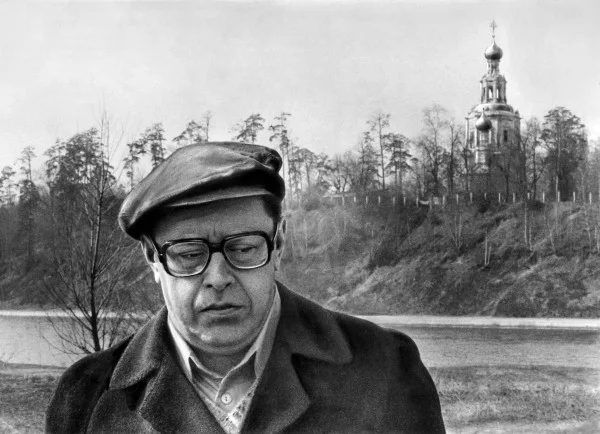
Был он плотный, с прямоугольной фигурой, близорукий мужчина в крупных очках в массивной оправе, ходил, как все в СССР, в черном пальто и в кепке, зимой в облезлой кроличьей шапке, с портфелем в руке, был страстным болельщиком «Спартака» и даже в Копенгаген, где был в очередной поездке, просил прислать ему телеграмму со счетом Games. Был книжником, что неудивительно: в то время дефицита на книги многие гонялись за новинками и редкостями и собирали домашние библиотеки — но у него был в этом деле свой, особый интерес. Брал в долг и на Кузнецком Мосту, у книжных барыг, покупал томики с портретами и биографиями членов Государственной Думы 1905 года — странная покупка в 1959-м советском году, когда дореволюционная история казалась давно отжившей дребеденью. «У Трифонова имелись почти полные комплекты таких очень редких журналов, как «Каторга и ссылка», «Былое». Журналы были аккуратно переплетены: писатель пользовался услугами частного переплетчика» (Рой Медведев). И вопросы — как все это вышло, как, почему? — его не отпускали.
Все о том же, все тот же поиск — книг, убранных в спецхраны, которые он, найдя, «потаенно и сладко почитывал», запрещенных, изъятых, писателей, которых цензоры вымарали из литературы, отца, которого увели летней ночью с дачи в Серебряном Бору. В 1967 году Трифонов нашел человека, сидевшего с отцом в одной камере на Лубянке. А ведь дом на Лубянке для ЧК-НКВД присмотрел его отец в 1918 году — ходил по Москве с товарищами, выбирал место. В маленьких квартирах в новых районах Москвы отыскивал тихо живущих там стариков. Старики рассказывали, но просили не называть их имен. «Напуган на всю жизнь», — написал он об одном из них. Павел Евграфович, старик из его книги, о самом себе не то что сказать вслух — даже подумать не мог. Свой арест спустя сорок лет в мыслях называл — «расставались не по своей воле».
Трифонов знал этот страх с детства. Страх — то, что он назвал «особая формация страха», а почему особая, без объяснений понимают те, кто с таким страхом жил — вошел в него, растворился в нем. Микродоза, всего лишь одна молекула страха, вошедшая в любую мысль и любое чувство, меняет их состав, изменяет их вещество.
Ему была дана способность погружения во время и в человека, в его помыслы, о которых человек часто и сам не знает — «во множестве мелких, неотлипчивых, жалящих, грязноватых делишек, без которых не существует жизни…». Интеллигента брежневского времени — а как долго, как бесконечно долго шло, а вернее, стояло это мучительное время — он видел насквозь, во всех его страстях, в его желаниях и тщеславии, в его слабости и ничтожности тоже. «Он был ленив и не до конца подонок. Это ему мешало» (из записей в тетрадях). То есть лень мешала быть подонком до конца. Безжалостно он видел человека. А в конце все равно оставалась — тоска и ощущение чего-то смятого, несбывшегося, утерянного.
Потому что, глядя внутрь себя и в глубину человека, он знал, что там, в этой темной глубине, обязательно скрыто что-то тайное, позорное и подлое. Нет людей без этого.
Вычерпывая глубину человека, вынимая из него пригоршнями и страницами его внутреннее болото, снимая слои ощущений, рано или поздно обязательно доберешься до скользкого, склизкого комка на дне… Во всей советской жизни, раскидывавшейся во все стороны, уходившей в разные концы линиями железных дорог, занимавшей каждый день семинарами, встречами и прочим, — было вот это тайное, о чем сказать нельзя.
Отец Трифонова, человек с усами, в круглых очках, «враг народа», изъятый из жизни, расстрелянный после пятнадцатиминутного так называемого суда — обстоятельств его расстрела сын не знал, не мог знать. Жену Трифонова (первую жену), певицу Большого театра, возили к Берии… Там, в глубине жизни, был этот набухший гноем, пульсировавший, не дававший жить комок.
«Он догадывался, что не надо догадываться, и догадываясь, как бы в то же время не догадывался ни о чем».
Чтобы понять, чтобы написать, надо дочерпывать до конца, «дочерпывать последнее, доходить до дна». Но то, что там, на темном, склизком дне находишь, причиняет такую боль.
Платой за многолетнее погружение в самого себя и во тьму человека была тяжесть в душе, боль в сердце, ощущение несчастья и то, что он назвал «душевная тошнота». «Очень скверно стал себя чувствовать: сердцебиение, одышка. Черт знает, разваливаюсь, как старый чемодан…» Так он написал, а ему было тогда всего 32. А одному из его героев, Дмитриеву («Обмен»), было 37. «Иногда ему казалось, что все еще впереди». It seemed. Какая простая фраза, и как много в ней сказано.
Он жил в состоянии несчастья. Есть такие люди, которым никогда не бывает хорошо — так они устроены. Оно длилось, длилось — состояние несчастья, несмотря на все его успехи и зарубежные поездки, несчастье души, измученной серым и бесконечно длящимся временем,
несчастье ума, измученного вопросами, на которые он искал ответы, несчастье памяти, которая мучила болью. Все было у него так хорошо — писатель, известность, книги, знакомства, поездки, планы — но все было так тяжко, так мучительно и безнадежно. Словно серым завешено, бетоном придавлено. «Когда-то, незадолго до смерти, он сказал мне: «Почему мы с тобой такие несчастливые?!» (Ольга, жена).
«Ему не мешали ни шум, ни хозяйственная суета, он записывал, и ничто не могло его отвлечь. Наоборот, часто отвлекался сам: попить чайку, поболтать, прочитать страничку текста. Вставал рано — в шесть, и до десяти, до одиннадцати сидел за письменным столом».
Так глубоко залезать человеку под кожу может не каждый пишущий. Он безжалостный писатель. Однажды жена попросила его сказать, что он думает о ее книге. «Тебе с наркозом или без?» Залезая в своих героев, он одновременно залезал в себя, в свои помыслы, слабости, мысли. Себя он изучал и препарировал без наркоза.
Свою особенность как писателя он знал, сам говорил об этом — отсутствие развитой фантазии. Придумывать не мог, должен знать. Поэтому анатомировал себя, препарировал себя, резал себя, вытаскивал из себя вещи, которые в других лежат неосознанным грузом. Из этой плоти, из собственной плоти, лепил героев.
Инфаркта не переживал, но инфаркт описал изнутри человека — Петра Александровича, отца Ляли из «Долгого прощания».
Однажды он увидел бродячих собак и написал о них: «бездомные собачонки холуйского вида». Жестоко написал, без жалости, с ясным пониманием — людей, собак, того, что есть и изменить нельзя, то есть жизни.
Он все время создавал систему зеркал. Во «Времени и месте» он пишет о писателе Антипове, который является отражением самого Трифонова, но чтобы не подумали, что он и есть сам Трифонов, он вводит в роман и самого себя, только лишь для того, чтобы создать себе алиби: он — не я. Трифонов, значит, пишет об Антипове, а Антипов в книге Трифонова пишет о писателе Никифорове, который, в свою очередь, пишет о писателе Всеволодове, а Всеволодов пишет о писателе Сыромятникове, а Сыромятников о Клембовском, а Клембовский о Рындиче. Все пишут обо всех, перпетуум-мобиле литературы.
Но Никифоров глазами жены Всеволодова с верхнего этажа дома, где жил Трифонов, видит парк, а вернее, Нескучный сад и остановку, которая есть там до сих пор.
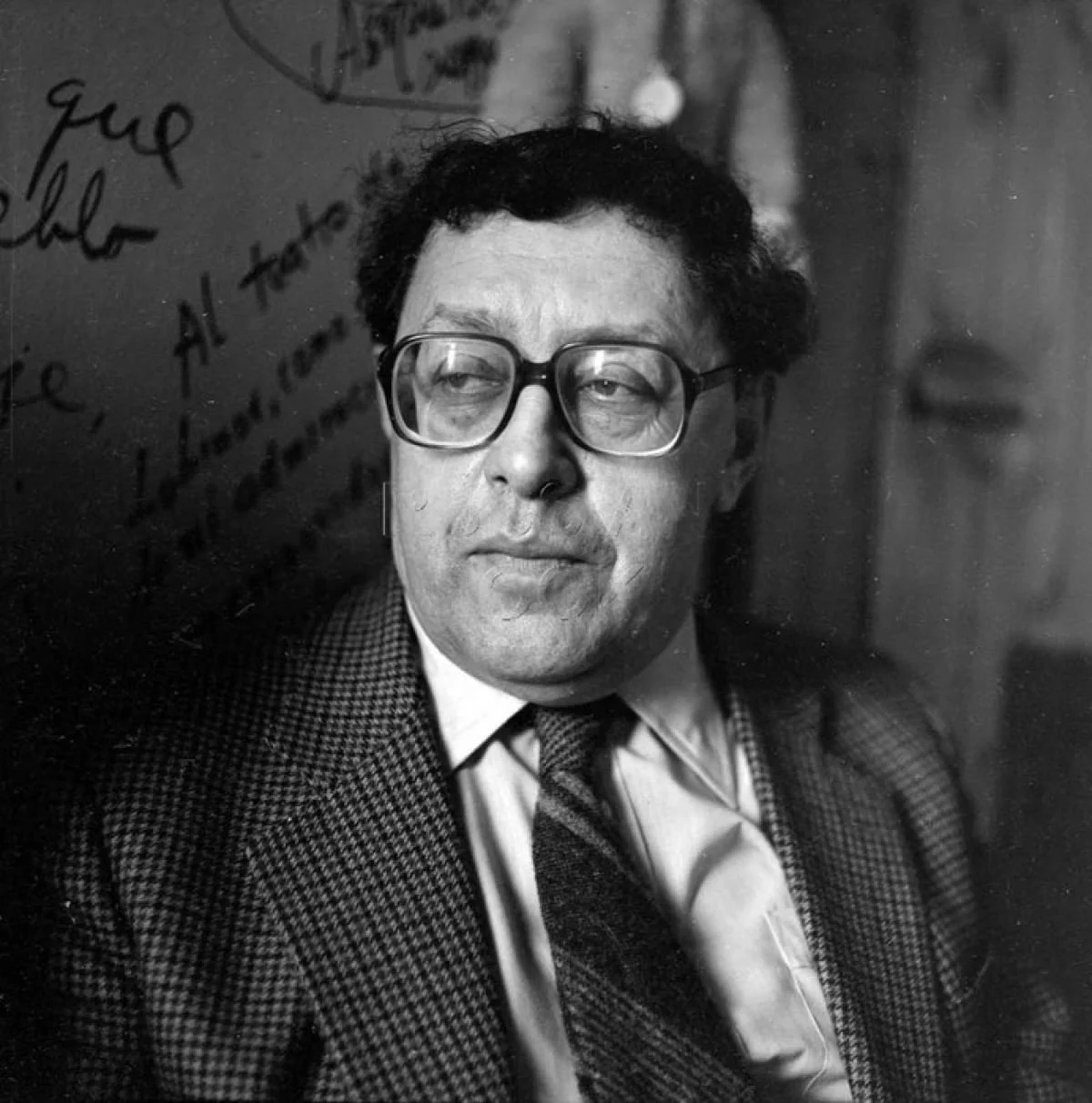
И выходит, что я теперь пишу о Трифонове, что он, хитрец эдакий, так расставил зеркала, что и я в них попал и брожу между них, гляжу на появляющиеся и исчезающие в зеркалах лица и фигуры неизвестных мне людей и гадаю: а он-то где? а он-то кто? Стоит в тени за всей этой сложной системой зеркал — серьезный, большой, прямоугольный, в шапке кроличьей, в черном тяжелом советском пальто, в массивных очках.
«Ну и ночь! Самая подходящая для смерти. Думал о том, что могу умереть. Мыслей о смерти не бывает. Мысли о смерти — это страх. Потом, когда боль утихла и дыхание стало ровней — раза два удалось глубоко вздохнуть — я подумал о том, что это было бы слишком бессмысленно. Ведь должен же быть какой-то смысл». Это мысли одного из его героев, эти слова Трифонов написал за одиннадцать лет до смерти.
Смысл, какой-то смысл… Должен же быть смысл в метаниях и борениях человека, в его мелких делах и больших мечтах, смысл в борьбе за кусок хлеба и метры кооперативной жилплощади, смысл в возведении государства, которое убивает людей массами, смысл в том, что отец отдавал все силы созданию новой власти, а потом сказал: «Мы создали паскудную власть. Это фашисты» — смысл в том, что воздуха нет, не дают дышать, терзают душу и рукописи, заставляют «прыгать в высоту без разбега со связанными руками». Должен же быть смысл.
В «Исчезновении» он попытался воссоздать последние дни своего отца перед арестом. О том, что было с отцом после ареста, не писал — и не только потому, что нельзя, запретная тема. Немота постигает перед ямой.
«Мысль об освобождении занимала его, освобождении от многого: от забот о детях, которые выросли, от ненужной мебели, от мук тщеславия, от власти женщин, эгоизма друзей, террора книг». Так это обстояло у героя «Времени и места» писателя Антипова, а у самого Трифонова как? Он ли отразился в Антипове или Антипов в нем? В его хитро расставленных зеркалах не разберешь.
Когда он болел в конце своей жизни — как странно, как невозможно это звучит, «в конце жизни» — его жена пыталась пробиться в Кремлевскую больницу, получить направление на МРТ. Носила коробки конфет и деньги в конверте врачихе в поликлинике Четвертого главного управления. Не помогло, направление на томограф писателю Трифонову не дали, не по рангу ему был томограф.