
Translated material
Peoples on the verge of disappearance
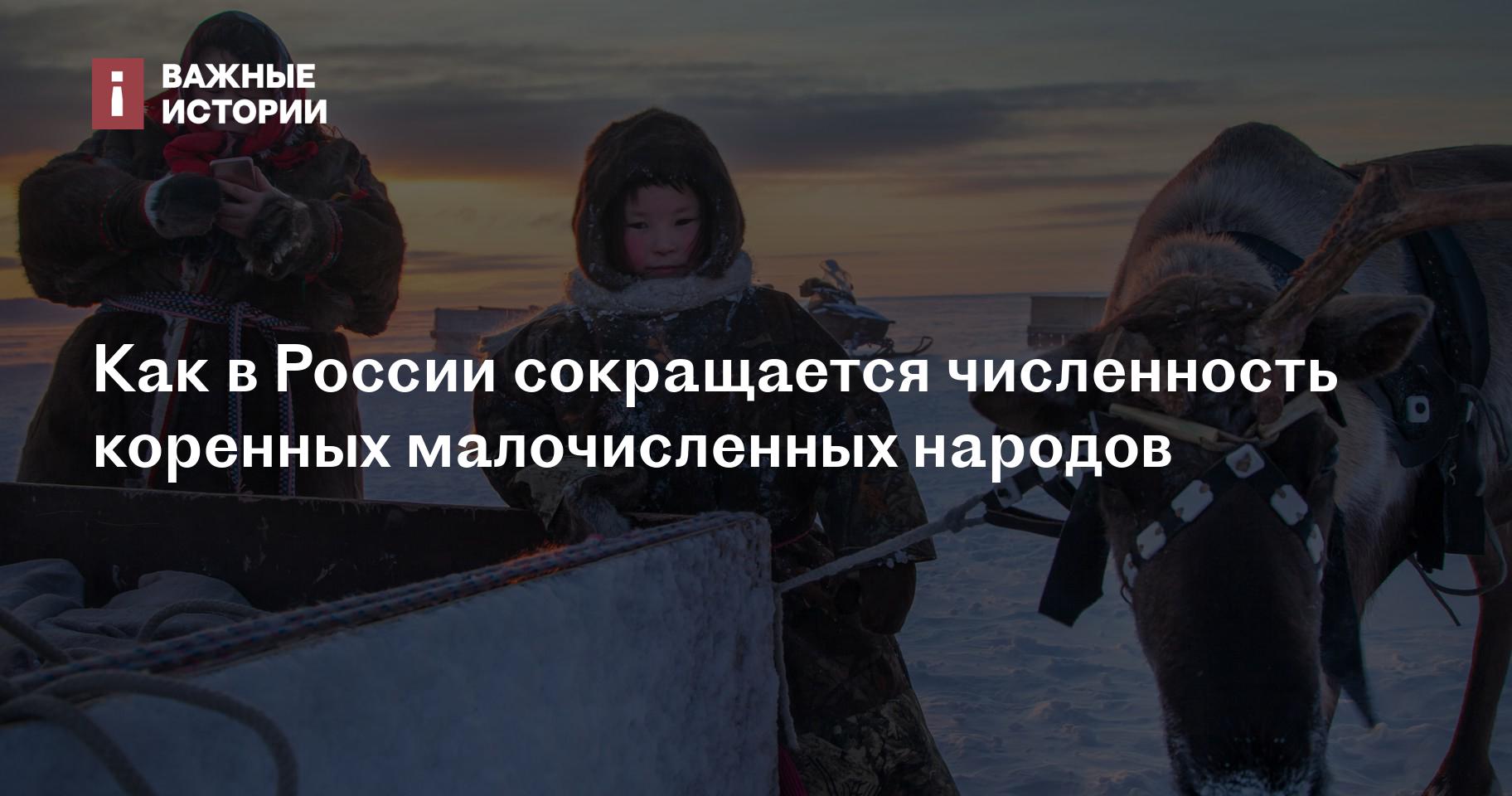
In Russia, 47 indigenous peoples live: some of them have only hundreds or dozens of people. The All -Russian census of the population of 2021 showed that the number of most of them has declined in the past ten years. “Important stories” tell what nations were on the verge of disappearance and how their situation was aggravated by a war, unleashed under the mask of “denazification” by Russia in Ukraine. The tragedy for these peoples was not only mobilization, but also sanctions, a reduction in financing from the state, which prefers to spend money on war.
"Political numbers"
According to the All -Russian Census of the population of 2021, the number of 67% of the indigenous peoples decreased compared to 2010, when the previous census was carried out. Most of them lose in numbers throughout the history of modern Russia.
The results of the last all -Russian census should be treated with caution, demographs warn. This year, about 16 million participants in the census did not indicate their nationality - in the previous census there were only 5 million of these. According to the senior researcher at the Center for Demographic Studies of the Higher School of Economics, Julia Florinskaya, this figure says that in general it is impossible to trust the census. “Most likely, these [16 million without nationality] rewritten not personally, but administratively ( those who are rewritten by administrative sources, for example, house books. - Approx. Ed. ).”
It is still possible to analyze these censuses on changing the number of indigenous peoples if you look at the dynamics starting with the 1959 census, the independent demograph Alexei Raksha notes. According to him, the dynamics could not change much, and any sharp changes will be explained not by demographic reasons: a change in self -awareness (for example, many Adygs in this census themselves were recorded by Circassians) or, which is more often in Russia, administrative “wrapping”. The birth rate indicators should also be taken into account among different nationalities, but for indigenous peoples, such statistics have not been developed for several years.
“We don’t have other statistics on the indigenous peoples,” says Dmitry Zhezhkov, a representative of one of the indigenous peoples, Itelmen, “and we must probably trust her.” At the same time, he draws attention to the fact that the numbers for some indigenous peoples can “draw” when it is necessary to propagate or solve pro -government problems. For example, the smallest indigenous people according to the 2010 census were Kereki living on Chukotka - then there were only four people, and in the 2021 census they were already 23.
Another example is Nenets, the largest of the indigenous peoples. In the census of 2021, 49,787 people were recorded by the Nenets. “A big suspicion is that this is a political figure that is drawn. If the Nenets cross the border of 50 thousand, under Russian law they will no longer be considered a native of the small people. It seems to me that their number has already grown over 50 thousand, but the authorities artificially reduced it in order to maintain this status to them. It is simply impossible to throw them from among the indigenous peoples, since they are most involved in traditional nature management, reindeer husbandry and other types of traditional economic activity. And if this border [in 50 thousand for the status of the indigenous people's root] is raised, [the state] will immediately arise a question about Karelians, Khakasses and other peoples, for which the figure is slightly higher. In many ways, statistics on indigenous peoples are political numbers, ”says Zhezhkov.
An increase in numbers occurs in peoples who are more involved in traditional nature management, the expert believes, but some indigenous peoples in Russia are already on the verge of disappearance.
In part, the reduction of indigenous peoples occurs for natural reasons, but the state intervenes in this process. “They assimilate and die: grandmothers leave, grandfathers leave, and young people associate themselves with a certain nationality,” says Dmitry Zhezhkov. - The benefits, privileges from the state, as claimed in the government, this [reckoning oneself to the indigenous peoples] does not. What to do with it? We need another state policy, other legislation and basic principles in the country, so that the rights of minorities, the rights of vulnerable groups of the population are respected. First of all, to give people access to their traditional resources, to traditional lands. The key question among the indigenous peoples has always been accessible to land and resources: fishing and hunting plots are needed. But the indigenous peoples become involuntary rivals of all large state industrial projects and businesses, which also claim to these territories. The authorities consider the indigenous peoples an objectionable obstacle to these territories: irregular, unnecessary, interfering with the development of the country. Therefore, and such a situation comes when there is nowhere to earn money, there is nowhere to live and develop: you are being driven from the forest, you are being driven from the river. ”
Support “important stories” your donation will help us tell the truth to supportZhezhkov gives an example the village of Kazas in the Kemerovo Region, which used to be a national village, the Shors lived in it. Most of its inhabitants were engaged in traditional crafts - hunting and fishing. In 2012, the Yuzhnaya coal company put into operation the Coastal section. Because of this, the ecology was severely affected, the Lysai Mountain Holy for the Shors was destroyed, whose spirit was considered the guardian of the village and maintaining a connection with the world of ancestors. In the same year, the company demanded from the residents of the village to sell her their homes in order to carry out the development of coal deposits on the territory of the Cossack, under pressure, residents were forced to move. “The village was destroyed, housed at home, these families were forced to leave. They moved to the cities, and their children in the urban environment were assimilated, they forget the language, ”says Zhezhkov.
Go to war in large numbers
The war in Ukraine will greatly hit the indigenous people of Russia, ethnic activists believe. Men from among indigenous peoples are mobilized in the war. Although, according to Russian laws, indigenous peoples can take advantage of the right to an alternative civil service, this opportunity does not apply for a period of mobilization. The indigenous peoples go to war in large numbers, says Dmitry Zhezhkov. In the list of representatives of the indigenous peoples of Russia who died in the war with Ukraine, which is on the editors of “Russia's indigenous peoples” on its own, more than 100 people have already been included. According to Zhezhkov, in reality the dead are many times more.
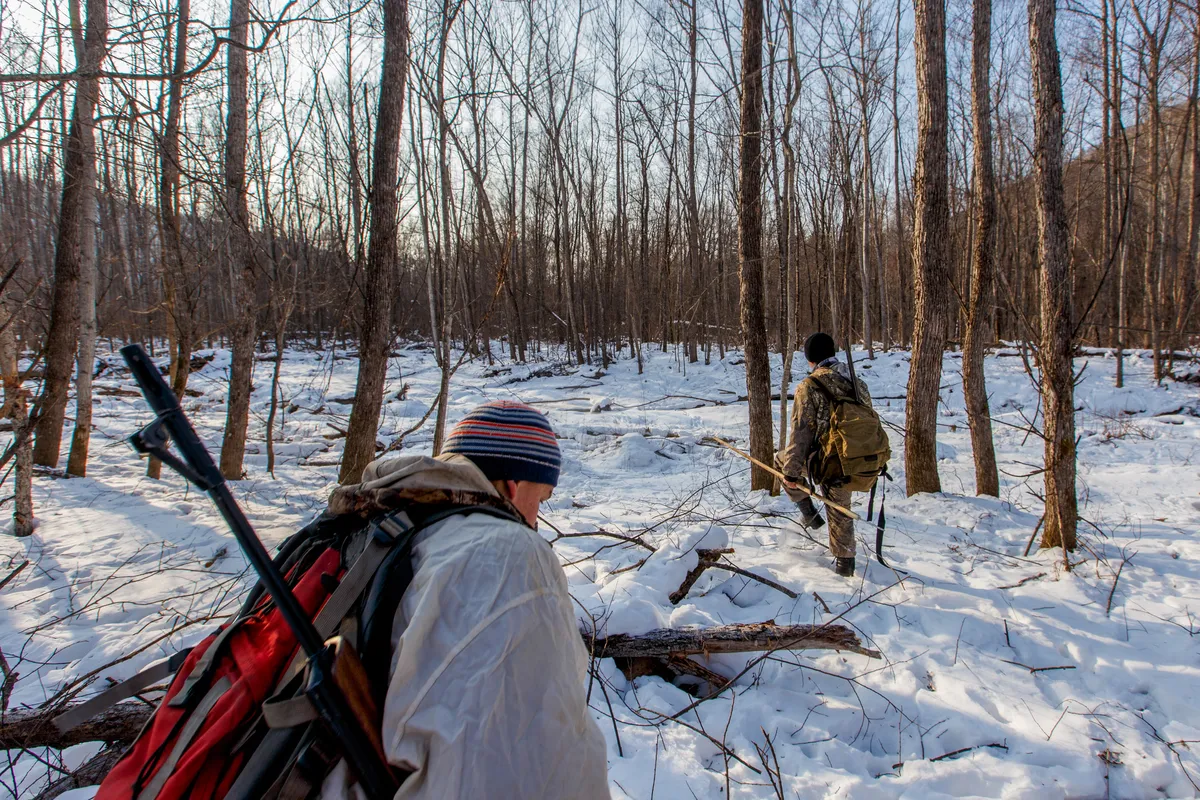
Mobilization is a tragedy for the ethnic minorities of Russia, especially for the indigenous peoples, many of which have only a few thousand, and sometimes hundreds of people, says Zhezhkov. “If the losses in the war affect large ethnic groups for dozens of generations and over a huge time, then for small peoples even the death of several people is already a great tragedy. If the people are only 200 people, and two young representatives died in the war, then there will be no two families, ”he says.
According to Zhezhkov, it is the male population, which most suffers in the war, who has a special influence on the preservation of indigenous peoples. “Men [among representatives of indigenous peoples] are more involved in traditional nature management: their activity allows you to maintain the status of a people, which leads traditional hunting, fishing - forest activities,” the expert explains. - Women are much more mobile, in many cases they choose more comfort for their children: they move to larger villages, and from larger villages to cities, where it is easier for them to start a family. They marry representatives of other peoples and to a greater extent [than men] are assimilated. ”
Mobilization is disproportionate in large cities and ethnic outskirts of the country, says Zhezhkov. The expert gives the example of the Gvasyugi in the Khabarovsk Territory - this is the National Udege village. The local television report said that 14 representatives of the Udege people were mobilized from there, and based on the male population of the village, which potentially falls under mobilization, it turns out that a 30% mobilization reserve of the village was taken from there to the war. “This is a giant figure, which, of course, does not fight with the data that Shoigu and Putin gives [about 1% of the country's mobilization reserve],” says Zhezhkov.
“Ethnic activists say that the authorities deliberately destroy these peoples, calling for the war as many people from them as possible,” continues Zhezhkov. “On the other hand, this may be due to the fact that indigenous peoples live on poor outskirts, where people have poverty and loans, and they believe in the authorities that they can earn money in the war.” He explains that indigenous peoples are deprived of the opportunity to resist and have fewer sources of information than the rest of the population. “Usually, this happens like this: the authorities arrive, says what is needed. And if in the city a young man can still hide in another apartment or call a lawyer, then in the village there is no: “Once the authorities said, it means that it should be so.” They do not have access to alternative information, they read less and talk about it: one propaganda channel watch and believe the state. And this is natural, because [there] the main concern is to hunt, catch fish and think less about politics, ”says Zhezhkov.
This thesis is confirmed by the data of other researchers. Associate Professor of the Faculty of Sociology of the University of Exterior (England) Alexei Bessudnov revealed ethnic inequality in the mortality of Russian troops in Ukraine: he found out that, for example, for a man from Buryatia, the risk of dying in Ukraine in Ukraine is 100 times higher than for a man from Moscow. However, as the researcher notes, this imbalance is not so much associated with the ethnic component as with the fact that from rural areas, from remote regions, villages, sparsely populated territories of Russia, more than from regional centers and large cities. It is in such territories that most of ethnic minorities and indigenous peoples live.
“I am skeptical of the opinion that the state specially conducts ethnic purges,” says Zhezhkov. - by and large the state does not care about the small indigenous peoples. The main thing is to solve your affairs as soon as possible: mobilize the army, gather people, send it to war. State officials, starting from the Ministry of Defense and ending with military commissars in the field, go along the simplest path. They know that in Moscow they will meet resistance, so they go and take meek: those who can be collected the fastest, fulfill their plan and report to the authorities. And so they go to these villages, to these villages, where the indigenous peoples live. ”
Without drugs and snowmobiles
The situation of the indigenous peoples is also affected by the economic situation that has developed in the country due to the war unleashed in Ukraine. “In remote villages where the indigenous peoples live, this is manifested in the fact that planes began to fly there less often: it has become unprofitable for businessmen to take products to shops, people have to get to larger villages for food. There was a problem with medical equipment and modern drugs, ”says Zhezhkov. He adds that the indigenous peoples are now experiencing difficulties with the technique that they need to conduct their traditional activities - for example, they are not available to snowmobiles that were previously purchased abroad.
The sanctions imposed by Western countries in response to Russian aggression affected its own citizens from among the indigenous peoples. “The simplest example is the indigenous peoples who hunt a fur beast,” says Zhezhkov. - The largest auction in Europe on Meh took place in Copenhagen, from sales on it, indigenous peoples and received the main money. Now, due to sanctions, this is prohibited: the price of the skin falls and there is no one to sell it, the indigenous peoples cannot hold a normal hunting season. They also cannot sell Olenin abroad due to sanctions. ”
Subscribe to our mailings tell the most important stories about this warThe departure from the Russian market of Western companies that worked in places of resettlement of indigenous peoples hit the indigenous peoples. “Western business is Western standards. We, the communities of indigenous peoples, could turn to these Western companies with the requirements to comply with international law in relation to ecology, in relation to the rights of indigenous peoples. Now they are leaving, and standards are falling rapidly. The indigenous peoples can no longer appeal to international law. And Russian companies do not take into account their interests, hold hearings [according to projects that affect the lands of the settlement of indigenous peoples] formally. “Here you have a document for several hundred pages and three days for consideration. The hearings will be held in electronic mode, here you are to make your opinion for five minutes,” they say to the reindeer herders who wander in minus 45, ”says Zhezhkov.
“Another problem for indigenous peoples related to the war,” international contacts were sharply limited. If earlier the indigenous peoples could go to Geneva and submit a report there about their position, and then the UN could redirect the recommendations back to the Russian authorities, which would have to react to this, now all this does not work. Russia no longer pays attention to international requirements, letters, appeals, ”the expert adds.
Without money and languages
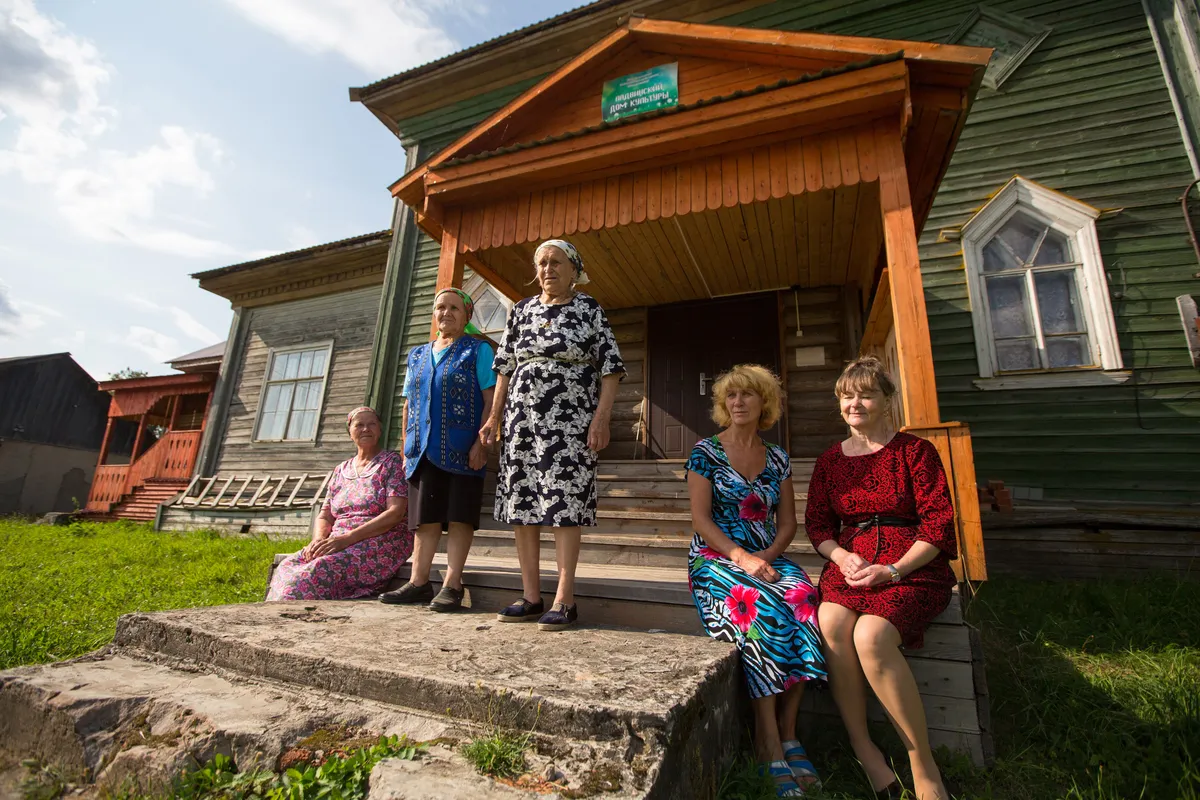
In 2023, the authorities reduced the amount of subsidies to support indigenous peoples. According to Zhezhkov, the cutting of expenses for indigenous peoples also occurs due to a war, which costs the country's budget expensive.
“Financial support from the state has always been insufficient, this money has always been not enough. Back in 2010, when the amount of 500 million was discussed, we said [to the authorities] that it was a penny. And these 12 years the indigenous peoples lasted within the framework of this budget, ”says Dmitry Zhezhkov. According to him, in Russia, regional authorities use money to support indigenous peoples for their needs. For example, in the Murmansk region, under the program for indigenous peoples, an apartment building was built, into which only one Sami family was settled, and the rest were given to the waiting lists not from among the indigenous peoples. “It has always been just an additional budget line: they built schools, bridges that, on the one hand, are also used by indigenous peoples, but on the other, we always considered it inappropriate use. The indigenous peoples need money for social programs, medical care, preservation of languages and culture, the purchase of commercial equipment. But all this from the support budget goes 5%, and 90% will go to some bridge, ”Zhezhkov explains.
Support from the state is not enough to preserve languages. “In our country's native peoples, the language is primarily associated with traditional natural activity. That is, in the Nenets, the Evenks, who are engaged in reindeer husbandry, it has been preserved in an excellent degree, they mainly speak this language. The peoples who are more assimilated, the language has not been preserved, ”says Zhezhkov.
He says that the preservation of such languages greatly depends on state programs, in foreign countries, unlike Russia, attention is paid to dying languages. For example, in Scandinavia, the Sami language is now being revived - in Russia it is used only by 10% of the Sami, it follows from the census. “I live in Norway,” says Zhezhkov (he emigrated in 2013, when the authorities began to counteract the work of the Association of the indigenous peoples of the North, Siberia and the Far East, in which he was vice president). “Here the state creates socio-economic incentives for the study of languages of peoples.”
Even Vladimir Putin admitted that in Russia little attention is paid to preserving the languages of indigenous peoples. At the request of a resident of the Udege village of Krasnoye Yar of the Primorsky Territory, to introduce training in the Udege language Putin: "This [the languages of the small nations of Russia] is our greatest cultural wealth, but, unfortunately, we lose it."