
Translated material
I am scared to perform and get acquainted with people
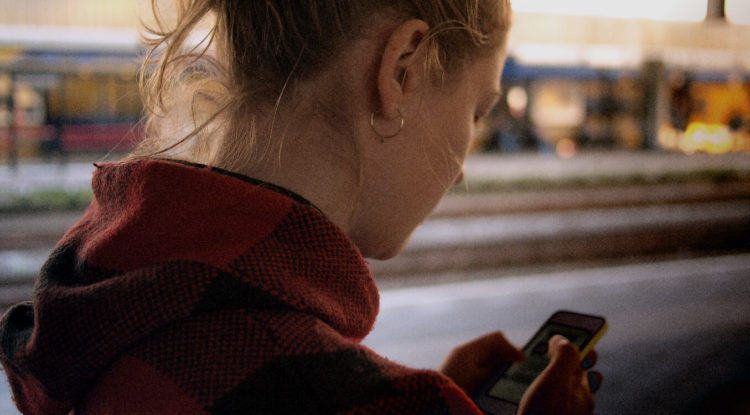
What is social anxiety and how to deal with it
Calling on the phone or expressing your opinion can be anxious - and this is normal. But sometimes these situations cause an irresistible fear and can negatively affect life. “Cold” talked with clinical and family psychologist Anastasia Menn about where the border between social anxiety and sociophobia is and how to help himself if it becomes difficult when interacting with people.
In order not to miss the main materials of the "cold", subscribe to our Instagram and telegram .

What is social anxiety and why does it arise?
This is emotional discomfort, constraint or anxiety in different social situations. These include performances, dates, acquaintances, eating in a public place, conversation by phone, communication both orally and in writing on social networks, interviews. According to the study of the social psychologist, Philip Zimbardo and his students, up to 95% of people experience anxiety in social situations.
Possible causes of social anxiety:
- Biological factors. For example, a genetic predisposition or features of the nervous system, which can be associated with both genetics and intrauterine development or birth of a child.
- Education and atmosphere in the family. For example, the child was constantly criticized at home or his parents were shy. Then there is a high risk that it will grow up uncertain, shy and will be worried when communicating with others.
- Negative experience of communicating with peers, for example, bullying.
- Personal characteristics: for example, low self -esteem or perfectionism. People who consider themselves “insufficiently good” are afraid that others will notice it, and avoid communication: “Everyone will find out that I am stupid and see that it is ugly, it’s better not to go anywhere.”
What is it manifested in?
Physically social anxiety can manifest itself like other types of anxiety: heartbeat and breathing are quicked, sweating increases, hands and voice begin to tremble.
In moments of anxiety, a person has many thoughts about what others think about him. “They think I am an idiot”, “everyone sees how I turned red,” “They will never call me to speak again,” “They don’t like me.” Because of this, contact with the interlocutor is lost, since all attention is aimed at alarming thoughts.
Anxiety has behavioral manifestations. A person can refuse to participate in performances, avoid acquaintances, drink alcohol in order to feel more confident at meetings, or be silent because of fear of saying something “stupid”.
And what is sociophobia?
This is a disorder, which is manifested in the excessive experience of fear and anxiety in the same or more situations: for example, interaction with others (conversation, correspondence) or stay in sight (performance). In the modern classification of diseases, ICD-11, sociophobia is called a social alarming disorder.
The causes of sociophobia, as in the case of social anxiety, are associated with biological factors (genetic predisposition, features of the nervous system), social (relations in the family and with peers) and personal (high self -criticism, perfectionism).
A person with sociophobia tries to avoid social situations, and if he participates in them, he feels intense fear or anxiety. He is also afraid that his manifestations of anxiety will cause a negative assessment of others. For example, that people will laugh at him, criticize, reject him. Social anxiety disorder is affected by a person’s relationship, professional development and pours out into strong restrictions in life, while social anxiety causes discomfort, but it is issued.
Social anxiety is unpleasant, but many people, despite it, continue to work actively. In the case of sociophobia, restrictions in life are more significant. For example, a person finds himself in a stupor when he is asked to speak at conferences, and this interferes with promotion. Or he does not go on dates, because he is afraid that no one will like it.
Is it possible to get rid of social anxiety?
It is normal to feel the alarm, but if you notice not just anxiety, but signs of a social alarm disorder, it is better to seek help from a specialist. The proven method in the treatment of anxiety disorders is cognitive-behavioral therapy.
You can read the book of Robert Lih “Freedom from anxiety” . It discusses different ways of overcoming anxiety, including social.
How to help yourself with anxiety attacks?
Respiratory practices
The concentration of breathing can help calm down. Classical technique - breathing on the square:
- Inhale slowly and count to four;
- hold your breath into four accounts;
- exhale slowly into four accounts;
- hold your breath again and count to four;
- Repeat three to five times.
You can make it even easier: take a breath of four and exhale for six to eight accounts. When the exhalation becomes longer than the inhalation, the part of the nervous system is activated, which is responsible for calming and inhibition.
Muscle relaxation
After muscle tension, relaxation always follows - that is, in order to relax, you must first strain the muscles: you can clench your fists, imagining that you squeeze the juice from the lemon, and then lose the tension. Then do it with other parts of the body - for example, you can strain your legs or pull your neck, and then relax them.
Frightening stimuli
If you understand that you are avoiding social situations due to anxiety, but in fact you would like to take part in them, then you can try to meet your fear. To do this, it is useful to compose a list of such situations and to predict them from the simplest to the most difficult. Then try to live these situations, starting with the simplest, and praise yourself for every step taken.
American psychotherapist Albert Ellis set up an experiment when he studied at college. He was scared to communicate with the girls because he thought that he was rejected. Ellis wanted to overcome his fear and met about 100 girls. As a result, only one agreed to the date, but did not come. This is how he describes this experience: “During this exercise, no one was sick, no one called the policeman and I did not die. This attempt to try new behavior for myself and understand what is happening in the real world, and not in my imagination, helped me overcome the fear of talking with women. ”
To AK to support a loved one if he experiences social anxiety?
If your friend has social anxiety, you should not say: “This time it was almost almost imperceptible that you are nervous”, “Well, why are you so shy about?”, “Do you need to be treated.”
Try not to focus on the alarm of a person when you invite him somewhere. Instead, we can say how everyone will be happy if he comes to the meeting. It is also useful to share your experience, tell you what makes you be nervous and how you do it: “I am also very worried about public speaking - sessions with a psychologist help me” or “I also have my hands sweat before the interview, I blush, but I try to encourage myself.”
If you see that the reactions of a close to social situations are similar to sociophobia, for example, he is closed, little to go, then tell him about your feelings about this: “I am worried about you, you are important to me. Can I try to help you? ” If the answer is positive, you can share with it articles on social anxiety or sociophobia and the contacts of trusted specialists.