
Translated material
"Let it not be in your opinion"
Stunes are held throughout France due to the intentions of the authorities to raise the retirement age. Macron does not plan to make concessions
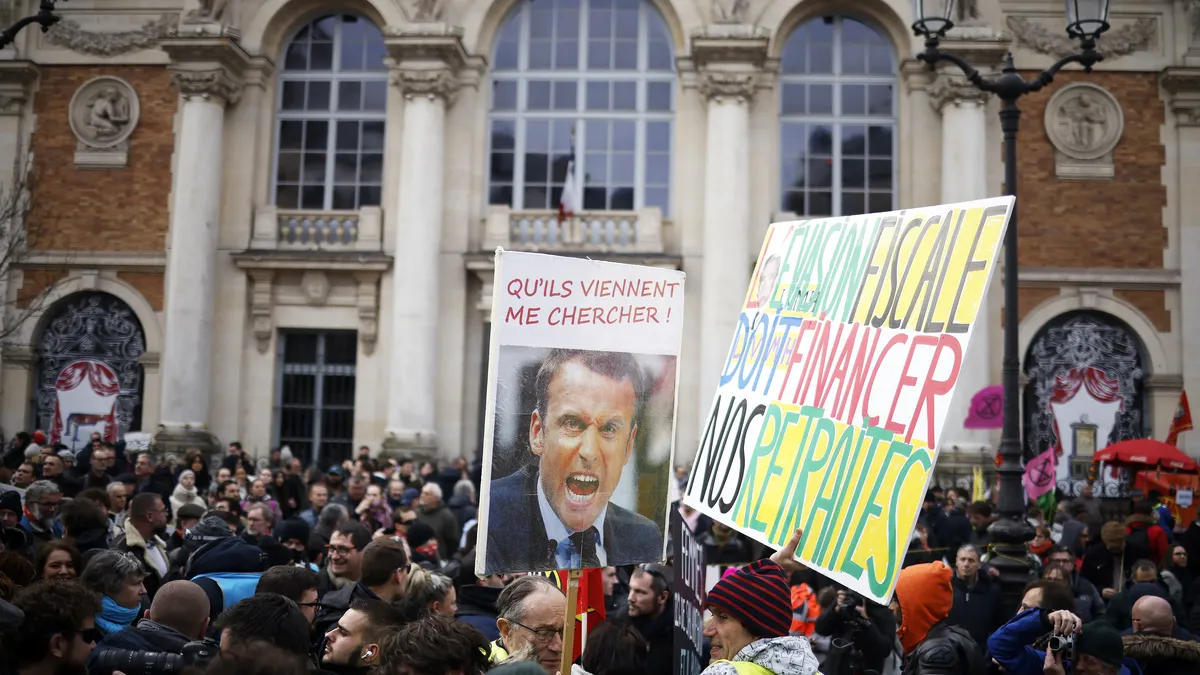
Since mid -January, France has been shaken by strikes, the reason is the plans of the authorities to increase the retirement age from 62 to 64 years. The first large -scale protests passed throughout the country on January 19, the second day of the shares - January 31. Trade Unions appointed new strikes on February 7 and 11. Why are the authorities not ready to make concessions to the protesters?
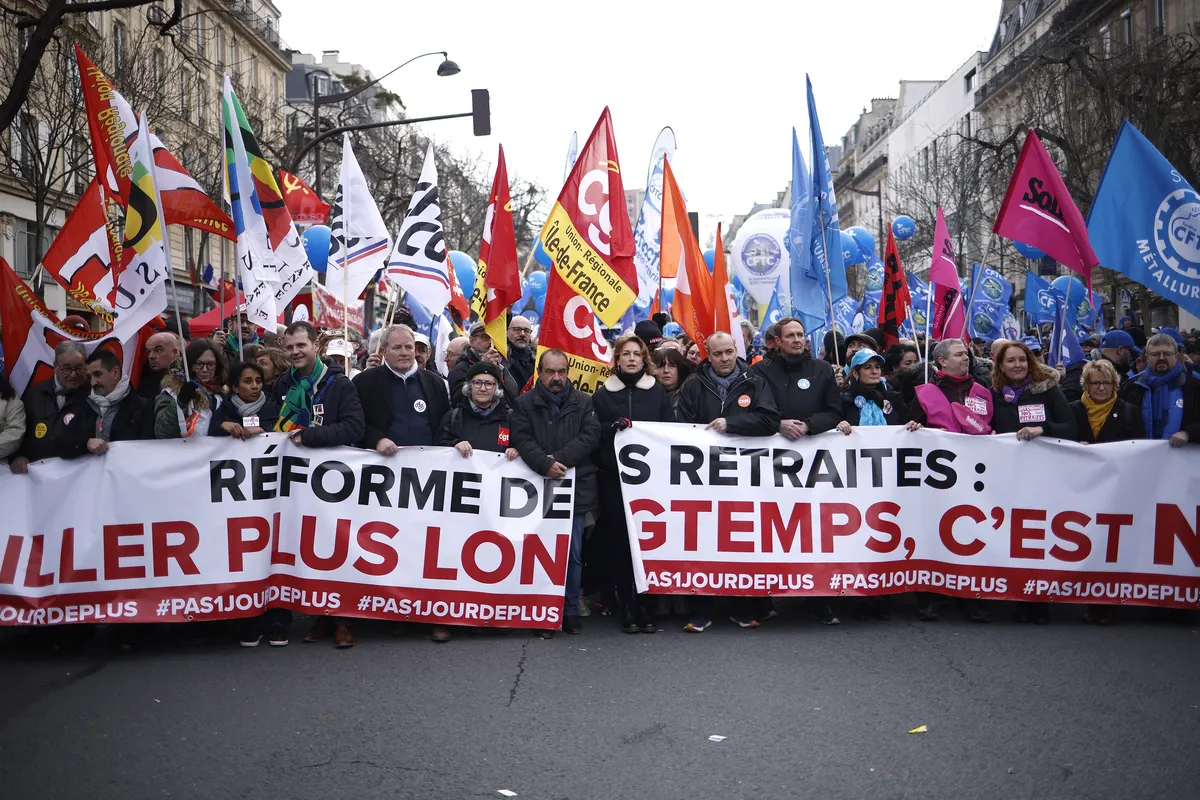
The number of participants in the first day of strikes, January 19, already talks about the high level of discontent of the French by pension reform. The authorities counted 1.12 million demonstrators throughout the country, the organizers of the protests, the universal confederation of labor (CGT) - more than 2 million LE Monde journalists specified that there were at least 160 demonstrations throughout the country, while they took into account actions in which more than a thousand people participated. The largest protests were in Paris - 400 thousand people, according to CGT and 80 thousand - according to the police.
On January 31, according to the Ministry of Internal Affairs, the number of protesters was more than the 19th: 1.272 million people. CGT reported 2.8 million protesters.
This is a record for the number of participants in shares against social reforms in France since 1995.
Teachers, workers of the transport sector, the energy sector, as well as officials took to the streets. The City Hall of Paris did not work on January 31, the authorities, for example, Brumium, Eshirol, and Montrey closed their doors at noon.
According to a survey conducted by the ELAB Institute for BFMTV, 72% of the French do not support pension reform. 40% of Macron's supporters indicated her injustice.
Trade unions announced new protests on February 7 and 11 - this week in France will begin school holidays. The purpose of the trade unions is to strengthen the pressure on the authorities. Deputies of the National Assembly will discuss the bill on February 6.
Deputies introduced about 7,000 amendments to the draft law on pension reform. Republicans (Les Républicains - 617 amendments), as well as the “National Association” (Le Rassemblement National) Marine Le Pen, who lost Macron in the second round of the presidential election (75 amendments) were the record holders.
What is the purpose of the reform
On January 10, the Pension Reform project was introduced by French Prime Minister Elizabeth Bourne. In addition to increasing the retirement age from 62 to 64 years, innovations also provide for an increase to 43 years of the term that a person needs to work in order to receive a pension in full (now the necessary experience is 42 years). At the same time, they want to save the right to retire, regardless of experience of 67 years.
They plan to carry out both the increase in the retirement age and the increase in the length of service necessary for retirement. They want to increase the retirement age to 64 years by 2030 - every year it will be raised by three months. The French authorities plan to increase the experience in the same scheme - so it will reach 43 years by 2027.
In addition, pension reform intends to establish a minimum pension for those who have the necessary experience at 1200 euros. Now the minimum pension is about 750 euros per month with the allowance,
But without other additional payments. A pension of single people cannot be less than 961 euros per month.
The authorities explain the desire to conduct a pension reform with the need to stabilize the system. So, the French Ministry of Finance calculated that the reform will help replenish pension cash desks by 17.7 billion euros by 2030. The head of the Ministry of Bruno Le Mayor noted that in case of refusing to change the deficit of the pension system, 13.5 billion euros will be the same year.
Macron on the first day of protests, January 19, was in Barcelona in negotiations with the Spanish Prime Minister Pedro Sanchez. The President of France said: “We must carry out this reform,” and noted that he spoke about pension reform during the presidential campaign (he wanted to establish the age of retirement at 65 years). At the same time, Macron also commented on protests: “Opinions must be expressed, this is the principle of democracy.” Thus, the French president made it clear that the authorities do not intend to deviate from the intentions of the reform of the pension system.
The Prime Minister Bourn adheres to the same point of view: on January 29, despite the protests, she said that increasing the age of retirement to 64 years is no longer discussed. "
Protests in previous years
A previous attempt to increase the retirement age in 2019 also caused powerful protests-in December, according to the authorities, more than 800 thousand people entered the shares, the organizers-1.5 million. At the beginning of 2020, the then Prime Minister Eduar Philip said that since 2022, the retirement age would not increase, and in March, Macron reported the freezing of retirement reform due to the adoption of measures to contain the pandemia of coronavirus.
In 1995, when a previous record was set by the number of shares of shares against reforms in the social sphere, the authorities tried to implement the “Jupppe plan”. Reforms were named by the name of their author, Republican Alena Juppe. According to trade unions, then over 2 million people took to the streets, the police eventually abandoned the reform of the pension system. However, at the end of 1995, they adopted a resolution regarding the social sphere: it also established a fee to repay social debt, which is deducted from labor income or various benefits, for example, for unemployment.