
Translated material
"Sandance" during the war
Film critic Alice Taiga talks about the films of the main festival of independent cinema
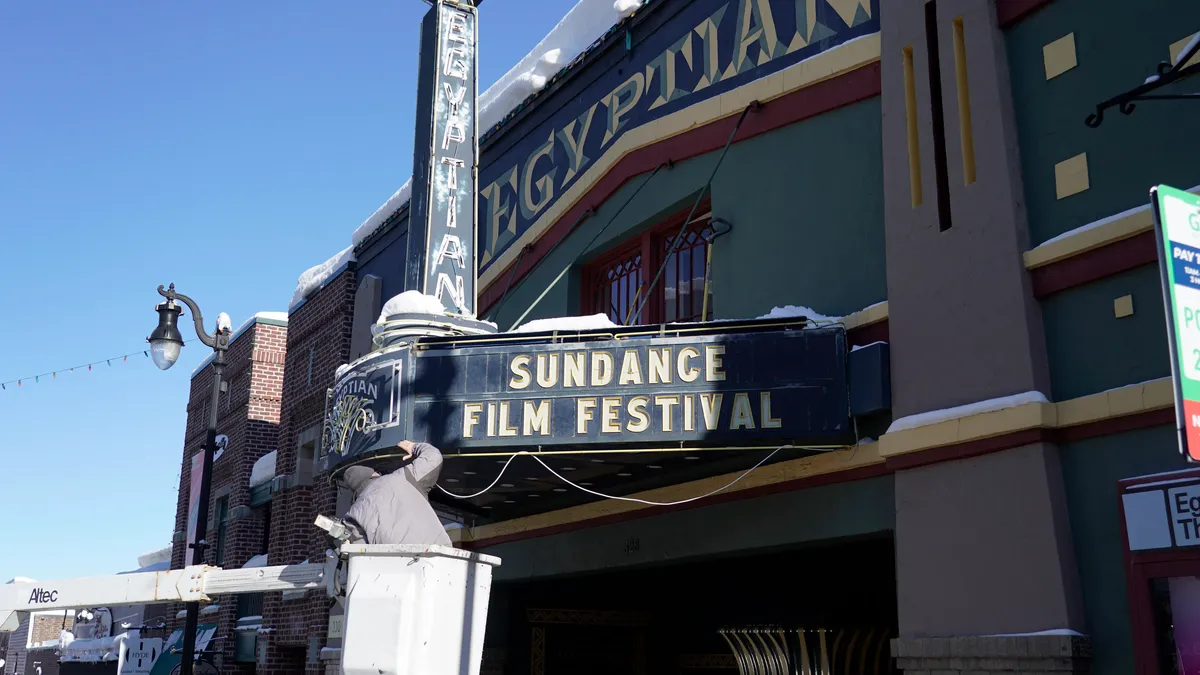
On January 19–29, the annual festival "Sandance" was held in the US state of Utah - the main world show of independent cinema. For more than 30 years, new names have been discovered here: from the “old men” this is Quentin Tarantino, Wes Anderson and Richard Linklater, from the new generation - the Chloe Zhao, Damien Shazell or Ryan Johnson, debuted on Sandance. The festival even entrenched the expression “Typical Sandance Film” - in relation to independent cinema certain genres, which always go at the festival with great success. The film critic Alice Taiga specifically for Novaya Gazeta Europe watched the program of the festival online and shares the most interesting films of this year in the popular Sandance genres, which mutate over time, but retain festival DNA.
Mabblekcor-comedy
Theater Camp, directors Molly Gordon, Nick Lieberman
A month from the life of an improvised teenage theater
In the middle of the zero, it was the American independent festivals, including the “Sandance”, opened the world cheaply made conversational cinema with a simple plot (and often even plotted), which immediately christened the mubblecor: the heroes have already muttered something unintelligible, or argue without it, or they say instead of doing something. Several important names in the modern mainstream and most of the current successful television series have grown from Mubblekor (say, the series “Girls” or “Ted Lasso” owe almost everyone to Mubblekor). At the Sandance of this year, they also talk a lot - in the satirical thriller Rotting in the Sun, built only on dialogues, or in a black comedy about the Asian identity of Shortcomings.
This year’s exemplary mupor is “Theater in the camp”, the directorial debut of the duet Molly Gordon and Nika Lieberman, who grew out of their short meter of the same name. This is a deafening ridiculous film, shot in the genre of mockmentaries, about an experimental theatrical production in a summer camp and confusing relations, hundreds of people involved in the sale, from a music teacher to the owners of a neighboring camp. The film, crowded with conversations, - swift and satirical - is mocking both the theater, and over the art for the masses, and over modern democracy. If you ever were on a naive children's cabbage or tried to build a fair horizontal organization, observing the deadlines, you will definitely laugh into the voice. The “Theater in the Camp” is our public much naked in miniature, where it is difficult not only to hear each other, but also to bring at least one idea to a worthy finale.
Dock biography
Still: A Michael J. Fox Movie, director Davis Guuggenheim
Favorite America in the fight against Parkinson and himself
The Sandance festival is the only major world festival where documentary cinema in the program is not inferior to the game in either volume or quality. Moreover, this practice has existed for many years, even before documentary cinema has come into fashion on streaming services. The program of each year includes several celebrities, and these celebrities can be as super-popular (for example, this year they showed a movie about Brooke Schilds and Little Richard), as well as niche (films about the video artist June Payka, poetess Nikki Giovanni, HipGnosis designers and Sher Haite feminist).
Michael Jay Fox - the favorite of America, the star of the “back to the future” trilogy and the Family Ties sitcom - was still diagnosed with Parkinson's disease, which forever changed his life and career. But if with some other hero the film could become a tragic story about a broken acting fate, then with Fox in the center of the film narrative works differently. This is a stinging and funny biography of a person with disabilities, which does not give up himself and does not allow himself to feel sorry for anyone around. The film shows how Fox includes its diagnosis in the plots of film and television and epizodes, in which it is removed, how it jokes in black over the disease with loved ones, how it makes fun of its weakness on camera during the interview- even despite how it is difficult for him to sometimes finish the phrase. The advantage of the film is that the main events of the actor’s life are told through the comic episodes of his roles in the cinema and on television. The first date, insomnia, the shooting schedule, problems with money and temptations of success is not told by the hero’s monotonous voice, but through short scenes with the participation of an actor who could never sit not in place.
Cinema about the war
5 Seasons of Revolution, director Lina
The war in Syria through the eyes of an independent activist and participants in underground resistance
"Sandance" traditionally does not stand aside from the topic of war. This year, the festival showed two films about what was happening in Ukraine (“20 days in Mariupol” and “Iron Babels”) and the history of the creation of chemical weapons by the Aum Senrika sect. The plot about wars that never end, but usually do not fall into the mainstream media field, arises either in art thrillers in the traditions of magical realism (in my mother's skin), then in decolonial tales of the fight against conquerors (Sorcery).
“Five Seasons of the Revolution” is a documentary of the natives of Damascus Lina about the last ten years of her life: from participation in the Civil Revolution in Syria to a forced departure to Europe. Filming on the streets was carried out by a hidden camera, the director openly worked only in the apartments of trusted friends - activists, journalists, young independent politicians who discuss the methods of civil protest against the Assad dictatorship. It is one thing to watch stories about destruction and cleansing in Homs in the news, another through a camera hidden under Lina's jacket. It is one thing to read about the despotism of Assad in analytical articles, and another - to watch how Lina's friends show traces of torture on their bodies.
“Five Seasons of the Revolution” is an insider film that would never be able to make any other professional from the outside: the author of the film has access to activists and private notes who did not leave the territory of Syria. This is a war by the eyes of the inhabitants of the occupied country, whom the government intentionally holds in fear and information blockade, so that “protests” and “resistance” are mentioned only in the news and do not receive any human dimension.
Drama about teenagers
When the ice is melting, director Feurle Beaten
Drama about childhood cruelty and parental blindness
Stories of growing up is another important tag for Sandance: first love, friends of youth, broken hearts, problems with parents and persecution at a school in Sandan stories are found every year. Only this year in the program of such films there were at least a dozen. Indian sisters in the struggle for the future turn into the heroines of the Bollywood action movie. The girl recalls her growing up in the sexually liberated commune of San Francisco in the early 70s (Fairyland). In the film adaptation of the Book of the Mosseg Moshweg, it is told about the platonic love of a young girl working in prison and a prison psychiatrist (Eileen). Horrores about children and adolescents in the risk zone are also a trend of more than one year (My Animal, Talk to Me, Run Rabbit Run).
It seems that the scripts of films about adolescents are getting darker every year. Myths about the “Miraculous Schools” are exposed by stories of severe injuries, the scars from which determine the further life of heroes, regardless of their will. It is such a dark story from childhood that cannot let the main character of the Belgian drama “When the ice is melted” - the girl Emma, who does not get along with her parents or the younger sister. Having received an invitation to the funeral of a childhood friend, she recreates the summer in memory that turned her life turned upside down. Once she spent days long with the two best little friends, taking part in the brutal draws of the girls they liked. The debut of the Belgian director Feucle Buithens is a laconic, but very careful for the details of the cinema: she stings the audience with small details of the pseudo -publishing European life, where cruelty is supposedly condemned, but still exists, hidden from the eyes. And in the behavior of children who want to live against the parental rules, be sure to get to the surface.
Genre confusion
Rotting in the Sun, director Sebastian Silva
Satirical thriller about the grief and a corpse on the roof
The old -fashioned division of films into genres into “thrillers”, “comedy” or “melodramas” does not work well with modern innovative films, and most of the Sandance program is confirmed this. Why not combine a family melodrama with anti -utopia (The Pod Generation), but a political satire with a marital drama (Fair Play)? Many films of the festival of this year do not just successfully combine genres, but often combine completely contradictory.
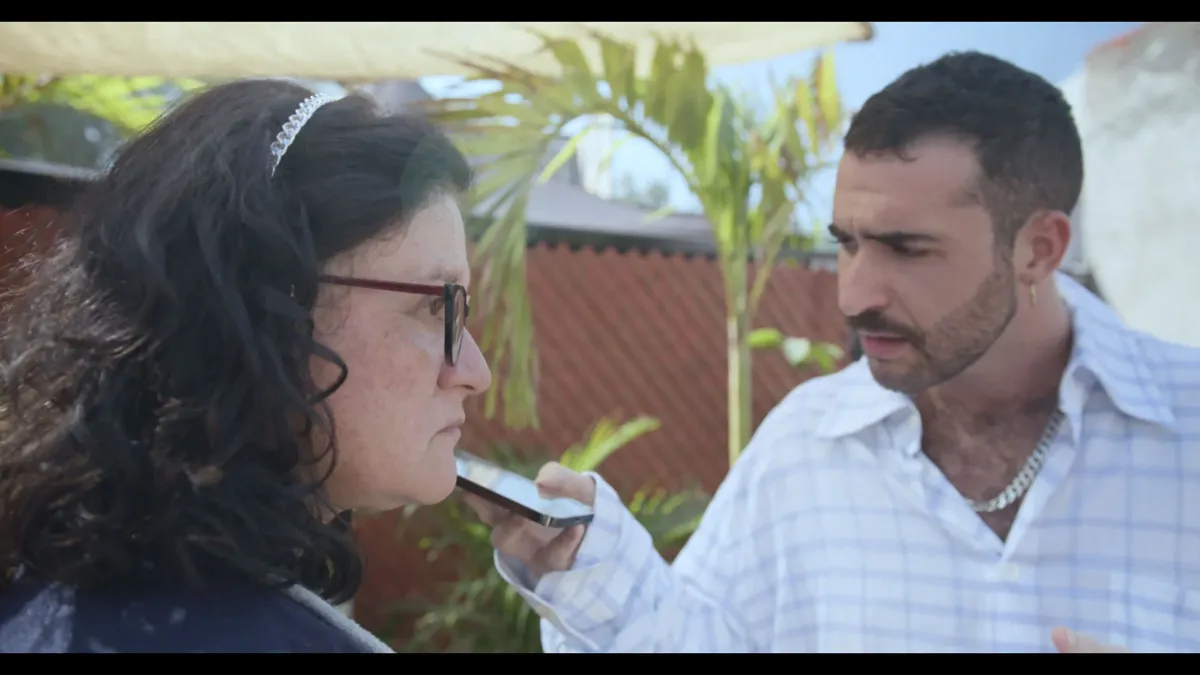
Rotting in the Sun Sebastian Silva is a thriller, a black comedy, and a daring LGBT Kino 18+. The main character - in fact, director Sebastian Silva - lives in a repaired mansion in Mexico City, abuses forbidden substances and suffers from a creative crisis. A friend advises him to go for inspiration for the most famous Mexican gay rejection. During the orgy, the hero, to his misfortune, meets the irordantin content and star of all social networks Jordan, who begins to impose a common project to him. The hero does not yet know that he will not be scolded from Jordan to his last days. The film for two -thirds was shot in one location, ridicules everything, from the lifestyle of the influensers to artificial intelligence, and becomes a sentence of the narcissistic world of "creators". The author least regrets himself - this is especially delighted.
Horror from the son of Kronenberg
Infinity Pool, director Brandon Kronenberg
The rich pay for crimes in the tropical "banana dictatorship"
It is high time horror to stop considering the “low genre” - this is said in an interview, for example, actress Mia Goth, the star of Infinity Pool, the new film by the son of David Kronenberg, and the successful dilogy of Tai West “Perl” and “X”. The horror films traditionally collected a teenage audience and fans of the genre, but for several years now they capture not only mainstream rental, but also the festivals (“Titan” by Julie Dyurno, “Witch” by Roger Eggers, “Solstice” by Ari Aster or last year’s winner of “Sandance” - “Nanny”). This year, there were no less than a dozen on the “Sandance” of the horror, and the wave of rethinking the genre was once launched here-in the cult parallel program of thrillers and horrors Midnight.
Kronenberg Jr. continues the line of his father: “Endless Basin”-his third film after low-budget, but exciting thrillers “Antivine” and “In Alien Skin”. This movie can not be called a purebred film of horrors, there is a political satire, anti -utopia, and a little science fiction. And the horror of Kronenberg is existential, and not provoked by scummers.
The main character, not a very successful writer, goes to the tropical authoritarian country to the resort for the rich, meets a young fan and goes to the wild, ignoring all the rules for tourists. He will fall into the frightening closed community of sadists. The endless pool is a terrible child of the White Lotus and the Black Mirror, a film about inhumanity, cruelty and permissiveness. And that the law is an abstraction when you have power. Like his father, Kronenberg Jr. takes off trillers to tell about the gloomy worlds of pleasure, control, pain and inequality, elusive from the philistine gaze.
Auto -firm
The Persian Version, director Maryam Keshavarz
Three generations of rebellious Iranian women in the struggle for freedom
The advice, which successful directors often give beginners - shoot about what you know well. The auto -firm is becoming increasingly popular both in literature and in the feature cinema: Richard Linlaiter (“Appol 10½”) and Stephen Spielberg (Fabelmans), Cameron Crowe (“Almost Famous”) and Alfonso Koaron (“Roma”) recall childhood and youth. The debutants often also often perform with films inspired by the events of their life, including in the genre of docks. So, the festival showed the alternative history of the New York transgender community, shot by the former sex worker, and a film about growing up in an apartheis of a girl from South Africa (Milisuthando).
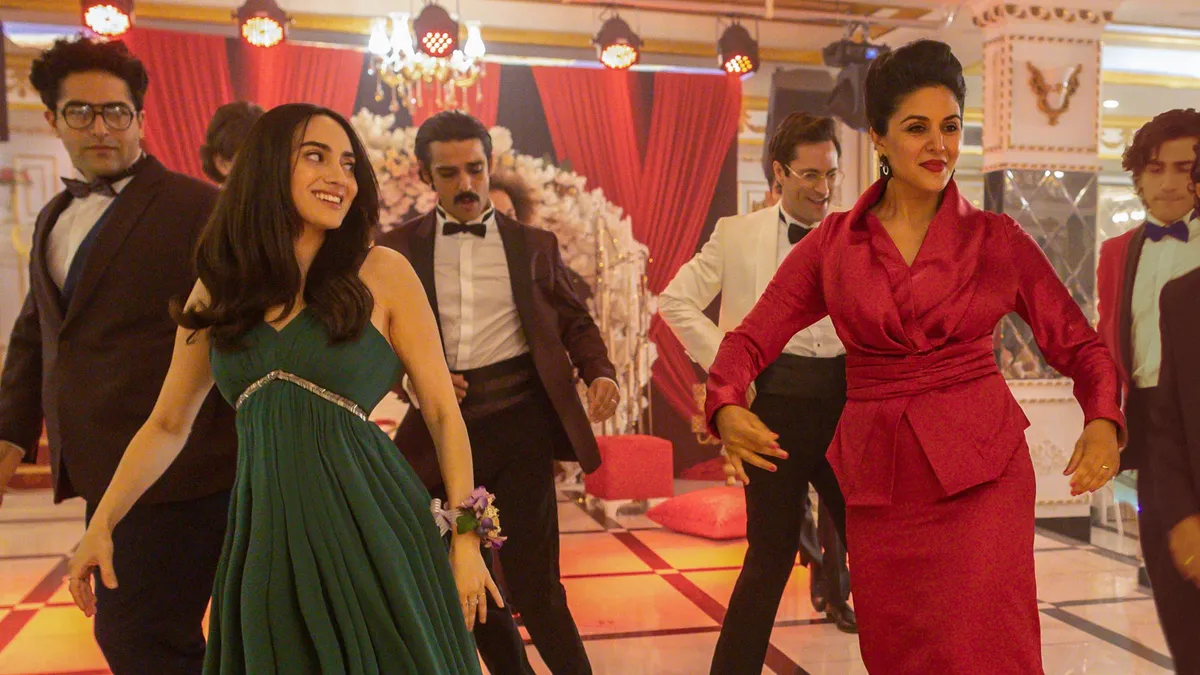
The game debut of an American Iranian descent “Persian version” is inspired by the history of the family of the main character and the collective history of all Iranian women from the second half of the twentieth century both in Iran and in the United States. The Persian version is the intertwined story of a daughter, mother and grandmother who moved to America, but never lost her connection with culture, the language of Farsi, relatives, Islam and traditions.
Each generation has its own challenges and problems. Grandmother suddenly moved to the United States an adult woman, mother learned to earn money, raising nine children, her daughter is trying to get from her parents and brothers respect for her life choice - to be a writer and live with girls. At the same time, the family has secrets that no one is talking about, and the pain that no one is discussing. “Persian version” - with all the seriousness of which concerns - a very funny family comedy that can smooth out contradictions and look at incomprehensible relatives with a merciful look of acceptance. And for those who know about Iran only on news headlines, this is a great way to see the history of the country through the eyes of her women, who do not get tired of fighting for freedom and happiness of themselves and their loved ones, even when circumstances dictate and forget about their dreams.