
Translated material
Not a place to fight corruption
Russian deputies will be allowed not to publish income declarations. We recall in the end that they want to hide
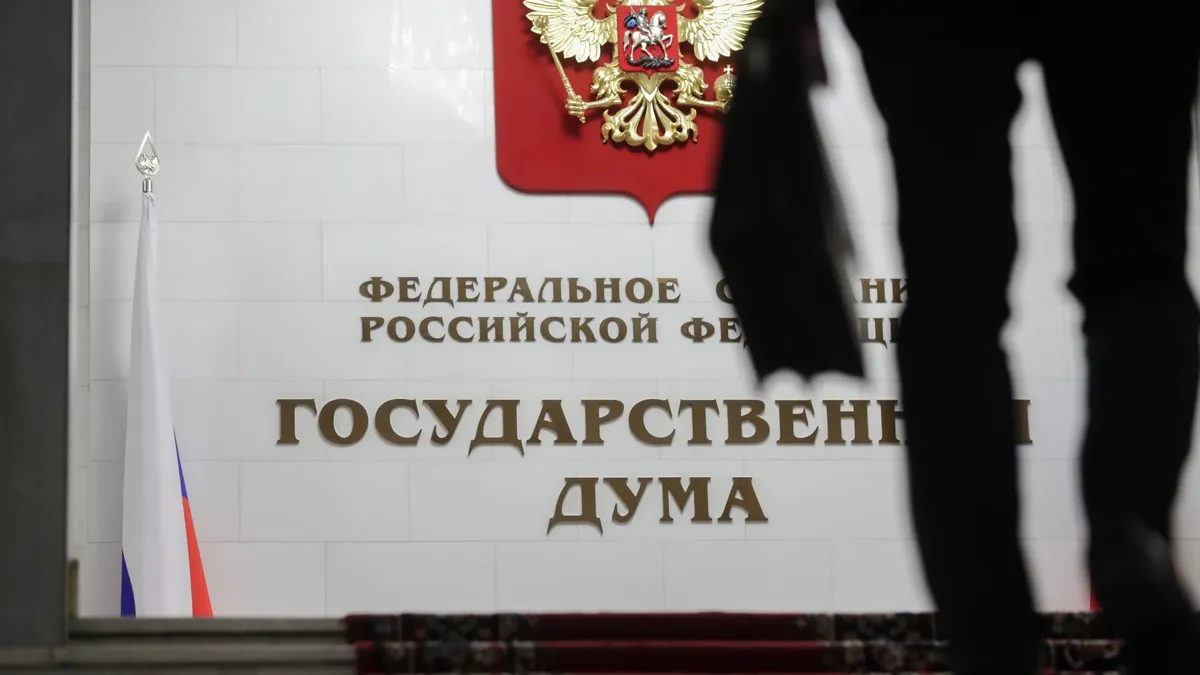
Vladimir Putin signed a law that allows the deputies not to publish in the public domain a declaration of income, expenses and property. This step will greatly change the system of anti -corruption reporting in Russia. Service The declarant studied the data of 3960 declarations of deputies of 85 Russian regions, including the annexed Crimea and Sevastopol, in 2020. They were published in the spring of 2021, and this is the latest data reduced to a single base. For them you can get an idea of what Russian deputies want to hide.
Initially, the law was conceived and announced as a canceling mandatory annual declaration for deputies of regional parliaments that perform their powers on a non -permanent basis. Such people sit in two chairs: in one parliamentary, they vote for the regional budget, regional or republican laws and even offer changes to federal legislation; Sitting in another, they manage a state -owned enterprise or commercial organization. Obviously, this situation is associated with a high probability of conflict of interests, increased risks of influencing or other forms of manifestation of corruption.
By the second reading in the State Duma, a circle of persons whose income and property information is proposed not to publish have expanded: it includes those who receive salaries as deputies of regional parliaments, as well as deputies of the State Duma and senators. The desire of federal parliamentarians to “hide” caused a great resonance. Some authors of the initiative even stated that they would publish their declarations voluntarily.
Meanwhile, it is worth noting that the thematic rating of Forbes “100 civil servants with the highest income” from year to year is the deputies of regional parliaments. And it was the regional elites, when the declaration system arose, resisted its appearance and did not reveal the data about themselves voluntarily.
Responsibility for the insurance of declarations was established only a few years after the introduction of the appropriate obligation - and after the two monitoring conducted by Transpenseri International -Russia, revealed non -publication of 653 and 254 declarations for 2013 and 2014. respectively.
Interestingly, the publication of declarations of regional deputies now does not fall under federal regulation.
Almost every legislative assembly uses its original data disclosure format.
The smart passer, specially designed by Transpenseni International-Russia for automated reading of declarations, does not cope with such a variety of formats. As a result, it is impossible to guarantee the completeness of data in a single year: somewhere the robot could not read the declaration, somewhere it was published untimely or was not posted on the site at all.
Formally speaking, neither regional nor federal lawmakers are civil servants, but since they decided to combine two types of activities, then there will be no additional transparency. In their declarations, many regional and federal deputies report not about salaries in public office, but about income and dividends from business.
In the preparation of the text, we used data from 3960 declarations of deputies of 85 Russian regions, including Crimea and Sevastopol ( annexed by Russia. - Approx. Ed. ) For 2020. These data were published in the spring of 2021, and this is the latest data reduced to a single base base. Let's see what is interesting in the declarations of regional deputies and what we are offered to deprive valiant parliamentarians.
Real estate record holders
To compile this rating, we used data on objects in individual, shared or joint property of the deputy himself (information about the property of children and spouses also appears in the declarations).

The leader of the rating turned out to be the United States Nina Chekotova from the Irkutsk region: in 2020, she owned 128 real estate objects, all of them were in Russia. These are 55 land plots with a total area of 45.7 hectares, 40 apartments (total area of 2179 sq. M), 6 residential buildings (1452 sq. M) and 27 other facilities (baths, administrative buildings, non -residential premises, electric, water and sewer networks, and more).
Chekotova in the back breathes Zurab Zekhov from Adygea (127 objects) and Hikmet Mammadov from the Jewish Autonomous Region (125 objects). Zekhov “specializes” on land plots: it has 110, the total area is 490.4 hectares, although many are in shared ownership (the share in the declarations is not indicated). Mamedov has a more diversified property portfolio: 40 land plots, 10 apartments, several stores, non -residential premises, warehouses, workshops and another.
Nina Chekotova earned 193 million rubles in 2020, Hikmet Mammadov - 152 million, and Zurab Zekhov - only 7 million (but in 2021 - already 131 million). In total, seven deputies from the sample have more than 100 real estate objects, another 24 - from 50 to 100 objects.
Inheritance mandate
The deputy is good, the child of the deputy is even better. True, until the age of 18 you get into the parental anti -corruption declaration.
The child of the Belgorod United Russia Alexander Pashkov was lucky: in 2020, relatives gave him 77 million rubles. The deputy of the Udmurtia from the LDPR Timur Yagafarov , children earned 1.9 and 3.85 million in 2020, but there the explanation may be in the sale of apartments previously recorded on them.
The sale of real estate may also be explained by the income received by the child Valery Kolokoltsev from the Chelyabinsk region. By the way, Kolokoltsev combines the deputy chair with the post of President of the Magnitogorsk State Technical University. G. I. Nosova - it was precisely such “part -time” ones that was initially designed to exempt from the need to submit a law under consideration in the Duma. By the tenth line of the rating, the annual income of children of regional deputies falls below a million rubles.
Family enterprise
It is not easy to get to the bottom of a barrel called “Big Revenues of the spouses”. It is wives and husbands who often provide high family income with both deputies and other civil servants.
In the case under consideration, the palm of the championship is at the Kamchatka deputy Igor Yevtushka . In 2014, his wife earned a little less than 5 million, but in 2020-more than 2.6 billion rubles. This is not necessarily the same spouse: if the deputy changed his wife to a richer, this is not indicated in the declaration.
Foreign possessions
A prominent builder and part -time deputy of the Yaroslavl Regional Duma Tigran Ghazaryan has the most extensive list of foreign real estate (according to the number of objects). However, she is in completely explainable and friendly Armenia.
Deputy Chairman of the Tyumen Regional Duma Vladimir Piskaykin (“Fair Russia”) declared 7 objects abroad, and all in the unfriendly countries of NATO: a land plot and three parking spaces in Germany, apartments in Germany and Bulgaria.
Former in 2020 in the Legislative Assembly of Crimea, and now Leonid Babashov, who is sitting in the State Duma, owns three land plots in Ukraine - an amazing phenomenon for today's times. However, if he does not mean plots in Crimea, most likely he will soon lose this property as a result of the sanctions imposed on him by the Ukrainian authorities.
Deputies on wheels
Vyacheslav Fomichev (previously met in the Duma of the Moscow Region, and by the time the material was written to the Federal Duma) with his family owns a whole fleet. In his collection there are three “Bentley”, four luxury “Mercedes” of other models, only 21 vehicles. It is noteworthy that “Maybakhkh 57s” and one of the dear “Mercedes” are recorded on the minor son of a politician.Ulyanovsk deputy Vadim Martynov moves by car “Aston Martin V8 Vantage S” (the price of a new car is at least 150 thousand euros), his wife drives “modest” “Mazerati Levante” or “Porsche Panamer”. The declaration also mentioned two auto springs, but not so luxury brands. Tigran Ghazaryan (Yaroslavl Region) chose a more classic option-“Rolls-Royce Phantom”.
The air fleet of regional parliamentarians is 13 units, and at once 5 of them (one aircraft and 4 helicopters) belong to Alexander Basansky (Magadan Region). We are talking about three Mi-8T helicopters, one Mi-8PS and An-2 aircraft. Alexander Tsyban (Voronezh Region) bought himself two Robinson HC R-66 helicopters.
***
The bill on the cancellation of the publication of declarations will be a huge step back in anti -corruption and ensuring transparency and at the regional policy level. When the declaration system arose, the regional elites resisted its appearance and did not reveal the data about themselves voluntarily.
The arguments that there is no need to publish a declaration of "non -professional deputies" is extremely doubtful. In addition, it is already clear that such “non -professional” things were not limited. These arguments are only a cover for unwillingness to disclose information about yourself.
Anti -corruption declarations, although they are not an ideal and exhaustive data source, certainly represent value and are successfully used by journalists and civil society to analyze the activities of the official, the search for possible corruption and other violations. But in the conditions of war, proposals to limit access to data receive political support, as they reduce risks for foreign assets of defendants and members of their families in case of possible sanctions.