
Translated material
More than 10,000 Internet resources fell under military censorship
In our material, we talk about how the Russian authorities from February 24 last year systematically cleaned the information field in Russia, arguing this with a “struggle against military fakes” and “discrediting the army”.
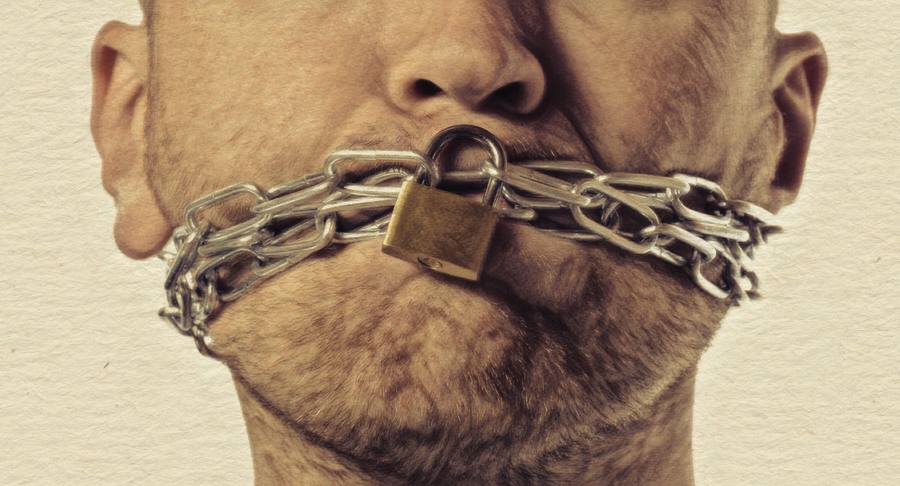
Photo: betanews.com
From the beginning of the so -called "special military operation" has passed for almost a year. During this time, hundreds and thousands of well-known media resources, news channels of world and regional significance, sites of human rights organizations, their mirrors, and even pirate, trade and other portals fell under blocking.
At the moment, we have counted more than ten thousand sites that the authorities sent to the ban on the basis that they allegedly distribute “discrediting Russian armed forces” or “military fakes”.
The absolute record holder to restrict access in this matter was the Prosecutor General’s Office of the Russian Federation , but there are also many decisions of regional courts, which every month has become more and more.
Unfortunately, after such a long time, we are no longer so surprised at such a manifestation of state censorship, but from the very beginning of the “special military operation” Roskomvobod continues to observe how access to various media resources of a very different orientation is limited.
Blocks of authorship of the Prosecutor General became so massive largely due to the fact that, according to its decisions, it is possible to limit access to sites bypassing the courts. So, since the beginning of the February events, the Prosecutor General’s Office, on the basis of one decision at 27-31-2020/ID2145-22, was blocking more than 6,000 sites and links (some have already been made from the registry). This was one of the very first and most massive in terms of prohibited information in the register of prohibited information, the solution of the supervisory authority.
By the way, it was accepted immediately after the beginning of “special operational” actions, when the law on military censorship was not yet. We have an assumption that on its basis, sites and links to the register of prohibited are still entered, but we cannot approve this with one hundred percent confidence, since only the date, mass of locks and orientation of sites that are blocked in this decision coincide in the solutions of the “unknown stateganese”. For example, in the case of blocking links to Cloudfront, you can see for your own to see that there are only two initiators: the aforementioned department and (until November 2022) the Prosecutor General . The authorities preferred to hide the remaining details from the public from the public.
Then there were many other decisions that, after the adoption of the law on military censorship, began to appear with an enviable frequency.
Among the first to be blocked were quite popular sites and even social networks:
- Facebook and his messenger ;
- Twitter ;
- Russian student socio-political magazine DOXA ;
- BBC ;
- "Voice of America" ;
- DW ;
- Popular blog-platform TJ ;
- St. Petersburg edition "Paper" ;
- "Medusa" ;
- Activatica ;
- "Mediazone" ;
- "Companion" ;
- "Radio Liberty" ;
- "Echo of the Caucasus" ;
- Republic ;
- magazine "7x7. Horizontal Russia ” ;
- "Taiga.info" ;
- The Village ;
- The Chelyabinsk independent edition of Lentacel , which has repeatedlyfell intothe field of view of the authorities .
Of course, this is far from a complete list of sites that fell under lock.
Back in early March last year, two largest Russian media Echo of Moscow and Rain were subjected to blocking. Moreover, the Echo radio stations had to face censorship from two sides at once. From the Prosecutor General’s Office-due to the coverage of hostilities in Ukraine, and from Google, which, in turn, limited access to the EU residents to the YouTube channel of the radio station due to its connection with Gazprom-Media.
In July last year, Rain received permission to broadcast from Riga, but after the recall of the Latvian license, he accepted the invitation to broadcast in the Netherlands. The Radio station "Echo of Moscow", working on August 22, 1990, suspended its work by decision of the director of the radio station Alexei Venediktov.
But back to military censorship from the Prosecutor General and ships. Often it is quite difficult to explain its application to all kinds of services. For example, both the sites of public organizations, and the lastals of countries that the Russian authorities consider “unfriendly” are randomly include, and the sites of large media, but also on the same grounds, online cinemas and sites with pirate content are randomly entered. Perhaps they at one time published materials in support of Ukraine or with criticism of “special operations”, as well as calls to utter Ukrainian volunteers.
Unfortunately, for the owners of certain sites, blocking is sometimes only the beginning of a series of sad events. Often you can see how in real life some representatives of the censorship of media become involved in administrative and even criminal cases.
For example, ex-editors DOXA sentenced the court to two years of correctional labor. Also, he should not administer sites for three years. And on the Vologda activist and politician Yevgeny Domozhirov, whose site was also blocked, brought several protocols in the case of discrediting the Russian army due to his publications on social networks.
In the summer, through the Russian Prosecutor General’s prosecutor's office, the Russians disappeared to access the service for the authors of their work on a paid subscription Patreon . This happened due to the DOXA editorial office posted on the February Service of the February statement. In it, journalists opposed a “special military operation” in Ukraine. Since the lock is carried out according to HTTPS, the entire site is not available.
Grammarly -an online service that helps to write texts in English also have problems with Grammarly. A page was subjected to military censorship with a statement of the service that he suspended his work in the territory of the Russian Federation and Belarus.
Other decisions of the supervisory authority later blocked the Carto.ru website, where all cartoons about Masyanya are collected.
Jooble vacancies, “cold”, “training ground” flew into the ban. Media ”, one of the most popular chess sites Chess.com,“ Present ”, German newspaper Bild, Human Rights Watch (HRW), Popular Finnish newspaper Ilta-Sanomat, online encyclopedia of visual art of Wikiart, Site of the popular Stalker 2 game.
The materials of The Telegraph, the Baltic Delfi project, were blocked, and the German information publication Die Welt was blocked immediately with all domains and subdomains.
By the way, Delfi hunting began from ships, and not from the Prosecutor General. At first, the court in Kaliningrad blocked one link of the publication, and then the whole site.
The courts did not taste as fast as the supervisory authority, which in one decision could limit access to dozens or even hundreds of sites at once, and then some decisions made “rubber” properties, and on the basis of one requirement, Internet resources were gradually made and made until their number reached several thousand, as in the case of decision No. 27-31-2020/ID2145-22.
As a rule, the courts ignored large editions, with the exception of the aforementioned DELFI, and the most common reason for blocking was a reprint of the message of the Ukrainian Ministry of Internal Affairs with a recipe for Molotov cocktail. From the recent interesting one, one can note: the blocking of the meme, which depicts Vladimir Putin and the swastika transforming into the letter Z; restriction of access to almost two years has not given signs of life to the Igronews portal, who was revived after February 24 and printing pro -Ukrainian texts; a ban on sites with calls to finish the Armed Forces of Ukraine; Video criticizing the actions of the President of Russia (many similar sites are already blocked at the Hosting level).
Another characteristic feature of the locks related to military censorship is their backbone - when the same site is twice (sometimes three times) entered into the register of prohibited, only on the basis of different decisions of the Prosecutor General’s Office. Perhaps the supervisory authority is in a hurry to limit the information field for Russians, which itself does not always remember who and when it blocked. From time to time, the “unknown stateganese” does the same.
In such a situation were :
- Meduza;
- "Caucasian knot";
- "Mediazone";
- "Taiga.info";
- The New Times;
- "Ribbon";
- Republic;
- "Agency.ru"
...and so on.
Also, the supervisory authority is not trying to make mirrors of news sites, for example, the Radio Liberty projects on azureedge.net and cloudfront.net .
From November 15, sites blocked by the Prosecutor General’s general stopped entering the register. We do not know exactly which invisible stateganese still brings in the register of prohibited links and sites. But from that moment, more than 7.5 thousand sites have been introduced into the register with the “unspecified state house”, of which more than a thousand on the basis of military censorship. Moreover, many sites coincide in their orientation with those whom the Prosecutor General’s Office blocked, making decisions in those days that coincide with the decisions of the “unknown”.
In particular, they fell under the lock:
- A large site with anime, as well as Japanese and South Korean films Animaut , which has more than fifty thousand subscribers in VK. The reason for the blocking is not entirely clear, since there is no information about Ukraine or the “special operation” there, but nevertheless it is blocked, apparently, on the basis of the same hidden solution 27-31-2020/ID2145-22 of 02.24.2022, which limits access to a huge number of pirate sites and online cinema-theaters;
- Mirrors of the news aggregator The True Story;
- free keyboard simulator Ratatype, the developers of which do not hide their pro -Ukrainian position; news portal "Cavpolite";
- The project’s website from the ROO “Business outside Politics” is already in the very name of the domain as a sore throat at the present time;
- The popular Ukrainian payment service Liqpay, which provides the opportunity to accept payments on sites, in mobile applications connected to the Internet;
- The project "Checked. Media".
Already in January of this year, the Unknown Gosorgan blocked the Project Hope (project “Nadezhda”), which is engaged in the organization of global medical and humanitarian assistance around the world.
Even under the lock, the Slovak daily newspaper Denník N, specializing in the releases of corruption in the political circles of Slovakia, and also pays attention to the global agenda, and I include the situation in Ukraine.
In the new year, it was not without humor. So under the blocking the section “Politot” of the popular site of memes and funny pictures Joyreactor fell.
Also, “Unknown Gosorgan” decided to bet on the larger bet and blocked the official sites at once by three official departments of the United States: Central Intelligence Directorate ( CIA ), Federal Bureau of Investigations ( FBI ) and the official website of the US State Department for Awards for Justice.
It is impossible not to pay attention to the blocking on the “mask” of the Rashka.net project ( “Change Paul Gay Sex is cool” ), trolling state bodies and courts in that it reprints prohibited materials. The project has already replaced many domains and several names.
Already in the new 2023, Medusa , blocked by last spring, the Prosecutor General’s Office announced an unwanted organization. The supervisory authority considered that this publication represents the "threat to the basics of the constitutional system and safety of the Russian Federation."
Also, the "Unknown Office" continues to consistently block the "New Gazeta" and its materials. The publication found in the register of prohibited information its report from the Samara region, where the funeral of the dead mobilized Russians from Makeevka passed. Recently, the Moscow City Court approved the decision of the previous instance on the cancellation of the certificate from the "new".
Just a few hours before the release of this review material, we learned that the site of the Moscow Helsinki group , one of the oldest human rights organizations in Russia, was hit by the blocking. In Roskomnadzor, Interfax substantiated this "repeatedly placing prohibited content and materials discrediting the RF Armed Forces." The other day, the site of Dmitry Ivanov (blogger Kamikadze di ) and the Chuvash activist Alexander Lnakov also got there.
As you can see, military censorship has already become a large -scale phenomenon. These more than ten thousand Internet resources include both small and inherent sites and serious publications with a world-famous publication. Many means of communication, social networks, and postal services are blocked. It is unlikely that even with the end of the so -called “special military operation” or the transition of military operations to a less hot phase, the situation with locks will change significantly, because censorship no longer needs reason or grounds for its use.
Unfortunately, the actions of the supervisory authority become increasingly closed and not controlled by the public. At the moment, it is possible to study the actions of military censorship only by court decisions, which are also enough.
We continue to conduct research based on data from the register of blocked sites in order to provide the public at least part of the illegally hidden information.