
Translated material
"The largest and most dangerous political confusion on Earth"
The United States declassified several more documents on how to build relations with Moscow. This time - from 1993
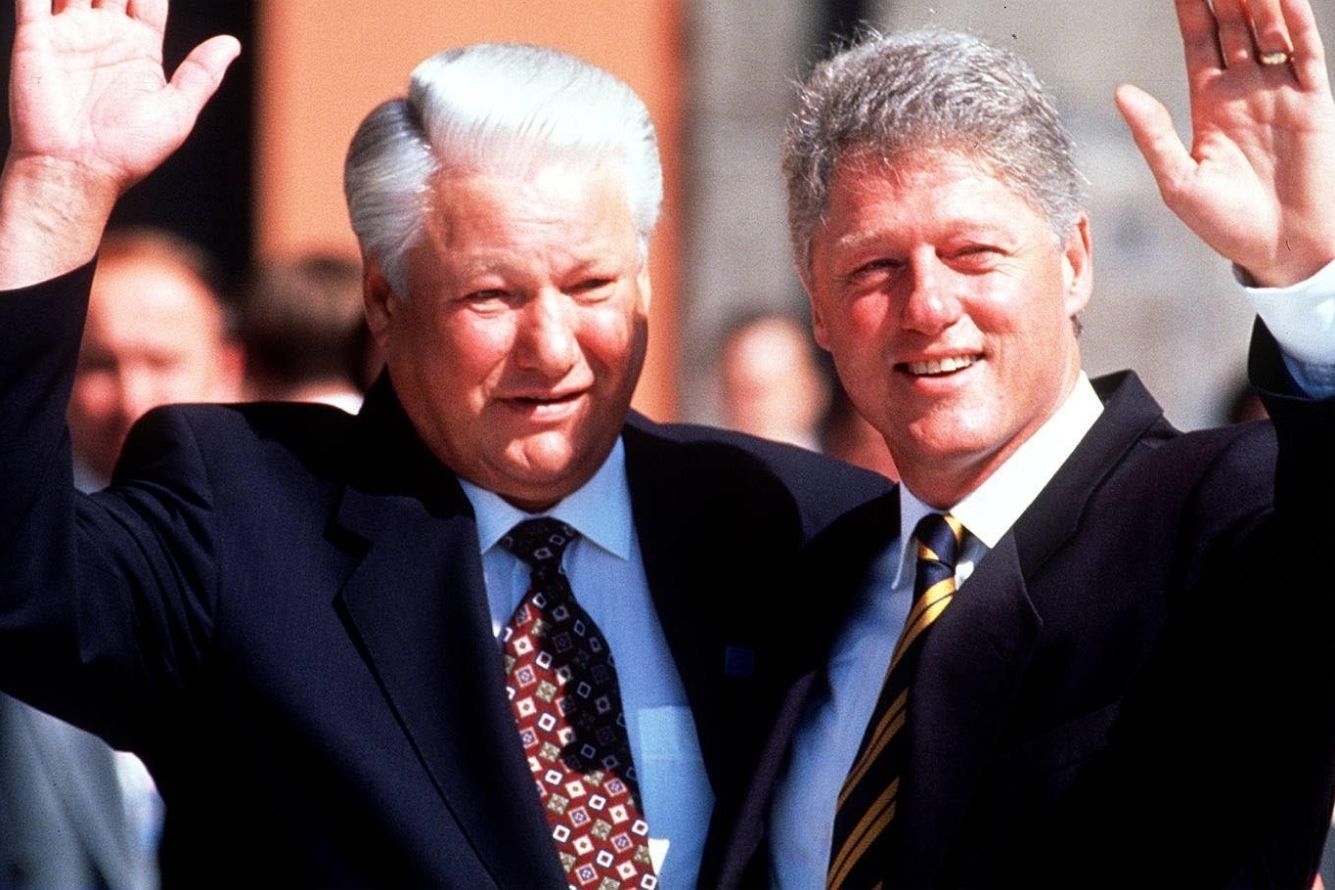
On February 7, the national security archive at the University of George Washington published three secret documents related to Russia dating from 1993. Among them is the transcript of the first conversation between Bill Clinton after taking office as president with Boris Yeltsin, as well as the parting words of the outgoing Secretary of State Lawrence Igelberger to his successor Warren Christopher. In it, he, among other things, warns about the possibility of armed conflicts in the post -Soviet space, including in Ukraine.
Clinton and Yeltsin
The first telephone conversation between Boris Yeltsin and Bill Clinton in the status of the US President took place on January 23, 1993, three days after Clinton entered office. Prior to this, Yeltsin and Clinton met personally in June 1992, when the Russian president came to the United States. Clinton was then the leader in the race of candidates from the Democratic Party.
Clinton began the conversation with the assurances that Russia will have a “maximum priority” in the foreign policy of the United States during his presidency. “We intend to do everything in our power to help Russia carry out democratic reforms. We will try to make our economic assistance as useful as possible, ”Clinton Yeltsin said. He also promised to assist in deferred payments on Russian debts to the Paris club .
The US President also noted the importance of interacting with Russia on international issues, such as Bosnia and Iraq. Yeltsin confirmed his readiness for cooperation, but emphasized that Russia hopes for a political solution to the Yugoslav issue with the involvement of the UN, and not through military intervention by NATO.
Yeltsin also insists in a conversation that the presidents need to meet "no later than February [1993]." “I think the whole world is waiting for this meeting, since the new American president could make changes to politics [in relation to Russia], at the same time supporting the general vector of our politics and personally,” the President of the Russian Federation said.
To this, Clinton answered Yeltsin that he should first pay attention to intra -American affairs - in particular, to speak with the annual message to Congress - and immediately after that is ready to meet with Yeltsin. The presidents agreed that the summit will be held in the territory of the third country, the right to choose which Yeltsin leaves Clinton. As a result, the meeting was held in March in Canadian Vancouver.
“I am sure that together we will be able to achieve the closest partnership between Russia and the USA,” Clinton said at the end of the conversation. As the US National Archive notes in a commentary on the transcript, this is exactly what Yeltsin always wanted to hear: “The word“ partnership ”was magical for the Russian president who tried to get closer to the previous administration of the White House, but could not get this from Bush .”
The outgoing Secretary
Another document published on February 7 by the national archive is the message of the outgoing Secretary of State Lawrence Igelberger to his successor Warren Christopher, dated January 5, 1993. In this letter, Igelberger talks about the main directions of American foreign policy and focuses on potential threats. “This is the world in the midst of revolutionary changes, in which you will encounter both the historical opportunity to outline a new international order and with a sobering up set of problems,” the former Secretary of State begins his letter, noting that for the first time in 50 years the United States “does not encounter a global armed enemy”.
Among the new opportunities, Igelberger called "the gradual inclusion of the reforming Russia and eastern Europeans in the stable European system." Among the possible problems, he noted the armed conflict “between Russia and any of the states on its periphery”, including with Ukraine, characterizing it as “not the most likely, but the most dangerous”. In addition, Igelberger mentioned a possible refusal of Ukraine, Belarus and Kazakhstan from his obligations on nuclear disarmament .
Next, Igelberger writes that the transformation of the former socialist countries into “market -oriented, responsible members of the international community” is the best guarantee of the security of the United States themselves. At the same time, he noted that he was preoccupied with the threat of sliding these states, especially Russia, back to authoritarianism. The outgoing Secretary of State also urges the successor not to overestimate expectations from the friendships of Moscow: against the background of growing pressure from the opposition in Russia itself, Boris Yeltsin will show much less advisability on the Balkan issue in the medium term, and will also show that the Russian Federation acts regardless of the West.
In total, Igelberger in his message identified three key issues in the Russian direction:
- The United States should solve the issue with the Soviet nuclear arsenal as soon as possible and ensure that all weapons are consolidated in Russia, and Ukraine, Belarus and Kazakhstan fulfill its obligations on denuclearization;
- The United States should support economic reforms in Russia, because "history will not look at us kindly if we do not provide generous help." An important component of the strategy described by Ignberger was to support the training of Russians in the United States and provide the Americans with technical assistance to local business in the Russian Federation;
- The United States should help Yeltsin and its followers find ways to ensure that ethnic conflicts on the borders of Russia do not reach a hot phase: "We do not want threats to Russian minorities to become a problem for the democrats in Russia, but we do not want to see the resumption of Russian imperial control."
Igelberger also briefly outlined the main issues in interaction with other countries of the former USSR. He called for Ukraine to be treated as an independent player, and not as "in addition to our relations with Russia." From the Baltic countries, the outgoing Secretary of State advised to achieve “more generosity in the issue of the rights of the Russian minority”, which will quickly complete the withdrawal of Russian troops from the region. In Central Asia, he proposed to pay special attention to Kazakhstan "with his 45 percent Russian minority and nuclear weapons." But the rest of the states, Igelberger wrote, "probably for a long time will be unstable in political and economic terms."
“The success of reforms in Russia may not guarantee the success of reforms in other countries of the former USSR, but if the reforms in Russia are fail, it will definitely mean the failure of reforms in the entire former Soviet empire,” Lawrence Igelberger wrote in conclusion of his letter.
Advisor - New Secretary
The third published document is a service note by a specialist in Russia Strouob Talbott for the already took office as Secretary of State Christopher Warren on the eve of his meeting with the Russian Foreign Minister Andrei Kozyrem.
As the US National Archive notes in its comment, a document dated February 6, 1993 shows how important the Clinton administration attached the issue of reforms in Russia. In addition, he gives an understanding of the “unprecedented level” of personal involvement of both Talbott himself and Bill Clinton in the process of promoting democracy in Russia.
In the document, Talbott wrote that although “Russia and the countries of the former USSR are the largest and most dangerous political confusion on Earth”, he expects that a “bright future” can occur with a fairly high level of support for Russian reforms by the United States.
Talbott notes that the collapse of the USSR is not just a “second revolution” in Russia, but at once three revolutions at the same time: the transition from totalitarianism to democracy, from a planned economy to a market and from the empire to a national state. According to Telbott, the relative successes that Russia achieved in all three areas are "nothing more than the greatest political miracle of our era."
“If this continues, this can be compared with the birth of our own country, our system and our role in the world by positive influence,” the diplomat writes at the end of the letter.